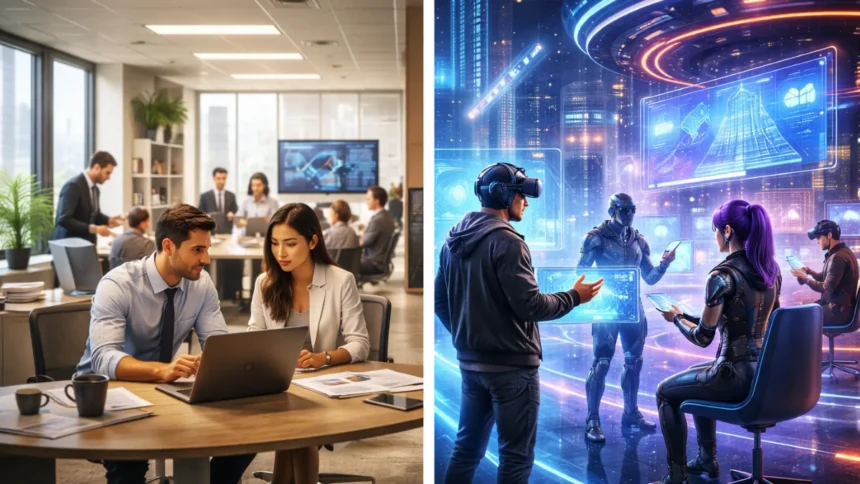
The first time someone attended a virtual meeting using a headset, it felt less like work and more like stepping into a game. Avatars nodded awkwardly, rooms looked like unfinished architectural models, and yet—there was something undeniably intriguing about it. That moment captured the essence of the IMetaverse Debate: a mix of curiosity, skepticism, and cautious optimism.
For some, the metaverse represents the next version of the internet—immersive, persistent, and interactive. For others, it feels like a solution still searching for a problem.
What the I Metaverse Debate Is Really About
Strip away the buzzwords, and the IMetaverse Debate boils down to a fundamental question: Do people actually want to live parts of their lives in virtual spaces?
The idea isn’t entirely new. Online worlds have existed for decades—from gaming platforms to social virtual spaces. What changed recently is the scale of ambition. Tech companies began positioning the metaverse not as a niche environment, but as a parallel digital layer where work, social life, commerce, and entertainment could converge.

That shift transformed curiosity into scrutiny.
Because once the concept moved from “interesting possibility” to “inevitable future,” the stakes changed. Suddenly, businesses started investing heavily, governments began observing regulatory implications, and users were expected to adapt to a new kind of digital presence.
And that’s where the debate intensified.
The Promise: Why the Metaverse Still Feels Inevitable
Despite criticism, there’s a reason the metaverse continues to attract attention—and funding.
At its core, it offers something traditional digital platforms don’t: presence. Not just seeing content, but being inside it.

Imagine attending a concert without geographical constraints. Or collaborating in a design studio where 3D models can be manipulated in real time. In sectors like education, architecture, healthcare training, and remote collaboration, the potential is hard to ignore.
Businesses, in particular, see opportunity.
Virtual storefronts, immersive advertising, digital real estate—these aren’t just futuristic ideas anymore. Brands are experimenting with environments where users don’t just browse products but experience them.

There’s also a psychological layer here. Humans naturally seek immersion. The success of gaming ecosystems and social media suggests that people are willing to invest time—and identity—into digital spaces.
The metaverse simply pushes that behavior one step further.
The Pushback: Why the IMetaverse Debate Is Intensifying
For every ambitious vision, there’s an equally strong counterargument.
One of the biggest concerns is utility versus novelty. Many early metaverse experiences feel more like tech demos than practical tools. Users try them once, maybe twice, and then return to simpler, faster platforms.
There’s also the issue of accessibility.
High-quality virtual experiences often require expensive hardware, stable internet, and a level of digital literacy that not everyone possesses. In countries like India, where digital adoption is growing but still uneven, this creates a gap between possibility and reality.
Then comes the fatigue factor.
People already spend significant time online—on phones, laptops, and tablets. The idea of moving even deeper into immersive environments raises questions about digital overload. Not everyone is eager to replace physical interactions with virtual ones.
Privacy and data concerns add another layer.
If social media already tracks behavior, what happens when platforms start capturing movement, gestures, and real-time interactions in virtual environments? The scale of data collection could expand dramatically.
These aren’t abstract concerns. They’re central to why the IMetaverse Debate hasn’t settled.
Business Reality: Investment vs Return
Perhaps the most telling aspect of the metaverse conversation is happening in boardrooms.
A few years ago, investments surged. Companies rebranded, launched virtual platforms, and announced ambitious roadmaps. The assumption was clear: early entry would secure long-term dominance.
But returns haven’t matched expectations—at least not yet.
Many projects are still in experimental phases. User engagement is inconsistent. Monetization models remain unclear.
This has led to a more cautious tone in recent discussions. Instead of positioning the metaverse as an immediate revolution, companies are reframing it as a long-term evolution.
That shift matters.
Because it signals that the metaverse may not arrive as a sudden transformation, but as a gradual integration into existing digital ecosystems—gaming, e-commerce, remote work tools—rather than replacing them entirely.
The Psychology Behind the Debate
Beyond technology and business, the IMetaverse Debate is deeply human.
It reflects how people perceive identity, connection, and reality.
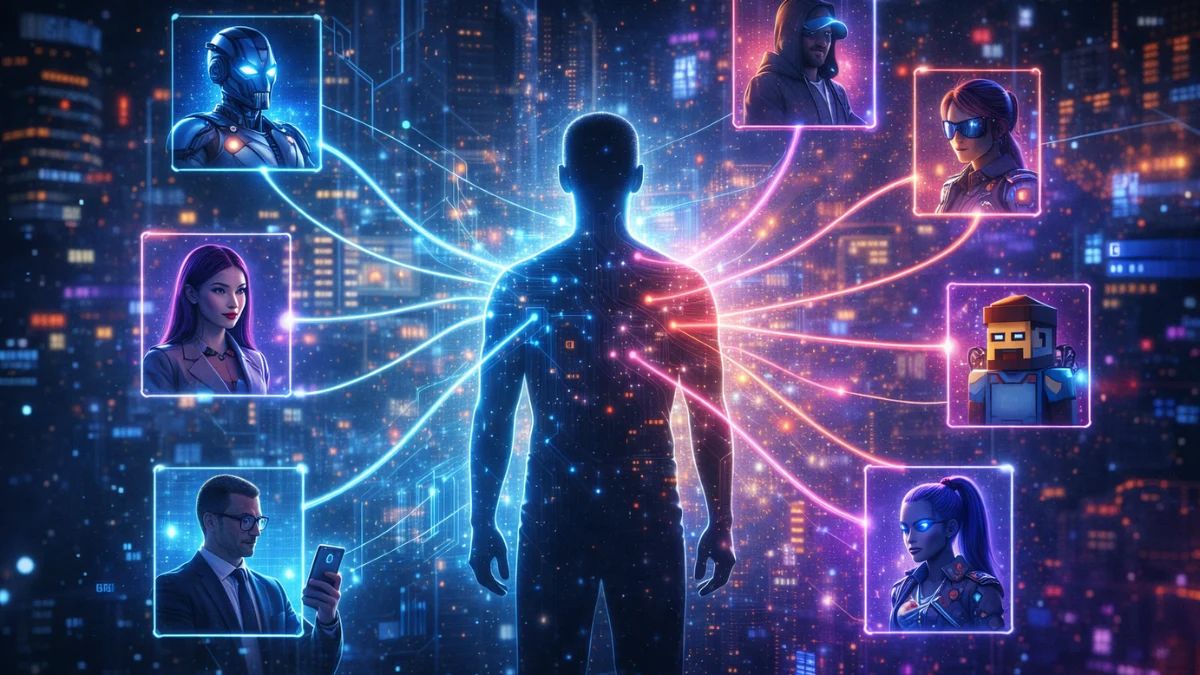
In virtual spaces, users can redefine themselves—appearance, behavior, even personality. For some, that’s liberating. For others, it raises questions about authenticity.
There’s also a subtle tension between control and escape.
The metaverse offers environments where everything can be designed, optimized, and curated. But real life is messy, unpredictable, and grounded in physical experience. The debate, in many ways, is about which of these people ultimately value more.
Interestingly, younger generations seem more comfortable navigating this duality. For them, digital and physical identities are not separate—they’re extensions of each other.
That generational shift could quietly shape the future of the metaverse more than any technological breakthrough.
Why the I Metaverse Debate Matters Right Now
Timing is everything.
The metaverse is being discussed at a moment when multiple technologies—AI, augmented reality, blockchain, high-speed connectivity—are evolving simultaneously. Together, they create an ecosystem where immersive digital environments are more feasible than ever before.
But feasibility doesn’t guarantee adoption.
The real question is whether the metaverse solves problems people actually care about—or creates new ones.
In India, for example, priorities often revolve around accessibility, affordability, and utility. Technologies that succeed here typically address practical needs at scale.
If the metaverse aligns with those needs—education, remote work, skill development—it could find a strong foothold. If not, it risks remaining a niche experience.What Comes Next: Evolution, Not Explosion
The most realistic future isn’t a sudden shift into fully immersive digital worlds.
It’s quieter than that.
Pieces of the metaverse are already integrating into everyday life—virtual meetings, AR filters, digital avatars, interactive environments. Over time, these elements may become more seamless, more useful, and less noticeable.
The term “metaverse” itself might even fade, replaced by specific applications that feel practical rather than experimental.
That’s often how technology evolves.
Not through dramatic transformations, but through gradual adoption that eventually feels normal.
The first time someone attended a virtual meeting using a headset, it felt less like work and more like stepping into a game. Avatars nodded awkwardly, rooms looked like unfinished architectural models, and yet—there was something undeniably intriguing about it. That moment captured the essence of the IMetaverse Debate: a mix of curiosity, skepticism, and cautious optimism.
For some, the metaverse represents the next version of the internet—immersive, persistent, and interactive. For others, it feels like a solution still searching for a problem.
What the IMetaverse Debate Is Really About
Strip away the buzzwords, and the IMetaverse Debate boils down to a fundamental question: Do people actually want to live parts of their lives in virtual spaces?
The idea isn’t entirely new. Online worlds have existed for decades—from gaming platforms to social virtual spaces. What changed recently is the scale of ambition. Tech companies began positioning the metaverse not as a niche environment, but as a parallel digital layer where work, social life, commerce, and entertainment could converge.
That shift transformed curiosity into scrutiny.
Because once the concept moved from “interesting possibility” to “inevitable future,” the stakes changed. Suddenly, businesses started investing heavily, governments began observing regulatory implications, and users were expected to adapt to a new kind of digital presence.
And that’s where the debate intensified.
The Promise: Why the Metaverse Still Feels Inevitable
Despite criticism, there’s a reason the metaverse continues to attract attention—and funding.
At its core, it offers something traditional digital platforms don’t: presence. Not just seeing content, but being inside it.
Imagine attending a concert without geographical constraints. Or collaborating in a design studio where 3D models can be manipulated in real time. In sectors like education, architecture, healthcare training, and remote collaboration, the potential is hard to ignore.
Businesses, in particular, see opportunity.
Virtual storefronts, immersive advertising, digital real estate—these aren’t just futuristic ideas anymore. Brands are experimenting with environments where users don’t just browse products but experience them.
There’s also a psychological layer here. Humans naturally seek immersion. The success of gaming ecosystems and social media suggests that people are willing to invest time—and identity—into digital spaces.
The metaverse simply pushes that behavior one step further.

The Pushback: Why the IMetaverse Debate Is Intensifying
For every ambitious vision, there’s an equally strong counterargument.
One of the biggest concerns is utility versus novelty. Many early metaverse experiences feel more like tech demos than practical tools. Users try them once, maybe twice, and then return to simpler, faster platforms.
There’s also the issue of accessibility.
High-quality virtual experiences often require expensive hardware, stable internet, and a level of digital literacy that not everyone possesses. In countries like India, where digital adoption is growing but still uneven, this creates a gap between possibility and reality.
Then comes the fatigue factor.
People already spend significant time online—on phones, laptops, and tablets. The idea of moving even deeper into immersive environments raises questions about digital overload. Not everyone is eager to replace physical interactions with virtual ones.
Privacy and data concerns add another layer.
If social media already tracks behavior, what happens when platforms start capturing movement, gestures, and real-time interactions in virtual environments? The scale of data collection could expand dramatically.
These aren’t abstract concerns. They’re central to why the IMetaverse Debate hasn’t settled.
Business Reality: Investment vs Return
Perhaps the most telling aspect of the metaverse conversation is happening in boardrooms.
A few years ago, investments surged. Companies rebranded, launched virtual platforms, and announced ambitious roadmaps. The assumption was clear: early entry would secure long-term dominance.
But returns haven’t matched expectations—at least not yet.
Many projects are still in experimental phases. User engagement is inconsistent. Monetization models remain unclear.
This has led to a more cautious tone in recent discussions. Instead of positioning the metaverse as an immediate revolution, companies are reframing it as a long-term evolution.
That shift matters.
Because it signals that the metaverse may not arrive as a sudden transformation, but as a gradual integration into existing digital ecosystems—gaming, e-commerce, remote work tools—rather than replacing them entirely.
The Psychology Behind the Debate
Beyond technology and business, the IMetaverse Debate is deeply human.
It reflects how people perceive identity, connection, and reality.
In virtual spaces, users can redefine themselves—appearance, behavior, even personality. For some, that’s liberating. For others, it raises questions about authenticity.
There’s also a subtle tension between control and escape.
The metaverse offers environments where everything can be designed, optimized, and curated. But real life is messy, unpredictable, and grounded in physical experience. The debate, in many ways, is about which of these people ultimately value more.
Interestingly, younger generations seem more comfortable navigating this duality. For them, digital and physical identities are not separate—they’re extensions of each other.
That generational shift could quietly shape the future of the metaverse more than any technological breakthrough.
Why the IMetaverse Debate Matters Right Now
Timing is everything.
The metaverse is being discussed at a moment when multiple technologies—AI, augmented reality, blockchain, high-speed connectivity—are evolving simultaneously. Together, they create an ecosystem where immersive digital environments are more feasible than ever before.
But feasibility doesn’t guarantee adoption.
The real question is whether the metaverse solves problems people actually care about—or creates new ones.
In India, for example, priorities often revolve around accessibility, affordability, and utility. Technologies that succeed here typically address practical needs at scale.
If the metaverse aligns with those needs—education, remote work, skill development—it could find a strong foothold. If not, it risks remaining a niche experience.
What Comes Next: Evolution, Not Explosion
The most realistic future isn’t a sudden shift into fully immersive digital worlds.
It’s quieter than that.
Pieces of the metaverse are already integrating into everyday life—virtual meetings, AR filters, digital avatars, interactive environments. Over time, these elements may become more seamless, more useful, and less noticeable.
The term “metaverse” itself might even fade, replaced by specific applications that feel practical rather than experimental.
That’s often how technology evolves.
Not through dramatic transformations, but through gradual adoption that eventually feels normal.
More Read

Conclusion
The IMetaverse Debate isn’t really about technology. It’s about direction.
It asks whether the next phase of the internet will prioritize immersion over simplicity, experience over efficiency, and digital identity over physical presence.
Right now, the answer isn’t clear—and that uncertainty is precisely what makes the debate important.
Because once the direction is set, reversing it won’t be easy.
Final Insight
At The Vue Times, we don’t see the metaverse as hype or inevitability—we see it as a test. Not of technology, but of human preference. The future won’t be decided by what can be built, but by what people choose to keep using when the novelty fades.
Frequently Asked Questions
What is the metaverse in simple terms?
The metaverse refers to immersive digital environments where users can interact, work, socialize, and experience content in real time, often using avatars and virtual spaces.
Why is the IMetaverse Debate important?
It highlights key questions about usability, privacy, business value, and whether people actually want immersive digital experiences as part of daily life.
Is the metaverse already in use today?
Yes, in limited forms—gaming worlds, virtual meetings, and AR/VR applications are early examples, though full-scale adoption is still evolving.
What are the biggest concerns about the metaverse?
Common concerns include high costs, privacy risks, lack of clear utility, digital fatigue, and accessibility challenges.
Will the metaverse replace the internet?
Unlikely. It is more likely to evolve as an extension of the internet, integrating with existing platforms rather than replacing them entirely.
Conclusion
The IMetaverse Debate isn’t really about technology. It’s about direction.
It asks whether the next phase of the internet will prioritize immersion over simplicity, experience over efficiency, and digital identity over physical presence.
Right now, the answer isn’t clear—and that uncertainty is precisely what makes the debate important.
Because once the direction is set, reversing it won’t be easy.
Final Insight
At The Vue Times, we don’t see the metaverse as hype or inevitability—we see it as a test. Not of technology, but of human preference. The future won’t be decided by what can be built, but by what people choose to keep using when the novelty fades.
Frequently Asked Questions
What is the metaverse in simple terms?
The metaverse refers to immersive digital environments where users can interact, work, socialize, and experience content in real time, often using avatars and virtual spaces.
Why is the IMetaverse Debate important?
It highlights key questions about usability, privacy, business value, and whether people actually want immersive digital experiences as part of daily life.
Is the metaverse already in use today?
Yes, in limited forms—gaming worlds, virtual meetings, and AR/VR applications are early examples, though full-scale adoption is still evolving.
What are the biggest concerns about the metaverse?
Common concerns include high costs, privacy risks, lack of clear utility, digital fatigue, and accessibility challenges.
Will the metaverse replace the internet?
Unlikely. It is more likely to evolve as an extension of the internet, integrating with existing platforms rather than replacing them entirely.