

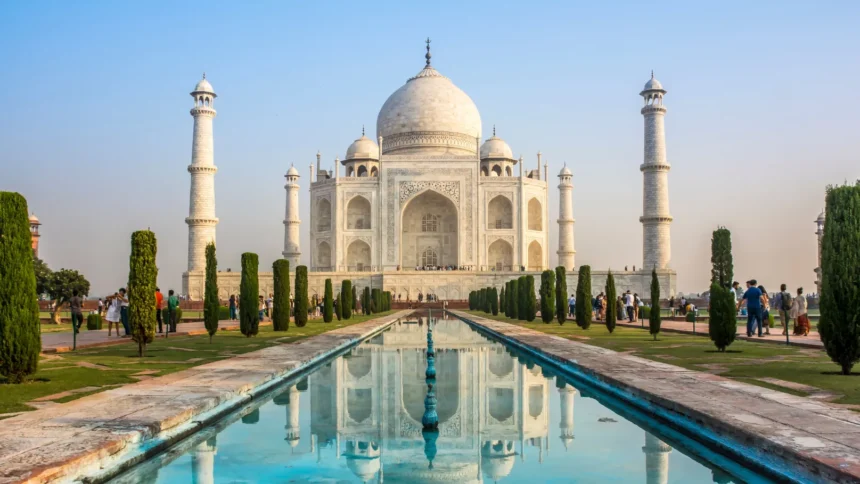
Few monuments on Earth carry as much immediate recognition as the Taj Mahal. A silhouette of a white marble dome framed by slender minarets has, for centuries, been photographed, painted, romanticized and politicized. But the Taj’s fame is not just a matter of image: it remains India’s single most visited monument, a UNESCO World Heritage site, and a near-universal shorthand for South Asian heritage. That continued primacy matters — not just for Agra or Uttar Pradesh, but for the shape and future of heritage tourism across India. Below I unpack why the Taj keeps topping visitor lists, what that dominance reveals about India’s tourism ecosystem, and how policymakers, communities and the tourism industry should respond so heritage benefits more people while surviving the strain mass visitation brings. Why the Taj still wins hearts and feet
1. A near-perfect combination of architecture and storytelling
The Taj Mahal’s visual power is immediate: perfect symmetry, refined proportions, shimmering marble that changes tone with the light. But architecture alone doesn’t explain mass appeal. The Taj is wrapped in a simple, universal story — a monumental expression of love and loss — that crosses cultures and languages. Visitors don’t just come to see a building; they come for the story and the aesthetic experience, both of which are easily communicated and emotionally resonant across global tourist markets. UNESCO’s appraisal singles out the Taj as “the jewel of Muslim art in India and one of the universally admired masterpieces of the world’s heritage,” a designation that adds authoritative weight to the narrative tourists consume.
2. Iconic status and global marketing
The Taj is India’s brand asset in the cultural tourism marketplace. It appears on countless postcards, travel guides and airline ads. That ubiquity keeps it top of mind for potential travelers planning a India trip for the first time. The monument functions as a gateway image: for many foreign visitors “seeing India” begins — and sometimes ends — with the Taj. This marketing halo effect draws repeat domestic visitors too: school trips, family outings, and pilgrim-like returns from across India reinforce the site’s popularity.
3. Institutional reinforcement and ticketing data
Ticketing and management practices also concentrate visitors at the Taj. Among centrally protected, ticketed Archaeological Survey of India (ASI) monuments, the Taj leads in absolute visitor numbers for both domestic and foreign tourists; recent counts show millions of annual entries, with the Taj consistently top of the list. That momentum is self-reinforcing: high visitor numbers attract more services, tours and infrastructure investment, which in turn make it easier for still more tourists to arrive.
4. Accessibility and tourism infrastructure
Agra is comparatively well connected by road, rail and air links to India’s major tourist circuits (Delhi–Agra–Jaipur is a classic triangular route), which reduces the friction of travel. Hotels, guides, restaurants and souvenir markets have grown around the monument to serve mass tourism — and that, too, draws more visitors because they can plan a satisfying trip with predictable logistics and services.
5. Cultural rituals and media amplification
The Taj’s role in film, literature, and social media constantly renews its relevance. Bollywood films, international documentaries and millions of Instagram posts keep the monument circulating in global culture. Media coverage—whether about anniversaries, conservation projects, access rules, or celebrity visits—creates recurring publicity spikes that feed visitation.
What the Taj’s dominance reveals about Indian heritage tourism
Concentration of demand
The Taj’s dominance highlights a classic tourism pattern: demand clusters around a small number of “superstar” sites. While India has thousands of significant monuments, a handful receive the lion’s share of attention and dollars. That concentration brings clear economic benefits to hotspot regions but also neglects other heritage places that could benefit from investment and visitation.
Economic value, and uneven distribution of benefits
Heritage tourism generates substantial economic returns. Market reports and government data point to a thriving heritage tourism sector, with strong domestic demand and recovery of inbound travel after pandemic lows. However, the financial benefits are often locally concentrated — hotels, large vendors, and tour operators capture a big slice, whereas smaller communities and peripheral sites may see less direct gain unless there’s deliberate policy to spread benefits.
Infrastructure and conservation tensions
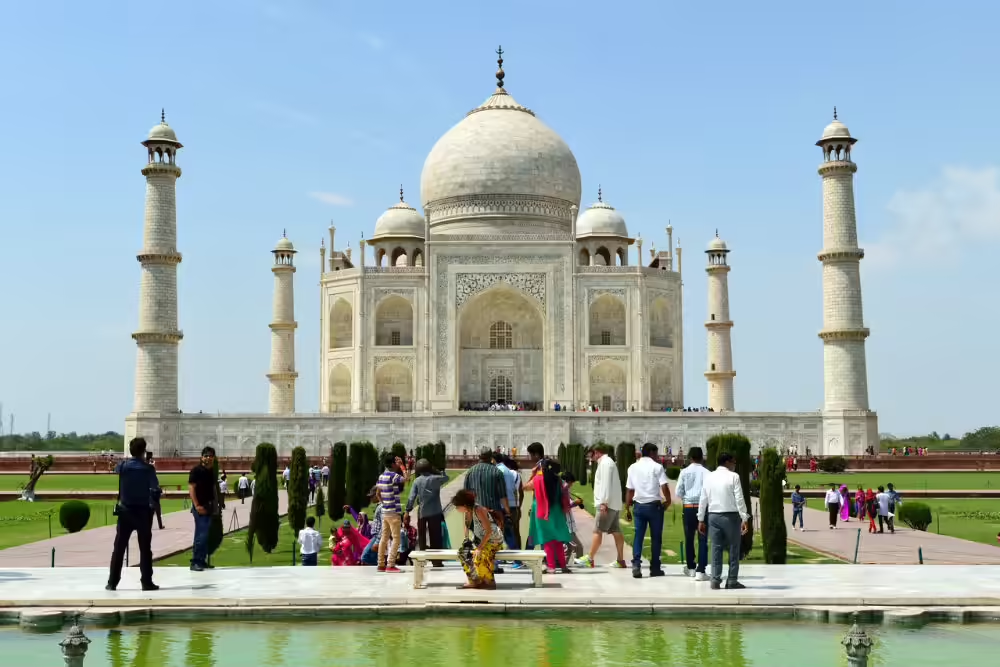
High visitor volumes create immediate conservation challenges: wear on fabric, pressure on surrounding urban infrastructure, pollution and crowd management issues. The sheer number of daily visitors requires constant maintenance and sometimes invasive crowd-control measures that can alter the visitor experience and stress the monument’s fabric. The Taj’s custodians must constantly balance conservation needs with the financial imperative of tourism revenue.
Policy leverage and its limits
The Taj also demonstrates how a single heritage asset can attract public and private investment — from restoration projects to improved access roads and new visitor facilities. Yet that leverage is a double-edged sword: political will and funds funneled to one marquee site can starve others, creating a national portfolio of heritage where a few assets are well managed and many are not.
The implications for heritage tourism strategy
If the Taj is a case study, the lessons for national and local policy are clear: leverage iconic sites, but design for diversification, sustainability and equity.
1. Diversify the visitor economy
India can (and should) use the Taj’s brand power to create circuits that pull visitors into lesser-known sites. Packaging day trips or multi-day routes that link the Taj with nearby Mughal-era, colonial, or local craft heritage sites can spread economic benefits to smaller towns. State tourism boards and private operators should co-create itineraries that reduce crowd pressure on the Taj while increasing footfall to under-visited places.
2. Invest in distributed infrastructure
Improving transport and digital wayfinding to peripheral sites makes them more accessible. Governments can target grants or tax incentives to upgrade accommodations and services in secondary destinations so they’re capable of receiving spillover tourists who otherwise would simply pass through.
3. Community-led tourism and benefit sharing
Local communities must be partners, not bystanders. Training programs for guides, micro-grant schemes for small businesses, and community-controlled handicraft markets ensure that tourism’s economic rewards are more evenly distributed. Community stewardship also builds local pride and can aid conservation, especially for vernacular heritage that lacks national-level attention.
4. Manage carrying capacity with grace
Rather than bluntly limiting numbers, managers should use intelligent demand-shaping: timed entry tickets, differential pricing for peak hours, interpretive experiences that encourage off-peak visits, and virtual/AR experiences that relieve physical pressure while enriching visitor understanding. Some of these tools are already used at other world heritage sites and can be adapted to local needs.
5. Reinvest tourism revenue into conservation and local services
Ticket revenue — when transparently allocated — can fund both conservation and local public goods (waste management, street lighting, sanitation). Transparent accounting and participatory budgeting processes help ensure funds serve both monument preservation and community needs. This improves resident attitudes toward visitors, which is critical for long-term sustainability.
Challenges that require urgent attention
Environmental and urban pressures
Air pollution, groundwater depletion and urban encroachment are real threats to marble and heritage landscapes. Addressing these issues demands cross-sectoral policy (transport planning, environmental regulation, urban land-use controls) rather than heritage management alone.
Overdependence on a single asset
Regions that rely on a single iconic monument for tourism risk economic shocks if access is restricted, if conservation emergencies arise, or if external factors (pandemics, political tensions) reduce travel. Developing a diversified tourism product lowers that vulnerability.
Authenticity vs. commodification
Tourist demand for packaged, Instagram-friendly experiences can erode the authenticity of cultural practices and lead to commodified performances that satisfy visitors but impoverish living traditions. Conservation strategies must therefore be culturally sensitive and co-designed with communities.

Concrete policy and industry recommendations
-
National circuit grants: Fund multi-site circuits that pair the Taj with nearby heritage and cultural experiences, with conditional funding tied to local benefit-sharing plans.
-
Carrying-capacity frameworks: Use evidence-based limits during peak seasons, combined with dynamic pricing to incentivize off-peak visits.
-
Community enterprise programs: Offer microcredit and capacity-building for local entrepreneurs (guides, homestays, craft producers).
-
Transparent reinvestment laws: Require a fixed share of ticket revenue to be allocated to conservation and community development, published annually.
-
Sustainable transport investments: Prioritize low-emission linkages and pedestrian-friendly zones around heritage precincts to reduce pollution and improve the visitor experience.
A closing thought: iconic sites as a responsibility, not just an asset
The Taj Mahal will likely remain India’s best-known monument for decades to come — and that is a powerful asset. But its global prominence comes with responsibility. Iconic sites set the agenda: how they are managed, who benefits, and how conservation is funded will influence standards across the country. If India uses the Taj’s gravitational pull to build resilient, inclusive and environmentally responsible heritage tourism, then millions of visitors each year can become not just consumers of a monument’s beauty but partners in preserving a living cultural landscape.