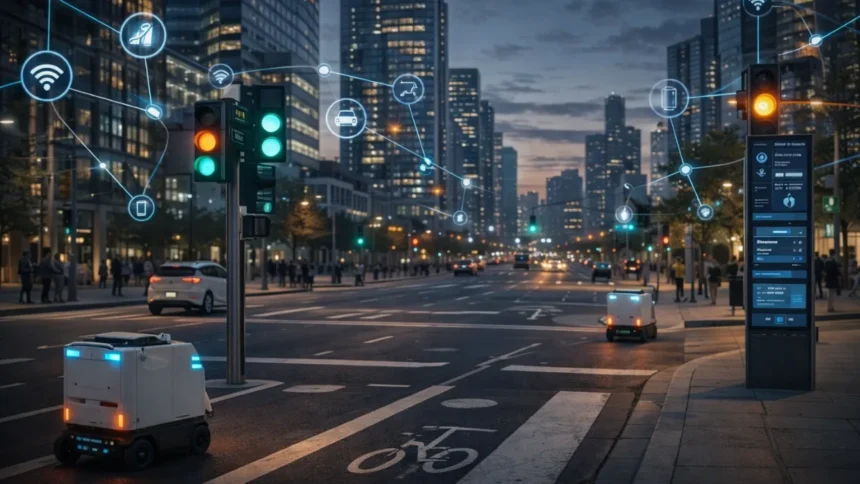
There was a time when the idea of robots belonged to factories, science fiction films, or distant futures that felt comfortably out of reach. Today, that distance has quietly collapsed.
You don’t always notice it at first. A vacuum that cleans your floor without instruction. A recommendation system that seems to understand your preferences better than you do. A chatbot resolving your issue before a human ever enters the conversation. None of these announce themselves loudly as “robots,” yet they are all part of the same shift.
Robots in daily life are no longer an arrival. They are a presence. And more importantly, they are becoming invisible.
When Robots in Daily Life Stopped Feeling Like Technology
The most interesting aspect of this transformation is not technological—it is psychological.

Earlier, machines were tools. You operated them. You controlled them. Their limitations were obvious, and so was your authority. But the robots that now exist in everyday life do something different. They operate with a degree of autonomy. They anticipate. They respond. They adapt.
This changes the relationship.
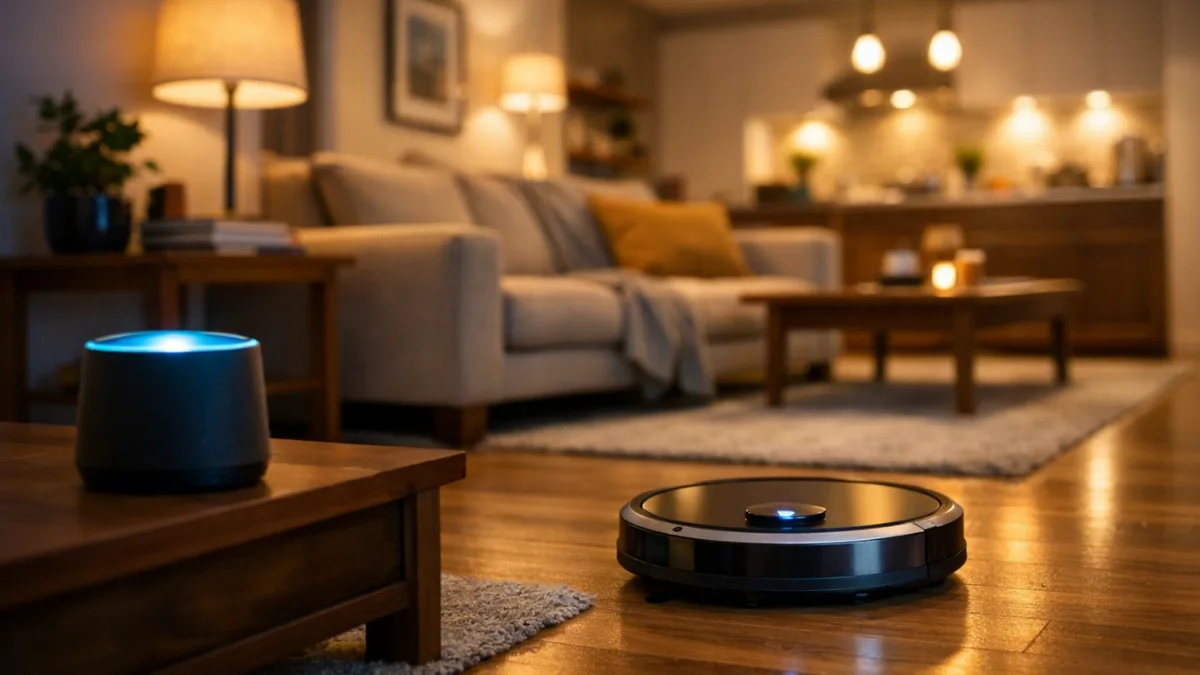
A robotic vacuum does not wait for instructions. It learns your space. A smart assistant does not just respond—it predicts. Even customer service bots are no longer rigid scripts; they simulate conversation, often convincingly enough to blur the line between machine and human interaction.
Where Robots in Daily Life Are Already Present
The idea of robots still carries a visual bias—metal bodies, moving arms, humanoid shapes. But the reality is far more subtle.

In homes, robots appear as convenience. Cleaning devices, smart kitchen assistants, automated lighting systems. These systems remove friction from routine tasks, turning time into the most valuable output.
In workplaces, robots operate behind interfaces. Algorithms filter resumes. AI tools draft emails. Automated systems manage inventory, logistics, and even decision-making frameworks. What used to require teams now often requires systems.
In public spaces, the shift is even more understated. Airports use robotic systems for baggage handling. Hospitals rely on robotic assistance for surgeries and diagnostics. Even traffic systems are increasingly automated, adjusting signals based on real-time conditions.

The pattern is clear: robots are not replacing environments—they are embedding themselves within them.
Why This Shift Is Accelerating Now
Technology does not move in isolation. It moves when economics, demand, and capability align.
The current rise of robots in daily life is not accidental. It is the result of three converging forces.
First, computational power has reached a level where machines can process vast amounts of data in real time. This makes automation not just possible, but efficient.
Second, the cost barrier has dropped. What was once limited to large industries is now accessible to households and small businesses.
Third, human behavior has changed. Convenience is no longer a luxury—it is an expectation. People do not just prefer efficiency; they assume it.
This combination creates a feedback loop. The more people rely on automation, the more systems evolve to meet that reliance. And the more capable those systems become, the deeper they integrate into daily life.
The Subtle Trade-Off: Convenience vs Control
Every technological shift comes with an exchange. The rise of robots is no different.
Convenience often demands surrender—of effort, of attention, sometimes even of decision-making. When a system chooses what you watch, what route you take, or what product you buy, it simplifies life. But it also shapes it.
This is where robots in daily life become more than tools. They become filters.
They filter information, experiences, and even opportunities. Over time, this filtering can create a form of passive dependency. You begin to rely not just on the outcome, but on the system itself.1
The danger is not loss of control in a dramatic sense. It is the gradual outsourcing of small decisions—so many that you stop noticing them altogether.

The Business Behind Everyday Robotics
Behind every seemingly simple robotic system lies a complex economic structure.
Companies are not just building tools; they are building ecosystems. A smart home device is rarely just a device—it is an entry point into a network of services, data, and recurring engagement.
This is where the real value lies.
Data collected from daily interactions allows companies to refine systems, personalize experiences, and predict behavior. Robotics, in this sense, is not just about physical or digital automation. It is about understanding patterns at scale.
The businesses that succeed in this space are not necessarily those that build the most advanced robots. They are the ones that integrate seamlessly into human routines without disruption.
What This Means for Work and Skills
There is a persistent fear that robots will eliminate jobs. The reality is more nuanced.
Robots tend to replace tasks, not entire roles. Repetitive, predictable processes are the first to be automated. But roles that require judgment, creativity, and adaptability remain resistant—for now.
What changes is the nature of work.
Instead of performing tasks, individuals are increasingly required to manage systems. Instead of executing processes, they oversee automation. This creates a shift in skill demand—from operational ability to analytical thinking.
The challenge is not displacement. It is adaptation.
Those who understand how to work with robotic systems will find themselves ahead. Those who resist the shift may find their roles gradually reduced in relevance.
The Future Direction of Robots in Daily Life
The next phase of robotics will not be about visibility. It will be about integration.
Robots will become less noticeable, not more. They will operate quietly in the background, embedded into infrastructure, communication, and decision-making systems.
We may not always recognize them as robots. They will appear as features, services, or simply “how things work.”
More importantly, they will become contextual. Systems will not just respond—they will understand situations. A home that adjusts itself based on your mood, a workplace system that anticipates project needs, a city that adapts to its population in real time.
The line between environment and machine will continue to blur.
More Read

Conclusion
The story of robots in daily life is not about machines becoming more human. It is about human life becoming more structured by machines.
This is not necessarily negative. It is, in many ways, an improvement—greater efficiency, reduced effort, expanded capability. But it is also a transformation that demands awareness.
Because the most powerful changes are rarely the loudest ones.
They are the ones that become normal.
Final Insight
The future will not be defined by how advanced robots become, but by how quietly they shape everyday decisions. The real shift is not technological—it is behavioral.-The Vue Times
Frequently Asked Questions
1. What is Robots in Daily Life?
Robots in daily life refer to automated systems and AI-powered tools integrated into everyday activities, such as smart homes, customer service bots, and workplace automation.
2. How are robots used in daily life today?
They are used in cleaning devices, virtual assistants, healthcare systems, logistics, and even online platforms that personalize content and services.
3. Are robots replacing human jobs completely?
Not entirely. Robots are replacing repetitive tasks, while human roles are shifting toward decision-making, creativity, and system management.
4. Why are robots becoming more common now?
Advancements in AI, reduced costs, and increased demand for convenience have accelerated the adoption of robots in everyday life.
5. What is the future of robots in daily life?
Robots will become more integrated and less visible, operating in the background to enhance efficiency and personalize experiences.