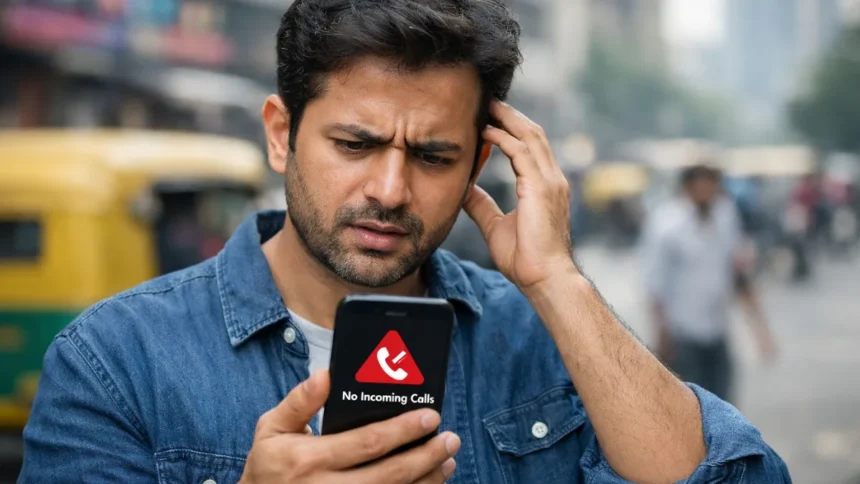
There’s a moment almost every prepaid user in India has experienced. You pick up your phone to check a missed call, only to realize something is off. No signal issue. No network outage. Just silence. Then it hits—you haven’t recharged.
But the confusion lingers. Why should incoming calls stop at all?
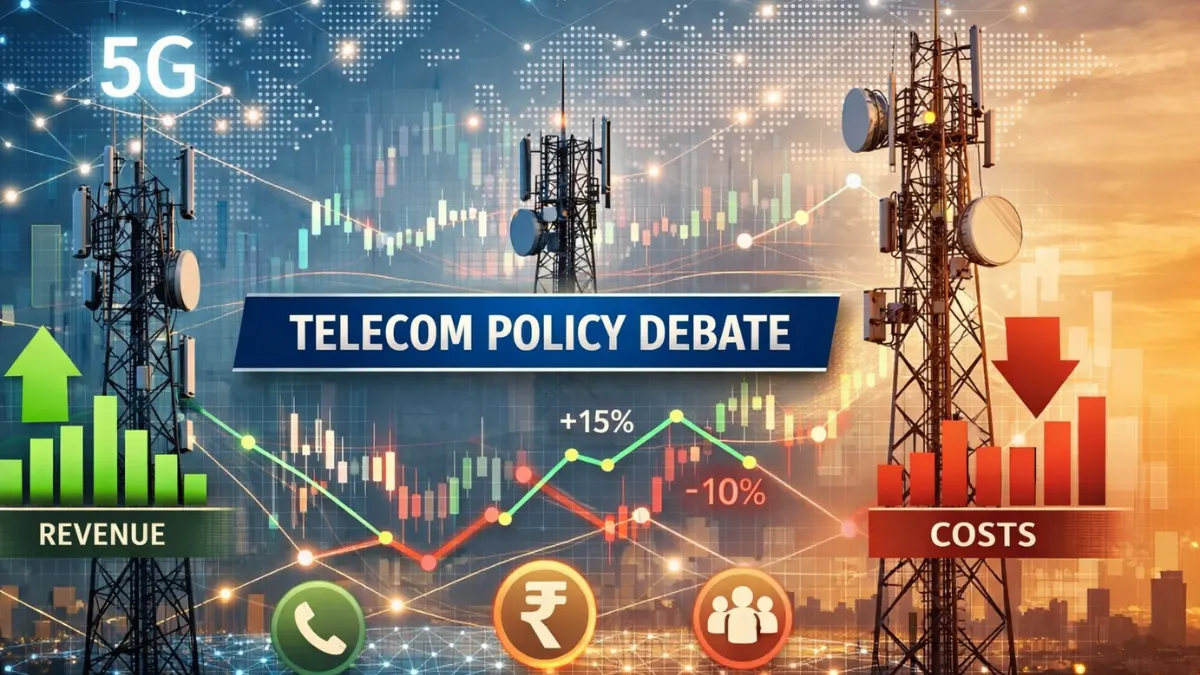
This seemingly small inconvenience has quietly turned into a larger telecom policy debate. What started as a pricing model has now become a question about access, fairness, and how essential communication really is in a country like India.
Why Incoming Calls Stop Without Recharge: Telecom Policy Debate Explained in Simple Terms
At its core, the issue is straightforward. Telecom operators in India have gradually shifted from offering lifetime incoming validity to bundling incoming and outgoing services within prepaid recharge plans.

Earlier, once you bought a SIM card, incoming calls were largely free for life. You could receive calls even without active recharge. That model slowly changed.
Now, most prepaid users must maintain an active plan to continue receiving incoming calls after a certain grace period. If not, services—including incoming calls—are restricted or disconnected.
It feels counterintuitive. Receiving a call doesn’t “use” your balance in the traditional sense. Yet, it’s no longer free.
How Did This Change Happen?
To understand this, you need to step back into the early 2000s telecom era in India.
Back then, incoming calls were actually charged. The “Calling Party Pays” (CPP) model changed that, making incoming calls free for users. It was a massive shift that fueled mobile adoption across the country.

For years, telecom operators competed aggressively, offering ultra-cheap tariffs, lifetime validity SIMs, and minimal restrictions. But the landscape changed dramatically in the mid-2010s.
Data became the new battleground.
With the rise of affordable internet, voice calls essentially became a bundled add-on rather than the core service. Telecom companies began restructuring their pricing:

- Voice became “unlimited”
- Data became the primary revenue driver
- Validity became mandatory for service continuation
In this new model, incoming calls were no longer treated as a standalone free service—they became part of the validity package.
The Business Logic Behind It
From a telecom operator’s perspective, this shift wasn’t arbitrary.
Maintaining a mobile network isn’t cheap. Infrastructure, spectrum costs, maintenance, and regulatory fees all add up. Even inactive users occupy network resources—numbers, routing capacity, and database management.
Allowing unlimited incoming calls without recharge creates a large base of non-paying users who still consume system capacity.
So operators introduced a system where:
- Active users (with recharge) subsidize network costs
- Inactive users are gradually disconnected or restricted
It’s a move toward sustainability. But it also raises a critical question—should basic connectivity be treated purely as a commercial product?
Why It’s Becoming a Policy Debate
The issue is no longer just about pricing. It’s about access.
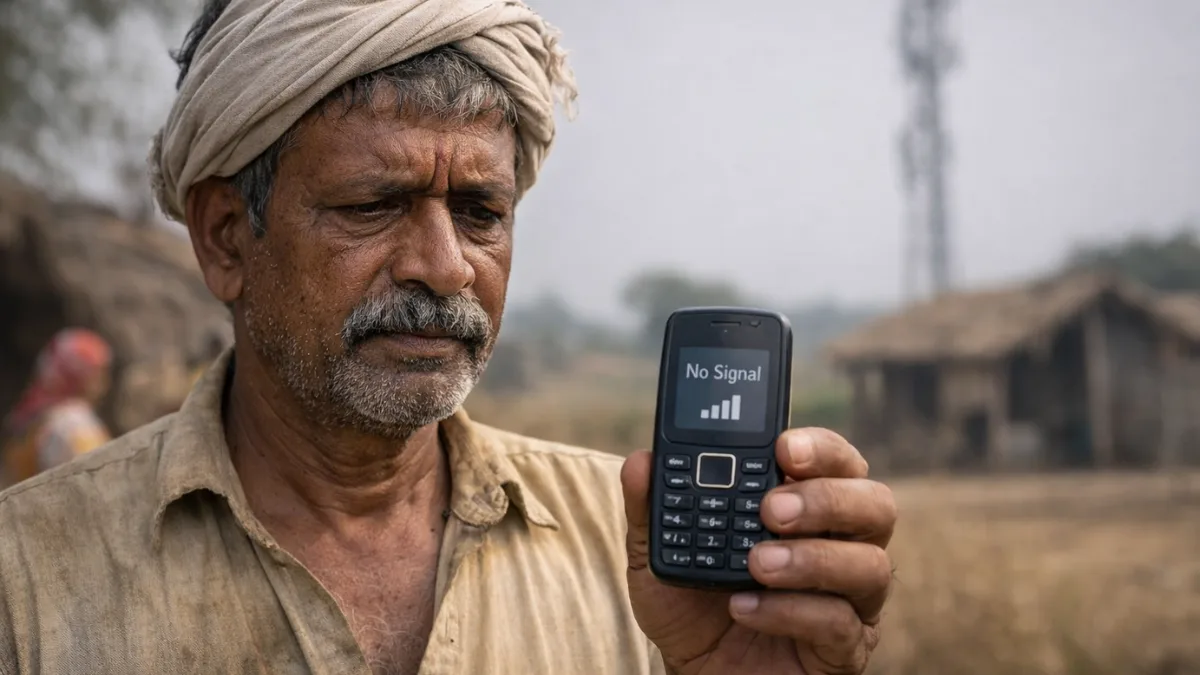
India has millions of low-income users who rely on mobile phones for essential communication—especially in rural areas. For many, recharging regularly isn’t always feasible.
When incoming calls stop:
- Job opportunities can be missed
- Emergency communication is disrupted
- Financial inclusion tools linked to mobile numbers are affected
This is where the debate intensifies.
Should telecom services be treated like electricity—pay to use—or like a basic right, where at least minimal access is guaranteed?
Regulators and policymakers have started to take notice.
The Role of Regulatory Thinking
India’s telecom ecosystem operates under regulatory oversight, with periodic discussions about consumer protection.
There have been calls to:
- Mandate minimum incoming call validity
- Introduce ultra-low-cost plans for basic access
- Ensure that users are not completely cut off from communication
However, regulators also face a balancing act.
Telecom companies argue that forcing free incoming services could:
- Reduce revenue
- Impact network investments
- Slow down infrastructure expansion
It’s a classic policy dilemma—consumer welfare vs industry sustainability.
Why This Issue Feels Bigger Than It Is
On the surface, this looks like a minor inconvenience. But psychologically, it feels like something more.
People associate phone connectivity with identity.
Your mobile number is tied to:
- Bank accounts
- Aadhaar and official documents
- Work communication
- Social relationships
Losing incoming call access—even temporarily—creates a sense of disconnection that goes beyond technology.
It’s not just about missing calls. It’s about losing access to the network that defines modern life.
The Digital Economy Angle
There’s another layer to this conversation—the rise of India’s digital economy.
As more services move online, mobile connectivity becomes a gateway:
- UPI transactions
- OTP-based authentication
- App-based services
If incoming calls and SMS are restricted due to lack of recharge, users can be locked out of essential services.
This raises a critical question for policymakers:
Can a digital economy truly function if access to communication is conditional on continuous payment?
What Telecom Companies Aren’t Saying (Openly)
Telecom operators rarely frame this as a restriction. Instead, they present it as a “validity-based service model.”
But the shift reflects a deeper reality.
India’s telecom sector has gone through intense price wars, consolidation, and financial stress. Profit margins are thin. Debt levels are high.
In such an environment, every user needs to contribute to revenue.
The era of free incoming calls for inactive users doesn’t align with this financial reality anymore.
What Could Change in the Future?
The debate is still evolving, but a few possible directions are emerging:
1. Basic Connectivity Plans
Ultra-cheap plans that offer:
- Incoming calls
- Limited outgoing minutes
- Minimal data
These could act as a safety net for low-income users.
2. Regulatory Intervention
Authorities could mandate:
- Minimum incoming call validity period
- Clearer consumer rights around disconnection
3. Tiered Service Models
Different levels of connectivity:
- Premium users with full services
- Basic users with restricted but essential access
4. Digital Identity Protection
Ensuring that mobile numbers linked to essential services are not easily deactivated.
Why This Debate Matters Now
The timing is not accidental.
India is pushing toward:
- Digital governance
- Financial inclusion
- Rural connectivity
At the same time, telecom models are becoming stricter and more commercial.
This creates a gap.
If connectivity becomes conditional, the very users who need it most could be excluded.
That’s why this issue is gaining attention—not because of inconvenience, but because of its long-term implications.
More Read

Conclusion
The question isn’t just why incoming calls stop without recharge. It’s what that decision represents.
It reflects a shift in how communication is valued—from a basic utility to a packaged service.
There’s logic behind it. There’s also a cost.
As India continues to digitize, the balance between business sustainability and universal access will define the next phase of telecom policy.
Because in a country where a missed call can mean a missed opportunity, silence is never just silence.
Final Insight
At The Vue Times, we believe the future of connectivity will not be decided by pricing alone—but by how inclusive it is. The real question is not whether users should pay, but whether anyone should ever be completely cut off.
Frequently Asked Questions
Why do incoming calls stop without recharge in India?
Incoming calls stop because telecom services are now tied to active plan validity. Without recharge, operators restrict services after a grace period.
Is it legal for telecom companies to block incoming calls?
Yes, under current regulations, operators can restrict services based on plan validity. However, this remains a debated policy issue.
How long do incoming calls work without recharge?
Usually, there is a grace period of a few days to weeks after plan expiry, depending on the operator, before incoming calls are blocked.
Can I receive SMS without recharge?
In most cases, SMS (especially OTPs) may also stop once the plan expires, though some operators allow limited access during grace periods.
Will India bring back free incoming calls?
It’s unlikely in the old form, but there may be low-cost or basic connectivity plans introduced to ensure minimal access for all users.