
For much of the world, the weather is becoming increasingly unpredictable.
Forecasts from leading meteorological agencies indicate there is an 81% probability that a historically strong Super El Niño could develop before the end of 2026, with conditions expected to continue well into 2027. If those projections hold, the phenomenon could amplify heatwaves, alter rainfall patterns, disrupt agriculture, and increase the risk of weather-related disasters across multiple continents.
Record-breaking heatwaves are scorching Europe. Wildfires are spreading across parts of North America. Some regions are struggling with prolonged drought, while others are experiencing devastating floods.
Now, climate scientists are warning that another powerful force may be about to intensify these extremes.
Unlike hurricanes or earthquakes, El Niño develops gradually.
Its effects, however, can reshape weather patterns across the globe for months.
So why are scientists paying such close attention?
Here are five reasons this developing Super El Niño could become one of the most consequential climate events in recent years.
1. Global Temperatures Could Reach New Highs
One of the most immediate concerns is heat.
El Niño naturally warms parts of the Pacific Ocean, but that warming influences atmospheric circulation far beyond the ocean itself. The result is often a rise in global average temperatures.
Scientists caution that because today’s climate is already warmer due to long-term greenhouse gas emissions, a powerful Super El Niño would build on that existing warming rather than occur in isolation.
Recent months have already delivered record-breaking temperatures across parts of Europe, where prolonged heatwaves have strained healthcare systems, increased wildfire risks, and placed pressure on electricity grids. A stronger El Niño could intensify similar conditions in other regions over the coming months.
For millions of people, that means more frequent heat alerts, higher health risks, and greater stress on critical infrastructure.
2. Some Countries Could Face Severe Drought While Others See Flooding
El Niño rarely affects every region in the same way.
Instead, it redistributes rainfall across the planet.
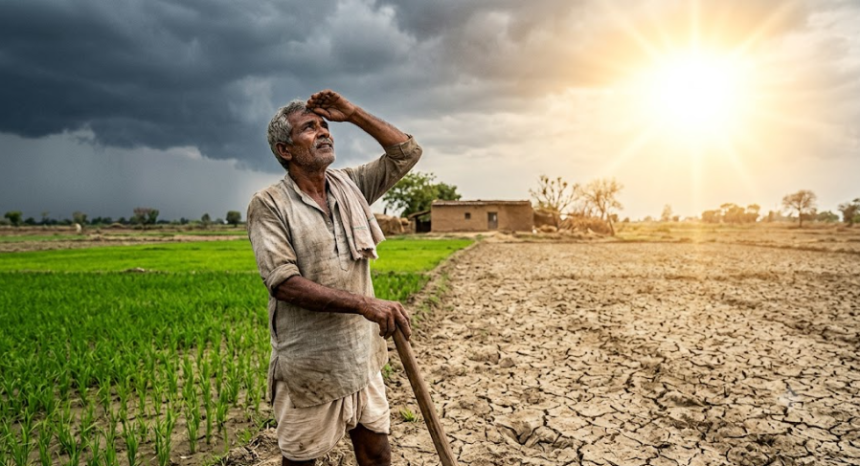
Some areas receive significantly less precipitation than usual, increasing the likelihood of droughts, crop failures, and water shortages.
Others experience heavier rainfall that raises the risk of flooding and landslides.
Historically, strong El Niño events have contributed to drought conditions in Australia, parts of southern Africa, Indonesia, and portions of South America, while bringing heavier rainfall to sections of the southern United States and other regions. Meteorologists emphasise that every event differs, but the current forecasts point to a heightened risk of weather extremes across multiple continents.
These shifts do not simply affect weather forecasts.
They influence food production, water security, transportation, and public health.
3. Agriculture Could Come Under Fresh Pressure
Agriculture depends heavily on predictable seasons.
When rainfall patterns change dramatically, farmers often face difficult decisions about planting schedules, irrigation, and crop selection.
Prolonged drought can reduce harvests.
Excessive rainfall can damage crops, delay planting, and increase the spread of plant diseases.
Countries heavily dependent on rain-fed agriculture are particularly vulnerable.
For consumers, these disruptions may eventually contribute to higher food prices as reduced harvests affect domestic and international supply.
Climate scientists note that agriculture has become increasingly exposed to weather variability, making events such as Super El Niño economically significant as well as environmentally important.
4. Marine Ecosystems Could Face Another Major Stress Test
The effects of Super El Niño are not limited to land.
The warming of surface waters in the central and eastern Pacific Ocean can disrupt marine ecosystems, affecting everything from coral reefs to commercial fisheries.
Warmer ocean temperatures reduce the availability of nutrient-rich water that normally rises from the deep through a process known as upwelling. This can lead to declining fish populations, disrupting the livelihoods of coastal communities that depend on fishing.
Marine scientists are also closely monitoring coral reefs.
When sea temperatures remain unusually high for extended periods, corals experience bleaching, a stress response that causes them to expel the algae they rely on for survival. Severe bleaching events can permanently damage reef ecosystems, reducing biodiversity and threatening marine species.
Several of the world’s largest coral systems have already experienced repeated bleaching over the past decade.
A strong Super El Niño, combined with long-term ocean warming linked to climate change, could place additional pressure on these fragile ecosystems.
5. India Could Experience Uneven Monsoon Conditions
Although Super El Niño is a global climate phenomenon, its impact on India is watched particularly closely because of the country’s dependence on the southwest monsoon.
Historically, El Niño has often been associated with weaker-than-normal monsoon rainfall, though the relationship is not always straightforward. Other climate systems, including the Indian Ocean Dipole (IOD), can either reduce or amplify El Niño’s influence.
The India Meteorological Department (IMD) has repeatedly emphasised that seasonal rainfall depends on multiple atmospheric and oceanic factors rather than a single climate event.
Even so, meteorologists closely monitor Pacific Ocean temperatures because prolonged warming can influence rainfall distribution, reservoir levels, agricultural productivity, and water availability across different regions.
For farmers, changes in monsoon timing can affect sowing schedules.
For cities, uneven rainfall may increase the risk of both flooding and water shortages depending on local conditions.
The combination highlights how closely India’s economy remains connected to seasonal weather patterns.
Governments Are Preparing for More Climate Extremes
The growing likelihood of a Super El Niño has prompted governments and international agencies to strengthen climate preparedness.
Meteorological departments are expanding seasonal forecasting models to provide earlier warnings of changing weather patterns.
Emergency authorities are reviewing flood response plans, drought management strategies, and public health measures designed to reduce the risks associated with extreme heat.
Agricultural agencies are advising farmers on water-efficient practices, crop diversification, and irrigation planning in regions expected to experience below-average rainfall.
Meanwhile, health authorities are preparing for the possibility of longer and more intense heatwaves, particularly in urban areas where high temperatures can pose serious risks to vulnerable populations.
Scientists stress that while weather events cannot be prevented, early warning systems and better planning can significantly reduce their impact.
Why Scientists Are Paying Closer Attention Than Ever
El Niño itself is not unusual.
It has occurred naturally for thousands of years.
What concerns researchers today is the interaction between natural climate cycles and long-term global warming.
The world’s average temperature has already risen substantially since the pre-industrial era.
As a result, climate events that once produced severe weather now occur against a warmer background, increasing the likelihood of record-breaking heat, more intense rainfall, prolonged droughts, and larger wildfires.
Scientists caution that it is difficult to attribute every individual weather event directly to El Niño.
However, they agree that when a strong El Niño develops during a period of elevated global temperatures, its impacts can become significantly more pronounced.
This is why climate researchers, governments, and disaster management agencies are monitoring the latest forecasts so closely.
Readers interested in climate and environmental conservation can also explore our article on Amazon Rainforest: A Global Treasure, which examines one of Earth’s most important ecosystems and its role in regulating the global climate. For authoritative information on El Niño and global climate conditions, visit the World Meteorological Organization (WMO), which provides regular climate updates and scientific assessments.
Conclusion
The developing Super El Niño is more than another seasonal climate event.
If forecasts prove accurate, it could influence weather patterns, agriculture, public health, ecosystems, and economies across multiple continents over the coming months.
Its effects are unlikely to be uniform.
Some regions may experience prolonged drought.
Others could see heavier rainfall, flooding, and stronger storms.
For countries such as India, where millions depend on seasonal rainfall for agriculture and water security, monitoring these developments will remain particularly important.
Scientists emphasise that while Super El Niño is a naturally occurring climate phenomenon, its interaction with a warming planet has increased the potential for more extreme outcomes.
As governments strengthen forecasting systems and emergency preparedness, the months ahead will provide another important test of global climate resilience.