
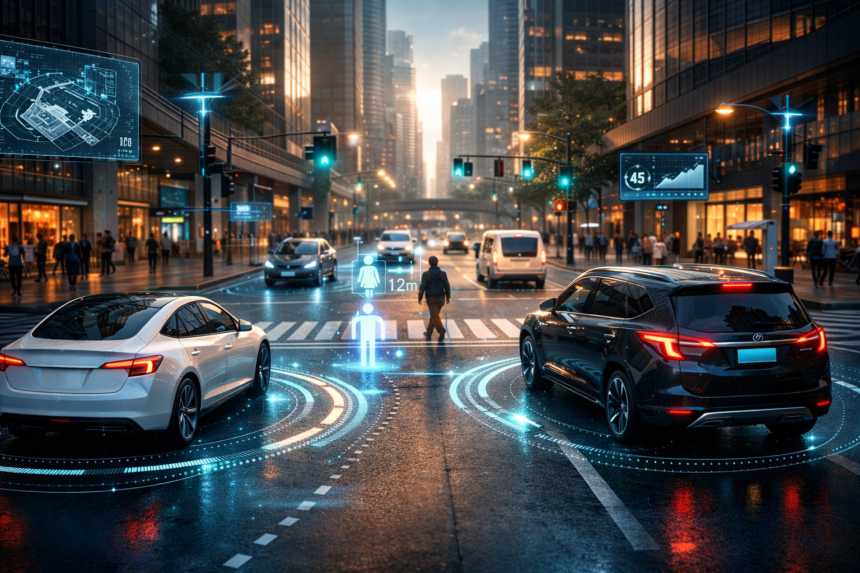
A quiet moment at a traffic signal says more about the Future of Self-Driving Cars than any tech conference ever could. Drivers glance at their phones. A biker inches forward impatiently. A pedestrian hesitates, unsure if anyone will actually stop. The entire system runs on a fragile agreement: humans paying attention—most of the time.
Now imagine that same intersection without human judgment at all.
Not chaos. Not perfection either. Something in between.
That’s where the story of autonomous vehicles really begins.
The Future of Self-Driving Cars Is Not About Cars
For years, self-driving cars were marketed as a simple upgrade: remove the driver, add artificial intelligence, and roads become safer. The narrative was clean, optimistic, and—frankly—misleading.
The Future of Self-Driving Cars isn’t just about vehicles. It’s about replacing human decision-making in one of the most unpredictable environments we’ve ever created—public roads.
Early breakthroughs came from companies like Tesla, Waymo, and traditional automakers racing to integrate AI systems into vehicles. But the deeper challenge wasn’t hardware or even software. It was human behavior.
Humans don’t drive logically. They negotiate, signal subtly, break rules occasionally, and adapt instantly to chaos. Teaching machines to replicate—or even outperform—that complexity is a different kind of problem altogether.
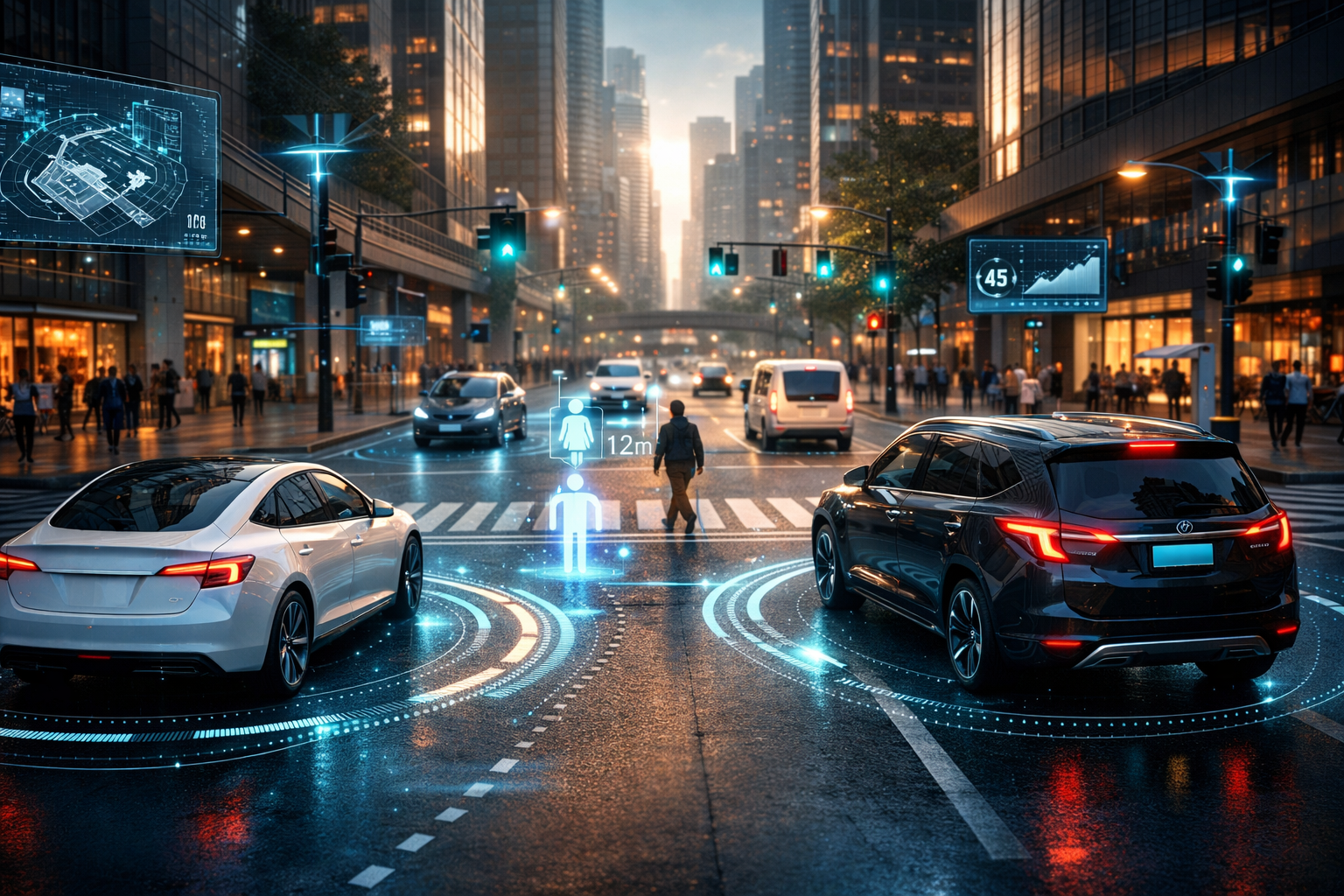
Why the Future of Self-Driving Cars Is Still Unfinished
There’s a reason you don’t see fully autonomous cars dominating highways yet. The issue isn’t technological stagnation—it’s edge cases.
A child chasing a ball onto the road. A construction worker waving traffic through an unclear detour. A sudden downpour blurring visibility.
Machines struggle not with routine, but with unpredictability.
Even advanced systems today operate best in controlled environments: highways, mapped urban zones, or geofenced areas. But real-world driving isn’t controlled—it’s messy, emotional, and often irrational.
This gap between “can work” and “always works” is where progress slows down.
And where public trust gets tested.
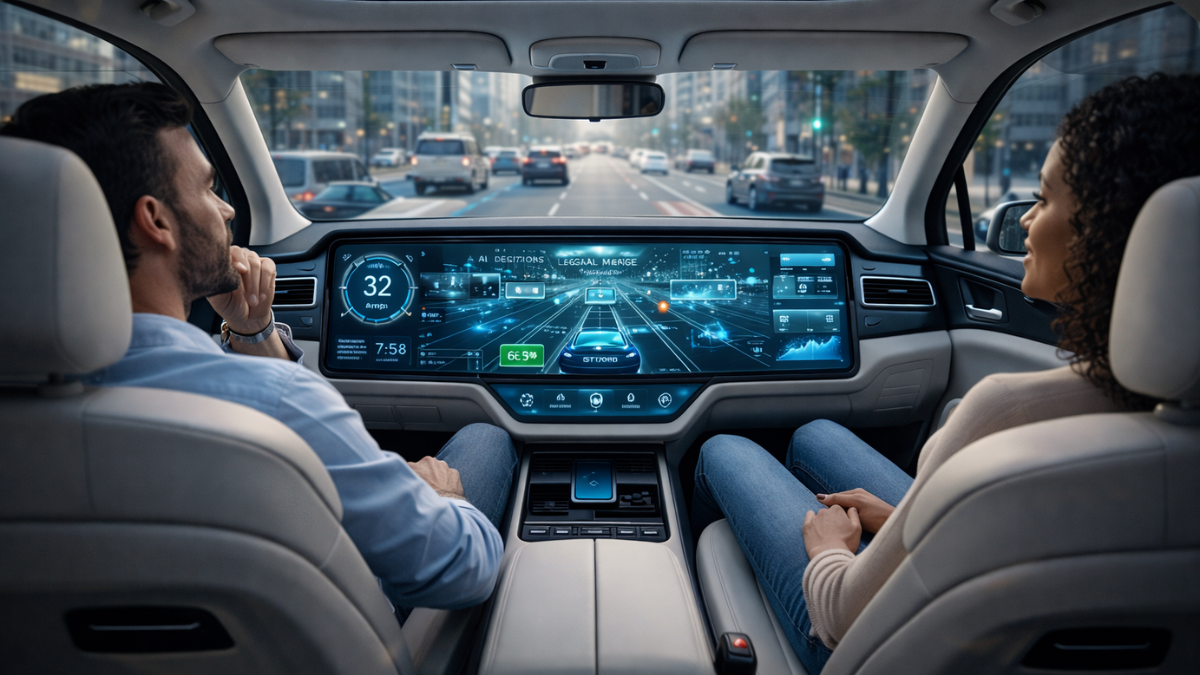
The Psychology Behind Trusting Machines with Life
There’s an uncomfortable truth in the Future of Self-Driving Cars: humans are willing to forgive human error, but not machine error.
A human driver making a mistake feels relatable. A machine making the same mistake feels unacceptable.
This psychological asymmetry matters more than most technical limitations.
Even if autonomous vehicles statistically become safer than human drivers, a single high-profile accident can reshape public perception overnight. Trust, once broken, takes far longer to rebuild than any algorithm can be retrained.
That’s why the future isn’t just about better AI—it’s about better communication, transparency, and gradual adoption.
Business, Economics, and the Silent Transformation
Behind the scenes, the Future of Self-Driving Cars is less about convenience and more about economics.
Think logistics.
Autonomous trucks could operate 24/7 without fatigue. Delivery costs could drop significantly. Supply chains could become faster, more predictable, and less dependent on human labor shortages.
Ride-sharing could transform as well. If there’s no driver, pricing models change. Car ownership itself may decline in urban areas where autonomous fleets become cheaper than owning a personal vehicle.
Insurance industries are already preparing for this shift. Liability moves from driver to manufacturer. Risk models change. Entire sectors quietly reconfigure.
The biggest disruption isn’t on the road—it’s in the business models surrounding it.
Urban Design Will Change—Whether We Notice or Not
Cities today are built around human limitations: reaction time, attention span, and error.
Remove those constraints, and urban planning evolves.
Parking spaces may shrink as autonomous vehicles keep moving or self-park efficiently. Traffic signals might become less necessary if vehicles communicate with each other directly. Road layouts could be redesigned for optimized flow instead of human unpredictability.
But this transition won’t happen overnight. It will happen unevenly—city by city, country by country.
And in that uneven transition lies both opportunity and confusion.
The Ethical Layer Nobody Can Ignore
Every conversation about the Future of Self-Driving Cars eventually arrives at ethics.
If an accident is unavoidable, how does the system decide what to do?
Prioritize passengers or pedestrians? Minimize total harm or protect the vehicle occupants?
These aren’t technical questions. They’re philosophical ones.
Different cultures may approach these decisions differently. Regulations will vary. And companies will have to make choices that aren’t purely engineering-driven.
The uncomfortable reality is this: autonomy forces us to define values we’ve never had to explicitly code before.
The Reality Check: Full Autonomy vs Partial Automation
There’s a growing realization in the industry—full autonomy might take longer than expected.
Instead, we’re seeing rapid growth in partial automation: driver-assist systems, adaptive cruise control, lane-keeping, and AI-powered safety features.
These systems don’t remove the driver. They support them.
And in many ways, this hybrid model may define the near future.
The road to full autonomy isn’t a leap. It’s a gradual shift where machines take over specific tasks before eventually taking over the entire system.
The Future Direction: Quiet Integration, Not Sudden Revolution
The Future of Self-Driving Cars won’t arrive with a dramatic switch.
There won’t be a day when all cars suddenly become autonomous.
Instead, it will creep into everyday life.
A taxi with no driver here. A delivery robot there. A highway system where cars drive themselves only under certain conditions.
Over time, these moments accumulate. And one day, looking back, it will feel like the transition happened faster than expected.
But in reality, it was happening slowly all along.
More Read
Conclusion
The Future of Self-Driving Cars is less about replacing humans and more about redefining control.
It challenges how we think about responsibility, trust, and decision-making in systems we no longer fully operate. The technology is advancing, yes—but the real shift is cultural.
We are not just building smarter cars.
We are building systems that ask us to let go of control—and trust something we didn’t evolve to trust.
That’s why the future feels both inevitable and uncertain at the same time.
Final Insight
The real question isn’t when self-driving cars will arrive.
It’s how comfortable we are becoming with not being the one behind the wheel.
Because once that shift happens, the future won’t feel like technology anymore—it will feel like a new normal.-The Vue Times
Frequently Asked Questions
1. What is the Future of Self-Driving Cars?
→ It refers to the development and adoption of autonomous vehicles that can operate without human drivers using AI, sensors, and real-time data processing.
2. Are self-driving cars already available?
→ Yes, but mostly in limited forms. Many vehicles offer partial automation, while fully autonomous cars are still being tested in controlled environments.
3. Are self-driving cars safe?
→ They have the potential to reduce accidents caused by human error, but safety challenges remain, especially in unpredictable real-world scenarios.
4. When will fully autonomous cars become common?
→ Widespread adoption may take another 10–20 years, depending on technological progress, regulations, and public trust.
5. How will self-driving cars impact jobs?
→ They may reduce demand for drivers in logistics and transport sectors while creating new opportunities in tech, maintenance, and AI systems.