

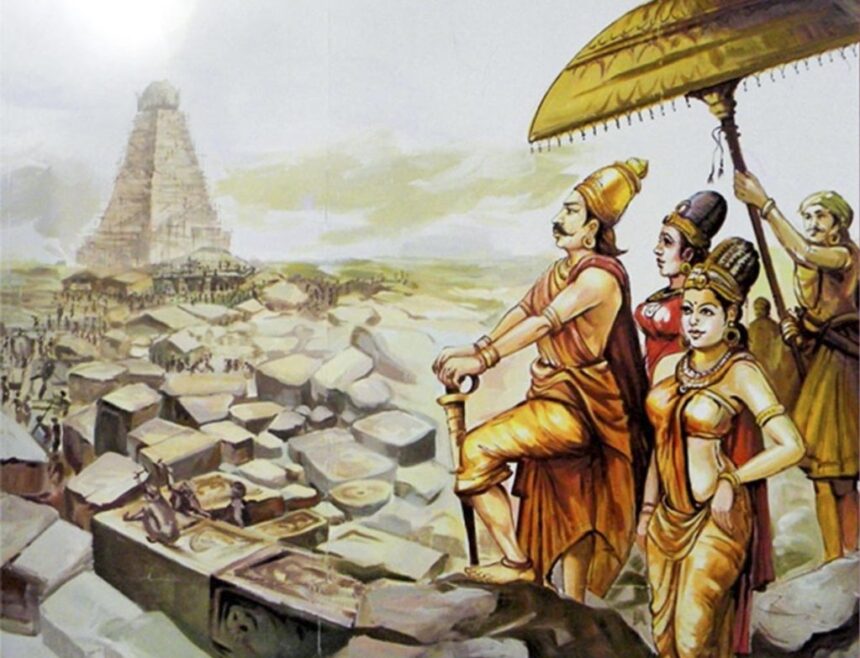
When we think of India’s past, grand narratives of empires, philosophy, and art often spring to mind. Yet beneath every bustling street, every havelī, and every temple, there lies a quieter testimony—etched into stone, hammered onto copper, painted onto walls—that speaks louder than any spoken legacy. These silent archives, ranging from the basalt pillars of the Mauryan Empire to the weather‑worn copper plates of the Gujarat Sultanates, hold the fingerprints of the people who lived in our subcontinent. Their words, though silent, are alive with stories that have remained hidden until the meticulous work of epigraphists and historians made them audible.
1. The Birth of Written India: A Brief Overview
India’s written tradition stretches back over five millennia, with the earliest inscriptions dating to the Indus Valley Civilization (c. 2600–1900 BCE). Though the Indus script remains undeciphered, the subsequent Vedic period introduced the Brahmi script around 300 BCE, a system that evolved into the myriad regional scripts we see today. By the reign of Ashoka (c. 268–232 BCE), inscriptions were no longer mere administrative tools; they became instruments of state ideology and a means to reach the populace.
The spread of Buddhism, Jainism, and Hinduism further enriched this epigraphic tapestry. Inscriptions were affixed to stone pillars, temple walls, and copper plates, each medium chosen for its permanence. While stone inscriptions aimed for an eternal record, copper plates—used heavily for land grants and royal decrees—offered a portable, insular record that could be carried to new lands or passed down through generations.
2. The Materials of Memory: Stone, Copper, and Walls
2.1. Stone Inscriptions
Stone, with its durability, has long been the preferred canvas for lasting proclamations. In the Mauryan Empire, Ashoka’s edicts on pillars and rock faces spread his doctrine of *Dhamma* across his realm. The pillars at Sarnath, Dhauli, and Sanchi each bear a slightly different message, but all emphasize moral governance, compassion, and non-violence.
Later, Gupta and Pallava rulers employed stone to record their victories and religious patronage. The *Chaturvedi* stone in the Deccan, for instance, commemorates a royal marriage and offers a glimpse into the matrimonial alliances that were crucial to dynastic politics.
2.2. Copper Plate Inscriptions
Copper plates are unique in that they combine physical resilience with a sense of personal ownership. The Gupta copper plates of Mankot, issued by the Chandra dynasty, recorded land grants to Brahmins, laying down a legal framework that echoed through centuries of agrarian society. The use of copper allowed these plates to be sealed with symbols of authority, ensuring authenticity.
In the medieval period, the *Kachchh Copper Plates* of the Chaulukya dynasty in Gujarat describe intricate tax arrangements and court proceedings, revealing an administrative apparatus far more sophisticated than commonly imagined.
2.3. Temple Walls and Murals
Temple walls, particularly in South India, served as both devotional spaces and historical chronicles. The *Chennakesava Temple* at Belur, for instance, is adorned with vivid bas-reliefs that narrate episodes from the *Bhagavata Purana*. While these scenes were primarily religious, inscriptions on the same walls often recorded the patronage of kings and the socio‑economic context of temple construction.
In the caves of Ajanta and Ellora, the walls preserve both religious paintings and dry‑ink inscriptions detailing the patronage of the Gupta and Deccan kingdoms. These inscriptions are indispensable for dating the caves and for understanding the socio‑cultural milieu in which they were created.
3. Decoding the Past: The Art of Epigraphy
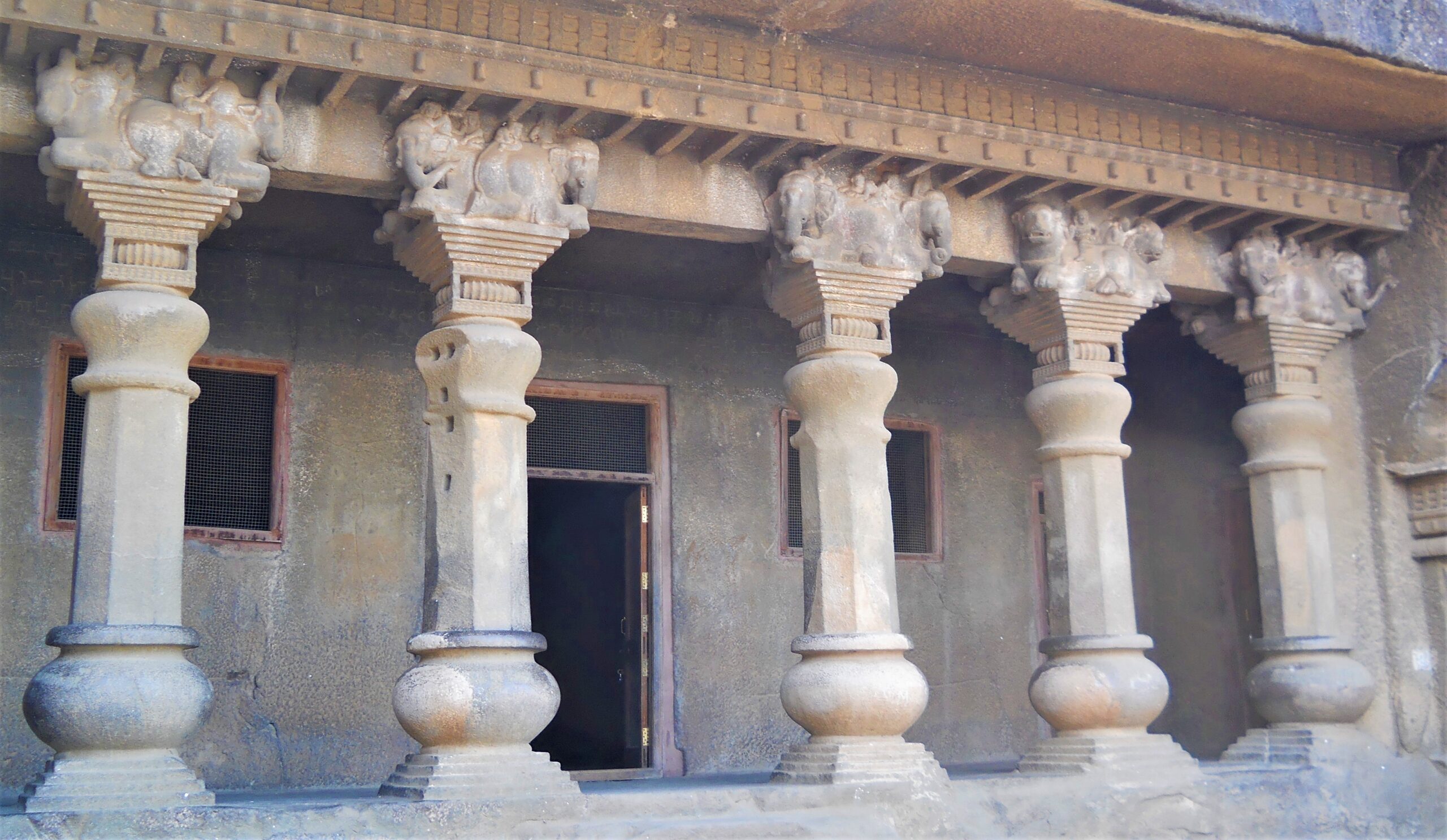
The discipline of epigraphy—the study of inscriptions—has evolved into a blend of linguistic, palaeographic, and archaeological expertise. Deciphering an inscription requires not just a knowledge of ancient scripts but also an understanding of the sociopolitical context. The meaning of a phrase could shift dramatically depending on who delivered it, where it was placed, and what was happening in the world at the time.
Modern technology has revolutionized epigraphy. High‑resolution photography, 3D laser scanning, and multispectral imaging allow scholars to recover deeply eroded texts and even discover inscriptions hidden beneath layers of dust or paint. The *Masur inscription*, for example, which was once unreadable, was brought to life using multispectral imaging, revealing a rare reference to a queen’s court.
4. Hidden Stories: Voices from the Margins
While the grand narratives of kings and gods dominate many inscriptions, a careful reading often uncovers voices from the margins—women, tribal peoples, traders, and common folk—whose stories would otherwise be lost.
4.1. Women in Power
The *Bhandarkar inscription* from the Chalukya period lists a queen, *Shahadevi*, as the grantor of a temple. Her name, coupled with the elaborate description of her *charity*, suggests a woman who wielded significant political influence—a rarity in an era dominated by male rulers. Further, the *Kolkata inscription of the Pala dynasty* mentions a *Sarasvati Devi* who founded a monastery. These references challenge the conventional perception of gender roles in ancient India.
4.2. Tribal Narratives
In the *Madhya Pradesh stone inscriptions* from the Gupta period, a group of *Panchal* tribes is documented as having donated land to a temple, signifying a form of royal recognition. Similarly, the *Wadiyara copper plate* details a settlement of *Saurashtra* tribal groups in the coastal belt, revealing a complex web of interactions between settled kingdoms and nomadic peoples.
4.3. Common Folk and Trade
The *Ganganagar copper plate* from the 10th century records a merchant named *Vijaya* who was granted a *Khand* (land parcel) for maintaining a caravanserai. This indicates the existence of a sophisticated trade infrastructure and the recognition of urban commerce by the state. The *Kanchi inscription* from the Pallava era, on the other hand, lists a *Durga*—a local market in the royal city—underlining the economic importance of marketplaces and their integration into royal patronage.
5. Economic Realities: Land, Tax, and Commerce
Satellites of the political and religious spheres, the economic inscriptions provide a window into the everyday functioning of ancient societies. These records illuminate land distribution practices, tax structures, and the integration of trade routes.
Land Grants and Patents: The *Yamunapalli copper plate* (c. 1100 CE) documents a grant of a *taluka* (district) to a Brahmin family. The detailed description of the boundaries and the tax exemption attached to the grant hints at the sophistication of agrarian policies.
Taxation: The *Ujjain stone inscription* lists various taxes such as *vaanij* (trade tax) and *tapu* (land tax) and their rates. This not only helps historians estimate the economic burden on farmers and merchants but also reveals the state’s revenue priorities.
-Commerce: In the *Karnataka stone inscription of the Chola period*, an account of a *margadarshaka* (merchant guild) is recorded. The guild’s regulations on trade practices, weight standards, and dispute resolutions show that commerce was not only robust but also regulated by local bodies.
6. Religious and Cultural Syncretism
India’s pluralistic society is reflected vividly in its inscriptions. From the *Ajanta caves* to the *Nagara temples* of Rajasthan, inscriptions chronicle acts of patronage that cross religious lines, illuminating the cultural syncretism of the time.
The *Kashmir Shaivite inscription* (c. 1340 CE) commemorates a royal patronage of a *Shiva* temple, but the text also praises a *Vishnu* shrine in the same complex, indicating the coexistence of Shaivism and Vaishnavism in royal ideology. Similarly, the *Nalanda inscription* from the 12th century details an endowment to both Buddhist monks and Hindu scholars, reflecting the intellectual openness of the era.
7. Decoding the Political Landscape
While kings’ names often appear in their own inscriptions, subtle clues in the text reveal shifting power dynamics and alliances. For example, the *Chola inscription at Thanjavur* records a joint victory with a *Pala* king, suggesting a diplomatic alliance that countered the threat from the Western Chalukyas. In the *Gandhara stone inscription* of a *Greek* king named *Basileus*, the language used acknowledges a *Brahmin* advisor, reflecting the integration of Greek and Indian administrative systems.
8. Chronology and Migration Patterns
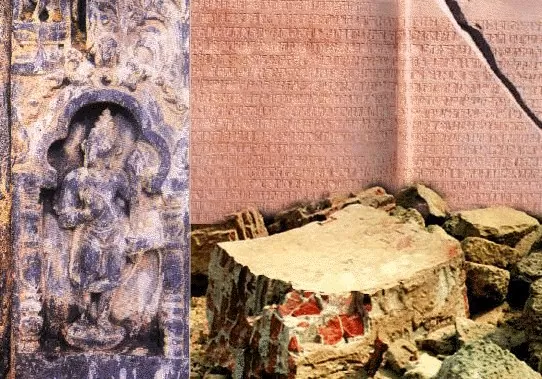
The geographic distribution of inscriptions offers insights into migration patterns and cultural diffusion. The *Tamil inscriptions* in Sri Lanka, dating to the 2nd century BCE, attest to early Tamil migrations. The *North Indian inscriptions* of the *Harsha dynasty* show a spread of the Sanskrit language into the Deccan, supporting theories of cultural migration through administrative channels.
9. The Challenges of Preservation
While stone and copper endure, they are not immune to the ravages of time. Weathering, vandalism, and modern development pose threats. The *Kumbhalgarh rock inscriptions*, once vivid, now display faded characters due to acid rain. The *Vidhyadhar copper plate* was found in a ruined temple, its copper oxidized but still legible thanks to its protective coating.
Conservation efforts, such as the *Centre for Epigraphic Research* in Chennai, use protective coatings and controlled environments to preserve these artifacts. However, the sheer number of inscriptions—estimated at over 30,000—means that many remain unnoticed or unprotected.
10. Digital Renaissance: Bringing the Silent Archives to Life
The digital age has unlocked unprecedented opportunities for epigraphists. Projects like *Project Madurai* publish digitized inscriptions and translations online, democratizing access. The *Mysuru Epigraphical Survey* employs 3D laser scanning to capture detailed surface textures, ensuring that even eroded characters are saved for future generations.
Crowdsourcing platforms invite volunteers to transcribe inscriptions from high‑resolution images, tapping into a global community passionate about heritage. The *Indian Epigraphic Database* is expanding, housing more than 10,000 inscriptions across scripts ranging from Devanagari to Telugu.
11. Interdisciplinary Collaboration: History, Linguistics, Anthropology
The study of inscriptions is inherently interdisciplinary. A palaeographer might focus on the evolution of script styles, while a linguist deciphers the linguistic shifts across centuries. Anthropologists help contextualize the social structures implied by land grants or tax records. When historians, linguists, and archaeologists collaborate, the resulting narratives are richer and more nuanced.
The *Medieval Indian Society* project, for instance, merges historical records with inscriptions to produce a socio‑economic map of the 12th‑13th centuries. This map reveals that while the agrarian output was high, the distribution of wealth was uneven—a fact that aligns with the tax data recorded on copper plates.
12. The Ethical Dimension: Ownership and Repatriation
In recent years, debates have surfaced about the rightful ownership of inscriptions, especially those displayed in foreign museums. The *Sanskritinscribed copper plate* found in the British Museum, originally from the *Nagarjuna* monastery, sparked a repatriation movement. Ethical stewardship demands that inscriptions be housed in contexts that respect their cultural significance.
13. The Living Legacy: Inscriptions in Contemporary Culture
Even today, inscriptions influence contemporary society. Festivals like *Kumbh Mela* often reference ancient pilgrimage routes mentioned in stone inscriptions. Modern Indian poets and playwrights draw inspiration from the verses etched in stone, weaving them into modern narratives. The *Delhi Sultanate’s copper plates*, for example, are cited in contemporary debates on secularism and minority rights.
14. Future Directions: Machine Learning and AI
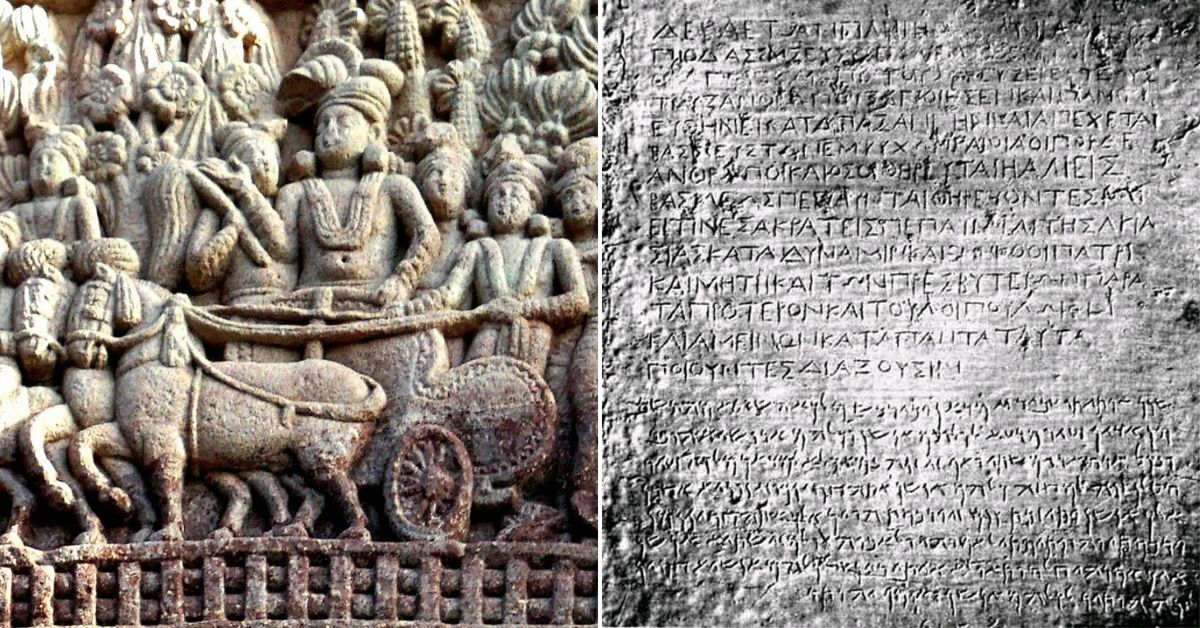
Machine learning is poised to transform epigraphy. Neural networks trained on thousands of inscriptions can predict missing characters, identify script families, and even suggest possible translations. The *Epigraphic AI project* at IIT Delhi is already testing this approach on the *Chalukya* stone inscriptions, with promising results.
More Read

15. Conclusion: The Echoes of the Past
Stone, copper, and wall inscriptions are more than mere historical artifacts; they are living testaments to the complexity, diversity, and resilience of India’s past. While they may lack the immediacy of spoken words, their permanence ensures that the voices of kings, queens, merchants, and commoners echo across millennia.
By studying these silent archives, we uncover hidden chapters of our history—stories that challenge myths, illuminate forgotten cultures, and remind us that the past is not a static narrative but a dynamic tapestry woven from countless individual threads. As scholars, caretakers, and citizens, it is our responsibility to preserve, interpret, and honor these inscriptions, ensuring that the silent voices of our ancestors continue to speak to future generations.