

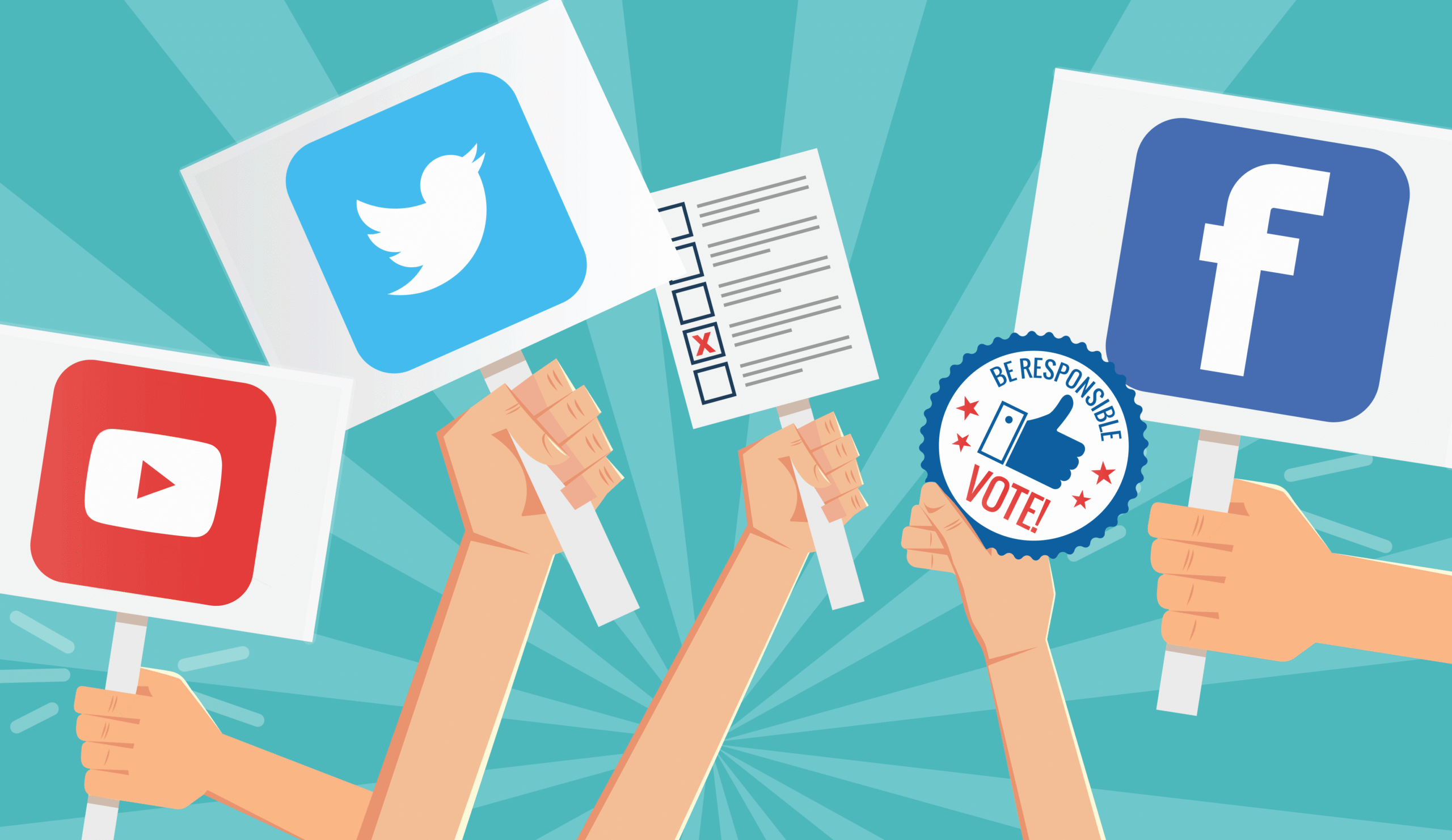
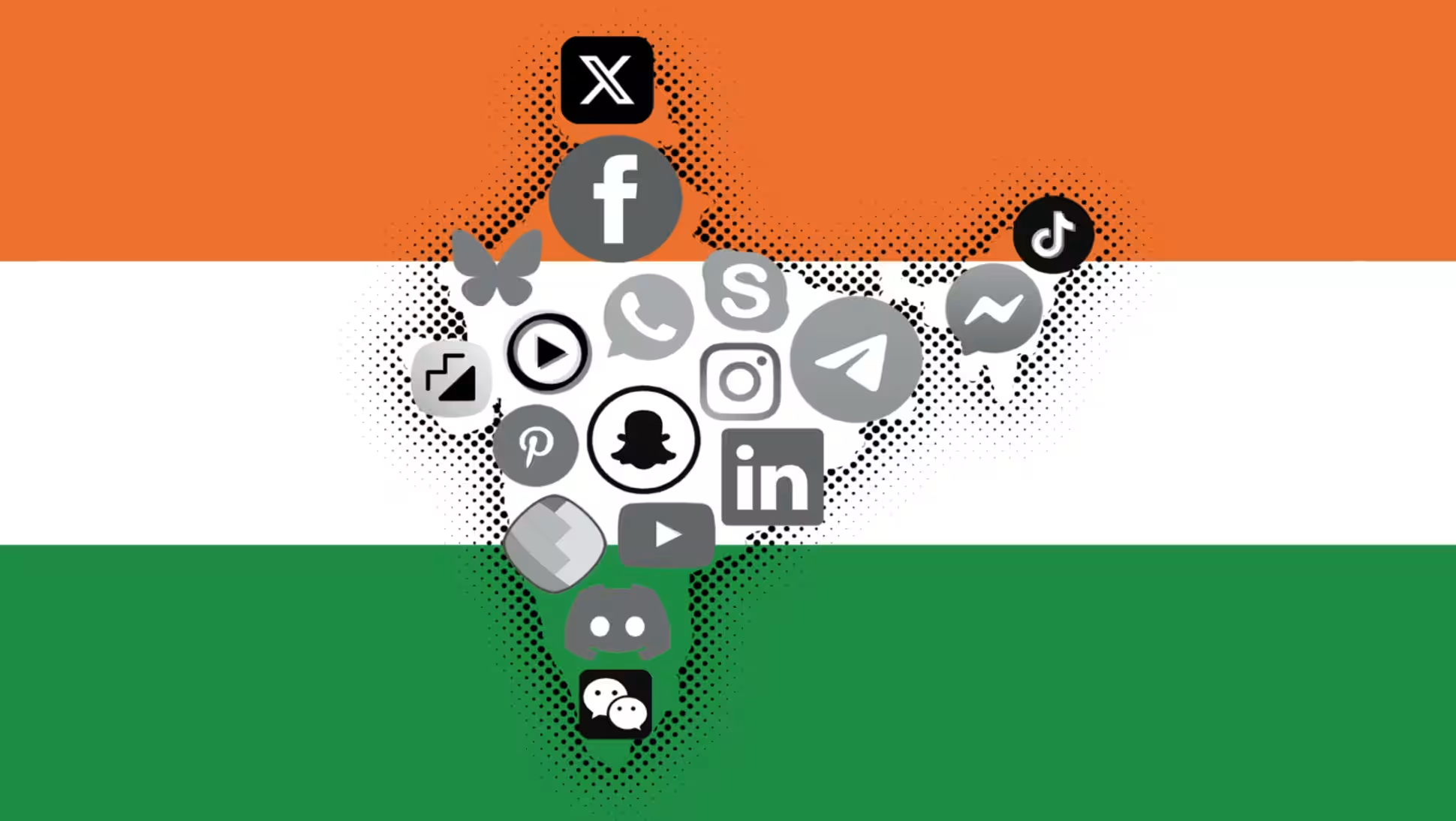
In India’s evolving electoral landscape, social media is no longer a peripheral tool—it’s central. Platforms like WhatsApp, Instagram, Facebook, X (formerly Twitter) and YouTube have transformed how political parties campaign, how voters engage, and how decisions are made. Traditional methods such as rallies, door-to-door canvassing, and print media remain relevant—but they are now deeply supplemented by digital outreach, micro-targeting, influencer campaigns, viral videos and real-time engagement. The question is not just that social media is being used, but how it is redefining political campaigns and altering voter behaviour in India’s context.
In what follows we will:
-
Look at the historical emergence of social media in Indian politics.
-
Examine the major mechanisms by which social media is reshaping campaigns and voters.
-
Analyse key trends, case studies and evidence from recent elections.
-
Discuss implications for democracy, governance, politics and society.
-
Reflect on future directions and challenges.
Historical Context: From Traditional to Digital
Until about the early 2010s, political campaigns in India were dominated by physical rallies, print media, local door-to-door canvassing, television and radio. Social media played a small role, mainly as a supplementary channel. But from the 2014 general election and more strongly from 2019 onward, digital media began to emerge as a serious locus of campaigning. For example, parties began using Facebook pages, WhatsApp groups and live streaming of speeches.
Post the Covid-19 pandemic, this shift accelerated significantly. Social media platforms provided a medium when physical campaigning was constrained. A recent study notes social media became “an essential tool for political communication, citizen engagement, and electoral campaigns” after the pandemic.
Thus the stage is set: social media moved from being optional to being integral—and this shift has changed both campaign practices and voter behaviour.
Mechanisms of Change: How Social Media Reshapes Campaigns & Voters

1. Direct & Personalised Engagement
Social media allows political parties and candidates to engage directly with voters—bypassing many of the traditional gatekeepers (mainstream media, local intermediaries). Platforms allow direct postings, live videos, Q&A sessions, stories and comments. The reach is national, the cost relatively modest, and the engagement often rapid. For example, a study found that social media had “significant influence on voting decision especially young voters” in India.
Moreover, micro-targeting is now a major tool: campaigns use data analytics to segment voters by age, region, language, interests, past behaviour—and tailor messages accordingly. A piece on future trends asserts that “data analytics allows campaigns to micro-target voters based on demographics, interests, and online behaviour.”
2. Narrative Control & Viral Content
Social media enables rapid dissemination of campaign narratives, slogans, hashtags, visuals and memes. Parties actively craft digital content to shape perceptions. For example, in India’s 2024 elections the use of hashtags like #Bhartibharosa, #Pehlinaukaripakki and #KissanMSPGuarantee was part of the social media strategy.
Additionally, viral videos and short-form content are increasingly important—especially to connect with younger, digital-native voters. A study shows short-form visuals and shareable infographics are becoming dominant.
3. Mobilisation & Real-Time Feedback
Social media enables campaigns to mobilise supporters quickly (e.g., calling for volunteer engagement, event participation, sharing content). It also allows real-time feedback: parties can see how posts are performing, which messages resonate, and adjust accordingly. The shift from mass broadcast to interactive, data-driven communication is notable. One article notes that social media has emerged from a “supplementary tool to a crucial factor in shaping campaign, voter engagement and political discourse.”
4. Amplification, Bots & Manipulation
However, social media’s power extends beyond legitimate engagement. It also enables sophisticated amplification, coordination, and manipulation of information flows. Research reveals how cross-platform campaigns manipulated Twitter trends using WhatsApp pushes in India.
Another study found thousands of coordinated campaigns using “lexical mutants” (paraphrased content across languages/platforms) to evade detection and amplify messages.
More Read

5. Influence on Voter Behaviour
On the voter side, social media affects behaviour in several ways:
-
It shapes perceptions of candidates, parties and issues via exposure to posts, videos, discussions and peer sharing. For instance, one study found that comments or tweets by political leaders influenced young voters’ decisions.
-
It affects information access and media consumption patterns: voters increasingly get political news via social media rather than traditional outlets.
-
It may influence political engagement, turnout and activism especially among younger voters. For example, a youth-focused study noted that youth and social media together have “significantly reshaped the electoral landscape” in India.
-
But it may also contribute to echo chambers, mis/disinformation, and polarisation—affecting how voters interpret and trust political messages.
Evidence & Trends from India: Case Studies
2019 & 2024 General Elections
A comparative research article on the 2019 and 2024 Lok Sabha elections finds that social media evolved from a supporting tool in 2019 to a central strategic asset in 2024—characterised by personalised targeting, AI tools, influencer mobilization, and short-form content.
Use of AI, Deepfakes and Digital ‘War-Rooms’
In India’s recent elections, parties reportedly used AI-generated content, deepfakes, and social-media war-rooms. For example, one report noted that political parties allocated large sums to develop AI-generated videos including altered footage of public figures to influence voters.
Regional and State-Level Campaigns
Studies of regional elections, such as in Assam and Uttar Pradesh, highlight how social media strategies are tailored locally: platforms are used to craft regional-language messages, leverage local influencers, mobilise specific voter blocs. For example, one paper focuses on Assam Assembly Elections and the growing role of social media for campaigning.
WhatsApp & Private Messaging
In India, WhatsApp plays a critical role because of its widespread use. Research (e.g., PoliWAM) shows large volumes of political discussion in WhatsApp groups around elections—often behind closed doors and harder to regulate.
Youth, Social Media & Voter Behaviour
Studies emphasise that youth—who are digitally connected and socially mobile—are more likely to be influenced via social media. A recent paper posits youth participation plus social media has changed how votes swing, especially in urban constituencies.
Implications: Democracy, Governance, Ethics
Positive Implications
-
Democratising Communication: Social media lowers barriers for smaller parties or independent candidates to communicate their messages without massive budgets.
-
Greater Citizen Engagement: Voters can ask questions, comment, share content, attend live streams—enhancing participatory democracy.
-
Issue Awareness & Youth Mobilisation: Issues like climate change, employment, digital rights gain traction via social media; younger voters get engaged.
-
Data-led Efficiency: Campaigns can allocate resources more efficiently, craft tailored messages, monitor feedback—making democratic outreach more responsive.
Risk & Ethical Concerns
-
Misinformation and Manipulation: The spread of fake news, deepfakes, mis/ disinformation is a significant threat. The AP and Guardian reports highlight how social media ads in India misled or incited violence.
-
Echo Chambers and Polarisation: Algorithms tend to show users content they like, reinforcing existing beliefs rather than challenging them. This can deepen polarisation and reduce deliberative democracy.
-
Privacy and Data Exploitation: Micro-targeting raises concerns about data privacy, manipulation of voters and lack of transparency in how voter data is used.
-
Unequal Access & Digital Divide: While social media reach is large, not all voters have equal access (rural areas, older voters). Over-dependence on digital may marginalise some voters.
-
Reduced Quality of Discourse: The viral-meme culture, short-form content may favour sensationalism over policy substance.
-
Regulatory and Ethical Gaps: Existing election laws and platform policies struggle to keep pace with digital campaigning (deep-fakes, paid ads, unmarked campaign content).
Impacts on Political Campaigning & Governance
-
Campaign strategies have shifted significantly: budgets now allocate large portions to digital advertising, influencers, war rooms, content creation. Traditional ground campaigning still matters but is supplemented by digital reach.
-
The speed of message dissemination means crises, scandals, or viral content can tilt public perception rapidly—campaigns now must respond in “real time.”
-
Governance and policy-making are influenced: issues that trend on social media or go viral attract more attention; parties adjust manifestos and messaging accordingly. For example, youth-centric issues via social media push parties to recognise them.
-
Voter behaviour: social media influences not only which candidates are chosen, but how voters think about politics, what they know or don’t know, how they share and engage with information and how peer-networks influence decisions.
Challenges & The Way Forward
Strengthening Digital Literacy & Fact-Checking
Given the proliferation of misleading content, strengthening voter digital literacy is imperative: helping users identify fake news, verify sources, understand how social media algorithms work. Social media companies, civil society and education systems must collaborate.
Enhancing Regulation & Transparency
Election regulatory bodies must update rules to cover digital political ads, micro-targeting, influencer campaign disclosures, deep-fake content, paid political messaging. Platforms must enforce policies more rigorously. The case of Meta’s ad approvals in India that incited violence illustrates the gap.
Ensuring Inclusive Access
Efforts should be made to ensure that digital campaigning does not leave behind rural or digitally-disconnected voters. Hybrid strategies (digital + physical) remain essential. Political parties must balance media strategies.
Policy Focus & Substantive Engagement
While viral content and slogans grab attention, campaigns must ensure policy substance isn’t lost in the digital chase of clicks and shares. Voters should be engaged on issues, not only on personalities. The challenge is to make digital engagement meaningfully tied to governance.
Monitoring and Research
Ongoing research is needed to understand evolving digital campaign tactics, platform algorithms, micro-targeting mechanisms, voter behaviour changes, and regional variations. For instance, studies have tracked lexical mutant campaigns and WhatsApp group influence.
Conclusion
Social media is redefining political campaigns and voter behaviour in India in profound ways. It has shifted the mode of campaigning from largely mass-rallies and broadcast media to a hybrid, digital-heavy model involving personalised messaging, viral content, influencer marketing and data-driven strategies. Voters today are not only recipients of campaign messages but active participants—sharing content, engaging in discussions, influencing peers and sometimes shaping narratives themselves.
At the same time, this transformation comes with major challenges: misinformation, polarisation, privacy concerns and the risk of superficial engagement. The health of Indian democracy in the digital age will depend on how these opportunities and risks are balanced—how campaigns maintain substance, how voters stay informed, how regulators keep pace, and how social media platforms act responsibly.
In sum: The future of electoral politics in India will be as much about data, algorithms, virality and digital networks as about speeches, rallies and physical canvassing. For political actors and voters alike, adapting to this new reality is not optional but necessary.