
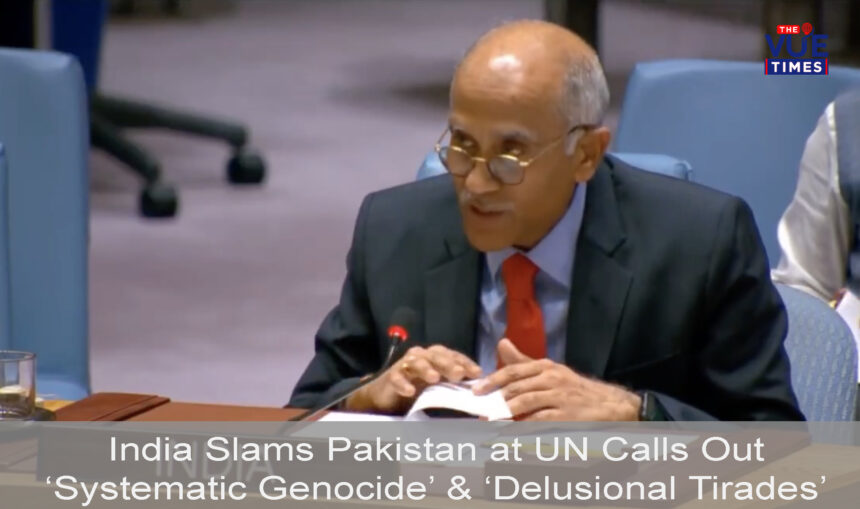
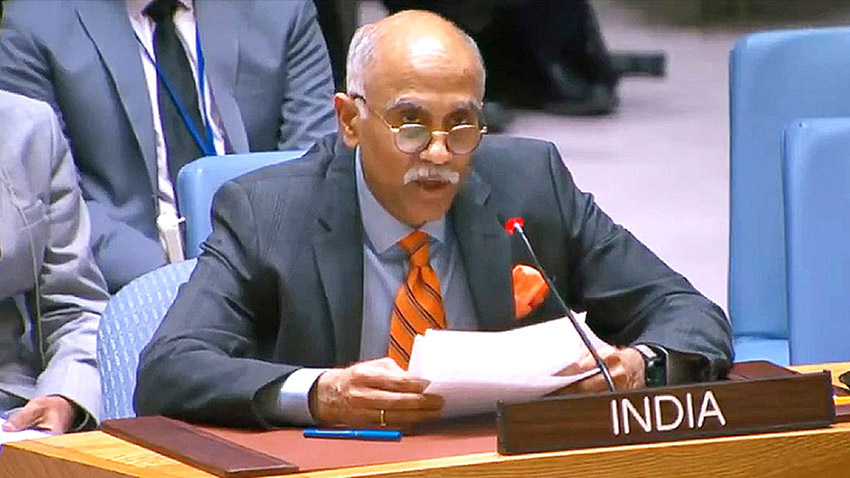
In a fiery exchange at the United Nations General Assembly, India strongly rebuked Pakistan for its repeated attempts to internationalize the Kashmir issue and accused Islamabad of engaging in “systematic genocide” and “delusional tirades” against India. The Indian representative, in a sharply worded speech, emphasized that Pakistan has no moral standing to comment on India’s internal affairs when it continues to sponsor terrorism, suppress minorities, and deny democratic freedoms within its own borders.
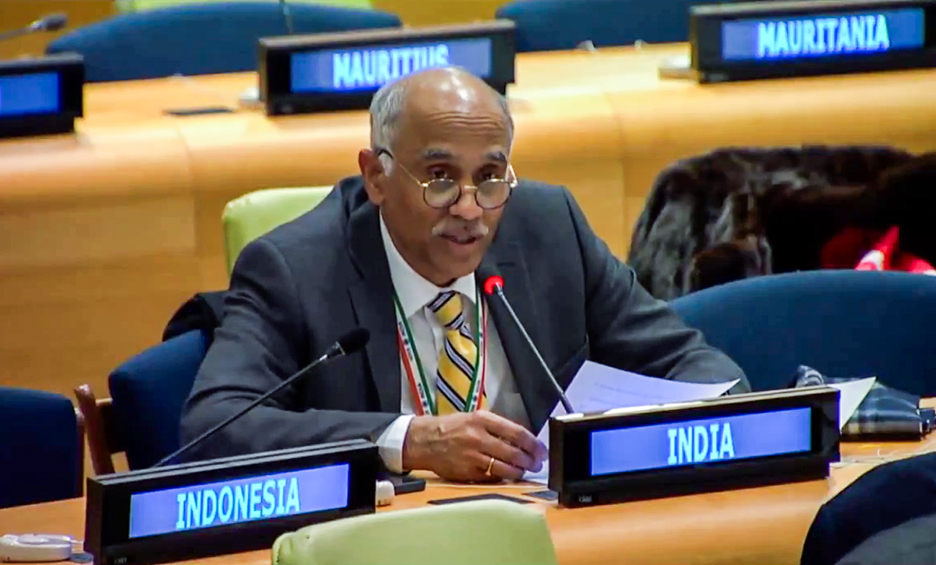
The confrontation came during the high-level session of the United Nations General Assembly in New York, where several nations addressed issues ranging from global peace to regional security. When the Pakistani delegate once again used the UN platform to raise the Kashmir issue and make allegations against India, New Delhi’s representative exercised the right of reply to deliver a scathing rebuttal. The response was direct, uncompromising, and reflective of India’s growing assertiveness on the world stage.
The Indian diplomat stated that Pakistan’s repeated obsession with Kashmir was not only outdated but also hypocritical, considering its own record of human rights violations and persecution of ethnic and religious minorities. “It is ironic that a country which has institutionalized discrimination and ethnic cleansing within its own borders dares to lecture others on human rights,” the Indian representative declared. The speech drew attention to the plight of minorities such as Hindus, Christians, Shias, Ahmadis, and Baloch activists who face persecution and state-sponsored violence in Pakistan.
India’s address went beyond routine rebuttals and focused on holding Pakistan accountable for fostering terrorism and spreading misinformation. The diplomat highlighted that Pakistan continues to provide safe havens for globally designated terrorist organizations such as Lashkar-e-Taiba, Jaish-e-Mohammed, and Hizbul Mujahideen. These groups, according to India, operate with state support and target innocent civilians in Jammu and Kashmir as well as other parts of India. “Pakistan’s hands are stained with the blood of countless victims of terrorism,” the representative said, adding that it is time the global community recognized Islamabad’s duplicity in speaking about peace while nurturing extremism.
The Indian side also pointed out that Pakistan’s political leadership frequently glorifies terrorists as “freedom fighters” and names public infrastructure after those responsible for violent attacks. India cited several examples where Pakistan’s leaders publicly eulogized individuals involved in cross-border terrorism. This, the Indian envoy argued, proves that Pakistan’s commitment to counterterrorism is nothing more than lip service.
India’s statement at the UN gained significant attention among international diplomats and global media. Many observers noted that the tone of the speech reflected a more confident and unapologetic India — one that refuses to tolerate baseless propaganda or victimhood narratives propagated by Pakistan. Over the past decade, India’s foreign policy under successive governments has increasingly emphasized zero tolerance toward terrorism and an assertive response to cross-border provocations.
The Indian representative further underscored that Jammu and Kashmir remains an integral and inalienable part of India, and any attempt by Pakistan to portray it otherwise constitutes interference in India’s sovereignty. The envoy reminded the assembly that the people of Jammu and Kashmir have consistently participated in democratic processes, including recent local and assembly elections, proving their faith in the Indian Constitution and institutions.
Turning the spotlight on Pakistan’s internal situation, India accused its neighbor of committing “systematic genocide” against its own ethnic groups. The Indian diplomat cited evidence of atrocities committed in Balochistan, Sindh, and Khyber Pakhtunkhwa, where military operations have led to mass disappearances, extrajudicial killings, and suppression of dissent. Reports by international human rights organizations have repeatedly highlighted these abuses, though Pakistan continues to deny them. “Before pointing fingers at others, Pakistan must answer for the countless lives lost within its own borders due to state repression,” India asserted.
The mention of “systematic genocide” was particularly striking, as India seldom uses such strong language at the UN. Analysts interpreted this as a deliberate diplomatic strategy to turn Pakistan’s own rhetoric against it. For years, Islamabad has accused New Delhi of human rights violations in Kashmir. By invoking the term “genocide,” India reframed the narrative, portraying Pakistan as the real perpetrator of mass human rights abuses rather than a victim.
The Indian statement also dismantled Pakistan’s long-standing narrative of victimhood. “It is a tragedy that Pakistan continues to live in a delusional world, clinging to obsolete narratives while its citizens suffer from poverty, political instability, and religious extremism,” the Indian diplomat remarked. “A nation that cannot provide basic rights and safety to its people should first put its own house in order before commenting on others.”
India’s remarks were met with applause from several delegations in attendance. Observers from neutral countries noted that India’s assertive stance is part of a broader effort to expose Pakistan’s double standards at international forums. New Delhi’s representatives have, in recent years, systematically highlighted Pakistan’s role in exporting terrorism and undermining regional peace.
The timing of this confrontation is also significant. It comes amid heightened tensions between the two neighbors following continued ceasefire violations along the Line of Control (LoC), the infiltration of terrorists across the border, and Pakistan’s repeated attempts to draw global attention to Kashmir. However, most international powers, including the United States, France, and Russia, have reiterated that Kashmir is a bilateral issue between India and Pakistan — a stance that aligns with India’s position and isolates Pakistan diplomatically.
India’s strong response also serves a domestic political purpose. With the nation heading toward crucial elections, the government’s firm handling of Pakistan’s rhetoric at the UN bolsters its image as a strong defender of national sovereignty. Political analysts believe such speeches reinforce India’s international stature while resonating with domestic audiences who demand a robust foreign policy.
Beyond the rhetoric, the Indian envoy used the platform to promote India’s broader vision for peace and development in South Asia. The representative emphasized that India remains committed to regional stability and economic cooperation but that peace cannot coexist with terror. “For true peace in the region, Pakistan must dismantle its terror infrastructure, stop funding extremist groups, and abandon its obsession with territorial disputes,” the diplomat said.
The speech also highlighted India’s global role as a responsible democracy and a proponent of inclusive development. The envoy pointed out that India has provided billions in aid to neighboring countries, participated actively in UN peacekeeping missions, and championed global issues like climate change, digital equity, and pandemic resilience. “India believes in partnership, not propaganda; in cooperation, not confrontation,” the representative added, drawing a clear contrast with Pakistan’s approach at international platforms.
Pakistan, for its part, responded to India’s statement with predictable outrage. Its delegate accused India of “diverting attention” from alleged human rights issues in Kashmir and claimed that India’s remarks were an attempt to “whitewash atrocities.” However, analysts quickly noted that Pakistan’s rebuttal lacked substantive evidence and merely repeated old talking points. Many diplomats privately observed that Pakistan’s arguments have lost credibility over time, especially as its domestic situation worsens and its economy faces crisis.
The debate at the UN also reignited discussion about Pakistan’s political instability. With its economy in turmoil, rampant inflation, and frequent clashes between the military establishment and civilian leaders, Pakistan’s credibility on the global stage has diminished. India, by contrast, is increasingly viewed as a rising power and a key player in global governance, technology, and economic development. This imbalance was evident in the tone and reception of both nations’ statements.
India’s use of the term “delusional tirades” was widely quoted in international media. The phrase captured the essence of New Delhi’s message — that Pakistan’s constant rhetoric on Kashmir has become detached from reality. Over the years, India has consistently urged Pakistan to focus on its internal reforms, combat terrorism, and engage in constructive dialogue based on mutual respect rather than baseless accusations.
Experts believe India’s approach at the UN reflects a strategic shift in communication. Instead of simply defending its stance, India is now proactively exposing Pakistan’s contradictions, challenging its moral authority, and reframing global perception. This shift aligns with India’s broader foreign policy of self-confidence, rooted in its growing economic and diplomatic influence.
As the General Assembly session concluded, India’s statement stood out as one of the most forceful rebuttals in recent years. It demonstrated New Delhi’s readiness to take a tough stand on the global stage, rejecting misinformation and calling out hypocrisy. The exchange also underscored how the India-Pakistan rivalry continues to play out at international forums, where both nations vie for narrative dominance.
The broader takeaway from this episode is that India is no longer content with merely countering Pakistan’s claims — it aims to reshape the global conversation. By invoking Pakistan’s internal human rights abuses, state repression, and terrorist sponsorship, India turned defense into offense. The move reflects a growing diplomatic maturity and an understanding that controlling the narrative is as vital as defending sovereignty.