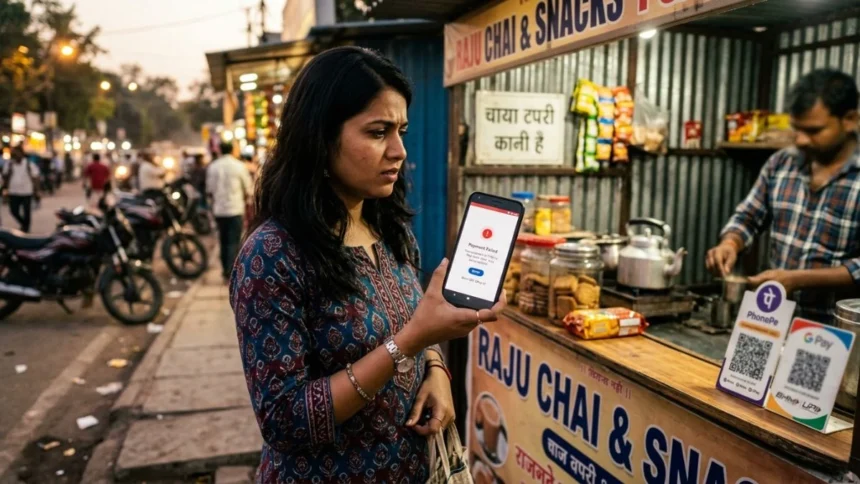
Introduction: A Solution To UPI Payment Failure in India
Unified Payments Interface (UPI) plays a vital role in the life of an Indian. Millions of transactions are carried out every minute through UPI apps such as Google Pay, PhonePe, and Paytm by small country roadside vendors as well as big businesses.
Although it is convenient to use, users often experience a disheartening problem of UPI Payment failed in India. It may be as easy as an error in a transaction but can also be a more stressful one where money is debit but the recipient is not receiving the money.
To the vast majority of users, the failure itself is not the biggest issue, but rather the ambiguity surrounding the cause of failure, and where to proceed further.
This is the guide that is aimed at solving this issue altogether.

At the conclusion of this article, you will find out:
- The technical-practical causes of UPI failures.
- Finding the root cause in your case.
- Procedure-by-procedure solutions to each case.
- What in case a deducted money is non-payable?
- Problem recovery and problem escalation.
- Real-world measures to prevent such issues in future.
This is not a self-dealing guide. It is a full problemshooting model aimed at actual users.
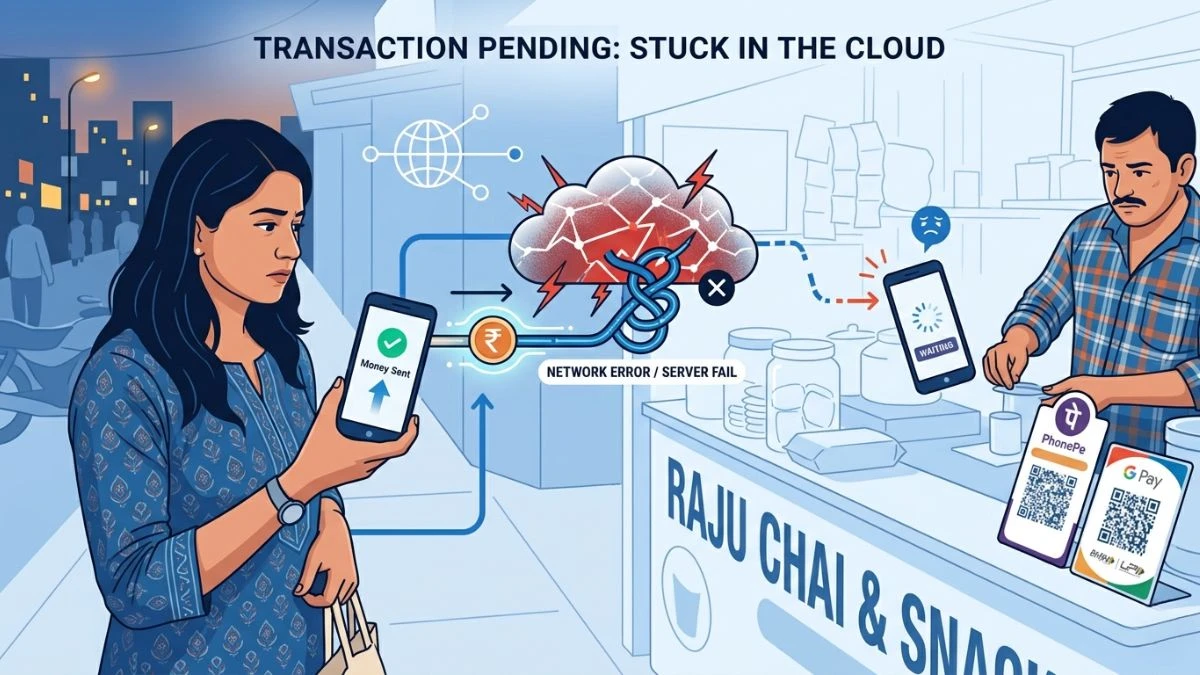
The Practicals of UPI (Reasons why failures are normal)
UPI is a payment system which operates in real time and is operated by the National Payments Corporation of India. It links multiple systems within a few seconds.
One UPI entails:
- Your mobile device
- Your UPI application
- Your bank’s server
- NPCI’s switching network
- The recipient’s bank
All these layers have to run in harmony with one another.

Why this matters:
Although your application may be running, the transaction may still fail due to:
- Your bank server is flaky.
- The bank of the receiver is in bad shape.
- The network fails.
- Authentication fails midway
This is how you cannot always control UPI failures.
UPI Payment Failures (Diagnose Before Remediating)
The kind of failure is known and with such knowledge you apply the right solution.

1. Temporary Technical Failure
These are the most prevalent and normally self-limiting.
Examples:
- “Transaction timed out”
- Your payment has failed, find later.
Cause:
- Network delay
- Server overload
2. Bank-Level Failure
These happen when your bank or the one to which you are sending the money is not responding.
Example:
Error of a payment being stuck during processing.
3. User Input Error
These are preventable mistakes.
Examples:
- Wrong PIN
- Incorrect UPI ID
- Insufficient balance
4. Failure based on security or risk
The transaction may be blocked by the banks when they see strange activity.
Example:
- Multiple failed attempts
- High-value transactions
All Reasons Why UPI Payments Fail (Deep Breakdown)
1. Unstable Internet Connection
The Internet is often unstable and this is a factor that is ignored most of the time.
UPI demands dynamism. Failure can only be triggered by a little failure in the network response.
People Facing Situation like that in daily life:
Payment initiation is done in a low-signal region. The request passes, and confirmation is lost.
Result:
Unsuccessful or uncompleted transactions.
Solution:
Always make sure that the signal is strong prior to payment.
Avoid switching networks during transaction
2. Bank Server Failure or Slackness
Banking operations are overloaded during working hours.
Peak times:
- 7 PM to 10 PM
- Festival seasons
- Salary credit days
What happens:
- Requests pile up
- Response time increases
- Transactions fail
3. Incorrect UPI PIN
Even one mistake made can lead to failure.
Multiple wrong attempts:
May temporarily interrupts transactions.
4. Inadequate or Barred Balance
Total balance and available balance are mixed up by many of the users.
Important:
Available funds are tapered off by pending debits.
The minimum balance requirements are applicable.
5. Daily Transaction Limits
UPI is regulated by the bounds:
Price: 1 lakh per day (standard)
Optimal number of transactions.
If exceeded:
Transactions automatically fail.
6. App-Related Issues
In some cases the problem is in the application itself.
Causes:
- Outdated version
- Corrupted cache
- App bugs
7. SIM and Device Problems
The UPI authentication relies on:
- Registered mobile number
- SMS verification
Problems:
- SIM not active
- SIM on secondary slot.
- SMS permissions disabled
The Method of Troubleshooting in Steps (Do This in this Order Strictly)
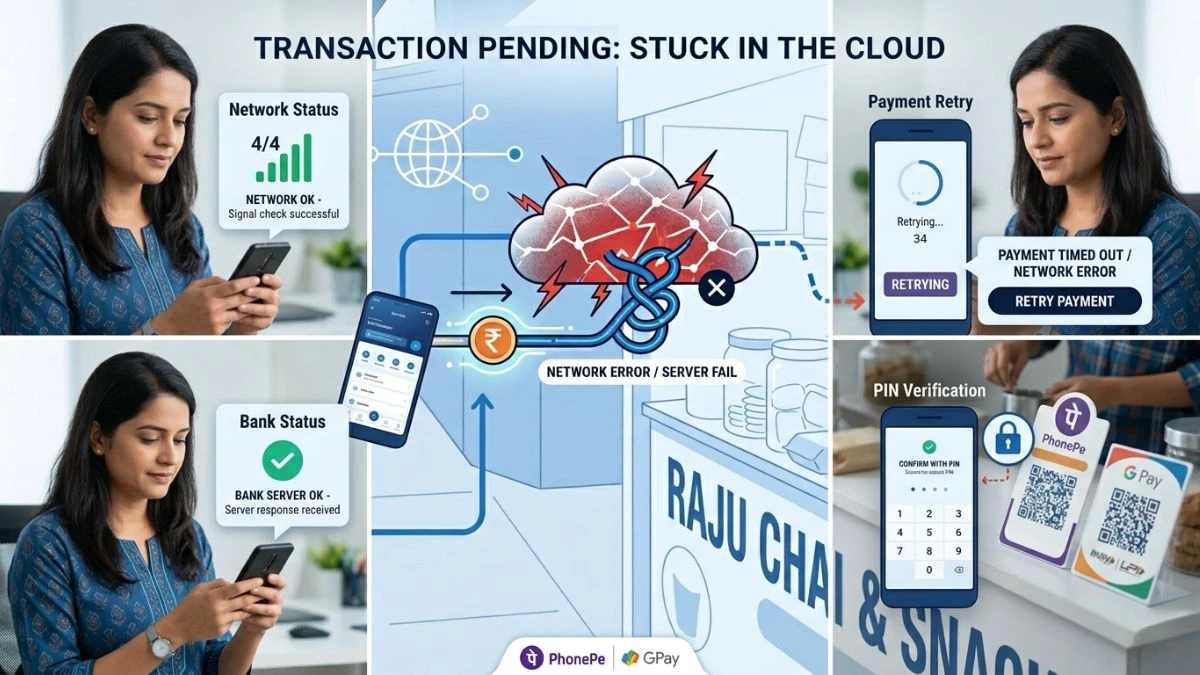
Step 1: Examine the Error Message Word-to-Word
Do not ignore it. It gives clues.
“Incorrect PIN” → user error
Bank server down -> wait.
Transaction failed-general problem.
Step 2: Find a Happy Medium
Before retrying:
- Check signal strength
- Change switch network as required.
Step 3: Check Bank Status
In case of recurrent failures:
- Assume server issue
- Wait 10–15 minutes
Step 4: Checking All Detail
Check:
- UPI ID
- Amount
- PIN
Step 5: Resume the App
- Close app completely
- Reopen
- Retry once
Step 6: Use Alternative Option
If urgent:
- Use another app
- Borrow another bank account.
Money Debited but Payment Failed (Full Discussion)
This is the most critical situation.
What goes on around the Backroom
- Payment request initiated
- Bank debits money
- Confirmation fails
- Transaction marked incomplete
- Refund process automation.
Refund Timelines
- Instant (rare)
- 24–48 hours (common)
- None (maximum 5 working days).
Important Insight
The majority of the users are overly panicked.
In reality:
Such cases are auto-resolved in 95 percent.
Automatization is seldom necessary.
Waiting for Money Back (Hands-on Guide)
Step 1: Wait First
Do not get heated on the spot.
Step 2: Approval of the transactions
Look for:
- Pending
- Failed
- Reversed
Step 3: Topics of interest with Bank Support
Provide:
- Transaction ID
- Time
- Amount
Step 4: Escalate When necessary
In case not resolved in 5 days:
Write a complaint through NPCI.
Complex Problems and Solutions
1. The privacy settings are not functioning properly on your device
Cause:
- App permissions
- OS issues
Fix:
- Allow SMS & phone settings.
- Update phone
2. Repetitive High Failure Accounts
Cause:
- Bank-side issue
Fix:
- Attempt connection of another account.
3. UPI Blocked because of security factors
Fix:
- Contact bank
- Complete verification
Prevention of UPI Failures (Strategic Approach)
1. Avoid Peak Hours
Process important payments at:
- Morning
- Afternoon
2. Maintain Backup Payment Method
Always keep:
- Secondary bank account
- Alternative app
3. Keep Apps Updated
Bugs are corrected with updates and make the software more reliable.
- Triple-Check Before Money is Sent
Verify name
Confirm UPI ID
More Read

Security Considerations
Attempts to commit fraud are sometimes associated with UPI failures.
Always remember:
- Never share UPI PIN
- Never grant a request that you are not sure of.
- Verify before paying
FAQ Section
Why then does UPI not work even when its all right?
Due to temporary technical problems with servers or networks that are out of control of users.
Time of refund after failure?
Typically 24 -48 hours, up to 5 working days.
How to undo a transaction that has failed?
Nope, it is automatic refunds.
Is it okay to restart at once?
Nay, before trying again to prevent concurrence debits.
Is UPI worthy to be used every day?
Yes, only failures such as occasional ones are normal in real time systems.
Conclusion
Upi is among the modern and most applied payment systems internationally. Although failure may be experienced, it is normally short-lived and can be overcome.
The essential formula in the treatment of UPI problems is:
- Learning the mechanics of the system.
- Detection of the right cause.
- Applying structured troubleshooting
- The ability to be cool when there is a refund delay.
Knowing this, you can deal with UPI payment failures with veracity and make online transactions in your everyday routine without problems.
About The Vue Times
The Vue Times is a web based program that is intended to make complicated issues with regard to technologies, financial, public policy, and problems in life simple in India. Our goal is to provide theoretical, practical and research-oriented information that a reader can use in his or her decision-making by comprehending real lifelong problems.
EDITORIAL NOTE
The Vue Times editorial board has thus checked and cleared this article as it is accurate, understandable and helpful. This data is informed by publicly available data, official guidelines, and real-life user situation in India.
DISCLAIMER
This paper is informational. Although utmost efforts have been put in place to make it accurate, policies, banking procedures and regulations can vary with time. It is recommended that any reader should confirm with the official sources or their respective bank before making any move.