

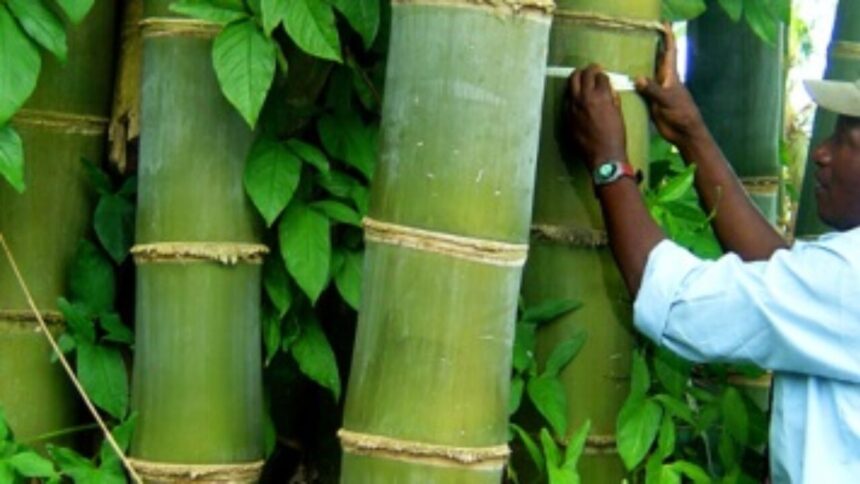
In October 2025, the Government of Maharashtra unveiled a landmark policy aimed at harnessing the untapped potential of bamboo. Titled the Maharashtra Bamboo Industry Policy 2025, the policy envisages attracting investments of up to ₹50,000 crore (approx) over a 10-year horizon, with the goal of generating more than five lakh (500,000) direct and indirect jobs. It is part of a push for green economy, sustainable livelihoods, forest conservation, climate action, and transforming bamboo from a relatively under-used resource to a major economic driver for the state.
Bamboo, often called “green gold”, has multiple uses — from construction and handicrafts to biomass energy, furniture, pulp, and handicrafts. With Maharashtra already ranking among the top states in terms of area under bamboo cultivation, the new policy is intended to scale up operations, promote value addition, strengthen supply chains, and ensure that benefits reach farmers, artisans, entrepreneurs, and also support environmental objectives.
This article will examine: what the policy is, its components, current status of bamboo in Maharashtra, potential benefits, possible impediments, comparative examples, and what steps will be needed for success.
Background: Bamboo in Maharashtra
Before the policy, here’s where Maharashtra stood with respect to bamboo cultivation and usage:
-
The state has about 1.35 lakh hectares under bamboo cultivation.
-
In 2022, production was around 9.47 lakh tonnes.
-
Bamboo is found in forest areas and non-forest land; naturally in districts like Gadchiroli, Chandrapur, Amravati, Bhandara, etc.
-
Despite its presence, much of the value chain has remained underdeveloped — downstream processing, high value uses, modern technology, market linkages, and artisan capabilities are limited.
So the groundwork is there, but to leverage bamboo at scale — for industrial, domestic, environmental, and export uses — large policy support is desirable.
Key Objectives of the Policy
Here are the central goals of the Bamboo Industry Policy 2025:
-
Investment Attraction & Job Creation
To bring in ₹50,000 crore investment in bamboo cultivation, processing, and value addition over 10 years, with the aim of generating over 500,000 jobs (direct + indirect). -
Income Diversification for Farmers
Provide farmers with alternative, eco-friendly, and sustainable income sources — shifting or supplementing dependence away from just traditional cash crops. Contract farming and Farmer Producer Organisations (FPOs) are to be promoted. -
Value Chain Development & Industrialization
Promoting downstream uses of bamboo, processing, manufacturing, and encouraging industries based on bamboo (furniture, handicrafts, domestic goods, industrial materials). Establish anchor units, common facility centres (CFCs), clusters, etc. -
Technological & Research Upgradation
Collaborate with agricultural universities, use modern technologies (GIS, drones, blockchain, tissue culture labs), and R&D to produce quality planting stock, improve yields, disease management, etc. -
Environmental Sustainability & Green Economy
Using bamboo to contribute to climate goals, biomass energy, carbon credits, and afforestation. Also, planting on wastelands and under MNREGA or public land programs. Using bamboo biomass in thermal energy projects. -
Supporting Artisans & Remote Areas
Establish Micro Common Facility Centres (micro-CFCs) for artisans in remote/difficult areas; build clusters of value addition; help small and medium enterprises and startups via incentives. -
Policy Coherence & Institutional Mechanisms
Aligning with the National Bamboo Mission and Maharashtra Mission 2023; creating support structures, financial incentives (subsidies, concessions); ensuring implementation budget, monitoring, and infrastructure.
Expected Outcomes & Potential Benefits
If implemented well, the policy could deliver multiple positive outcomes:
-
Major Employment Generation
Over 5 lakh jobs over 10 years means thousands of direct and indirect livelihoods in cultivation, processing, transport, artisan work, energy, and research. Particularly beneficial in rural, tribal, remote areas. -
Farmer Income Enhancement & Diversification
Farmers who opt for bamboo as a crop (on marginal or wasteland) could get steady income, reduce dependence on monsoon-sensitive crops, and improve resilience. -
Land Utilization & Environmental Gains
Wastelands and fallow lands can be used. Bamboo is fast growing, has soil‐binding properties, and helps with carbon sequestration. It can support forestry objectives and help combat soil erosion. -
Green / Circular Economy Boost
Integration with biomass energy, use of bamboo in sustainable building materials, furniture, handicrafts, domestic uses, etc., adds value. Potential for carbon credits and environmental market advantages. -
Industrial & Export Growth
With clusters and common facilities, Maharashtra can increase value addition, thereby capturing a greater share of domestic and international markets. Exports of bamboo products might increase, raising foreign exchange earnings. -
Technological Upliftment & Innovation
Use of modern R&D, improved planting stock, better processing machinery, traceability systems — all these will upgrade the sector and could reduce waste, improve productivity. -
Climate Action
Bamboo can help sequester carbon, reduce environmental degradation, and act as a green buffer. The biomass energy usage and plantation programs contribute to climate mitigation.

Challenges and Risks
However, policies of this scale also come with challenges that must be addressed; otherwise, promises may fall short.
-
Land & Tenure Issues
Identifying sufficient cultivable land (wasteland, fallow land) is not always easy. Land tenure, ownership, mixing of forest rights, private vs community land, and obtaining rights/permissions can be complex. -
Quality and Consistency of Planting Stock
High yield and disease-resistant bamboo varieties are key. If nurseries/seedlings are substandard, mortality, poor growth will undercut the policy. -
Infrastructure Bottlenecks
Building clusters, common facility centres, processing plants, logistics (roads, transport) takes capital and time. If infrastructure lags, supply chain costs will eat into profits or discourage private investment. -
Market Demand & Price Stability
Downstream industries (furniture, handicrafts, biomass, pulp, etc.) must be viable. Demand fluctuations, price volatility, competition (both domestic and international) can affect returns. -
Financing & Incentive Disbursement
Subsidies, concessions, venture capital funds all require transparent application, quick disbursal, avoiding bureaucratic delays. Delays can cause loss of momentum or investor interest. -
Skill & Capacity Gaps
Many artisans and small producers may lack exposure to modern techniques, design, marketing. Upskilling, R&D, extension work will be essential. -
Environmental Concerns & Forest Regulations
Bamboo growth and harvesting must comply with forest laws, biodiversity norms, water use, intercropping, etc. If mismanaged, could lead to deforestation (though bamboo is non-wood) or ecological disruption. -
Coordination among Agencies
Multiple agencies — forest department, agriculture, rural development, energy, artisans welfare, MSME, etc. — will need to coordinate. Often overlapping jurisdiction causes delays. -
Monitoring & Accountability
Ensuring that clusters are functional, that FPOs get technical support, that environmental safeguards are maintained, and that the intended beneficiaries (small farmers, artisans) indeed get gains — requires strong monitoring frameworks.
Policy Implementation: What Has Been Allocated / Timeline
Some specifics already announced regarding implementation:
-
Short-term financial outlay: The state has earmarked ₹1,534 crore for implementing the policy in the 2025-30 period.
-
For the current fiscal year, ₹50 crore has been allocated to kickstart programs.
-
Over a longer horizon (20 years), the plan foresees ₹11,797 crore as further outlay to sustain and scale up.
So initial implementation is already funded; further scaling depends on continued budgetary support and investor confidence.
Comparative / Global Context
It helps to see how Maharashtra’s policy aligns with what other regions/countries have done with bamboo:
-
Bamboo policies in countries like China, Vietnam, Indonesia have leveraged bamboo for both industrial uses and environmental restoration. They often combine plantation, processing, and export. Maharashtra’s policy is similar in its integrated approach.
-
In India, the National Bamboo Mission has existed, policies in other states are being formulated; but Maharashtra’s investment size (₹50,000 crore), the scale (clusters, value chain, biomass energy, technology) make it one of the most ambitious.
Implications for Stakeholders
Farmers
-
Opportunity to add a high‐yield perennial crop. Lower risk once plantations establish. Contract farming or FPO involvement may provide market linkages and assured income.
-
However farmers may need support (training, good saplings, credit, technical advice) to avoid losses.
Artisans / MSMEs
-
Micro CFCs, clusters, training, financial support can help in scaling up, improving design, accessing markets beyond local.
-
Access to technology, better tools, designs, quality standards will matter.
Entrepreneurs / Startups
-
With the venture capital fund, subsidies, incentives, new business models can emerge: bamboo furniture brands, industrial use, green building material, pulp, energy, modular bamboo structures, biodegradable products, etc.
Environment & Climate
-
Bamboo plantation can help sequester carbon, prevent soil erosion, restore degraded lands, contribute to green cover. Biomass energy reduces reliance on fossil fuels in certain sectors.
-
Potential for carbon credits or environmental market instruments for bamboo cultivation and use.
Government / Public Agencies
-
Need to build institutional capacity for monitoring, R&D, regulation, land use permissions, environmental oversight.
-
Must ensure policy coherence: forest laws, agricultural laws, energy policies, MSME policies must align.
Markets & Consumers
-
More supply of bamboo products, possibly lower prices, improved quality, more variety.
-
Consumers more environmentally aware may prefer bamboo over synthetic, plastic or less sustainable materials.

Potential Risks & How to Mitigate Them
To realize the policy’s potential and avoid pitfalls, careful planning and mitigation strategies are necessary.
-
Ensure sapling quality: Establish nurseries certified for quality, use tissue‐culture where needed, ensure disease resistance.
-
Secure land rights & permissions: Clear disputes, ensure tribal rights or forest rights are respected, avoid encroachment; use wastelands or fallow lands with minimal conflict.
-
Ensure financial flows reach small players: Simplify subsidy application, reduce bureaucratic bottlenecks, provide easier credit.
-
Build infrastructure on schedule: Clusters, CFCs, transport, processing factories, linkages to markets — delay in these reduces investor faith.
-
Skill development & training: For farmers, artisans, technicians. Extension services, exposure tours, demonstration plots.
-
Environment safeguards: Maintain biodiversity, avoid over‐monoculture, ensure local ecosystems are not harmed; plan for water usage, respect environmental norms.
-
Transparent governance & oversight: Audit, monitoring, public dashboards to track progress, beneficiaries.
-
Market demand stimulation: Promote domestically and globally the uses of bamboo products; government procurement can help (public buildings, infrastructure, furniture).
-
Flexible policies: Adjust incentives based on feedback; adapt to market realities; dynamic revision as per performance indicators.
Challenges Specific to Maharashtra
While Maharashtra has advantages (existing area under bamboo, supportive political environment, forest areas, educated population), there are state-specific challenges:
-
Geographical variability: Climate differences across regions; some pockets may not be suited for certain bamboo species.
-
Competition for land: Agricultural demands, urbanization, infrastructure, forest constraints.
-
Forest department regulations: Bamboo in forest areas may require special permits; overregulation may stifle planting or harvesting.
-
Artisan fragmentation: Many artisans scattered, informal, with weak market linkages; scaling up may require organizing them, quality control, branding.
-
Transport & logistics: Remote areas may lack decent roads; costs of transporting bamboo (which is bulky and perishable) can be high.
-
Capital access: While policy provides incentive funds, many farmers/entrepreneurs may still find banks or financing difficult, especially in remote / tribal areas.
What Will Determine Success
Some key measures that will decide whether the policy actually delivers its promise:
-
Effective implementation & oversight
Having a robust agency or task force dedicated to the bamboo policy, with clear deliverables, timelines, and accountability. -
Seed and sapling infrastructure
Ensuring that farmers get high-quality planting material in adequate quantity and timely fashion. -
Clustering & common facilities
Clusters and CFCs should be functional, accessible, and well-equipped, not delayed or underused. -
Financial & non-financial incentives
Subsidy disbursements, electricity concessions, interest subventions, VC fund actions need to be clear, transparent, and timely. -
Research & extension services
Adaptive R&D, demonstration projects, extension to farmers and artisans, local adaptation of species, pest/disease control. -
Market access & value addition
Securing markets (domestic & export), brand building, quality standards, product diversification, possibly e-commerce linkages. -
Environmental sustainability
Maintaining ecological balance, avoiding overharvesting, ensuring plantations don’t harm local biodiversity, ensuring water & soil health. -
Inclusion & equity
Ensuring remote, tribal, small farmers, small artisans get their share; ensuring gender inclusion; ensuring marginalized communities benefit.
Long-Term Prospects & Strategic Implications
If the policy succeeds, several long-term implications are likely:
-
Maharashtra could become a national leader in bamboo production and value addition; possibly exporting processed bamboo goods globally.
-
Bamboo may emerge as an important component of rural livelihood diversification, reducing migration pressures, improving resilience.
-
The green economy could derive multiple synergies: bioenergy, carbon sequestration, environmental restoration, forest cover improvement.
-
Policy frameworks developed here might serve as models for other states; learning from Maharashtra, replicating clusters or incentive frameworks elsewhere.
-
Bamboo’s role in climate mitigation may give Maharashtra a stake in national & global climate policy, carbon markets, and funding.