Diwali in India is more than a festival of lights — it’s a time when hearts glow, families connect, and streets sparkle with joy. But in recent years, the afterglow has turned into smog, asthma attacks, and environmental pain. With air quality already under severe stress, an eco-friendly Diwali is not just an option; it’s a necessity.
In this comprehensive guide, we explore seven smart, practical ways to celebrate a Green Diwali 2025 — without noise, without pollution, and with respect for our planet. We’ll cover historical context, current government policy, real-life examples from Indian cities & villages, actionable tips, and a forward-looking vision. Our aim: to make this your one-stop, evergreen resource for “Diwali without crackers” celebration ideas that align with India’s national development goals and sustainable future.
Why We Need an Eco-Friendly Diwali
A Legacy of Light and Shadows
Diwali has ancient roots — the festival of Lakshmi, Naraka Chaturdashi, the return of Lord Rama, and communal harmony. Its symbolism has always been about dispelling darkness, both externally and inwardly. Yet in recent decades, the brightness has been overshadowed by rising air pollution, respiratory illnesses, and noise complaints.


Pollution Spikes, Health Costs
- Every Diwali, airborne particulate matter (PM2.5/PM10) surges in many Indian cities, pushing AQI into “very poor” or “severe” zones.
- In Delhi and NCR especially, firecrackers have contributed to weeks of dangerous air quality.
- Hospitals report a spike in respiratory distress cases — children, the elderly, and people with asthma are most vulnerable.
- Noise pollution during Diwali also breaches permissible limits, disturbing both human and wildlife health.
Judicial & Policy Interventions
- In 2018, the Supreme Court (in Arjun Gopal case) permitted only green crackers (reduced emission fireworks) in limited time windows.
- In 2020, the National Green Tribunal (NGT) ordered an absolute ban on all firecrackers in NCR during Diwali.
- In 2025, the Supreme Court reserved judgment on whether to relax the firecracker ban in Delhi-NCR, and states are urging limited use of certified green crackers under strict norms.
- Experts caution that green crackers are not harmless — they still release fine particulate matter and can be misused or falsely labeled.
- Enforcement remains weak. Fake QR codes, unlabeled firework sales, and late-night bursting continue without accountability.
Given all this, a Diwali without pollution and noise is not just ideal — it’s urgent. And it is possible.
7 Smart Ways to Celebrate Eco-Friendly Diwali 2025
Below are actionable, realistic steps families, communities, and local governments can adopt to make Diwali 2025 a celebration of light — not smog.
1. Illuminate with Earthen Lamps, Solar & LED Lights
Why this works
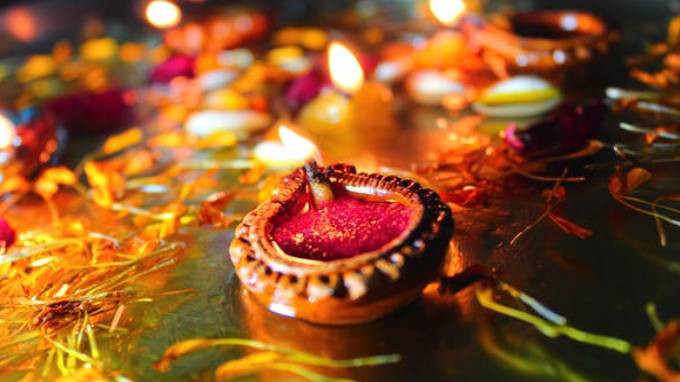
Choosing clay diyas, LED string lights, or solar lanterns replaces smoke and chemical emissions with gentle, clean glow. It preserves tradition and reduces pollution.
How to do it well
- Buy handmade earthen lamps (clay diyas) produced locally — this supports artisans too.
- Use LED string lights or solar-powered bulbs for streets and homes.
- Form community light displays instead of each household burning lights individually.
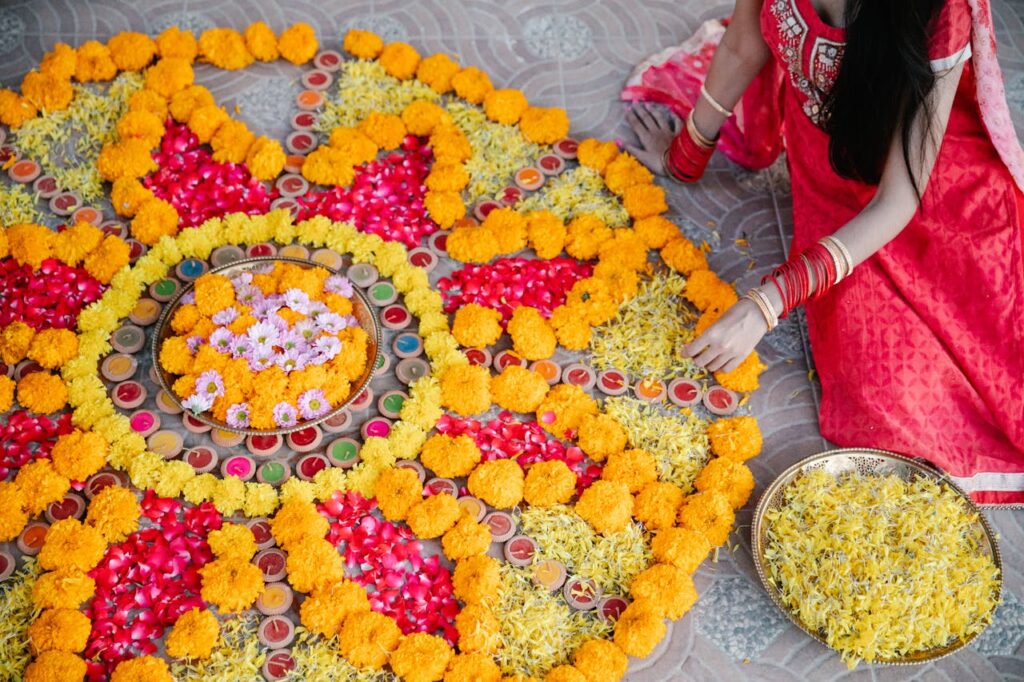
- Encourage decorative rangoli with organic colors instead of chemical dyes.
Real example
In Dhamtari, Chhattisgarh, local administration encouraged using clay diyas rather than artificial lights. They waived vendor fees for potters in markets to boost adoption.

2. Adopt Green Crackers (Only If Allowed) — With Caution
Why this is delicate
Green crackers are designed to reduce emissions by 30–40% compared to conventional ones. But they are not pollution-free — they still produce ultrafine particulates and gases.
Best practices
- Only burst CSIR-NEERI / PESO certified crackers during allowed windows.
- Enforce time limits, e.g., 8 pm to 10 pm, and decibel caps (≤ 120 dB at 5 m).
- Use crackers outdoors, away from dense neighborhoods.
- Avoid series crackers / laris which multiply explosion and emissions.
- Always maintain fire safety measures, water buckets, and permission from local authorities.
Legal & policy status 2025

- The Supreme Court has reserved its verdict on relaxing firecracker bans in Delhi-NCR.
- West Bengal has already allowed only certified crackers within specific hours and imposed enforcement under the Environment Protection Act, 1986.
- Some states, like Uttar Pradesh in NCR, continue blanket bans on firecracker sale, storage, and use.
- But even when permitted, implementation is weak: fake QR codes and mismarked crackers have undermined good intentions.
3. Soundless Celebrations: Embrace Diwali Without Noise
Why it matters
Even if emissions are reduced, the noise from crackers deeply disturbs people, pets, and vulnerable communities. Noise pollution raises stress, hearing issues, and sleep disturbance.
Tips to reduce noise
- Ban firecrackers altogether in your community.
- Replace them with silent sparklers, candle-lit rituals, or musical light shows (light-projected patterns on buildings).
- Use eco-friendly LED drones or laser light shows — these have zero emissions and no noise.
- Coordinate with neighbors to restrict noisy bursting to public zones only (if permitted).
- Promote “quiet hours” after certain times (e.g., after 10 pm).
Advocacy & social change
Organizations like Awaaz Foundation have championed noise pollution awareness and helped enforce noise control during festivals.
4. Community Celebrations & Public Lights Festivals
Why it helps
When communities pool resources, the environmental footprint per household drops. Community events also build social bonds and raise awareness.
Implementation ideas
- Create public diya / lantern festivals in squares or streets.
- Organize eco-friendly rangoli & lamp making workshops.
- Invite local schools, NGOs, and youth groups to adopt “light zones” instead of firecracker zones.
- Offer competitions and prizes for cleanest, most creative eco displays.
Impact
Community-led initiatives spread awareness, and when dozens of homes don’t burst crackers, the collective reduction in pollution is substantial.
5. Sustainable Gifts, Decorations & Rangoli
Why it matters
Much of the waste and pollution from Diwali comes not from bombs — but from single-use plastic decor, synthetic Rangoli powders, and non-biodegradable gifts.
How to do it better
- Use natural / biodegradable Rangoli colors (flower petals, rice flour, turmeric, charcoal, colored sand).
- Decorate with reusable items — cloth buntings, jute, bamboo, or clay; avoid plastic streamers.
- Gift plants, handmade goods, reusable items — not plastic trinkets.
- Encourage zero-waste gifting — wrap with fabric (furoshiki style), avoid plastic.
- Recycle or repurpose old decorations rather than discarding them each year.
6. Cleanse the Air with Indoor & Outdoor Green Practices
Why this matters
Even if crackers are limited, other sources — cooking, incense, candles — add to indoor air pollution. And with meteorological inversion (late autumn), pollutants linger.
Solutions
- Use air-purifying indoor plants (snake plant, aloe vera, pothos).
- Ventilate indoor spaces before and after celebrations.
- Use smokeless incense or natural alternatives.
- Encourage public cleaning drives immediately post-festival (collect burnt firecracker debris, ashes, plastics).
- Switch to LPG / electric cooking, avoid biomass in neighborhoods.
- Use green dust suppression on roads (sprinkle water / bio-misting) to limit resuspension of dust.
7. Campaigns, Policies & Citizen Action
Why it’s critical
Individual efforts help, but systemic change — policy enforcement, awareness, incentives — makes eco-friendly Diwali scalable and sustainable.
What governments & NGOs should do
- Strict enforcement of bans, decibel limits, and sales rules with randomized checks and real penalties.
- Subsidies / incentives for eco-friendly lights, certified crackers, clay diyas.
- Public awareness campaigns, school programs, media messages.
- Grants / support for local artisans producing clay diyas, biodegradable decorations.
- Monitoring & transparency — real-time data on AQI, complaint portals, citizen reporting.
- Integration with national priorities — link eco-Diwali to national development, climate goals, India latest updates.
- Research & development — invest in cleaner formulations, more sustainable celebration tech.
Citizen-level steps you can take now
- Pledge a no-cracker Diwali in your neighborhood.
- Volunteer with NGOs to distribute eco materials.
- Use social media (TVT, The Vue Times, etc.) to share green Diwali success stories.
- Report violations via pollution control boards or local authorities.
- Educate children about sustainable celebrations — this becomes a generational shift.
Indian Context & Illustrative Stories
Village to City: How Tradition Meets Sustainability
In a remote village in Rajasthan, a school teacher rallied students to light only clay diyas and make natural rangoli using flower petals. The village got covered by local news, and neighboring villages adopted the same in subsequent years.
In urban Hyderabad, markets are already seeing a surge in green cracker demand — NEERI-certified sparklers, sound-controlled flower pots, and lower-pollution rockets.
In Dhamtari (Chhattisgarh), local government waived fees on potters selling earthen lamps to boost green Diwali adoption.
Measuring Success: Metrics for a Green Diwali
To know if the effort worked, communities, governments, and media should look at:
- Pre- and post-festival AQI / PM2.5 / PM10 reductions
- Noise monitoring at neighborhood levels
- Number of eco pledges / households opting out
- Volume of waste cleanup (firecracker debris, plastics)
- Sales data of green lights, clay diyas, certified crackers
- Citizen complaints and enforcement data (violations punished)
These metrics help quantify real performance — not just intentions.
Challenges & Criticisms: Navigating Realities
- Green crackers may still harm: Studies show ultrafine particles (<100 nm) in green fireworks can penetrate deep into lungs.
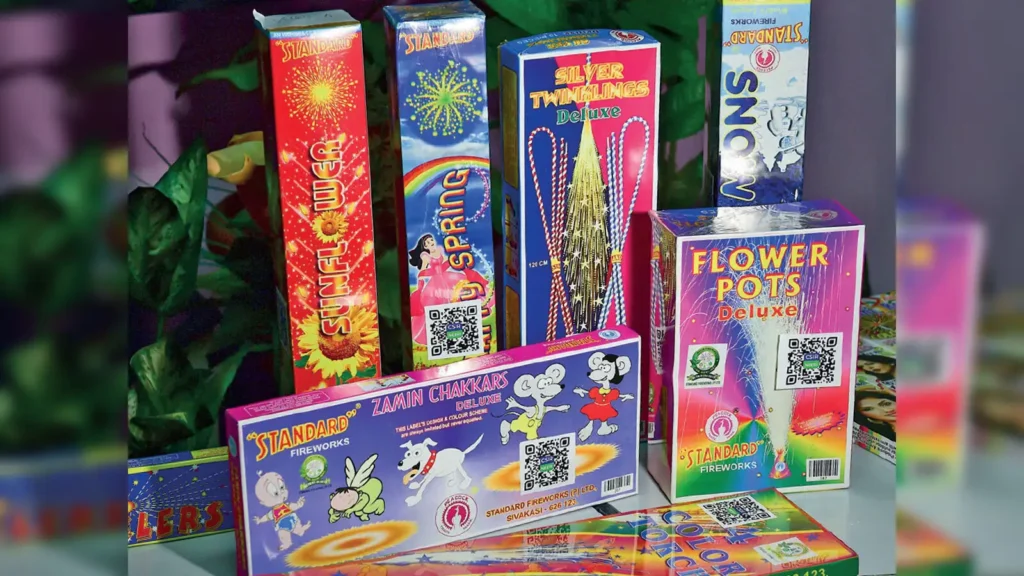
- Fake labeling / enforcement gaps: Many green crackers in markets are counterfeits with false QR codes.
- Cultural resistance: Some view restrictions as an attack on tradition.
- Economic impact: Firecracker manufacturing is a source of income for many small-scale units — these communities need alternative livelihoods.
- Weather / dispersion factors: Inversions, calm winds, stubble burning can negate even zero-cracker efforts if timed poorly.
Addressing these challenges requires transparency, stakeholder participation, alternative livelihood programs, and persistent enforcement.
Forward Look: What Diwali 2030 Could Be
- Bigger adoption of laser / drone light shows replacing fireworks altogether.
- IoT citizen sensors tracking neighborhood air quality in real time.
- Eco-festival certification for neighborhoods meeting emission and noise norms.
- National Green Diwali policy integrated with climate action, renewable energy, waste management.
- Youth-led eco-Diwali movements making it a social norm to avoid crackers.
- Stronger enforcement by linking policy to local funding, civic awards, and performance metrics.
If India can make Diwali 2025 a success story, it will set the precedent for future festivals nationwide.
Clear Takeaways & Action Steps
For Households
- Choose clay diyas, LED / solar lights, not plastic ones
- Skip or strictly limit crackers — prefer certified green only
- Use silent alternatives, avoid noise
- Decorate with biodegradable materials
- Clean up properly after the celebration
- Educate children on sustainable habits
For Neighborhoods & Communities
- Host community lighting events instead of individual bursting
- Pledge a no-cracker zone
- Organize cleanup teams
- Coordinate with vendors for eco supplies
For Local Governments & Policy Makers
- Enforce noise / emission laws strictly
- Promote subsidies for eco lights / artisan lamps
- Launch awareness drives in schools and media
- Monitor sales, ban fakes, impose penalties
- Link eco-Diwali to national development goals
For Media / Journalism / NGOs
- Report success stories and data transparently
- Cover compliance and violations
- Run campaigns — “Green Diwali 2025” theme
Partner with local bodies for citizen awareness
A Greener Diwali Begins with Us
As India continues its journey toward sustainable growth and environmental responsibility, Diwali 2025 stands as a test of our collective awareness and choices. Celebrating this festival of lights doesn’t need to come at the cost of clean air, peaceful neighborhoods, or ecological balance. By choosing eco-friendly decorations, organic diyas, and digital greetings over loud crackers and chemical-filled colors, we honor the true spirit of Diwali — light over darkness, wisdom over ignorance.
Across the country, citizens, schools, and communities are already embracing “Green Diwali” campaigns, inspired by government drives under the National Clean Air Programme (NCAP) and Swachh Bharat Mission. Every small step — from using solar lights to planting a sapling — contributes to a cleaner, quieter India.
The change begins at home. When we choose sustainable celebrations, we not only protect our environment but also set an example for the next generation. This Diwali, let’s pledge to celebrate responsibly — spreading light, not smoke; happiness, not noise.