
Oil has shaped global politics for more than half a century, but few regions influence the world’s economy as profoundly as the Persian Gulf.
Every time tensions rise involving Iran, the reaction extends well beyond diplomatic statements and military briefings. Energy traders reassess supply risks, investors shift billions of dollars between assets, governments monitor fuel reserves, and businesses prepare for higher operating costs. What begins as a regional geopolitical event can quickly influence inflation, financial markets, and economic confidence across continents.
That is because the Iran oil crisis is rarely just about one country.
It is about one of the world’s most strategically important energy corridors, a region responsible for moving a significant share of globally traded crude oil every day. Even the possibility of disruption can influence prices long before physical supplies are affected, demonstrating how interconnected modern economies have become.
For businesses, policymakers, and investors alike, developments involving Iran are no longer viewed solely through a political lens. They have become economic events with consequences that can influence everything from household fuel bills to corporate investment decisions.
Why the Strait of Hormuz Matters to the Entire World
Few waterways carry as much economic significance as the Strait of Hormuz.
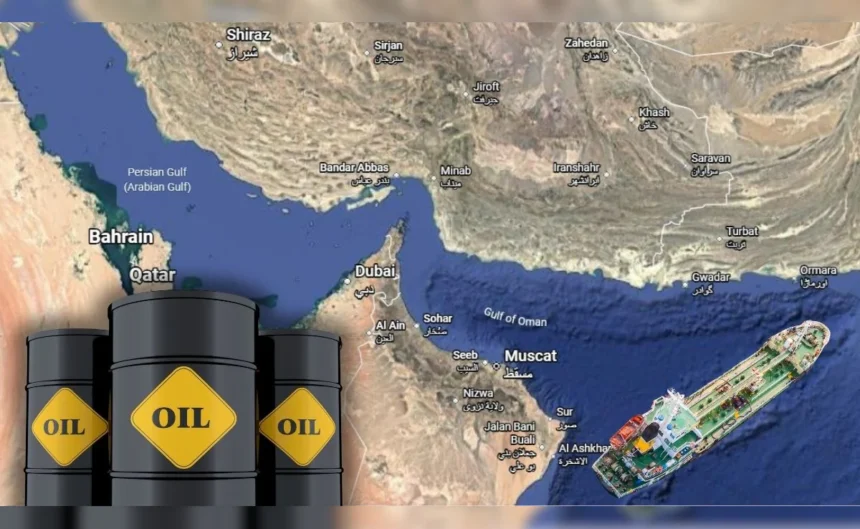
Stretching between Iran and Oman, this narrow passage connects the Persian Gulf to the Arabian Sea and serves as the primary export route for crude oil produced by Saudi Arabia, Iraq, Kuwait, the United Arab Emirates, Qatar, and Iran itself.
Roughly one-fifth of the world’s oil consumption passes through the Strait of Hormuz, making it one of the busiest and most strategically important maritime corridors on the planet.
Its importance lies not in its size but in its position.
There are few practical alternatives for transporting such enormous volumes of oil. Any disruption, whether caused by military conflict, political tensions, or threats to commercial shipping, immediately raises concerns about global energy supplies.
Markets understand this reality well.
Oil prices often react before any physical interruption occurs because traders price in future risk rather than waiting for shortages to materialise. In global commodity markets, perception can influence prices almost as quickly as actual events.
This explains why the Iran oil crisis consistently dominates international economic headlines whenever tensions escalate.
Oil Prices Reflect More Than Supply and Demand
Most people associate higher fuel prices with changes in production.
In reality, oil prices are influenced just as much by expectations as they are by physical supply.
Commodity traders constantly evaluate geopolitical developments alongside production data, inventory levels, shipping conditions, and economic forecasts. Even if oil production remains stable, uncertainty surrounding transport routes or regional security can push prices higher.
History provides numerous examples.
During previous periods of heightened tensions in the Gulf, crude oil prices rose sharply despite no immediate interruption to exports. Markets anticipated potential risks and adjusted accordingly.
This reaction illustrates an important characteristic of modern financial markets.
Risk itself carries value.
Companies purchasing crude oil, airlines planning fuel costs, manufacturers forecasting expenses, and governments managing inflation all rely on expectations about future prices rather than today’s conditions alone.
As a result, geopolitical developments involving Iran frequently influence energy markets long before consumers notice changes at petrol stations.
Why Higher Oil Prices Affect Nearly Every Industry
The impact of rising oil prices extends far beyond energy companies.
Modern economies depend on affordable transportation.
Every manufactured product, agricultural commodity, imported component, and consumer good relies on logistics at some stage of its journey.
When crude oil becomes more expensive, transportation costs increase.
Shipping companies pay more for marine fuel.
Airlines face higher operating expenses.
Road transport becomes costlier.
Manufacturers absorb rising production costs as raw materials and finished goods become more expensive to move.
Businesses rarely absorb these additional expenses indefinitely.
Many eventually pass part of the increase to customers through higher prices.
The consequences spread across multiple industries.
Food prices may rise because agricultural products require transportation.
Construction becomes more expensive due to higher material and logistics costs.
Retail businesses experience increasing distribution expenses.
Even sectors with little direct connection to oil often experience indirect financial pressure through their supply chains.
This interconnectedness explains why the Iran oil crisis receives attention far beyond the energy industry.
Its effects ripple across the broader economy.
Global Trade Depends on Stable Shipping Routes
Oil is only one component of the story.
The Gulf also supports international trade by connecting Asia, Europe, and the Middle East through some of the world’s busiest maritime corridors.
Periods of geopolitical uncertainty often increase operational costs for global shipping companies.
Insurance providers raise premiums for vessels operating near conflict-prone regions.
Shipping operators reassess routes to minimise potential risks.
Some cargo may require longer alternative journeys, increasing fuel consumption and delivery times.
For businesses operating within tightly integrated global supply chains, even small delays can create wider disruptions.
Manufacturers waiting for imported components may experience production slowdowns.
Retailers may face inventory shortages.
Exporters may struggle to meet contractual delivery schedules.
These logistical challenges have become increasingly significant as businesses adopt just-in-time manufacturing systems that minimise inventory costs while increasing dependence on reliable transportation.
The result is an economy where disruptions in one region can influence production schedules thousands of kilometres away.
Inflation Often Begins Outside National Borders
Inflation is frequently discussed as a domestic economic issue, but many inflationary pressures originate in global commodity markets.
Energy is one of the most important examples.
Higher oil prices increase transportation costs throughout the economy.
Factories pay more to operate machinery.
Logistics companies spend more on fuel.
Retailers face higher distribution expenses.
Eventually, these rising costs influence the prices consumers pay for everyday goods and services.
This relationship explains why central banks closely monitor geopolitical developments alongside employment, economic growth, and domestic demand.
Persistent increases in energy prices can complicate monetary policy.
Higher inflation may require tighter financial conditions, potentially affecting borrowing costs, business investment, and consumer spending.
The Iran oil crisis, therefore, is not merely a foreign policy issue.
It is an economic variable capable of influencing inflation expectations across both developed and emerging economies.
For countries heavily dependent on imported energy, including India, these developments carry particular significance because sustained increases in crude oil prices can affect trade balances, fiscal planning, and long-term economic growth.
Readers interested in another major international issue can also explore our article on Understanding the 2025 Conflicts in Gaza and Ukraine: A Simplified Overview, which examines how regional conflicts influence global security and economic conditions. For trusted analysis of international energy markets, visit the International Energy Agency (IEA), which provides comprehensive reports on global oil supply, demand, and energy security.
Conclusion
Modern economies are built on interconnected supply chains, stable trade routes, and reliable access to energy.
When uncertainty emerges in one of the world’s most strategically important oil-producing regions, its effects rarely remain confined to national borders. Markets respond immediately, businesses reassess risks, governments adjust policy, and consumers eventually experience the consequences through higher prices and changing economic conditions.
The Iran oil crisis serves as a reminder that geopolitical developments are no longer distant foreign policy issues. They have become economic events capable of influencing inflation, investment decisions, corporate strategy, and global growth.
For business leaders, investors, and policymakers, understanding the relationship between energy security and economic stability is no longer optional.
It is an essential part of navigating an increasingly interconnected world where political decisions can reshape markets almost overnight.