
Why the G20 Matters in a Fragmented World
The global economy today is more interconnected than at any point in history, yet political trust and institutional cooperation are increasingly strained. Financial shocks travel faster, climate risks cross borders, pandemics disrupt entire systems, and geopolitical rivalries complicate collective action. In this environment, the need for credible global coordination has never been greater.
The G20 occupies a unique position in this landscape. It is neither a formal institution nor a symbolic talking shop. Instead, it functions as a high-level coordination forum where the world’s most influential economies attempt to align policies on issues that no single country can manage alone.
For students, professionals, and decision-makers, understanding the G20 is essential to understanding how global economic priorities are shaped, negotiated, and implemented. Its relevance lies not in legal authority, but in agenda-setting power, often determining which issues rise to the top of global policymaking.
Core Explanation: What Is the G20?
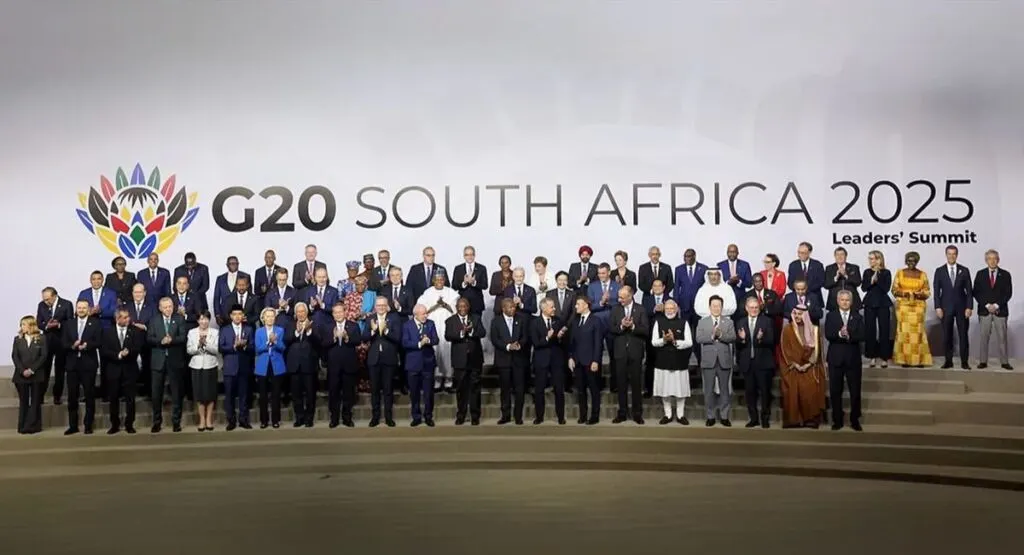
The G20, or Group of Twenty, is an international forum that brings together:
- 19 individual countries
- The European Union
These members collectively represent a dominant share of global economic activity, international trade, and population. The forum was created to ensure that major economies, both advanced and emerging, could coordinate on issues of global economic importance.
Unlike organisations such as the United Nations or World Trade Organization, the G20 has no founding treaty. Participation is based on economic significance rather than geographic representation. This design reflects a practical recognition: countries with the greatest economic weight have a disproportionate impact on global stability.
Why the G20 Is Not a Formal Organisation
One of the most misunderstood aspects of the G20 is its informal nature.
The G20:
- Has no permanent secretariat
- Issues no legally binding resolutions
- Relies on voluntary compliance
This structure is intentional. It allows flexibility, speed, and political frankness, qualities that are often constrained in treaty-based institutions.
The effectiveness of the G20 depends not on enforcement, but on political will and peer pressure among powerful economies.
Historical Background: Why the G20 Was Created
The Asian Financial Crisis as a Wake-Up Call
The origins of the G20 lie in the late 1990s, when the Asian financial crisis exposed deep vulnerabilities in the global financial system. At the time, economic decision-making was dominated by a small group of advanced economies.
Emerging economies, despite their growing role, were largely excluded from crisis-management discussions. This imbalance limited the effectiveness of global responses.
In response, finance ministers from major economies agreed to create a broader forum that included key emerging markets.
From Ministers to Leaders: The 2008 Turning Point
For nearly a decade, the G20 operated primarily at the finance minister level. This changed dramatically during the 2008 global financial crisis.
As the crisis threatened the global economy, leaders recognised that technical coordination alone was insufficient. Political leadership was required to restore confidence and coordinate stimulus measures.
The elevation of the G20 to a leaders’ forum marked its transformation into the central platform for global economic coordination.
Structure of the G20: How Decisions Take Shape
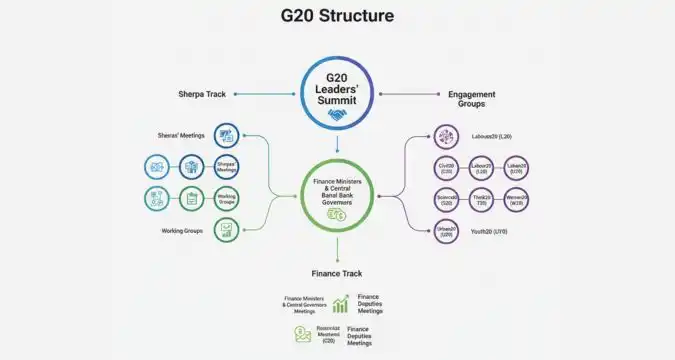
The G20’s structure is deliberately layered to balance political authority with technical expertise.
Leaders’ Summit: Strategic Direction
The annual Leaders’ Summit brings together heads of state and government. These meetings provide strategic guidance rather than operational detail.
Leaders’ declarations often outline:
- Shared priorities
- Broad policy commitments
- Areas for future cooperation
While non-binding, these declarations influence national policy debates and international institutions.
The Sherpa Track: Social and Developmental Issues
The Sherpa Track focuses on issues that extend beyond macroeconomics, including:
- Development cooperation
- Climate action
- Education and health
- Gender equality
Sherpas, personal representatives of leaders, coordinate this track and ensure continuity between summits.
The Finance Track: Economic Stability and Growth
The Finance Track is led by finance ministers and central bank governors. It addresses:
- Global growth prospects
- Debt sustainability
- Financial regulation
- International financial architecture
This track plays a central role during periods of economic stress.
Engagement Groups: Broadening the Conversation
The G20 engages with non-government stakeholders through structured groups representing business, civil society, think tanks, and youth.
These groups provide recommendations and research inputs, adding depth to policy discussions without diluting decision-making authority.
Objectives of the G20: What It Seeks to Achieve
Ensuring Global Economic Stability
The G20’s primary objective is to prevent systemic economic disruptions. By coordinating macroeconomic policies, members aim to reduce volatility and improve predictability.
This role becomes critical during global downturns, when uncoordinated actions can worsen crises.
Supporting Sustainable and Inclusive Growth
Economic growth alone is no longer seen as sufficient. The G20 increasingly focuses on how growth is distributed and sustained.
Key themes include:
- Infrastructure development
- Financial inclusion
- Productivity enhancement
These priorities reflect the concerns of both advanced and emerging economies.
Addressing Transnational Challenges
Issues such as climate change, pandemics, and digital transformation cannot be addressed unilaterally. The G20 provides a space to align national strategies on these global public goods.
The G20 and Emerging Economies: A Shift in Power
One of the G20’s defining characteristics is the inclusion of major emerging economies alongside advanced ones. This reflects a shift in global economic realities.
The presence of countries associated with groupings like Brics ensures that global economic governance is no longer shaped solely by traditional powers.
This inclusivity has enhanced the legitimacy of global coordination, even if consensus remains difficult.
India and the G20: Strategic Relevance
India’s role in the G20 reflects its growing economic footprint and diplomatic ambitions.
India uses the forum to:
- Highlight development challenges
- Advocate reform of global institutions
- Promote inclusive growth narratives
Rather than aligning with any single bloc, India positions itself as a bridge between advanced economies and the Global South.
Current Trends Shaping the G20 Agenda
Development Finance and Debt Stress
Many developing countries face rising debt pressures. The G20 has become a key forum for discussing debt relief frameworks and financial stability measures.
Climate and Growth Trade-Offs
Balancing economic growth with environmental sustainability remains a central challenge. The G20 increasingly debates how to finance climate transitions without slowing development.
Digital Public Infrastructure
Digitalisation has emerged as a key area of cooperation, with discussions on digital payments, governance frameworks, and inclusive access.
G20 in Comparison With Other Global Forums
The G20 differs from institutions like the IMF or World Bank in function and authority.
- It sets political direction rather than implementing programs
- It complements rather than replaces formal institutions
- It reflects current economic weight more accurately
This makes it a critical coordination layer in global governance.
Common Misconceptions About the G20
“The G20 Is Just a Talk Shop”
While outcomes are not legally binding, coordination among powerful economies shapes real-world policies over time.
“It Represents Only Elite Interests”
The inclusion of emerging economies and engagement groups broadens perspectives beyond advanced economies.
“It Has Lost Relevance”
Global crises continue to reinforce the need for high-level coordination, sustaining the G20’s relevance.
Implications: Why the G20 Matters to Ordinary Citizens
The decisions and priorities discussed within the G20 influence:
- Financial stability
- Employment trends
- Development financing
- Crisis preparedness
Although indirect, these impacts shape everyday economic conditions.
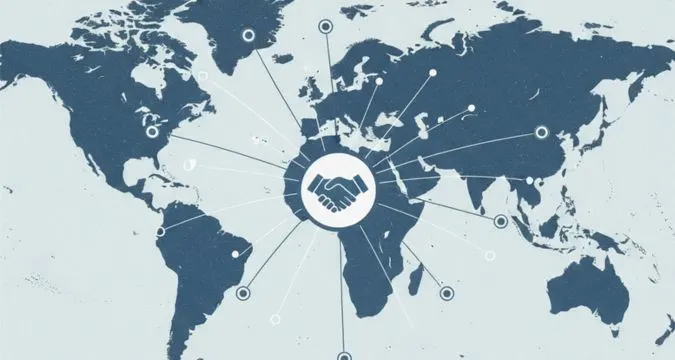
What to Watch Next
The G20’s future relevance will depend on:
- Its ability to manage geopolitical divisions
- Delivery on development commitments
- Adaptation to emerging global risks
Effectiveness will be judged by outcomes, not declarations.
More Read

Key Takeaways
The G20 represents a pragmatic response to a complex global economy. It brings together major players to coordinate policies on shared challenges.
Its influence lies in convening power, representation, and agenda-setting capacity rather than legal authority. In a world facing interconnected risks, the G20 remains an essential, if imperfect, platform for global cooperation.
Frequently Asked Questions
Why is the G20 important today?
The G20 enables coordination among the world’s most influential economies during periods of uncertainty, helping reduce instability and align policy responses.
How is the G20 different from formal institutions?
It operates through consensus rather than enforcement, shaping policy direction without imposing binding rules.
What role do emerging economies play?
They ensure that global economic governance reflects diverse development realities and priorities.
Does the G20 replace existing institutions?
No. It provides political guidance that complements the work of formal organisations.
What will shape the G20’s future?
Its ability to deliver meaningful coordination amid geopolitical tension will determine its long-term relevance.
Stay ahead of global shifts that shape India’s future. Read more clear, in-depth explainers on The Vue Times.