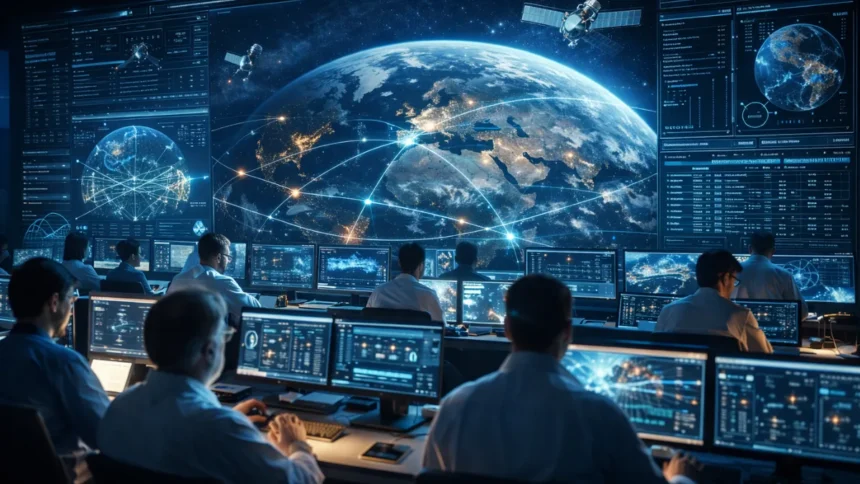
There’s a quiet moment just before dawn when satellites pass overhead, unseen yet deeply involved in the rhythm of daily life. Your phone locks onto a GPS signal. Weather alerts update. Banking systems sync across continents. It all happens without spectacle, without noise. And yet, none of it exists without what we call space technology.
That question—What Is Space Technology?—feels deceptively simple. It sounds like rockets and astronauts, distant galaxies and science fiction dreams. But the truth sits much closer to home. Space technology is less about escape and more about connection. It’s the invisible infrastructure that quietly powers modern civilization.
Understanding What Is Space Technology?
At its core, space technology refers to the tools, systems, and innovations developed to explore, utilize, and operate in outer space. This includes satellites, launch vehicles, space stations, navigation systems, and the software that binds them together.
But reducing it to hardware misses the larger picture.

Space technology is not just about going to space. It is about using space to solve problems on Earth. From predicting cyclones to enabling digital payments in remote areas, its real value lies in how it translates cosmic capability into everyday utility.
When people ask, What Is Space Technology?, they are often thinking about rockets launching dramatically into the sky. Yet, the more important story begins after the launch—when that satellite starts transmitting data, quietly shaping decisions across industries.
From Cold War Competition to Commercial Revolution
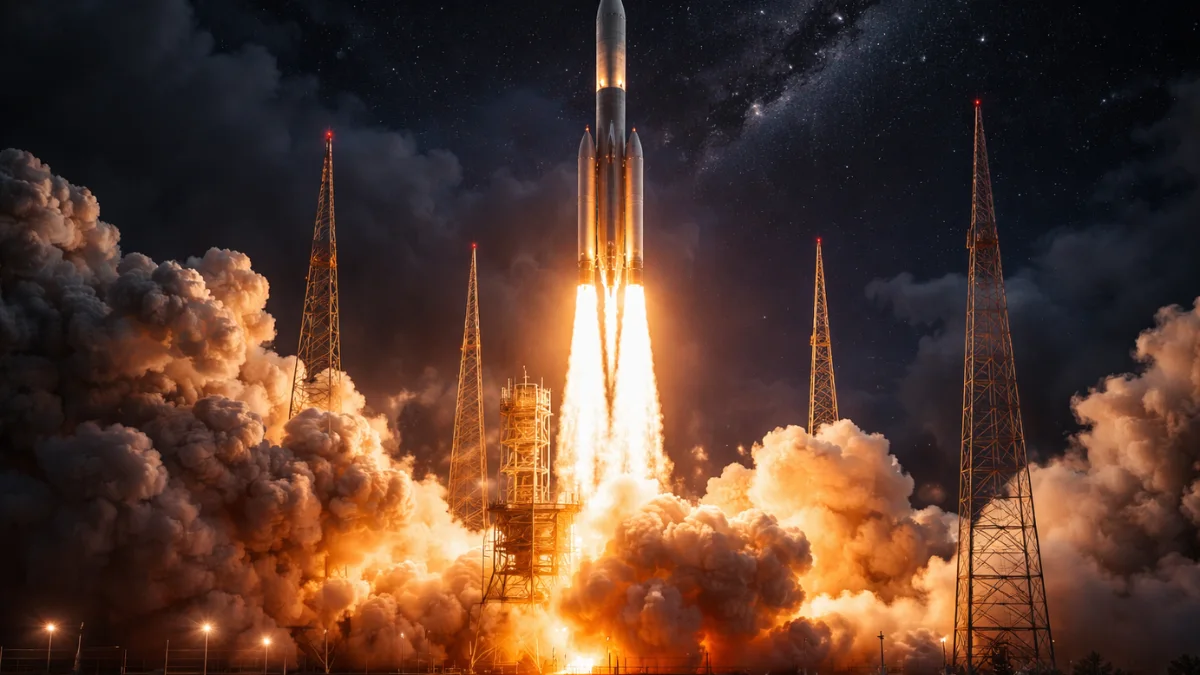
The origins of space technology are deeply tied to geopolitics. The launch of Sputnik in 1957 marked the beginning of a technological race between superpowers. It wasn’t just about exploration; it was about dominance, intelligence, and prestige.
Over time, that competitive urgency evolved into collaboration and then into commercialization.
Organizations like NASA and ISRO redefined what space programs could achieve—not just in terms of missions, but in terms of accessibility and cost-efficiency. India’s Mars Orbiter Mission, for example, demonstrated that deep space exploration could be done at a fraction of global costs.

Today, the narrative has shifted again. Private players like SpaceX and Blue Origin have entered the arena, turning space into a marketplace.
Space is no longer just a scientific frontier. It is becoming an economic one.
Why Space Technology Matters More Than You Think
To understand What Is Space Technology?, it helps to look at how deeply it is embedded in ordinary life.

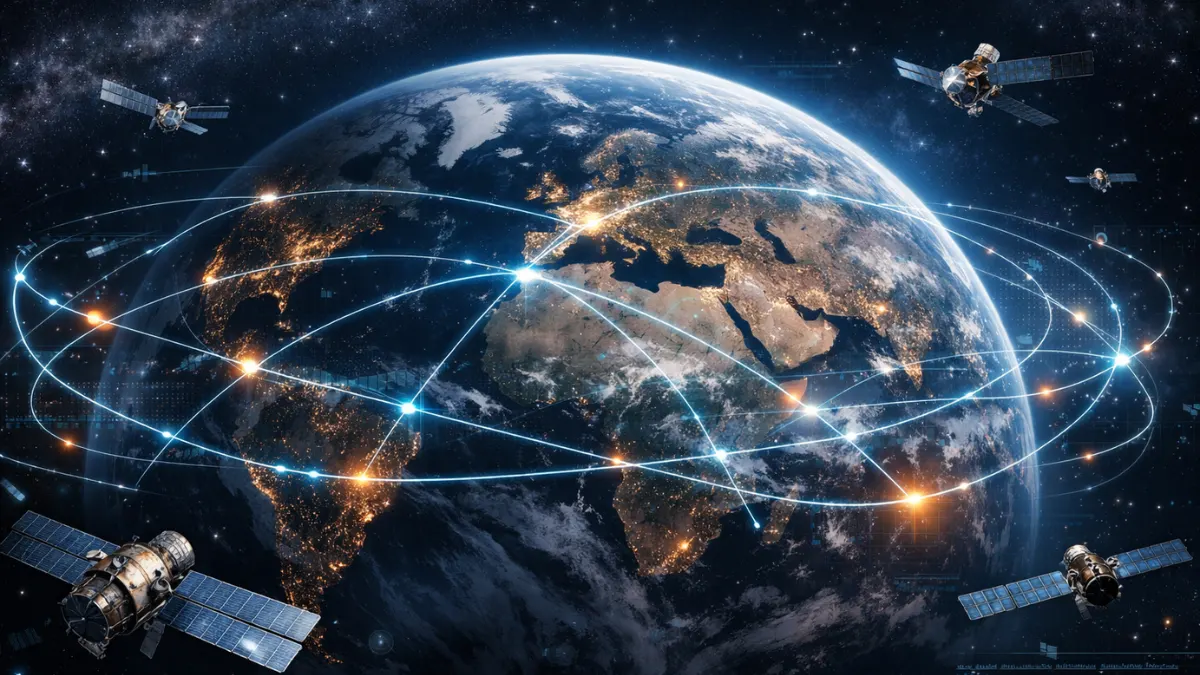
Navigation systems depend on satellite constellations. Without them, services like maps, ride-hailing, and logistics would collapse almost instantly. Weather forecasting relies heavily on Earth observation satellites, which monitor atmospheric patterns in real time. Even television broadcasting and internet connectivity—especially in remote areas—are powered by communication satellites orbiting thousands of kilometers above us.
Consider disaster management. When floods hit or earthquakes disrupt infrastructure, satellite imagery becomes one of the first tools responders rely on. It provides clarity when ground-level visibility is limited.
There is also a financial layer to this. Global markets, shipping routes, aviation systems—many of them depend on precise timing signals from satellites. Space technology doesn’t just support convenience; it supports stability.
The Business of Space: A Growing Economy
There’s a reason investors are paying attention.
The global space economy is expanding rapidly, driven not just by governments but by private companies building satellite networks, launch services, and even space tourism ventures. Low-Earth orbit is becoming increasingly crowded, not with debris alone, but with opportunity.
Startups are developing micro-satellites that can be launched at lower costs. Data from these satellites is being sold to industries ranging from agriculture to insurance. Farmers use satellite imagery to monitor crop health. Insurance companies use it to assess risk in disaster-prone regions.
The shift is subtle but significant: space technology is moving from being capital-intensive and state-controlled to agile and commercially driven.
And that raises an interesting question—who owns space in the future?
The Psychological Shift: From Distant to Immediate
For decades, space felt distant—something observed, not experienced. That perception is changing.
Reusable rockets, live-streamed launches, and growing public-private collaborations have made space feel closer. It’s no longer just about astronauts floating in zero gravity. It’s about entrepreneurs, engineers, and even students contributing to the ecosystem.
There’s also a psychological aspect at play. Space technology has always symbolized progress. Nations invest in it not just for utility, but for identity. A successful launch sends a message—not just to rivals, but to citizens.
It says: we are capable of building the future.
What Is Space Technology? Beyond Exploration
1. Communication and Connectivity
Satellites enable global communication networks, especially in areas where traditional infrastructure is limited. Rural connectivity, maritime communication, and even emergency response systems depend on them.
2. Earth Observation
High-resolution imaging allows governments and organizations to monitor environmental changes, urban growth, and resource management.
3. Navigation and Timing
GPS systems provide real-time positioning and synchronization, essential for transportation, defense, and finance.
4. Scientific Research
Space-based instruments help scientists study climate change, cosmic radiation, and planetary systems beyond Earth.
5. Defense and Security
Many nations rely on space technology for surveillance, intelligence gathering, and strategic planning.
Each of these layers adds depth to the answer of What Is Space Technology?—it is not a single field, but a network of interconnected systems shaping multiple industries.
The Challenges We Don’t Talk About Enough
With growth comes complexity.
Space debris is becoming a serious concern. Thousands of inactive satellites and fragments orbit the Earth, posing risks to active missions. Regulatory frameworks are still evolving, struggling to keep pace with rapid commercialization.
There is also the issue of inequality. While some countries and corporations push forward, others risk being left behind, widening the technological gap.
And then there’s sustainability. Launching rockets has environmental implications, and managing orbital traffic requires global coordination.
The future of space technology will not just depend on innovation—it will depend on governance.
Where Space Technology Is Heading Next
The next decade will likely redefine the boundaries of what space technology can achieve.
We are already seeing early signs of satellite internet networks aiming to provide global coverage. Lunar missions are being revisited, not just for exploration but for potential resource utilization. Concepts like space-based solar power and asteroid mining are moving from theory to discussion.
Artificial intelligence is also entering the equation, enabling autonomous satellites that can analyze data without human intervention.
Perhaps the most interesting shift is this: space is no longer just about looking outward. It is becoming a platform for solving inward challenges—climate change, connectivity gaps, and resource management.

Conclusion: A Technology That Redefines Perspective
So, What Is Space Technology?
It is not just the science of reaching space. It is the discipline of using space to understand, improve, and sometimes even rethink life on Earth.
It operates quietly, often unnoticed, yet its absence would be immediately felt. It shapes economies, influences geopolitics, and increasingly defines how societies function.
Space technology doesn’t just expand our physical boundaries. It expands our perspective.
And perhaps that is its most powerful function of all.
Final Insight
The real story of space technology is not about rockets piercing the sky. It is about systems quietly holding the modern world together. The future won’t belong to those who simply explore space—it will belong to those who understand how to use it meaningfully. Stay Informed Stay Updated-The Vue Times
Frequently Asked Questions
What Is Space Technology?
Space technology refers to tools, systems, and innovations used for space exploration and satellite-based services like communication, navigation, and observation.
Why is space technology important in daily life?
It powers GPS, weather forecasting, internet connectivity, disaster management, and global communication systems that people rely on every day.
Which countries are leading in space technology?
Countries like the United States, India, China, and Russia are major players, along with private companies entering the sector.
What are examples of space technology?
Satellites, rockets, space stations, GPS systems, and Earth observation tools are key examples of space technology.
What is the future of space technology?
The future includes satellite internet, lunar missions, AI-driven space systems, and increased private sector participation.