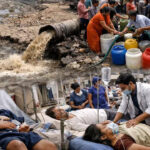
Why Urban Water Systems Fail in Indian Cities: Lessons from Indore is not just a headline born out of a local crisis. It is a reflection of a deeper structural failure affecting many Indian cities where rapid urban growth has outpaced civic planning. Indore, often celebrated for cleanliness rankings and smart city branding, offers a revealing case study of how fragile urban water systems truly are when governance, infrastructure, and accountability fail to move in sync.
The Illusion of Urban Water Security in Indian Cities
Indian cities have long operated under the assumption that water supply, once established, will continue uninterrupted. Pipelines laid decades ago are expected to serve populations that have multiplied several times over. This assumption is at the heart of why urban water systems fail in Indian cities.
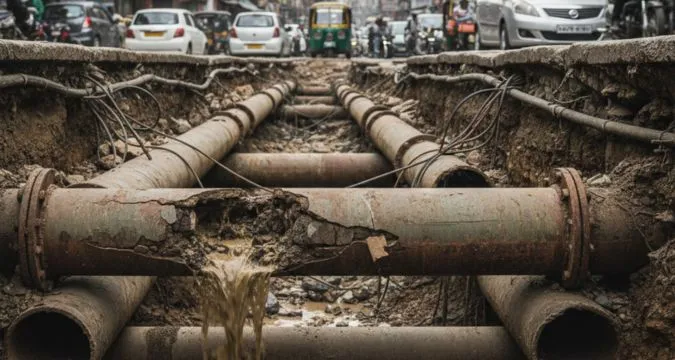
Urban water infrastructure in most Indian cities was designed during a time when population density was lower, groundwater was abundant, and climate variability was less severe. Today, cities face a completely different reality. Migration, real estate expansion, industrial demand, and erratic monsoons have placed unprecedented pressure on systems never built for such stress.
Indore’s water contamination episode shattered the illusion that administrative efficiency in one area guarantees systemic resilience across all civic services.

Indore as a Case Study of Systemic Vulnerability
Indore is often projected as a model city. Yet the water contamination incident revealed that surface-level success does not automatically translate into foundational strength. The failure was not sudden. It was cumulative.
Aging pipelines, unchecked leakages, proximity of sewage lines, and inconsistent water quality monitoring created conditions where contamination was inevitable. The crisis merely exposed what had been brewing silently for years.
When we examine why urban water systems fail in Indian cities, Indore illustrates a critical lesson. Clean streets do not mean clean water. Technology-driven dashboards cannot compensate for neglected underground infrastructure.
Aging Infrastructure and the Weight of Time
One of the most persistent reasons urban water systems fail in Indian cities is aging infrastructure. Most municipal pipelines in India are between thirty and fifty years old. Many exceed their designed lifespan.
Over time, pipes corrode, joints weaken, and pressure variations create micro cracks. These cracks allow contaminants to enter water lines, especially when water supply is intermittent and negative pressure forms inside the pipe.

In Indore, several water supply lines run dangerously close to sewerage lines. During leakages or pressure drops, sewage can seep into drinking water pipelines. This is not an exception. It is a widespread phenomenon across Indian cities.
Replacing pipelines is expensive, politically unglamorous, and logistically complex. As a result, temporary repairs are preferred over structural renewal, allowing risks to accumulate.
Also Read: How India’s Fitness Blends With Revolution

Intermittent Water Supply and Contamination Risk
Unlike many global cities, Indian cities do not provide continuous twenty four hour water supply. Water is released for limited hours each day. While this practice helps manage scarcity, it creates a serious health risk.
When supply stops, empty pipelines experience negative pressure. Any nearby leak becomes a point of contamination. When water flow resumes, pollutants are drawn into the system.
This cycle explains why urban water systems fail in Indian cities despite treatment plants functioning correctly. Even if water leaves the plant clean, it may not remain clean by the time it reaches households.
Indore follows this intermittent supply model, making its system inherently vulnerable despite modern treatment facilities.
Rapid Urban Expansion Without Infrastructure Synchronization
Cities like Indore have expanded rapidly in the last two decades. New residential colonies, commercial complexes, and informal settlements have mushroomed across urban and peri urban areas.
However, water infrastructure expansion rarely keeps pace with this growth. Temporary connections, unauthorized extensions, and overloading of existing pipelines become common.
Urban planning often prioritizes visible development over invisible systems. Roads, flyovers, and housing projects move faster than water networks buried underground.
This mismatch is a key reason why urban water systems fail in Indian cities. Infrastructure that is not designed holistically becomes fragile under pressure.
The Overlooked Role of Sewage Management
Drinking water safety cannot be separated from sewage management. Unfortunately, in many Indian cities, sewerage systems lag far behind water supply systems.
Incomplete sewer networks force households to rely on septic tanks or open drains. During heavy rains or blockages, sewage overflows and contaminates surrounding soil and water lines.
Indore’s contamination incident highlighted how poor sewage management directly threatens drinking water safety. When sewer lines leak near water pipelines, the risk becomes immediate and severe.
Urban water systems fail in Indian cities because sanitation is treated as a parallel issue rather than an integrated one.
Also Read: Top 5 Habits Of Fit Indian
Inadequate Water Quality Monitoring
Water testing in Indian cities is often reactive rather than preventive. Samples are tested periodically, not continuously. Results are rarely made public in real time.
In many cases, testing focuses on treatment plant output rather than household endpoints. This creates a blind spot where contamination occurring within distribution networks goes unnoticed.
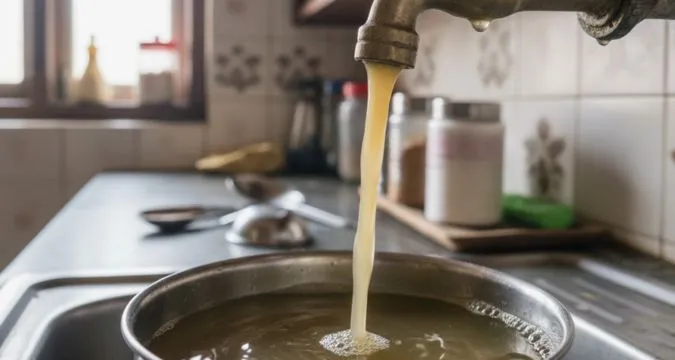
Indore’s experience revealed delays in identifying contamination sources. By the time action was taken, exposure had already occurred.
Without robust monitoring, urban water systems fail in Indian cities because problems are detected too late to prevent harm.
Administrative Fragmentation and Accountability Gaps
Another structural reason urban water systems fail in Indian cities is fragmented responsibility. Water supply, sewage management, road maintenance, and urban development often fall under different departments.
When pipelines are damaged during road work, accountability becomes unclear. When contamination occurs, blame shifts between agencies.
In Indore, as in many cities, coordination gaps slowed response and corrective measures. Clear ownership of outcomes is rare.
Urban governance requires integration. Without it, even well intentioned systems falter.
Climate Change and Environmental Stress
Climate change has added a new layer of complexity. Erratic rainfall, extreme heat, and declining groundwater levels strain water sources and infrastructure alike.
Flooding can overwhelm sewage systems, increasing contamination risks. Droughts force reliance on distant or deeper water sources, increasing pressure on pipelines.
Urban water systems fail in Indian cities because they were not designed for climate volatility. Indore’s reliance on surface water sources makes it particularly vulnerable during extreme weather events.
Public Awareness and Household Practices
While systemic failures dominate, household practices also play a role. Illegal connections, tampering with pipelines, and improper storage worsen contamination risks.
Many households assume municipal water is either entirely safe or entirely unsafe, leading to complacency or fatalism.
Indore’s case shows the need for informed citizen participation. Awareness complements infrastructure, but cannot replace it.
Lessons from Indore for Other Indian Cities
Indore offers critical lessons for urban India.
First, reputation does not equal resilience. Cities must audit invisible systems as rigorously as visible ones.
Second, preventive investment costs less than crisis management. Pipeline replacement, continuous supply, and real time monitoring are not luxuries.
Third, water and sewage must be planned together. Separation on paper creates contamination on the ground.
Finally, transparency builds trust. Public access to water quality data empowers citizens and pressures institutions to perform.
Also Read: Daily Habits Of Highly Successful Person
What Needs to Change Going Forward
If India is to address why urban water systems fail in Indian cities, reforms must be structural, not cosmetic.
Cities need long term infrastructure renewal plans insulated from political cycles. Water supply must move towards continuous systems with pressure management.
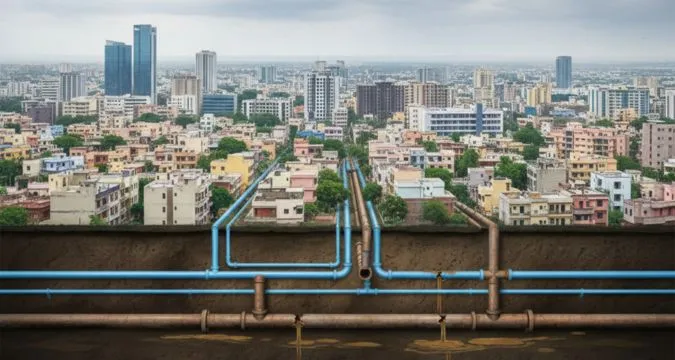
Sewage networks must be expanded and modernized. Monitoring must shift from periodic testing to sensor based real time systems.
Most importantly, governance must be unified. One city, one water accountability framework.
More Read

Conclusion: From Crisis to Course Correction
The Indore water contamination case should not fade into memory as a one time failure. It should serve as a turning point in how Indian cities think about water security.
Urban water systems fail in Indian cities not because of a single flaw, but because of accumulated neglect, fragmented planning, and delayed action. Indore has shown both the vulnerability and the opportunity.
If lessons are acted upon with seriousness, cities can move from reactive crisis management to proactive resilience. Safe drinking water is not a privilege of planning. It is a foundational responsibility of urban governance.
The question now is not whether Indian cities can afford to fix their water systems. It is whether they can afford not to.