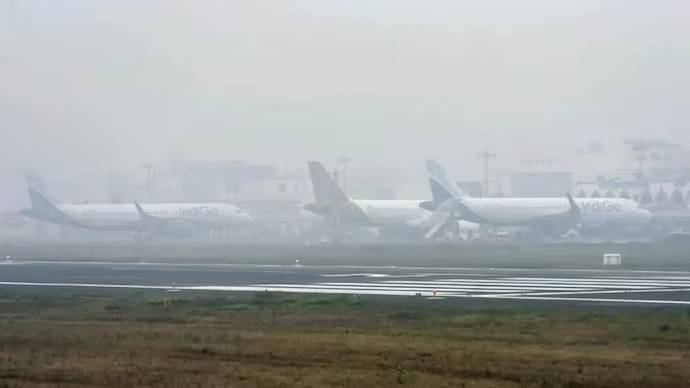
Each winter, when the weather in North and Central India turns colder, air passengers anticipate an experience that has become a routine practice: flight delays, diversions, cancellations, and hours spent in an airport covered with mists. In Delhi to Amritsar, Lucknow to Varanasi winter delays on flights are new headlines like season.
To the passengers, it is a frustrating experience. In the case of airlines, it is operationally draining. Winter is the worst season in the aviation calendar of airports and air traffic controllers.
Why then do we have flights delayed all the time during winter in India? Is it because it is foggy or are there deeper systems issues at the systemic level? More to the point, what can airlines in particular do to mitigate winter flight disruption rather than accept that it is inevitable?
This analytical piece of work determines the true cause of the lack of flight punctuality during winter seasons in India, the history and infrastructure in India that relate to the delay of flights, weather and fog as causes of flight delays, and solutions in details and future that airlines and airports should take on to counter these delays to safeguard passenger and operations.

Indian and winter aviation: a perennial dilemma
Indian aviation has always been put through winter test. In contrast to snow related disruptiveness in Europe or North America, the snow disruption in India is principally of the type of thick fog, low visibility, and cold weather operating constraints.
With reference to the official aviation statistics released during recent years by the government, according to handout information most of the winter flight delays in North India are directly or indirectly related to fog. The rest occur as results of cascading operational failures that proceed subsequent weather disturbances.
The peculiar feature of India is the geographical density of fog airports. Delhi, the busiest air terminal in India, turns out to be the centre of winter flight disruption. When Delhi decelerates, the impact becomes damaging throughout the domestic network.

The delays at winter flights are not a one-off event. These are disruptions which are network-wide.

The difference between winter fog and the other weather disruptions
Fog might be seen to be insignificant when compared to storms or snow falls, but visibility is everything in aviation.
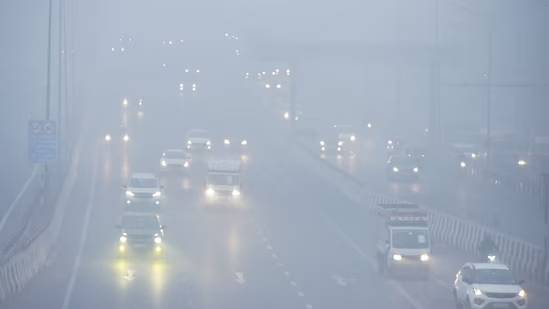
The visibility is reduced to below 50 meters during peak winter mornings and late nights at several Indian airports and at times even zero visibility. In such scenarios:
- During landings, pilots are not able to align aircraft visually.
- Runway markings are lost.
- Aircraft taxiing is also associated with runaway incursions.
- The distance between the aircrafts is to be increased by the air traffic controllers.
This seriously limits the capacity of the airport.

Fog does not move quickly as the rain or wind. It also stays hours, particularly in the Indo-Gangtic plains and therefore delays are not instantaneous.
Science of the impact of fog on aviation in India
The formation of fog in North India depends on a complex of:
- High moisture levels
- Low wind speeds
- Temperature inversion
- Certification nuclei polluting the air.
This produces radiation fog that may be dense and extend throughout the night till late in the morning.
Aviation wise it results into:
- Increased Low Visibility Procedures (LVPs)
- Increased aircraft separation.
- Reduced number of take-offs and landings per hour.
- Alternatives to secondary airports.
In the situation of active LVPs, capacity of the airports may decrease by approximately 50%.
Reasons that flights are stalled during winter other than fog
Although the cause of winter flight delays in India is around fog there are a number of structural and operational problems that intensify delays.
Poor developed landing facilities
Not every Indian airport has a Category III Instrument Landing System (ILS) that enables planes to land even when the visibility is so low.
Even under conditions of Cat III ILS:
- Not all runways are upgraded
- Pilots are not trained in all airlines.
- Not every plane is a certified one.
Such a mismatch generates selective functions making the whole system slow down.
Crew and aircraft preparedness lapses
Winter operations require:
- Special pilot training
- Cold-weather SOPs
- Increased simulator hours
- Precision crew rostering
With the peak seasons, however, there is no or very little spare capacity in airlines, so any disturbance caused by the winter can be a major problem.
When one flight is delayed:
- Crews time out
- Rotations of aircrafts fail.
- Follow on flights are cancelled.
It is through this that an individual delay caused by a fog turns out to be a network jam.
Overcrowded airports and slot congestion
Airports in the Indian metros work near their full capacity even on a normal day.
During winter:
- Runway movements reduce
- Slots cannot be honored
- Congestion on the ground is heightened.
- Delays in aircraft occupy their parking spots.
This is causing a bottleneck effect that can be addressed by no single airline.
Life scenario of passenger hit: a Delhi winter morning
Give the example of a business traveler who is taking a flight between Delhi and Bengaluru in January.
The flight will start at 7:00 AM. There is thick fog making the visibility only 100 meters. Low visibility procedures become eligible. Departures slow down. The plane has been late in an earlier flight. The crew is working under a limited number of hours.
By the time the fog lifts at 10:30 AM:
- 40 flights are waiting
- Slots are reshuffled
- Crew duty time expires
- The flight gets cancelled
The passenger loses meetings, links, and hotel reservations. The airline absorbs cost. The airport has the problem of handling the crowd.
The situation happens hundreds of times a year in winter.
Indian challenges to winter aviation
The aviation ecosystem in India has its own issues during winter and is not similar to the global environment.
Large passenger traffic and low flexibility
India boasts of the fastest growing domestic aviation market. The continued demand during winter is because of the weddings, holidays and business travel.
Young markets unlike the mature markets, passengers are not given enough alternative modes of transportation thus being more dependent on flights.
Regional airport infrastructure deficits
Numerous Tier-2 and Tier-3 airports are deficient in:
- Advanced ILS systems
- Fog-resistant lighting
- Qualified staffing of winter operations in ATC.
Diversions to these airports are usually accompanied with additional delays.
Communication and passenger management
Inadequate communication is one of the greatest complaints with delay during wintertime.
Passengers often report:
- No clear updates
- Last-minute cancellations
- Poor rebooking support
This converts the customer trust problem to weather delays.
The impact of airlines in minimizing winter airline delays
The winter disturbances can never be completely cleared. Nevertheless, they can be mitigated by a lot of planning, investment and responsibility.
Unless invested more in the advanced landing capability
Airlines must accelerate:
- ILS-compatible aircraft induction, Cat III.
- Low-visibility landing pilot training.
- Exercises in simulator periodically prior to winter.
This will guarantee that more flights can be made to work safely in fog.
Construct winter dedicated flight scheduling
The airlines should not keep summer schedules during winter, instead:
- Cut the early morning flights in areas that are prone to fog.
- Insert delays between rotations of aircrafts.
- Plan realistic block times
This enhances on-time performance even when it is interrupted.
Enhance crew and aircraft cushions
Airlines need:
- Fog bases have standby crews.
- Aviation spare capacity.
- Flexibility in crew rostering policy.
This avoids cancellations.
Enhance airport coordination and ATC
Real-time operations coordination between: is required in winter operations.
- Airlines
- Airports
- Air traffic control
- Ground handlers
Confusion in the case of real fog can be minimized by joint winter practice drills.

The airport role in controlling winter delays
The airports are not onlookers of winter aviation.
They must focus on:
- Quick runway visibility determination.
- Efficient ground lighting
- Quick snow and precipitation clearance (where necessary).
- Delays Comforts Passengers.
The large airports should also invest in AI-powered weather forecasting systems that are able to predict the onset of the fog with more precision.
Regulator and government accountability
The aviation regulator and infrastructure planners are very important.
Key focus areas include:
- Quickened ILS improvements in airports.
- Compulsory winter preparedness inspections.
- Clearly reported causes of delay.
- Airline compensations enforcement.
Delays of winter flights should be regarded not as a seasonal but as a systemic problem.
International aviation systems lessons
The countries with serious winters have proven that disruption can be reduced.
Key takeaways:
- Delays caused by surprises are minimized by advanced forecasting.
- Open communication with the passengers helps in anger reduction.
- Long term infrastructure investment yields long term dividends.
- India would be able to warp these teachings to its climatic conditions.
Future solutions: winter aviation in the next ten years
In the future, Indian aviation should be ready to:
- Increased air traffic
- Weather insecurity, which is climate-related.
- Increasing passenger expectations.
Emerging solutions include:
- AI-driven fog prediction
- Automated slot remodel systems.
- Passenger communication platforms: digital.
- Low visibility green taxiing technologies.
Winter aviation has to exist in the future which requires proactive planning rather than apologies.
What can passengers do in winter traveling
Passengers do not have nothing to do.
Practical steps include:
- Early flights during the peak of winter should be avoided.
- Select airlines that have a good performance during the winter.
- Have buffer connection time.
- Keep a watch on the airline advisories.
- Choose flexible tickets in the season of fog.
Educated passengers have fewer shocks.
More Read

Lessons learned: transforming winter disarray into operations
Winter flight delays in India are factual, habitual and disruptive. Chaos cannot be natural, and it may be fog.
With:
- Better infrastructure
- Smarter scheduling
- Trained crews
- Transparent communication
Disruption of flights during winter can be greatly decreased by airlines.
To the passengers, preparation and awareness is the key. To the airlines and authorities, accountability and investment cannot be compromised.
Each year winter will come back. It is not whether or not flights will be put in the fog, the question is whether or not the aviation system is prepared to meet it.