The Venezuela crisis is commonly perceived as a far-off Latin American phenomenon, but whose implications go much farther. In the case of India, which is an emerging fast expanding economy, the third largest importer of oil in the world and a nation that has to endure complicated global politics, the insecurity in Venezuela raises some crucial questions.
So what really happened in Venezuela?
How did one of the richest countries in the globe in terms of oil wealth fail economically and politically?
But above all, will the Venezuela crisis touch India in some way or another?

This analytical study outlines the Venezuela crisis from the beginning to its current state and then discusses how oil security, Indian diplomacy and strategic interest collides with the Venezuela crisis.
Venezuela: From Oil Superpower to Crisis State presents a study of the nation
Venezuela used to be one of the richest nations in Latin America. It rose to prosperity through a single source, which was oil. The nation has some of the biggest proven reserves of crude oil in the world and thus is a key player in the world energy markets.
Following decades, oil money subsidized government welfare, infrastructure as well as foreign relations. But overreliance on oil also left Venezuela very susceptible to price gouging, politics and mismanagement.
Venezuela flourished when the cost of oil was high. As the prices went down, cracks started to form.
The Origin of the Venezuelan Political and Economic Crisis
The Venezuela crisis did not occur immediately. It developed within years because of a political ideology, mismanagement of the economy, and the push of foreign powers.

Without Diversification in Oil Dependency
Venezuela was dependent on oil exports to the point of nearly depending on them to support the economy. Manufacturing, agriculture and private enterprise was forgotten. With massive falls in oil prices in the aftermath of 2014, government revenue caved in.
Authorities resorted to printing money instead of restructuring the economy and this resulted in hyperinflation. Prices were skyrocketing, savings were lost and even basic commodities were unaffordable.
Political Polarisation and Government Problems
Over the consecutive regimes, power had become more centralized. The opposition to politics became feeble, institutions were deprived of autonomy and confidence in the government dissipated. There was also election wrangling, doubt of legitimacy and the aggravation of political unrest.

The outcome was a series of demonstrations, raids, and unrest.
Sanctions and World Isolation
The situation was aggravated by international sanctions, particularly in the oil industry of Venezuela. The sanctions curtailed how Venezuela could sell oil willingly, interface in world fiscal networks, and get investment.
Capital, technology, and lack of capital reduced the oil production significantly. Refineries aged. Proficient laborers abandoned the nation.
Human Impact: When a Crisis Becomes a Humanitarian Disaster
The Venezuela crisis is not only a politics and oil problem, but a human crisis.
Millions of Venezuelans have been afflicted by:
- Extreme food and medicine shortages.
- Healthcare system failures.
- Electricity blackouts and lack of ice.
- Massive migration into the late nations.
The inflation was so high that one needed to change the prices of basic things several times per day. Payments lost their value. Schooling was undermined as teachers and students had to make ends meet.
This dehumanization is an urgent context to the realization of why the instability in Venezuela cannot be perceived in a vacuum.
Recent Developments: Why Venezuela Is Back on the World Radar
Venezuela is once more in the spotlight of the international community in recent years thanks to the increased level of political tension, conflicts between leaders, and international intrusion. The intensity of the power struggle within a country became stronger, military forces grew more and more influential, and foreign responses differed.
The world powers were preoccupied with reestablishing the democracy process and some were with the strategic and energy interests. This has been the new focus, and it has caused doubt about the future of the political direction of Venezuela.
It would be of concern to countries such as India
by virtue of global uncertainty not through ideological grounds but global uncertainty impacts energy markets, trade routes and diplomatic balances.
India Venezuela: Oil Built Relationship
India and Venezuela have a long history of engagement based on energy.
Venezuela is a target of Indian interest in oil.
India relies on outside sources to supply more than 80 percent of its crude oil requirements. Energy security is hence a priority among the nations. The heavy crude in Venezuela was compatible with certain refineries in India hence made them an attractive supplier at the beginning of the 2000s.
Another indication of Indian long-term interest and not short-term trade was the Venezuelan oil projects.

Diplomatic Engagement
South-South cooperation, mutual respect, and non-interference were the three bases of diplomatic relations between the two countries. Venezuela stood with India in the multilateral forums, as India urged a peaceful solution of the internal problems of Venezuela.
This moderated floor did not interfere with the internal Venezuelan politics and enabled India to remain engaged.
India-Venezuela Oil Trade Deterioration
With sanctions increasing and Venezuela reducing its production, India slowly decreased oil imports with Venezuela. The logistical, financial and legal problems motivated refiners to seek alternative suppliers.
This change leaves behind an important question:
Suppose that now India does not need to take much oil through Venezuela: does the crisis still count?
The response is yes – but not so evidently.
The way the Venezuela Crisis will affect India Indirectly
Global crises can have a ripple effect even in the case of limited success in direct trade. India can be affected by the Venezuela crisis indirectly though significantly.
Market Stability and Global Oil Prices.
The supply volumes are not the only factors that affect oil prices; another factor is the market sentiment and geopolitical risk. Extended instability in oil rich areas can drive the higher prices.
To India, oil prices will be increasing:
- Increased import bills
- Pressure on the rupee
- Rising fuel prices
- Food and transport effects of inflation.
A minor disruption of global supply chains can impact even an oil-dependent country like India.
Strategic Planning and Energy Security
The crisis in Venezuela underlines an important lesson to India: energy diversification is needed.
India has responded by:
- Ensuring suppliers on a regional basis.
- Expanding strategic petroleum stocks.
- Investment in green energy.
- Encouraging exploration within the country.
The Venezuela meltdown demonstrates the dangers of political instability among supplier nations – a crucial issue to the long-term energy security of India.
Diplomatic Balancing of Polarised world
The Indian foreign policy is also tested in the Venezuela situation.
India has always followed the tradition of not interfering in the affairs of other countries. Instead, it promotes dialogue, sovereignty as well as non-intervention.
This approach helps India:
- Keep contacts with the various world superpowers.
- Protect its citizens abroad
- Maintain strategic tradeoff.
But neutrality when safeguarding the economic interests must be done with delicate diplomacy.
Non-oil Strategic Interests
India is not just interested in Venezuela due to the short-term oil imports.
Overseas Investment Protection
Indian firms are invested in Venezuela energy projects. Changing political regimes or long-term instability may have an impact on asset value, future returns, and contractual obligations.
To protect its long-term interests, India should therefore follow events keenly.
Global South Solidarity
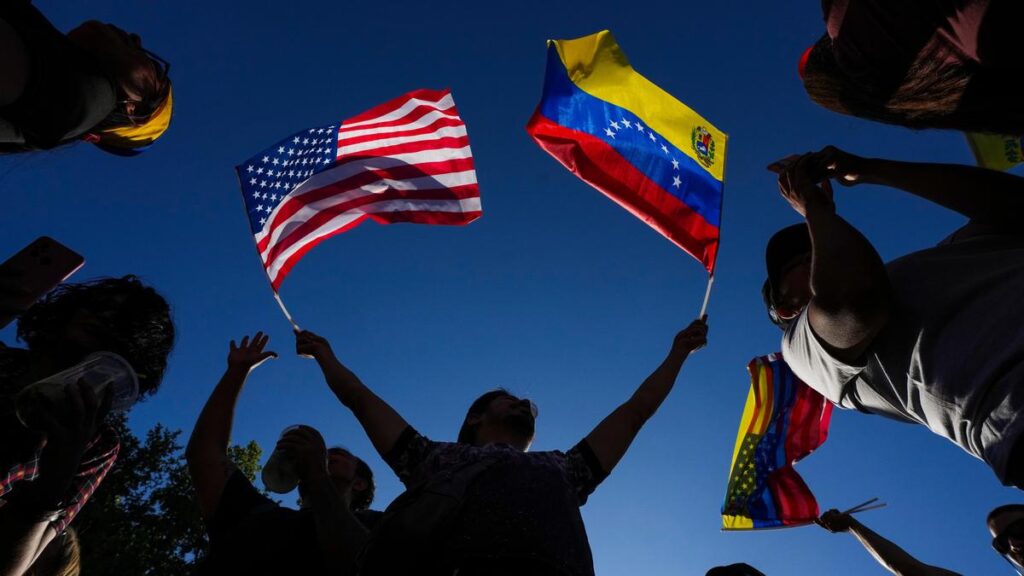
The case of Venezuela echoes with increased issues of the Global South, including economic insecurity, sanctions, and political suppressions.
The nature of India vis-a-vis Venezuela indicates its overall interest in representing the views of the developing countries on the international platforms.
Will the Crisis in Venezuela have any effects on the Global Position of India?
This will depend on the way global alignments change.
When Venezuela becomes stable and reemerges in the global markets, there is a likelihood that India will be offered chances of partnering in energy projects. In the event of continued instability, risk management will continue to be the main concern of India other than growth.
In both cases, the reaction of India to Venezuela reinforces the perception of a mature, sensible player in the international arena.
What Venezuela educates India on its Downfall
The case of Venezuela has valuable lessons to India and other third world economies.
Diversification in the economy is important.
The dependence on one resource can be fatal.
Strong institutions matter
The long-term growth is secured by political stability and autonomous institutions.
Energy is not called enhanced immunity.
Prosperity cannot be assured only by natural resources.
Resilience is necessitated by global integration.
Economic shocks are enhanced by isolation.
Reforms by India within the energy, manufacturing, and governance resolutions are to keep these traps at bay.
What Indian Segment Observers Will Watch in the Future?
The Venezuela crisis is not an alien tale to students, professionals, investors, and policymakers.
The major indicators to observe are:
- Global oil price trends
- Diversification of energy in India.
- Foreign policies on Latin America.
- Changes in sanctions around the world.
Knowledge of these factors can decode the influence of the distant crises on domestic reality.
Suggestions to Indians
On one hand, people are powerless to affect geopolitics; however, awareness is significant.
Students can:
- Investigate the aspects of energy security and world economy.
- Monitor the trends of international relations.
Professionals can:
- Know the impact of world oil prices on sectors.
- Expect inflation and pressure on costs.
Businesses can:
- Expect a fuel-related change in cost.
- Planning Track geopolitical risks.
More Read

The reason Venezuela remains of interest to India
The Venezuela crisis might seem so far geographically, however, its excess spreads over the oceans with oil markets, diplomacy and stability of the world.
Fear is not the critical lesson, but commitment is the critical lesson when it comes to India.
Through a balanced mix of energy sources, diplomatic stability, and drawing lessons about failure elsewhere, India would withstand shocks even in the most stormy areas.
The crisis of Venezuela is a reminder that activity of the globalizing world means that no crisis is actually far away – and strategic foresight is the greatest strength that India has.