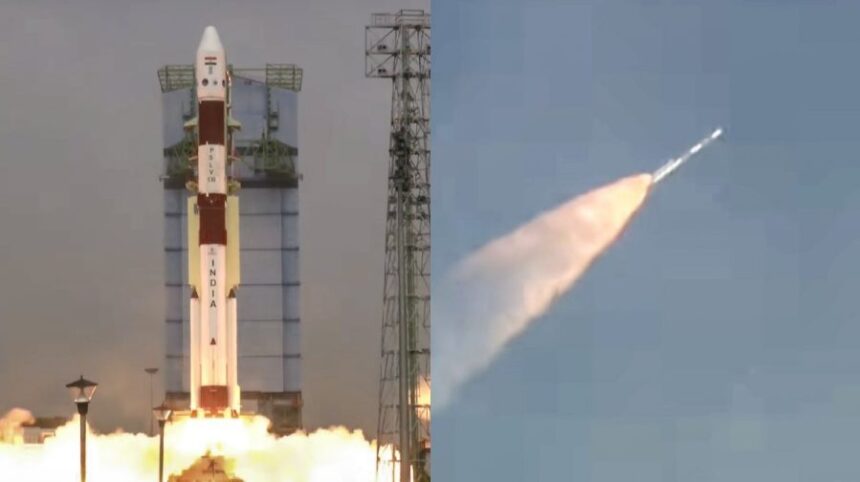
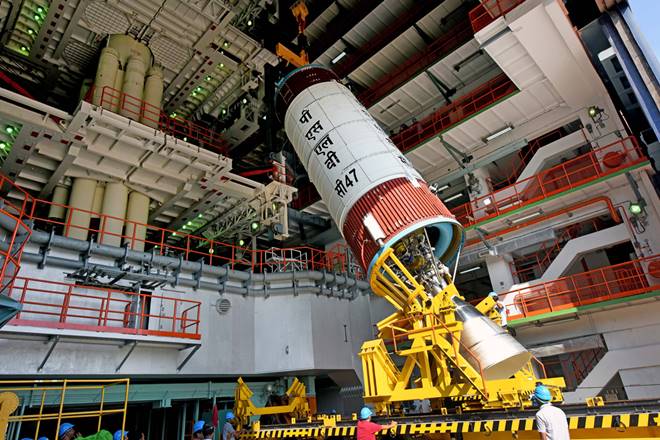
India has been proud of its space programme. Since it was established in the 1974s, the Indian Space Research Organisation has garnered much respect all over the world, especially with its ability to launch satellites at low costs and put probes in Mars during the first attempt. One of the pillars of this success has been the Polar Satellite Launch Vehicle commonly referred to as PSLV over decades.
This was the reason why the failure of the recent PSLV mission was a shocking event. A mission that should have marked a new dawn of ISRO in its history instead came to become a reminder of the complexity and brutality with which space technology operates. It was not merely a satellite that had not gone into its orbit correctly, but it cast serious doubt on dependability, checking mechanisms and the future of the developing space program in India.
In this article, it is described what went wrong with the recent launch of ISRO, why the failure of the PSLV, as covered, is much more than meeting headlines, and how India will react.
The PSLV Story: Why this Rocket is important to India
In order to see what kind of a blow to the head the failure was, one must engage in some understanding of what PSLV was.

PSLV has been referred to as the most reliable launch vehicle of ISRO. PSLV has sent:
- Indian earth observation satellites.
- National security in navigation satellites.
- Hundreds of foreign satellites, and revenue and trust.
There were years when PSLV was associated with consistency and accuracy. The reason why the clients were international was that PSLV was reputed to do the job.
That is why failure in launch of a PSLV is never taken as a matter of course.
What transpired on the last launch by ISRO
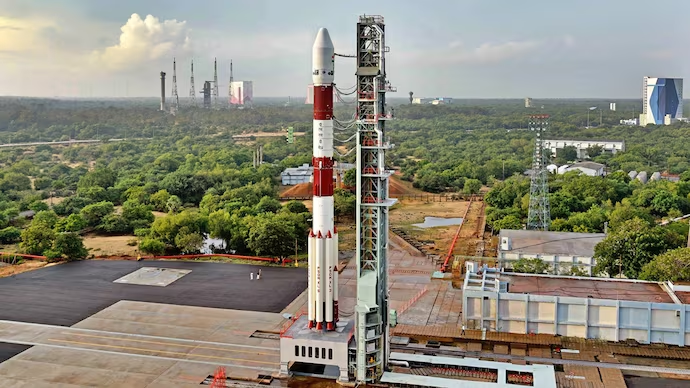
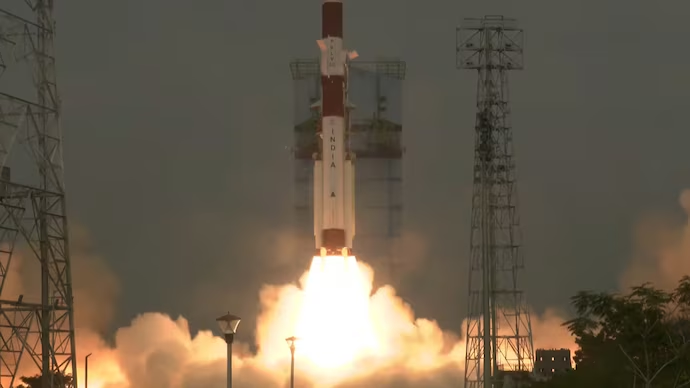
In their last mission, the PSLV successfully took off easily at Sriharikota. The first steps were taken as usual, and at a certain time, everything seemed right.

Then came the problem.
It was said that a diversion had been noticed in the third phase of the rocket. This stage is one of the critical stages in the mission. Any deviation at this stage may jeopardize the whole flight.
The satellite failed to reach its desired orbit resulting in the failure of the mission.

In simple terms:
- Launch was successful
- Orbit insertion failed
That difference is essential as it is an indication of a particular technical failure, rather than a total system meltdown.
Knowledge of the Third Stage Saccharine in Simple Words
The anomaly of the PSLV third stage has turned out to be under the scope of investigation.
This is why the third stage is so important:
- It gives a significant percentage of the speed required to remain in orbit.
- It works under high pressure and high temperature.
- Even minor abnormalities would multiply fast.
Even a slight change in the chamber pressure, the difference in thrust, or guide misplacement might lead to a drift of the satellite off the selected path.
The experts cite potential causes as:
- The solid motor combustion was intermittent.
- Varying pressure occurrences within the chamber.
- Control system deviation
ISRO has not yet issued a final technical report, but this has been known to happen occasionally, where third-stage problems are hard to forecast and control.
The reason why this failure is being taken seriously
India is a frequent launcher of rockets. Not all failures make headlines. So why is this one different?
Because:
- PSLV failures are rare
- Numerous satellites had been compromised.
- This is at a time at which the Indian space industry is growing.
- International trust is important in business debuts.
India has been a low-cost rival to conventional space powers in the past years. That image can be tainted, at least in the short term, by any perceived reliability concern.
That is why this is being termed as a major ISRO space mission set back and not a routine anomaly.
An overview of the Past Setbacks of PSL V
It is not the first time PSLV experienced difficulties.
Previously, standing alone failures were witnessed in ISRO because of:
- Sensor malfunction
- Stage separation issues
- Pressure anomalies
Whenever, the organisation reacted with profound failure studies, redesigning of the system and enhanced quality inspection.
The ability to learn fast and with force was traditionally the core of ISRO, which does not mean never to make mistakes but to learn.
Immediate Response of ISRO: Unruhled, Open, Technical
The reaction of ISRO was one of the remarkable features of this event.
No denial, no confusion or speculation. Officials accepted the anomaly in a few hours and confirmed that:
- Data analysis had begun
- An overview authority would be established.
- Future launches would be considered carefully.
The strategy is symptomatic of the institutional maturity of ISRO. Openness creates trust both at the domestic and international level.
The Implication This Has on the Space Roadmap in India
The space interests of India are growing at a high rate. Upcoming plans include:
- Human spaceflight missions
- State-of-the Art Earth observing systems.
- Greater partnership with startups made private.
- Heightened commercial satellite launching.
The failure of a PSLV satellite launch does not stop any of these plans, however, it puts spectators on alert.
Prior to the subsequent launch, ISRO can be expected to:
- Overview manufacturing processes.
- Re-analyze third stage design parameters.
- Enhance quality control.
Delays may occur on a short-term basis. Long-term damage is unlikely.
Human Side of Space Failures
Making it to launch is a range of thousands of engineers, scientists, and technicians.
One of the senior ISRO engineers has once remarked that every unsuccessful launch is like a boat-load of years being lost in a few seconds. Most of the members of the teams work under severe pressure sometimes not with their family and are solely motivated by national pride.
In India, ISRO launches are usually used to motivate school children in the countryside. A government school teacher in Telangana explained how students would assemble to view the live launch only to come back later with queries as to why it did not work.
Failures, which are painful, turn into moments of strong things learned.
International Statement: Failures Are not Exclusive to India
Even the most developed space agencies have not been spared.
- Billion-dollar budgets failed to win NASA missions.
- There were numerous launch failures by SpaceX before success.
- Recent anomalies have been experienced in European launch vehicles.
Space exploration has also been among the most complicated engineering problems faced by man.
India in that regard seems professional in its reaction.
The Indian Economic and Strategic Impact
Space missions are not mere scientific projects. They influence:
- Weather forecasting
- Agriculture planning
- Disaster management
- National security
The availability of data may be influenced by a delayed Earth observation satellite. Nonetheless, India has backup mechanisms as well as alternative satellites in place to ensure reduced interference.
India has long-term space objectives, which are intact strategically.
What India Can Learn out of this Failure
Each failure provides an indication. Some key lessons include:
- Mature systems should be reviewed constantly.
- The strengthening of redundancy should be done at key points.
- Design is not as important as manufacturing consistency.
- Openness ensures the confidence of the population.
These principles are already held by the internal culture of ISRO and that is why the recovery process will be quick.
The reason why Public Trust is not yet lost
Although this is disappointing, it is backed by the populace in most aspects.
There are social media discourses:
- Pride in ISRO’s openness
- Technical risk knowledge.
- Bravery in new enterprises.
The space programme in India has ever been considered a national initiative rather than a government initiative.
Relating Technology Failures to Indian Wide Problems
Surprisingly enough, such situations are reflective of the struggles in other industries.
As India has a set of questions such as why the cost of living is increasing at a faster rate as compared to the rate at which income in India is increasing, space failures also remind us that there is no linear progress. Growth, be it economic or technological, is characterized by setbacks.
The same strength which is required to cope with the increasing cost of living in India is that of scientific progress – adapt, reform, and go on.

PSLV and ISRO Future
In the near term, it is likely to include:
- Investigation reports in detail.
- Design improvements Incremental.
- Slow introduction of launches.
ISRO has bounced back in the past with a greater force. It is hardly plausible that it will be different this time.
The PSLV will continue to fly. The lessons learnt will inform its future missions.
What Can Be Learned by Students, Professionals, and Young Engineers
To students that want to work in the field of space science or engineering:
- Innovation entails failure.
- It is systems thinking that is more important than brilliance in an individual.
- True success is characterized by accountability and learning.
To practitioners, the way that ISRO handled the crisis provides a crisis management and transparency lesson.
More Read

Overall Lessons: More than Failure
- The failure in the PSLV mission was related to an anomaly, rather than a system failure.
- The reaction of ISRO is professional and mature.
- The space ambitions of India are not as weak.
- When managed properly, failures contribute to success in the future.
The Indian space missions are not over in spite of failure, but because it is learning.