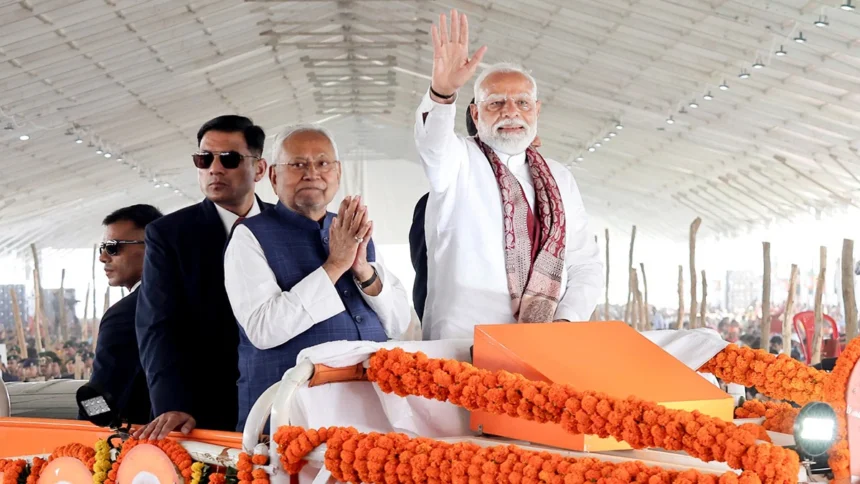
n what is being perceived as a crucial turning point ahead of the 2025 assembly elections in Bihar, Prime Minister Narendra Modi has publicly backed Nitish Kumar as the Chief Ministerial face of the National Democratic Alliance (NDA) in the state. Breaking with past caution and ambiguity, Modi’s clear endorsement signals a high‐stakes political strategy — meant to consolidate the alliance, counter opposition narratives and shape the electoral momentum in the region.
The move comes against the backdrop of intense electoral competition, shifting allegiances, and a region that holds high political value for national parties. It invites the question: Is this endorsement a masterstroke that will deliver the NDA an emphatic victory in Bihar, or will underlying tensions, voter sentiment and regional dynamics undermine the strategy?
In this article we explore the background of Bihar politics, the significance of Modi’s endorsement, motivations, implications for the NDA and opposition, potential risks, and what this means for the upcoming 2025 polls.
Political Context: Bihar’s Changing Landscape
Bihar has always been a crucible of Indian politics: a state with complex caste alignments, migratory workforce, regional economic challenges and intense electoral contests. The 243‐seat state assembly is crucial for any national party’s narrative. The upcoming 2025 Bihar Legislative Assembly election is seen as both a test and a bellwether.

Nitish Kumar, former Chief Minister and leader of the Janata Dal (United) (JD(U)), has been a dominant figure in Bihar for decades. His slogan of “sushasan” (good governance) and his alliances have shaped the state’s politics. The breakdown and rebuilding of alliances (notably with the BJP and later break-ups) add to the fluidity of the current scenario.
Recently, the opposition bloc (the Mahagathbandhan) named Tejashwi Yadav as its CM face, prompting the NDA to respond with urgency. Modi’s endorsement of Nitish comes just days after the opposition’s announcement, underscoring the heightened stakes.
The endorsement is not simply a campaign slogan — it is a strategic move with multiple implications: projection of stability, unity of alliance, clarity on leadership, signalling to voters of continuity, and countering criticism that the BJP may sideline Nitish post-polls.
Why is Modi’s Endorsement Significant?

1. Leadership Clarity
Until now, speculation has swirled around who will be the CM if the NDA wins. Some analysts believed the BJP might field its own candidate or remove Nitish post-polls. The explicit endorsement by Modi removes ambiguity, giving the alliance a clear top‐face to rally around. As one report states: “For the first time Prime Minister Narendra Modi endorsed Nitish Kumar as the BJP-led National Democratic Alliance’s chief ministerial face…”

2. Alliance Cohesion and Momentum
An endorsement from the national leader of the alliance carries weight in rallying regional units, allies and cadres. It sends a message of unity to voters, that the NDA is not fragmented but drawing strength from its regional partner. This is especially important given Bihar’s complex caste arithmetic, coalition compulsions and regional rivalries. Modi, in his rallies, emphasised that under Nitish’s leadership the NDA will break previous records and deliver a bigger mandate.
3. Attack on Opposition Narrative
By projecting Nitish as the face, Modi also draws a contrast with the opposition’s choice of Tejashwi Yadav. The PM slammed what he called “jungle raj” under the RJD years, promising stability, law & order and development under Nitish. Such rhetoric aims to shape voter perceptions — that the NDA already offers continuity of governance while the opposition may bring chaos.
4. Electoral Engineering
The timing of the endorsement — during the first big campaign rallies in Samastipur and Begusarai — is strategic. These are ground-level mobilisations designed to set the tone for the campaign, indicate commitment and create a narrative for the next few weeks.

5. Reinforcing Nitish’s Brand
Nitish has style and substance in Bihar politics (often referred to as “Sushasan Babu”). The endorsement strengthens his positioning and credibility in front of voters, especially given that some questions had been raised about his continuity as CM. By publicly endorsing him, Modi elevates his stature and signals trust.
Motivations Behind the Move
For Modi and the BJP
-
Electoral Advantage: The BJP may be seeking to leverage its national appeal combined with Nitish’s regional strength to sweep Bihar. A clear face simplifies voter messaging.
-
Containment of Rival Ambitions: By endorsing Nitish publicly, the BJP also anchors the CM‐face question and sidesteps internal BJP leadership aspirations in the state.
-
Narrative Framing: The endorsement gives the BJP a chance to frame the poll as a continuity vs change debate — continuity (NDA + Nitish) vs change (Opposition + jungle raj).
-
Alliance Management: A public show of support signals to regional allies that their leadership is valued and trust remains. It helps maintain coalition integrity.
For Nitish Kumar
-
Validation of Leadership: The endorsement by the national leader not only boosts his image but also strengthens his hand within the alliance and within his party.
-
Shielding from Speculation:There has been speculation in past years that his leadership might be diluted; a public backing counters that.
-
Positioning as Winner: Being the CM face sets expectations high and frames him as the probable next Chief Minister, giving him the campaign focal point.
For the NDA Alliance as a Whole
-
Unified Front: Projection of a united alliance with a clear leader helps voters believe in stability.
-
Clear Messaging: With a named face, campaign messaging becomes sharper — voters know exactly what or whom they are voting for.
-
Countering Fragmentation: Regional parties often caution coalition partners about leadership changes post-polls; this endorsement tries to preempt those concerns.
Implications for the Election
Prospective Benefits
-
Electoral Push: The endorsement may galvanise the NDA vote bank, especially among voters who seek stable leadership and governance.
-
Disruption of Opposition Strategy: By naming a CM face, NDA removes a denial or challenge against the opposition’s narrative of leadership uncertainty.
-
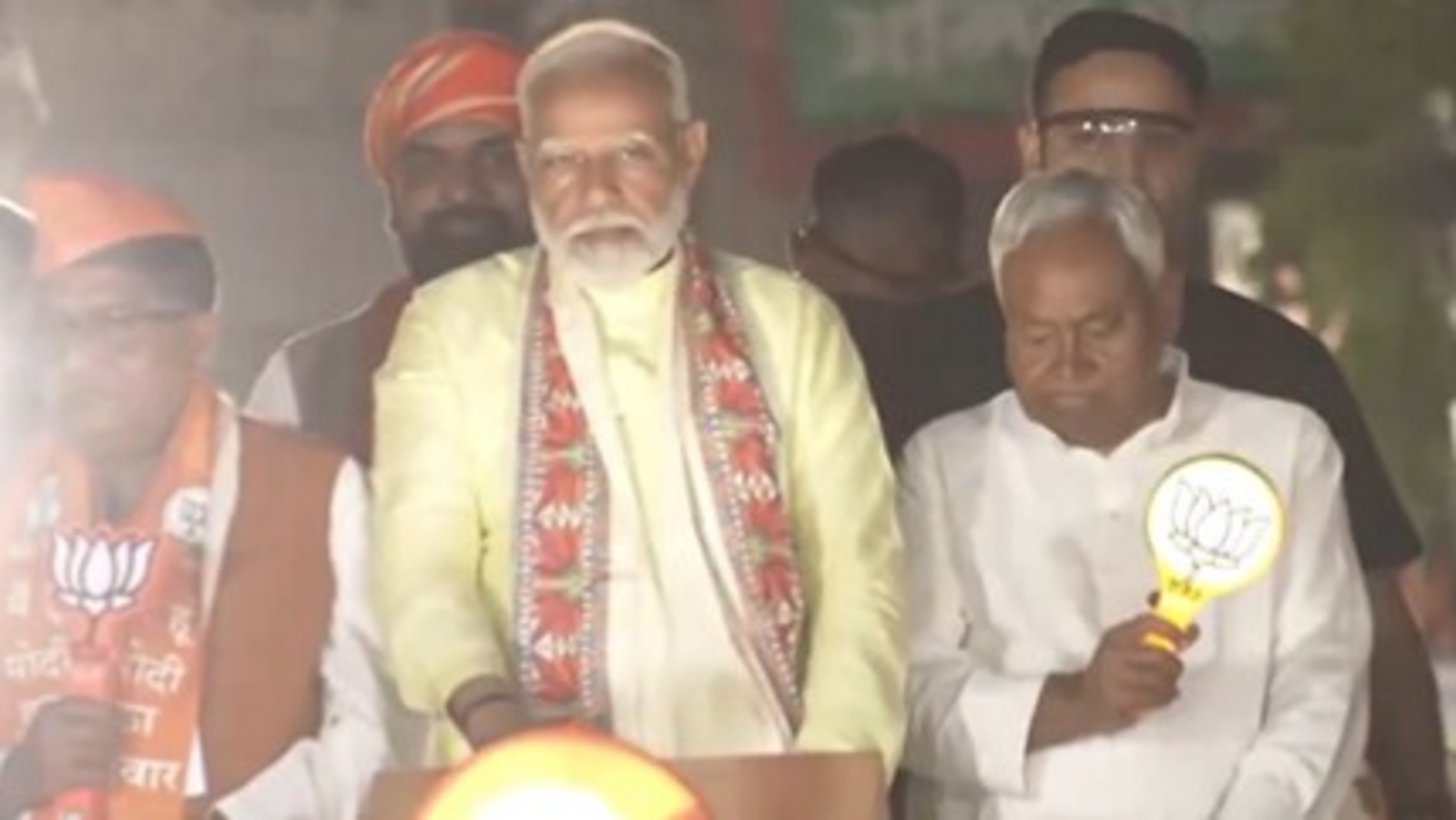
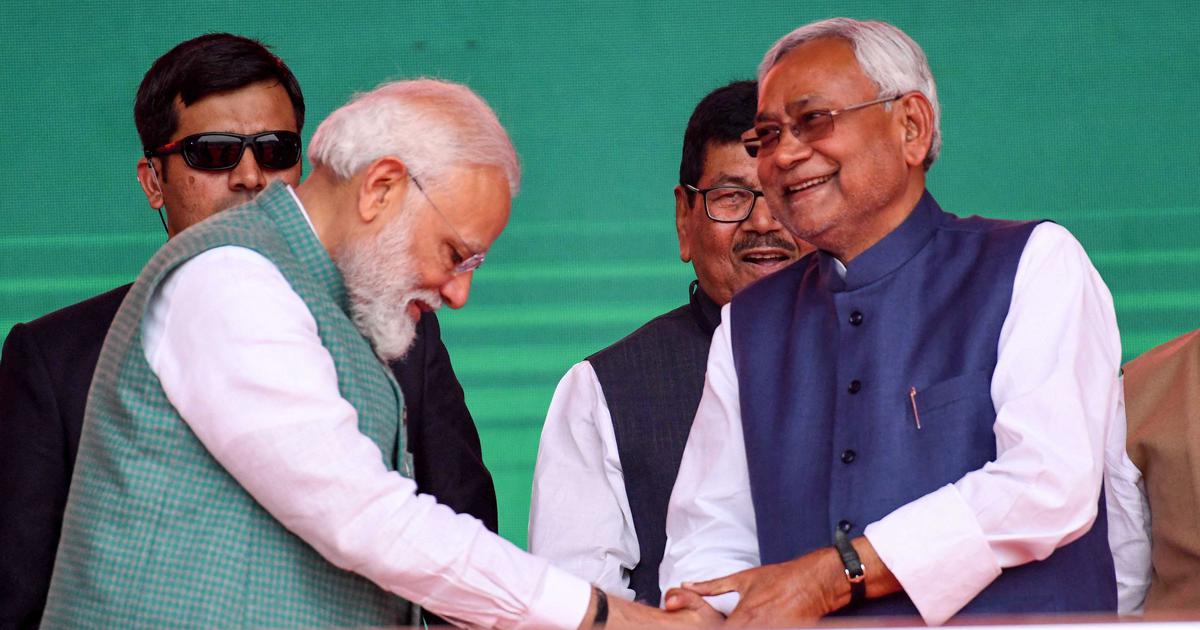
Campaign Momentum: The symbolism of Modi + Nitish together creates media buzz, energises cadres and may shift the electoral complexion.
-
Voter Psychology: For undecided voters, the endorsement may tip the preference towards NDA by signalling decisiveness.
-
Caste and Regional Balances: Nitish’s identity (Kurmi caste, OBC background) combined with BJP’s national footprint may help cover crucial electoral segments.
Risks and Challenges
-
High Expectations: Naming a face builds expectations of victory; failure to deliver will be seen as a major blow.
-
Over‐Centralisation of Message: If the strategy depends too heavily on one individual, it may overshadow local issues or ignore coalition dynamics.
-
Opposition Mobilisation: The opposition may now mobilise voters around change, anti‐incumbency or target Nitish’s long tenure.
-
Internal Alliance Friction: Other regional allies or BJP cadres may feel sidelined if the face becomes too dominant.
-
Voter Sentiment: As per recent media reports, voters in Bihar remain concerned about unemployment, migration, and unfulfilled promises. The endorsement might not overshadow these issues.
How the Opposition Responds
The Mahagathbandhan, which named Tejashwi Yadav as its CM face, responded with criticism and counterclaims. Tejashwi asserted that despite the endorsement, the BJP does not intend to give Nitish the Chief Minister’s office — indicating underlying alliance tensions.
The opposition is likely to focus on framing the election as a change versus continuity narrative, emphasising youth employment, migration, development deficits and raising issues of accountability. The endorsement from Modi may force them to recalibrate messaging: they must now challenge both Modi and Nitish, rather than just one. It may also push them to highlight possible discontent within the alliance or invoke coalition fatigue.
What Voters Should Watch
For voters in Bihar, the endorsement brings several signals and they should watch for:
-
Promises vs Past Record: How the NDA bridges the gap between what has been promised and what has been delivered over many years under Nitish and BJP governance.
-
Local versus National Issues: Will the campaign focus on ground‐level issues (jobs, agriculture, migration) or get dominated by personality politics?
-
Alliance Cohesion: Whether the NDA alliance can sustain unity post-election if they win, and whether the CM face remains stable.
-
Opposition Realignment: Whether the opposition can consolidate a credible alternative, shift youth and urban sentiment and exploit any cracks in NDA.
-
Campaign Dynamics: How the endorsement changes rally attendance, media coverage, voter enthusiasm and shifts in polling.
-
Polling Phases & Turnout: Since Bihar polls will be held in phases (Nov 6 and 11, 2025) according to reports, turnout and phase-wise performance matter.
The Broader Significance for Indian Politics
This is not just a Bihar‐specific story. The endorsement has national reverberations:
-
Modi’s National Strategy: It underlines how the BJP under Modi seeks to shape state elections by projecting regional allies instead of solely its own leaders.
-
Regional Power Dynamics: Nitish Kumar’s role being elevated shows the importance of regional party leaders in India’s coalition politics.
-
Election Template: If successful, this endorsement model may be replicated in other states where alliances exist: naming face + national leader backing = stronger campaign.
-
Narrative Battle: The opposition’s national narrative may shift if Modi+Nitish succeed in capturing Bihar, influencing other states’ contests.
-
Coalition Evolution: The balance between national party (BJP) and regional partner (JD(U)) leadership may evolve — whether the face remains the regional partner or whether BJP gradually takes control.
Is It a Masterstroke?
Labeling this a “political masterstroke” depends on how it plays out in ground reality. On one hand, the move has smart fundamentals: clarity of leadership, timing, narrative control, alliance signalling and media momentum. But on the other, Bihar has fragile socio‐economic structures, entrenched caste dynamics, migration issues, and voter fatigue.
If the NDA under Nitish wins convincingly, this endorsement will be seen as a masterstroke. If not, it may instead highlight the limitations of top‐down endorsements without deeper engagement. The real test will be: Can the leadership translate promise into performance? Will voters see tangible change in their lives beyond campaign rhetoric?