In a country that is about to have a potentially discerning democratic moment, the Maharashtra election 2026 is one of the most politically heavyweight and consequential fights in the state. Not only is Maharashtra the second-populous state in India; it is also its economic powerhouse and has a significant impact on the national GDP, industrial production, and political orientation.
The elections in Maharashtra in the last 10 years have marked profound changes in the priorities of voters, politics of alliances, and expectations of governance. Dramatic government collapses, coalition experiments that no one envisioned are all a part of the state living case study of modern Indian politics.
This detailed examination examines the exact message that the voters of Maharashtra are actually communicating, the best issues of the election that are currently influencing the masses, and an empirical effort at answering the most asked question at this point in time: who is going to get elected in the Maharashtra election in 2026?
The Maharashtra Assembly Election 2026: Why the election is important to India
Maharashtra has been characteristically central to Indian politics. The state also has Lok Sabha and Maharashtra Assembly representations of 48 MLA and 288 MP respectively. Any decision made here has a ripple effect on the economy of India, federal politics, as well as on governance models.

What is so significant about the Maharashtra assembly election 2026 is that it is a combination of several factors:
- Ten years of political turmoil.
- Divided regional parties and vote switching.
- Increasing economic pressure and generous welfare programmes.
- City suburbs are getting more polarized.
This election has ceased to be just about ideology to the voters. It concerns the delivery of governance, stability and survival on a daily basis.
A Concise Political History: The Maharashtra that Got to This Step
The tumultuous political crossover since 2014 needs to be reexamined in order to comprehend the sentiment of voters in 2026.
Two large poles in Maharashtra politics have been dominating the politics over decades:

- Congress-NCP alliance
- BJP-Shiv Sena alliance
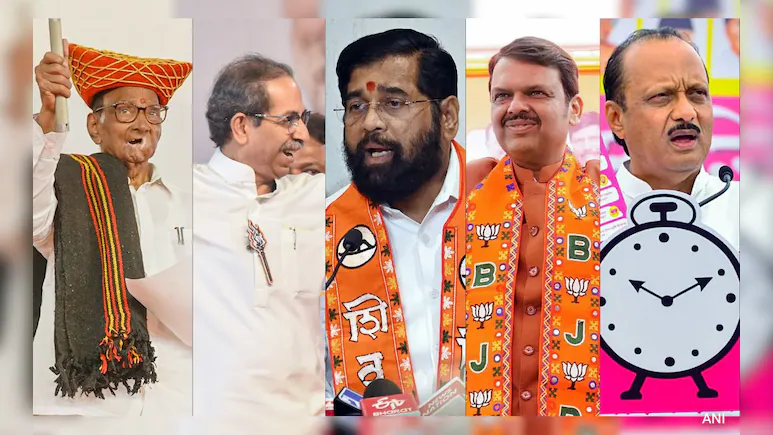
In 2014 BJP became the largest party for the first time. But the actual chaos begins after 2019, when alliances that collapsed after the polls were unexpectedly giving way to unexpected governments, defections, and party splits.
The important changes that continue to influence the Maharashtra political news today are:
- The Shiv Sena was split into opposing groups.
- Internal divisions of the NCP.
- Changes in leadership by the government are frequent.
- Party-party political opportunism.
To most of the voters, such instability brought fatigue and mistrust making the results of governance more significant than party allegiance.

What people are interested in watching in 2026 Maharashtra Voters Issues
In cities, towns and villages, Maharashtra electoral matters are all about pragmatism and not about ideology. The interviews with farmers, salaried professionals, small business owners and the young generation display the same pattern.
Employment and Youth Aspirations
The problem of unemployment is still one of the most important in Maharashtra elections.
Although Maharashtra is the industrial city in India, it has failed to create more jobs relative to population growth. The first-time voters (young voters) are frustrated because of:
- Insecure jobs and contract-based jobs.
- Slow government recruitment examinations.
- Skillless joblessness in the countryside.
An example of a 23 year old graduate who studied in Marathwada said that he works part time with no guarantee of success after a degree but is waiting to take competitive examinations.
To lots of families, the persistence of good jobs is the most important element that will persuade their vote.
Farmer Distress and Country Economy
Farmer distress still reigns in the area of Maharashtra rural belt, but it is still the main issue of the voter.
Major challenges include:
- Increase in the input prices of seeds, fertilisers and diesel.
- Unpredictable weather and climate pressure.
- Delayed insurance payouts
- Market price volatility
Such areas as Vidarbha and Marathwada have always encountered drought and debt. Though there are government schemes, voters claim that they are not well implemented.
To the rural voter, the 2026 election is one of economic self-respect and survival but not political catch phrases.
Inflation and Cost of Living
Inflation is a silent yet strong election issue that is referred to by urban and semi urban voters.
Household costs have gone up so drastically because of:
- Rising food prices
- More school and health care fees.
- High costs of transport and fuel.
The middle-class families are caught between the lack of income growth and the increase of costs. A significant number of voters claim to have now decided on parties on economic relief actions instead of big promises.
Infrastructure, Urban Governance and Housing
Such cities as Mumbai, Pune, Thane, and Nagpur are not only the symbols of the Maharashtra development but also of its administration issues.
The city voter is concerned with:
- Sluggish infrastructure developments.
- Traffic jams and transportation lapses.
- The lack of affordable housing.
- Flooding during monsoons
Although infrastructural projects such as metro development and road widening are evident, people are raising concerns whether development is sustainable and inclusive.
Stability in Law, order and governance
The issue of political instability has directly reflected on voter confidence. The number of changes in government and internal wrangles by the political parties have provided a perception of a stagnant policy.
Voters are clamoring more and more to receive:
- Full term stable government.
- Efficient leadership responsibility.
- Faster decision-making
Stability itself has become a significant campaign pledge to most people.
Mahayuti vs MVA: The Mainstream Political Race
The two main alliances that are at the centre of the political struggle in the Maharashtra election analysis are:
- Mahayuti: BJP, Shiv Sena (Shinde faction), NCP (Ajit Pawar faction).
- MVA (Maha Vikas Aghadi): Congress, Shiv Sena (Uddhav faction), NCP (Sharad Pawar faction).
This competition is not the battle of numbers only but the storytelling.
The Mahayuti Pitch
The Mahayuti places itself as the coalition of:
- Development
- Stability
Centralization with the central government
It has the following talking points:
- Infrastructure growth
- Welfare schemes
- Administrative efficiency
BJP has got an advantage with its organisational power and campaign machinery giving Mahayuti a structural edge particularly in urban and semi-urban regions.
The MVA Narrative
The MVA positions itself as the protector of:
- The regional identity of Maharashtra.
- Democratic values
- Federal balance
Its leaders attract voters with the help of emphasizing:
- Alleged misuse of power
- Local self-interest protection.
- Inclusivity and social justice.
The appeal of regional pride still works well with a number of voters particularly in the traditional Shiv Sena strongholds.
The Trends of the Voting in Maharashtra: What History and Data Say
The voting patterns across Maharashtra during the past three assembly elections can be helpful to look at.
Key patterns include:
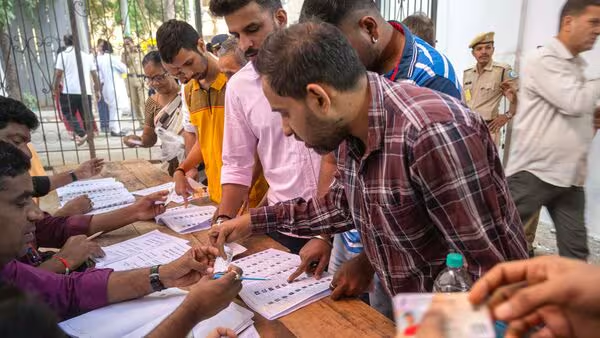
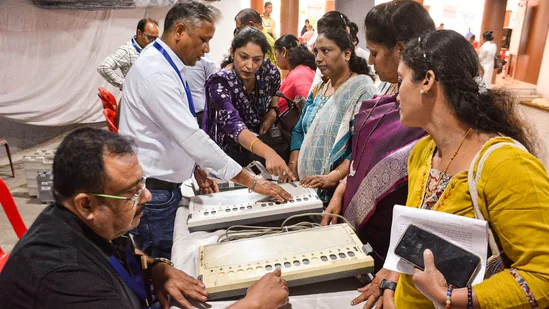
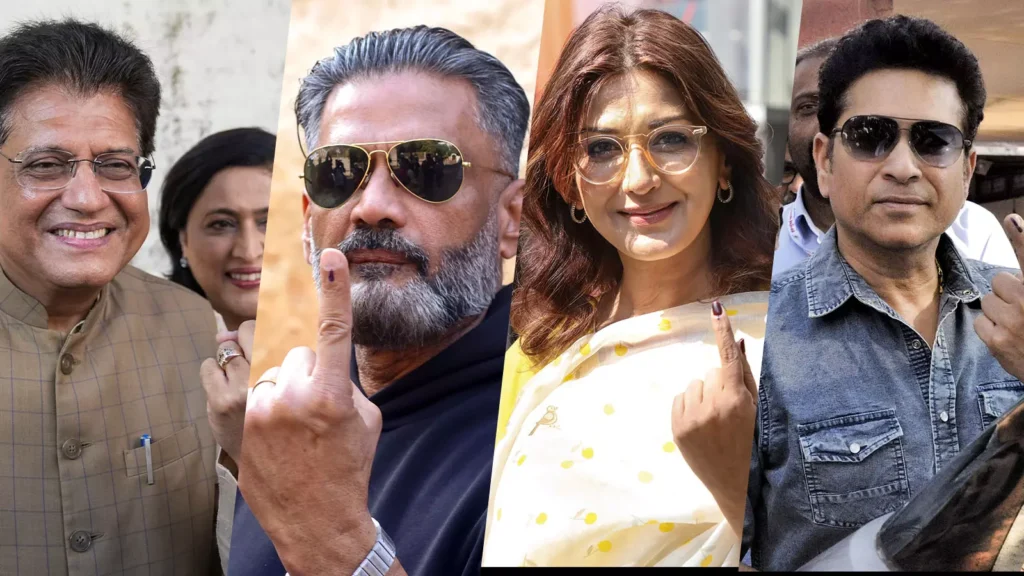
- Heavy voter turnout in the cities in the margin-making constituencies.
- Arithmetic, based on caste and community, in rural seats.
- Swing voters taking center stage.
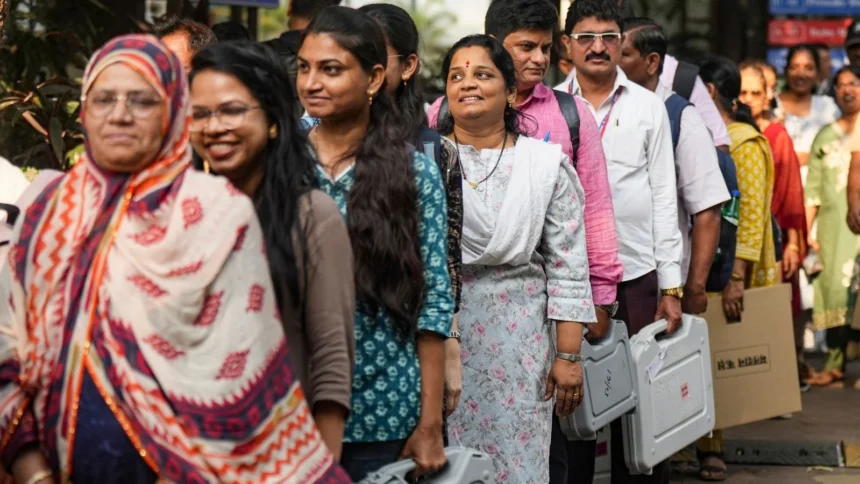
A strong demographic force has also been created by women voters which has been influenced by welfare schemes, safety issues and the economies of the household.
Juvenile voters, in turn, are not as loyal to established parties and rather pay attention to the employment results.
Caste, Community and Regional Dynamics
The caste politics still have a role to play albeit in more subtle forms than previously.
The factors influencing the results are:
- The debates of Maratha reservation.
- Strategies of OBC consolidation.
- Voter mobilisation of Dalits and tribal voter mobilisation.
This regional identity is still pronounced particularly in Western Maharashtra and Mumbai, as voters are sensitive to their feeling of being influenced in state politics.
Narrative Wars, Media, and Social Media
Another way the 2026 election is being influenced is by a digital battleground.
Key trends include:
- Violent social media advertising.
- Video storytelling to young people.
- Local messaging (WhatsApp based).
Yet, the electorate is growing more suspicious and they are vetting claims and paying attention to the credibility of the local candidates.
Who Will Win Maharashtra Election 2026? A Grounded Prediction
Their election predictions are not always accurate but a realistic Maharashtra election predictions analysis indicates that it is a tight call.
The main variables which can determine the victor:
- Voter turnout in urban seats
- Efficiency in seat sharing in an alliance.
- The quality of candidate selection.
- Leadership stability perception.
Currently, Mahayuti seems to have more organisational advantage whereas MVA still enjoys emotional and regional loyalty in strong pockets.
This is one of the most competitive elections in Maharashtra in decades as the final way can be decided on 10-15 swing districts.
What This Election Signifies to the political future of India
This election will affect more than Maharashtra including:
- National opposition unity
- Centre-state relations
- Stability in major areas of policy.
A functioning government in Maharashtra can help to recover investor trust and governance support, another divided mandate will only increase uncertainty in politics.
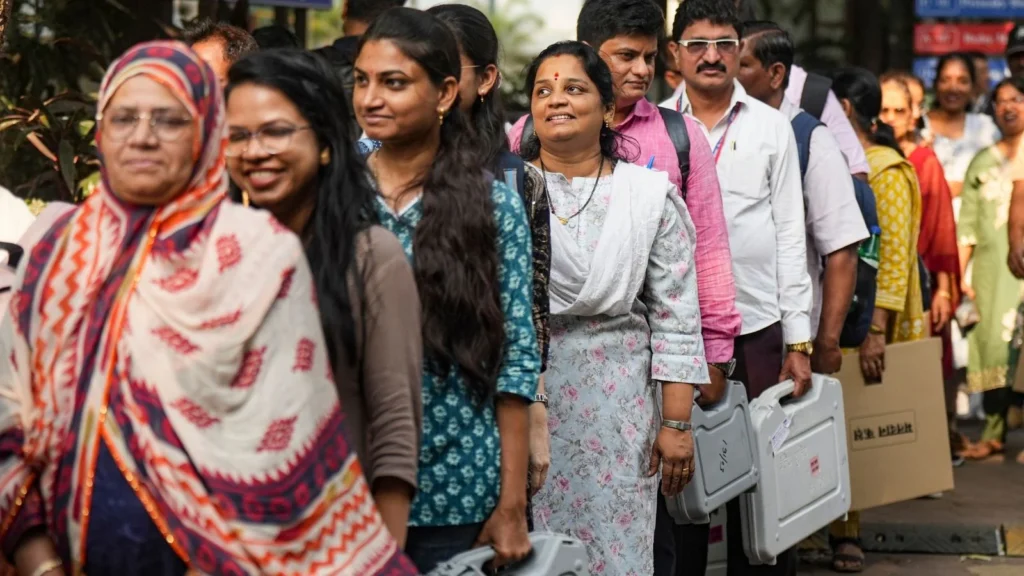
What Voters and Youth and Professionals can do now
For voters:
- Assess not only parties, but also candidates.
- Give priority to governance records.
- Be an active contributor to the local debates.
For youth:
- Engage in issue-based voting
- Demand job and education prowess.
- In the case of professionals and businesses:
- Track policy commitments
- Be ready for regulatory and economical changes.
More Read
Final Takeaways
- The Maharashtra 2026 election is more than a state election. It is a vote of governance, stability, and changing priorities of the Indian voters.
- The voters in Maharashtra are talking loudly:
- They want jobs, not slogans
- Stability, not chaos
- Accountable development.
The person who listens to these voices optimally is the one who is likely to put the future of Maharashtra, and subsequently the political orientation of India, into perspective.