A powerful explosion on 10 November 2025 near the Red Fort Metro Station in Delhi has triggered a major counter-terror investigation. What initially appeared as a vehicle fire has rapidly morphed into a suspected terror attack with inter-state, cross-border elements, and a module of radicalised professionals, including doctors. Among the latest and most startling developments is the arrest of a woman doctor linked to the network. The probe — now led by the NIA — has taken on a wide scope, spanning Jammu & Kashmir, Haryana, Uttar Pradesh and Delhi.
The Car-Blast Incident & Upgrade to Terror Case
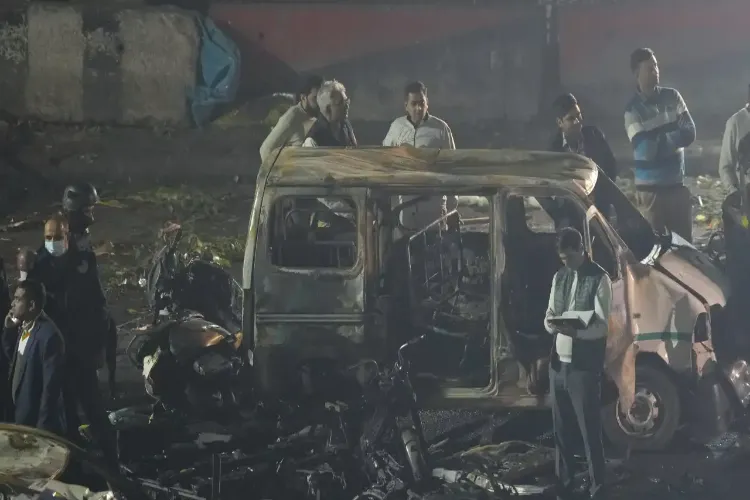
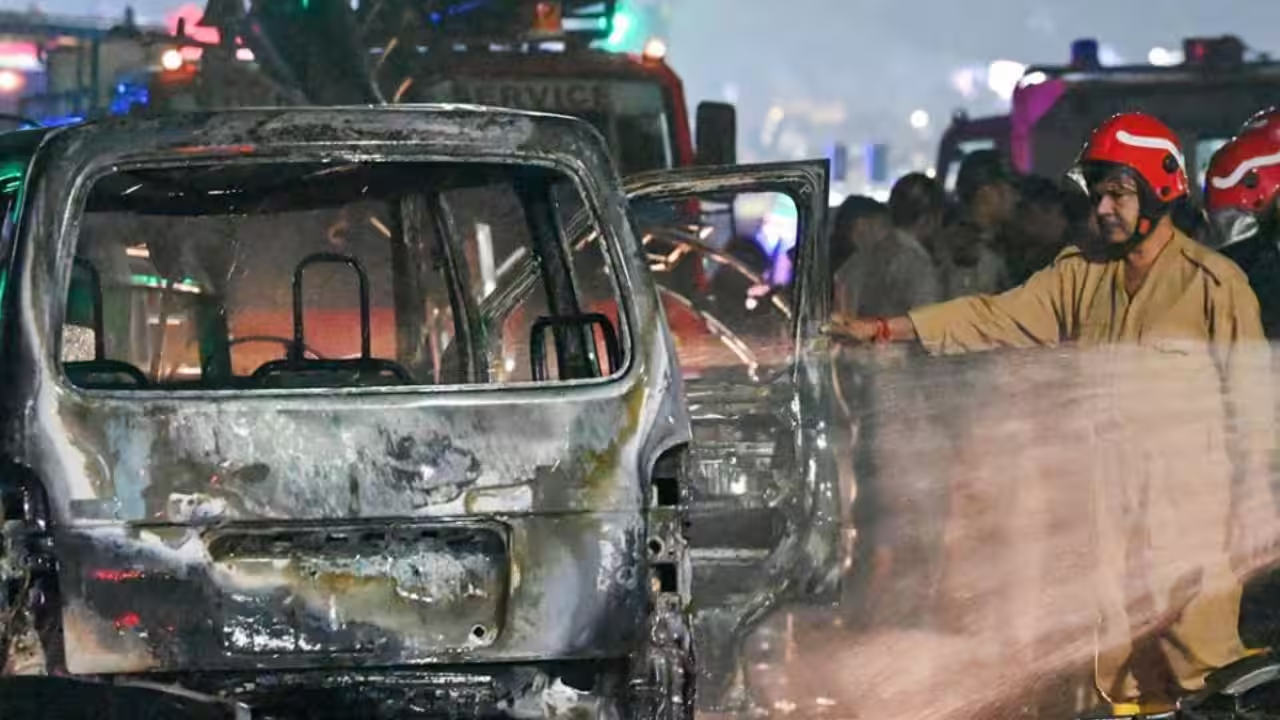
The explosion occurred when a slow-moving vehicle — a white Hyundai i20 — stopped at a traffic signal near the Red Fort area and detonated. Visuals show a mushrooming fireball, mangled cars and chaos among bystanders.
Soon after, law enforcement invoked anti-terror legislation — notably sections of the Unlawful Activities (Prevention) Act (UAPA) and the Explosive Substances Act — signalling that the blast is being treated as a terror act rather than mere accident.
Concurrently, sources revealed the car was linked to a terror module that had been under surveillance, involving massive quantities of explosives (about 2,900 kg) seized in Faridabad in the preceding days.

Thus, what started as a tragic explosion has become a major security event with national implications.
The Arrest of a Woman Doctor and the Terror Module
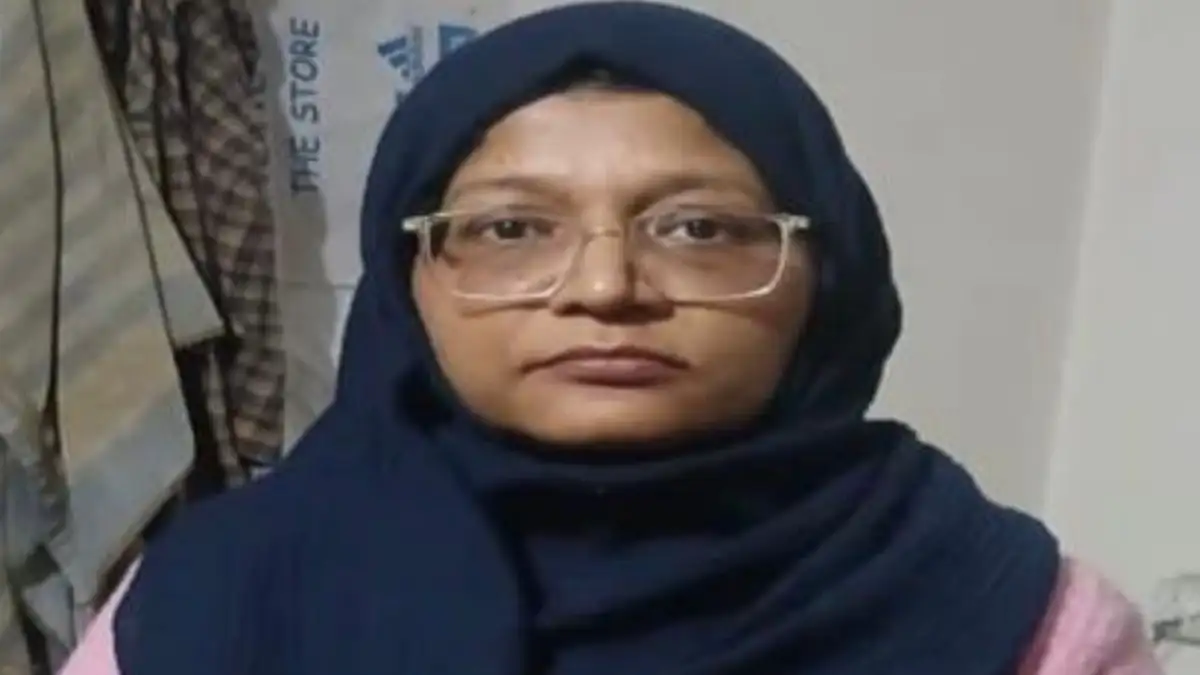
One of the most consequential updates is the arrest of a woman doctor — Dr Shaheen Shahid (also reported as “Shaheena Shahid”) — in connection with the terror module that allegedly links to the blast.
Who is Dr Shaheen Shahid?
- Originally from Lucknow, Uttar Pradesh, she had a reputable academic background — class-topper, medical doctor, assistant professor roles.
- Reports suggest she was affiliated with an institution in Faridabad (Haryana) and was alleged to be part of, or heading, the women’s wing of the terror outfit Jaish-e-Mohammed (JeM) or a connected subgroup.
- Investigators allege she helped in recruitment, logistic support, possibly facilitating the movement of arms/explosives, or functioning as a node within the “white-collar terror” network that used the cover of professional status to organise terror operations.
Her Role & the Module

- The module comprises doctors and professionals from Jammu & Kashmir, Uttar Pradesh, and Haryana, the sources say. For example, doctors from Kashmir (Pulwama, Anantnag) have been arrested.
- Linked to a massive explosives haul (ammonium-nitrate-based) and weapons recovered at locations in Faridabad.
- The car-blast case intersects with this module: the Hyundai i20 used in the blast is suspected to have been owned or driven by one of the doctors (Dr Umar Mohammad of Pulwama) who may have panicked and triggered the blast when associates were arrested.
Implications of her arrest
- Her arrest marks a departure from traditional terror profiles (militants in rural areas) to “professionalised” terror modules — doctors, faculty, networked across states.
- It underscores the “white-collar terror” paradigm where persons in conventional professions are allegedly radicalised and manage logistics, funding, recruitment behind the scenes.
- The probe’s expansion suggests the network may have sleeper cells or associates in multiple states, wider educational / professional cover, and international links.
The Sequence of Events: How the Module and Blast Unfolded
Putting together publicly available data, the following sequence emerges:
Explosive Seizure: About 2,900 kg of suspected bomb-making explosives — including ammonium nitrate — were seized in Faridabad, Haryana. Doctors and professionals from J&K are linked to the stash.

Arrests of Doctors: Several doctors were arrested: Dr Muzammil Ganaie (Pulwama), Dr Adeel Ahmad Rather (Anantnag) among others.
Car Ownership Chain: The Hyundai i20 involved in the blast was tracked: initially sold from earlier owner, registration chains, ultimately to Dr Umar Mohammed (Pulwama) allegedly.
Blast at Red Fort: Prompted by the arrests of module associates, the suspected driver (Umar) may have panicked and triggered the explosion near Red Fort. The car was likely laden with explosives, stopped at a signal, detonated.
Multi-Agency Response: The Delhi Police, J&K Police, Haryana Police, NIA and other central agencies are now coordinating, collecting forensics, DNA samples, CCTV footage, tracing the chain of command.
Key Individuals & Organizational Links
To navigate the cast of persons and groups:
Dr Umar Mohammad: A doctor from Pulwama, Jammu & Kashmir, suspected driver-owner of the Hyundai car that exploded near Red Fort.
Dr Muzammil Ganaie: Another doctor from Pulwama arrested in connection to the module; major explosives stash linked to him.
Dr Adeel Ahmad Rather: From Anantnag, arrested earlier; alleged to have posted JeM propaganda and helped logistics.
Dr Shaheen Shahid: From Lucknow, arrested; alleged head of a women’s wing of JeM in India; professional doctor, alleged recruiter.
Organisation – JeM (Jaish-e-Mohammed): A banned Pakistan-based militant group. The module is suspected to be under JeM’s influence or direction.
Ansar Ghazwat-ul-Hind (AGuH): Another group mentioned in connection with the module.
White-collar terror module: The term being used by agencies to describe professionals (doctors, faculty) engaged in terror logistics rather than classic militant profiles.
The Investigative & Legal Framework
Legal provisions
Case registered under UAPA (Unlawful Activities (Prevention) Act) Sections 16 and 18 — dealing with terrorist acts and conspiracy.
Also under Explosive Substances Act (Sections 3 & 4) and Indian Penal Code (murder, attempt to murder) because of blast and fatalities.
Forensics & evidence trail
DNA samples collected from family members of suspects (for instance, mother of Umar in Pulwama) to match remains from blast site.
CCTV footage tracing movements of the car before the blast.
Weapon and explosive seizure: rifles (AK-47), pistols, large quantities of ammonium nitrate.
Multiple state police teams and central agencies involved.
Multistate coordination
J&K Police, Haryana Police, UP ATS, Delhi Police, NIA all part of the operation.
The module spans multiple states (J&K, Haryana, UP) and possibly international logistic chains (Pakistan link) — complicating jurisdiction and coordination.
The Implications & Broader Significance
A shift in terror paradigm
- The involvement of doctors and professionals suggests a shift from traditional militant cadres to embedded professionals who operate in conventional roles but clandestinely facilitate terror operations (white-collar terror).
- The module’s networking across states and professions (medical colleges, universities) raises concerns about radicalisation in elite circles, stealth mobilisation and logistical sophistication.
Symbolic targeting
- The location of the blast — near the Red Fort — a national monument, crowded area and historically symbolic zone — underscores intent to strike high-visibility targets.
- Timing and coordination (explosives seized earlier in Faridabad; blast soon after) suggest pre-planned escalation rather than spontaneous act.
Security and intelligence challenge
- The spread of radicalised professionals makes detection harder; legitimate employment status can mask radical activity.
- Jurisdictional issues: Module crosses state boundaries, involves multiple policing agencies; requires seamless integrated intelligence.
- The use of large quantities of commercial fertiliser-derived explosives (ammonium nitrate) poses new challenge for tracking “dual-use” materials.
Political & public impact
- The blast has triggered heightened alert in Delhi, increased scrutiny of vehicle movements near monuments, metro stations and congested zones.
- Public confidence, especially in capital security, may be impacted. Media and opposition parties will press for accountability, intelligence failures, policy responses.
- For Kashmir and professional communities (doctors, universities), the module’s exposure creates reputational concerns and may lead to deeper scrutiny and policy changes in vetting.
What Still Remains Unclear / The Next Steps
Despite the flood of information, key questions remain:
More Read

Who ordered the attack? While JeM is named as an influence, the exact master-mind, funding chain and cross-border handlers are not yet publicly identified.
What was the actual target and motive? Was the Red Fort the primary target, or was the plan broader (multiple blasts) and this one was triggered prematurely?
Was the blast a suicide attack or panic detonation? Some sources say Umar panicked when associates got arrested and triggered the device; if so, the modus operandi differs from classic fidayeen attacks.
Extent of the network: Are there more professionals in other states (e.g., UP, Maharashtra) or abroad? Are dormant cells still active?
Material supply chain: How were thousands of kilograms of explosives obtained, stored, transported and concealed? What were the universities/facilities used for cover?
Policy and oversight gaps: How will regulatory frameworks around professional employment, university hire, dual-use materials be revised?
Key Take-aways
Professional cover used — The involvement of doctors and educators suggests radical agents using legitimate professions to mask terror operations.
Massive explosives haul — 2,900 kg of explosives plus weapons recovered; this is among the largest surprise caches in recent years.
Multi-state, possibly multi-national module — Cross-connections among J&K, Haryana, UP and possibly Pakistan.
Targeting symbolic zone — The Red Fort blast occurred in a crowded, historic area indicating intent to cause maximum psychological and political impact.
Proactive vigilance required — Security apparatus may need to adapt to the new “white-collar terror” model: professionals radicalised, logistical cells operating under academic/medical cover.
Conclusion
The arrest of the woman doctor and the exposure of a sophisticated terror module linked to the Red Fort car-blast mark a pivotal moment in India’s internal security landscape. The involvement of medically trained professionals in alleged terror logistics represents a worrying shift in modus operandi — one that challenges traditional profiling and detection models.
While much remains to be uncovered — motive, command-chain, full network, material supply – the ongoing NIA-led investigation promises to map the full contours of the plot. For now, the incident underlines that even in the capital, in well-monitored areas, determined terror modules can strike — which places immense responsibility on intelligence agencies, campus security, professional regulatory bodies and public vigilance.
As investigators proceed, there are several urgent priorities: connecting the dots between seizure and blast, apprehending the full network before it disperses, regulating dual-use materials more strictly, and reinforcing the security posture in urban symbolic zones.