
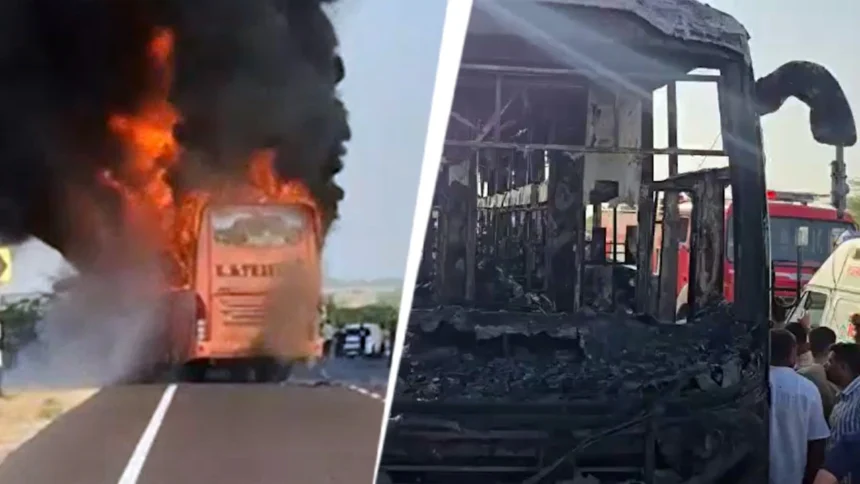
On October 14, 2025, tragedy struck Rajasthan when a private AC sleeper bus traveling from Jaisalmer to Jodhpur caught fire in mid-journey, turning what should have been a routine travel day into a horrific disaster. Reports indicate that at least 20 passengers were burnt alive, while 16 others suffered serious injuries. The incident sent shockwaves through the region, raising urgent questions about bus safety, emergency exits, regulatory oversight, and accountability. The deaths are among the deadliest single-vehicle fire incidents in recent memory in India.
This article delves into what is known so far — from the timeline and rescue efforts to probable causes, investigations, human stories, systemic issues, and what this tragedy means for public transport safety going forward.
The Incident: What Happened
Timeline & Setting
-
The bus departed from Jaisalmer, having a scheduled route to Jodhpur.
-
Shortly after departure — reports suggest within minutes — smoke was seen emanating from the rear / air-conditioning unit of the bus.
-
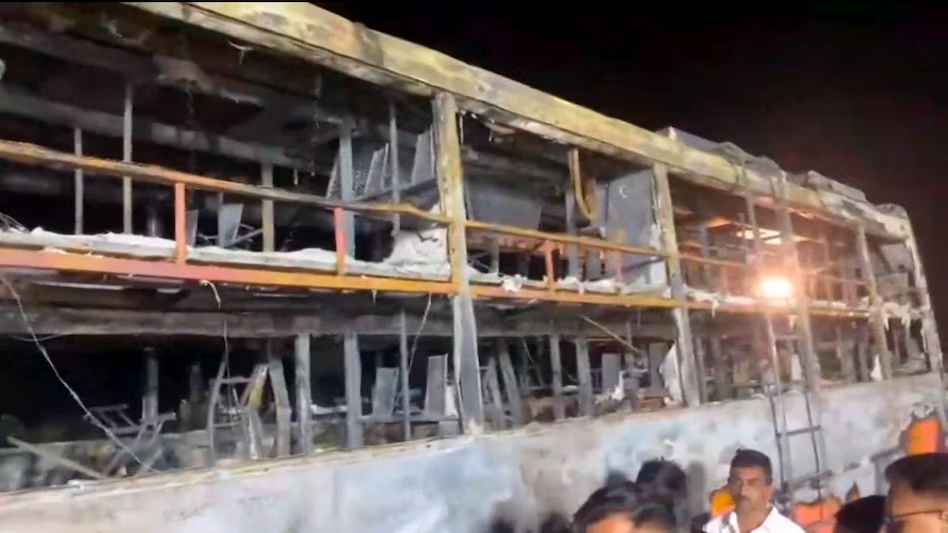
The fire spread rapidly, engulfing large portions of the vehicle before passengers could react or evacuate.
-
The driver managed to stop the bus near Thaiyat village, about 10 km from Jaisalmer, close to a military station.
-
Unfortunately, many passengers were trapped — reports suggest the bus doors jammed, and the only exit was blocked or inaccessible.
-
Those who could tried to break windows or escape through side openings, but the intense heat, flames, and smoke made it extremely difficult.
-
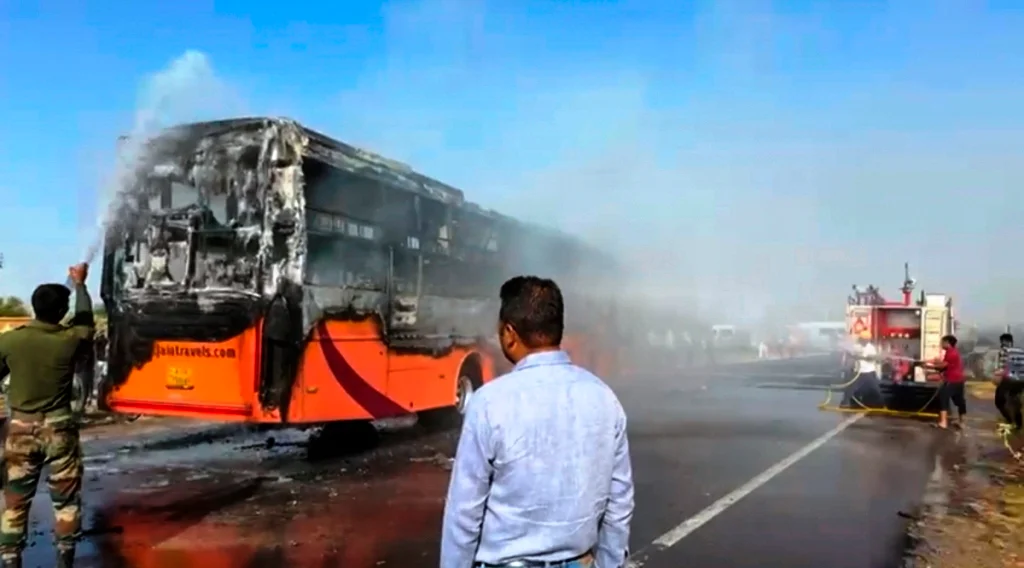
Rescue teams (local police, fire services, Army personnel) arrived and attempted fire control and evacuation.
Casualties & Injuries
-
Initial reports stated 20 people were burnt alive in the fire.
-
Among these, 19 bodies were retrieved from the bus itself; one person died en route to the hospital.
-
At least 16 people are confirmed injured, many with critical third-degree burns.
-
Some reports mention three children among the deceased.
-
The injured were first treated in Jawahar Hospital, Jaisalmer, and later many were shifted to Mahatma Gandhi Hospital, Jodhpur for advanced care.
-
Due to the intensity of fire, many bodies were charred beyond recognition, prompting authorities to initiate DNA sampling and forensic identification.
Reaction & Government Response
-
Rajasthan Chief Minister Bhajan Lal Sharma visited the site and the hospitals, expressed grief, and instructed officials to provide best possible treatment and support.
-
The Prime Minister’s Office expressed condolences, and PM Narendra Modi announced ex-gratia payments to the families of the deceased.
-
The district administrations of Jaisalmer and Jodhpur released helpline numbers for families to get information about missing persons, bodies, and DNA identification assistance.
-
The Forensic Science Laboratory (FSL) and DNA units were mobilized to assist with body identification.
-
The local police and investigative agencies have launched probes into the cause of the fire, including scrutiny of the AC system, modifications, compliance with safety norms, and maintenance records.
Possible Causes & Contributory Factors
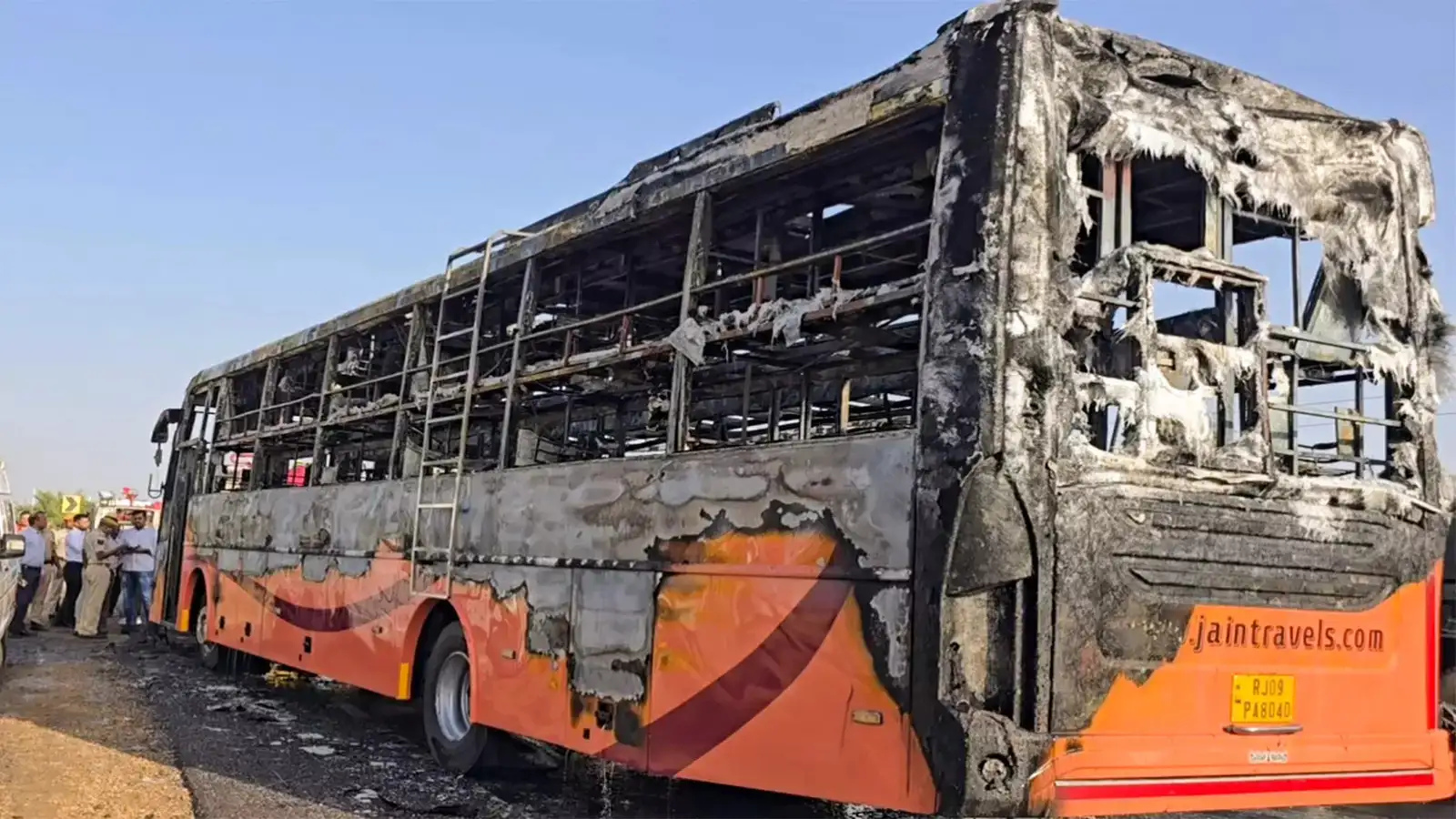
In tragedies of this magnitude, multiple factors usually converge. Based on media reports and preliminary investigations, some likely causes and contributing elements are emerging:
1. Suspected Short Circuit & AC System Fault
-
Many reports point to a short circuit in the air-conditioning system as the spark that triggered smoke and flames.
-
The bus was said to have been recently converted from non-AC to AC (just days before the fire), which may have introduced wiring or installation flaws
-
Such conversions, if done poorly, can compromise insulation, overload circuits, or lead to gas leaks (in AC refrigerant systems).
2. Fuel, Diesel & Gas Presence
-
The presence of diesel fuel and possibly AC gas or other combustible substances would have exacerbated the fire spread. Reports suggest the bus was fully loaded with AC gas and fuel.
-
Fire in the rear or near fuel or gas lines is especially dangerous due to rapid propagation and high temperatures.
3. Macerated Safety Standards / Inadequate Exits
-
Many reports state the bus had only one main exit, and that door got jammed — trapping passengers inside.
-
If emergency exits, side windows, or roof hatches were nonfunctional or sealed, escape would have been extremely difficult.
4. Recent Modification / Poor Quality Retrofit
-
A suspected cause is that the bus was recently modified to add AC (within 5 days prior). Such retrofitting may not have adhered to safety norms or undergone proper inspection.
-
Use of substandard wiring, components, or shortcuts in retrofitting can introduce hazards.
5. Delay in Fire Control & Rescue
-
The metal structure of the bus remained hot for hours, hampering rescue operations initially. Fire departments, local police, and Army teams worked in tandem, but the rapid spread of fire may have outpaced containment efforts.
-
The location near a military station helped: Army personnel reportedly reached early and assisted.
6. Regulatory Oversight Gaps
-
It remains to be seen whether the bus had valid safety certifications, valid permits, periodic maintenance, and compliance with fire safety regulations (such as fire extinguishers, emergency exits, signage, wiring standards, etc.).
-
If proper road transport authority (RTO) or safety audits were ignored or lax, the risk would have increased.
Human Stories & Impact
Behind the numbers are shattered lives, grieving families, and survivors with trauma. Some poignant elements emerging from reports and eyewitness accounts:
-
Several victims were reportedly from Jaisalmer and Jodhpur districts, including men, women, and children.
-
The tragedy has left many families in limbo due to charred remains needing DNA identification. The agony of uncertainty is weighing heavily on them.
-
The emotional trauma among survivors is deep — those who survived had to watch loved ones perish or be trapped in flames.
-
In one heartbreaking case, a family of an Army personnel posted nearby was reportedly among the victims — the soldier’s wife and children were said to have perished, making the identification even more tragic.
-
Eyewitnesses recount scenes of chaos, panic, people screaming, smoke, and heat. Some survivors were rescued by locals, passersby, or Army personnel using buckets, breaking windows, or prying doors.
-
In some cases, women had to be covered with clothes to transport them in ambulances in critical condition.
The wider social impact is also significant — communities coping with loss, questioning safety standards, demanding accountability, and pushing for reforms in public transport.
Investigation & Accountability
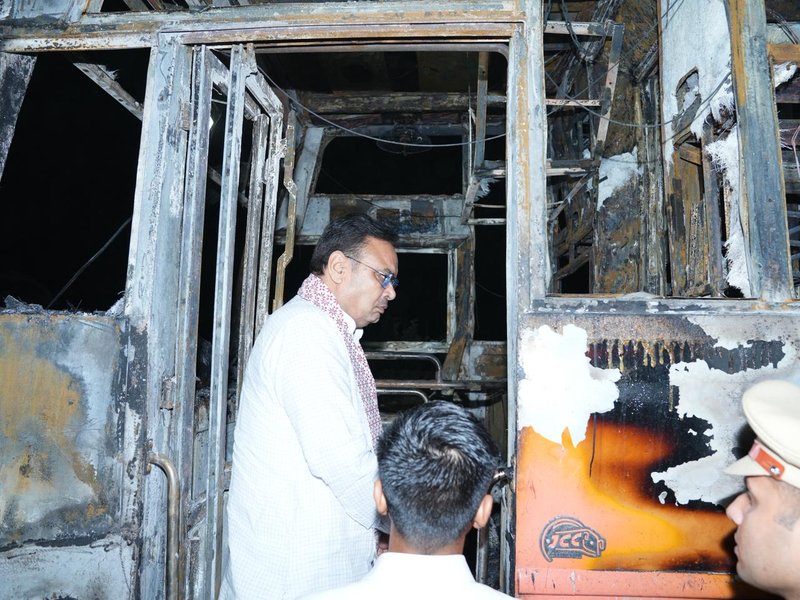
Given the scale of the tragedy, detailed investigations have been launched. Some actions and lines of inquiry known so far:
-
Forensic / Fire Department Probe
-
Fire department and forensic teams are analyzing wiring, AC system components, burn patterns, and origin points to reconstruct the cause.
-
Examination of residual wiring, insulation, circuit breakers, and gas lines will be essential.
-
-
DNA & Victim Identification
-
The bodies badly burnt need DNA sampling. Authorities are collecting family member samples, comparing with remains in forensic labs.
-
Some bodies have been transported to Jodhpur FSL for deeper analysis.
-
-
Scrutiny of Bus Ownership / Registration / Permits
-
Authorities will check whether the bus was legally registered, whether modifications (AC retrofit) had needed approvals, and whether safety audits were done.
-
Inspection of the bus’s maintenance history, records of inspection, compliance with safety norms, insurance, etc.
-
-
Responsibility for Retrofitting / Modifications
-
Those who carried out conversions — retrofitting non-AC to AC — will be scrutinized: materials used, wiring, piping, gas lines, insulation, certification.
-
-
Action Against Negligence
-
If negligence is found (overloading, failing maintenance, ignoring safety norms), legal cases (criminal or civil) may be filed against bus operators, maintenance agencies, and responsible officials.
-
-
Compensation & Support
-
The government has announced ex-gratia payments: ₹2 lakh for the families of deceased, and financial help for injured.
-
State and local authorities will likely set up relief measures (medical support, counseling, financial aid, legal assistance).
-
-
Regulatory Review
-
Transport departments, RTOs, safety regulators will likely be directed to re-examine safety standards, retrofit regulations, inspection protocols, and enforcement.
-
The tragedy may trigger stricter norms for AC retrofit, mandatory fire safety audits, stricter exit/egress regulations, and zero tolerance for noncompliance.
-
Systemic Issues & Lessons
This catastrophe is not an isolated mishap; it reflects deeper systemic problems in road safety, bus regulation, and oversight. Some of the lessons and systemic failings include:
Weak Oversight of Retrofitting & Modifications
-
Converting a vehicle (especially adding AC) demands rewiring, extra components, insulation, gas piping — each of which can introduce hazards if not done professionally and certified.
-
It appears this bus underwent a retrofit shortly before the disaster, pointing to possible lax standards or shortcuts.
Inadequate Safety Norms for Buses
-
Some buses are built or modified without multiple exits, emergency hatches, fire suppression systems, flame-resistant materials, or structural fire barriers.
-
Older buses or modified ones may not meet modern safety designs for evacuation under fire conditions.
Poor Inspection & Auditing Regimes
-
Regular mandatory inspections, electrical safety checks, fire safety audits, and certification compliance are essential.
-
If inspections are perfunctory or compromised, unsafe vehicles stay on road.
Lack of Emergency Preparedness & Training
-
Bus drivers, conductors, and staff should be trained for emergencies, including fire, evacuation, collapse, etc.
-
Emergency tools — fire extinguishers, breakable glass hammers, escape route lighting — must be installed and functional.
Accountability & Regulatory Enforcement
-
Regulatory bodies, transport departments, enforcement agencies must ensure compliance, not just issue licenses.
-
Corruption or inefficiency in inspections, delayed punitive action, or lack of follow-through contributes to unsafe practices.
Need for Technology & Safety Engineering
-
Use of flame retardant materials, better wiring insulation, redundant exit routes, automatic fire suppression systems, sensor alarms, and structural compartmentalization can reduce risk.
-
Policy push for retrofitting older fleets with safety upgrades under supervision could help.
Public Reaction & Political Fallout
As news of the tragedy spread, reactions came swiftly from various quarters:
-
Public outrage and grief: Local communities, netizens, citizens demanded justice, compensation for victims, and accountability for failures.
-
Political leaders expressed sorrow and pledged action. The chief minister and central government responded with sympathies and financial assistance announcements.
-
Media scrutiny has focused on safety negligence, regulatory gaps, and the peril of unsafe modifications.
-
Opposition leaders, civil society, and media commentators will likely press for systemic reforms, strict oversight, and preventive policies to ensure no recurrence.
Impact & Implications
On Public Transport Safety
This disaster may catalyze reforms: tighter safety norms, more rigorous inspections, stronger penalties, and better emergency infrastructure. Many bus owners, transport unions, and regulatory agencies will feel pressure to raise safety standards.
On Trust in Transport Systems
Passengers may become more wary of bus travel, especially on newer or modified vehicles. Trust in transport safety will require visible reforms and accountability to rebuild.
On Policy & Legal Reforms
Governments (state and national) may introduce stricter legislation regarding vehicle conversions, mandatory fire audits, technology mandates, and license revocation policies. Courts may be petitioned to oversee safety reforms.
On Victims & Families
For affected families, the trauma, uncertainty (due to difficulty identifying remains), and loss are profound. Compensation, timely support, mental health services, and transparency in investigations will be crucial.
Challenges & Uncertainties
-
Incomplete data: As investigations are under way, precise causes, number of passengers, exact modifications, and culpability may take time to establish.
-
Forensic delays: DNA identification, burn pattern analysis, wiring trace studies take time and technical expertise.
-
Legal complexities: Establishing negligence, identifying responsible parties among multiple actors (bus operator, retrofitters, inspectors, regulatory agencies) is legally complex.
-
Resistance / Pushback: Some operators or vested interests may resist major regulation changes or blame shifting.
Recommendations / Way Forward
-
Immediate Safety Audits
All buses, especially those with modifications (AC retrofits etc.), should undergo immediate safety & fire audits before being allowed on road. -
Stricter Regulation for Retrofitting
Government rules must enforce that any conversion (non-AC to AC, wiring additions) be certified by authorized agencies under rigid standards. -
Mandatory Safety Equipment
Buses must carry functioning fire extinguishers, emergency hammers, escape hatches, illuminated exit routes, and signage. -
Training & Drills
Drivers and staff should be trained in emergency response, evacuation, fire drills, and passenger management under crisis. -
Transparent Oversight & Penalties
Regulatory agencies should have robust mechanisms for inspection, surprise checks, license revocation for violations, and public disclosure of safety records. -
Victim Support & Relief
Ensure fast compensation, transparent identification of victims, trauma counseling, medical support, legal aid, and rehabilitation assistance to survivors and families. -
Public Awareness & Reporting
Encourage passengers to report unsafe buses, demand safety certificates, evidence of recent audit, etc. Use technology (apps) to allow reporting of safety violations. -
Legal Reform & Judicial Oversight
Judiciary can monitor implementation of new safety norms. Governments should codify reforms into enforceable law, not just guidelines.