The issue of un-clean air, in Indore the much billed clean city of India, is causing an uncongenial disturbing problem in the populace. The past few weeks have seen a sudden and sharp increase in the number of cases of diarrhea in Indore raising alarm bells in hospitals, municipal departments and state health authorities. What used to seem like isolated cases, is now coming out as a full scale water borne disease epidemic, with direct connections with polluted drinking water in Indore.
Health authorities have reported that several localities are registering gastrointestinal infections, vomiting, dehydration, and severe diarrhea, which are usually typical of contaminated water supply. Following the course of events, the Indore water contamination outbreak is now a matter of concern not only in the city, but also in the Indian city public health management.
Uncomfortable questions in this crisis are:
What happened to a city that had become world-renowned in terms of cleanliness?

Is India at an urban water systems meltdown?
And what are the lessons of this outbreak to the future?
An Impulsive Rise That Could Not Be Disregarded
Government and private hospitals in Indore started observing a pattern as noted by doctors. They were receiving patients of varying wards, income level categories and age brackets with almost the same symptoms. By week two, emergency wards had reported an increase in diarrhea cases of between 30-40 percent with children and elderly residents making up the highest proportion of diarrhea cases.
The cases, according to local health officials, were not food-related but instead waterborne with the direct indication towards the municipal water supply. The regions, where overhead tanks and the old pipelines did not allow the water circulation, demonstrated the high levels of infections, supporting the fears of sewage contamination.
Such early warning signs as:

- Sleepy motions and dehydration will occur suddenly.
- Case clusters in given colonies.
- Increased susceptibility of slum and low-income regions.
- Instead, results of water quality tests fall.
These results triggered an MP health department alert, which pushed Indore into the state of increased medical monitoring.

Knowing the Indore Water Crisis
The Indore water crisis was not something that appeared out of the blue. Relaxation of infrastructure over years caused by variations in the monsoon, deteriorated pipelines and increased growth in cities, is the outcome according to experts.
Over the past one decade, the population of Indore has swelled. Developing housing colonies, commercial centers and informal settlements have strained the city water supply infrastructure beyond its capacity reasons. On the one hand, the new pipelines were introduced in certain regions, on the other hand, the old underground pipelines, some of which are 30 years and more, continue to work which leads to the emergence of the risk of leakage and cross-contamination.

Untreated wastewater is believed to have leaked into drinking water pipes during the period of the latest maintenance operations and changes in pressure which results in drinking water contamination in Indore.
With three key causes, health experts in the public health industry emphasize them:
- Leaky pipes that permit sewage to penetrate them.
- Improper chlorination in the points of supply.
- Weak households in terms of water storage.
This mixture formed the ideal conditions for the outbreak of a waterborne disease in Indore.
Voices From the Ground: One City Caught Unawares
Sunita Verma, a homemaker, describes Banganga, how, in the locality, her whole family got sick within a space of two days.
My son first had pains in his stomach and then it was the husband. We believed that it was foreign food. But when even neighbours began to fall ill we knew that something was amiss with the water.
Like cases are coming out in Rajendra Nagar, Sudama Nagar and some areas of Vijay Nagar. According to many residents, the water smelled odd days before getting sick, or it appeared cloudy, and that was a warning that was not reported.
The crisis has been terrible to daily-wage earner workers and informal sector households. Visits to the hospital imply lost income, whereas buying bottled water undertakes an unforeseen financial cost.
Such human cost justifies the fact that the Indore human health crisis cannot be addressed as a seasonal outbreak of the disease.
Health Authorities Respond: Emergency Measures Switched on
When the extent of the outbreak was realized, the district administration started to implement emergency measures. Vigilance in Indore also consists of monitoring of water samples and provision of makeshift hospitals in the at-risk areas.
The steps implemented will include:
- Municipal tanks of water chlorinated.
- Sealing of potential polluted supply channels.
- Complimentary dispensing of ORS packets.
- Introduction of mobile health units.
- Communal calls to boil drinking water.
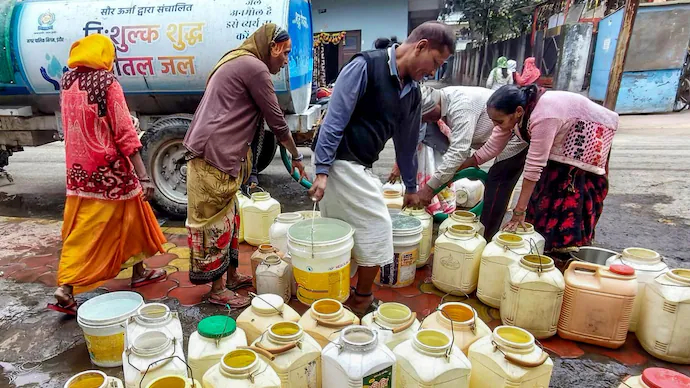
As per the internal data provided by the state authorities, more than 1,200 water samples were taken in a week, some of which were below the basic safety threshold.
The MP health department alert has also channeled the hospitals to ensure they stock-up well in terms of IV fluids, antibiotics and emergency beds.
An international, Not a local Bigger Problem
Although the emphasis has been on Indore news today, health specialists play a vital role and caution that this situation is just an Indian menace. In India, cities are grappling with the lack of safe drinking water particularly in seasonal changes.
National planning agencies have cited governmental figures in their deliberations, which demonstrate:
- In old cities, more than 70% of urban water pipelines had a lifespan that was above the recommended limit.
- In India, a considerable proportion of preventable diseases are still caused by waterborne diseases.
- Water stress on climate has been on the rise, posing more contamination pressure.
The example of Indore warns other such cities as Bhopal, Jaipur, Kanpur and some of the sections of the city of Delhi, where the same infrastructure conditions may be observed.
Historical Background Cleanliness vs Water Safety
The cleanliness champion status of Indore in the national ranking programs tends to dwarf another important measure, which is, water safety. Clean streets do not presuppose clean pipelines all the time.
In the past, Indian cities concentrated on the visibility of the waste management as opposed to the underground water infrastructure. As Indore spent so much in solid waste segregation and sanitation drives, the current upgrading of water pipes was behind schedule.
According to experts, city governance should stop resorting to surface cleaning but concentrate on systems that are not seen but essential to life such as drinking water systems.
Medical Explanation: Why diarrhea Epidemics are fatal
diarrhea might appear as a normal process, yet the specialists highlight the threats, particularly at times of outbreaks.

Severe risks include:
- Dehydration in a short duration causes organs to fail.
- Risk of high fatality among under five-year olds.
- High vulnerability of elderly patients.
- Apple transmission of secondary infections.
Medical practitioners involved in the treatment of the patients of the Indore diarrhea outbreak emphasize that the intervention should be early. It is unfortunate to see that most patients put off hospitalization thinking that they can cure themselves or that more time will clear the symptoms.
Economic and Social Effect on the City
The outbreak has broken the normal day in Indore besides health. Schools were registering reduced attendance, small businesses were registering low footfalls, the hospitals were delaying non-emergency procedures.
Those effects on the economy are:
- Greater family spending on healthcare.
- Loss of productivity in the case of illness.
- Strain on community hospitals and employees.
To a city that is positioning itself as a smart urban center, the crisis is of concern to the investors and urban planners.
What Might have Been Done Otherwise?
Urban policy analysts emphasise rather preventative failures of governance as opposed to reactive failures.
Key gaps include:
- The unusual water quality audits.
- Absence of real time contamination detectors.
- Weak liaison between the municipal and health departments.
- Inadequate enlightenment campaigns.
The outbreak of the waterborne disease in Indore could have been contained early enough before it escalated were it that there were early warning systems.

Lessons to Other Indian Cities
Some valuable lessons learned about urban India can be offered by the Indore crisis:
- Water security should be among the issues of national security.
- Infrastructure investment is a life and cost saving measure.
- Openness establishes trust in the population in times of health emergencies.
- There should be trained water quality specialists in the local governments.
These are lessons that would support long term planning goals that are usually emphasized in national development discourse.
What Citizens can do in the meantime
Though agencies are doing long-term repairs, the citizens will need to adopt short-term measures.
Basic measures that need to be taken by homes:
- Always boil drinking water
- Store covered with covered containers.
- Clean overhead tanks on a regular basis.
- Discoloured foul-smelling water is reported.
- Consultation in the early stages.
The risk of infection during an outbreak can be greatly minimized by some simple measures.
Future Projections: How to stop the Next Outbreak
Indore needs systemic reform rather than temporary relief to determine the future of the city in terms of public health.
Experts recommend:
- Full pipeline replacement strategies.
- The intelligent water monitoring systems.
- Water audits by third parties on a yearly basis.
- The involvement of the community in reporting.
When taken seriously, the measures would turn the crisis into a turning point.
More Read

Future of the New Urban India
The water pollution incident in Indore is not just a health panic among the locals. It is a representative of the poor condition of the city water systems in India.
Key conclusions:
- Clean water is required in clean cities not clean streets.
- The hidden gaps of governance are revealed during times of public health emergencies.
- It is always cheaper to prevent rather than cure.
- Policy is not as important as citizen awareness.
Indore experience will be used to determine how India faces the next urban challenge as health authorities are on guard and recovery efforts are still underway.