A New Dawn in Indian Cricket
It was written when the floodlights were on and the Indian women’s team defeated the world in their first time. In one of the most memorable events in the history of sport in the country, a bold team led by Harmanpreet Kaur became the first to win the final of the Women’s World Cup by 52 runs, capturing India its first women’s world cup title in its 13th hosting of the tournament.

What started as a dream several decades ago has finally become reality- a trip that was almost ruined in 2005 and 2017 and failed to provide Indian cricket with any heartbreak moments, instead, leaving behind a golden win. India did not merely get the trophy on this night, they changed the perception of belief, endurance and prospects of ladies sports in the nation.
Heartbreak to Glory: The Long Road to the Summit in India
Team India has come a long way through the Women World Cup. Their 2005 and 2017 runners-up performances turned them into a strong competitor, and a win always eluded them at the last step. This 2025 campaign, nonetheless, was a different music–a feeling of fate in the offing.
The calm and conviction of Harmanpreet Kaur coupled with the aggression at the top offered by Smriti Mandhana and Shafali Verma and consistency in the bowling department offered by Deepti Sharma. Collectively this team was deemed as the new dawn of Indian cricket- its fearless, zealous and united one.

The 52-run dosage did not only make India the fourth country in the history of the free woman world cup (after Australia, England, and New Zealand) but also demonstrated the extent of development in the women human capabilities in the field of cricket in India in terms of skill, professionalism and domination in the world arena.
The Ultimate Test: Buttery, Wet and Nocturnal
The tension was building when rain postponed the start in Mumbai. However, when the skies cleared, the intention of India was crystal clear. Shafali Verma, who came in to bat, got the tempo going with an explosive 87 off 84 balls. She joined hands with Smriti Mandhana to sew a fearsome 104 run stand that made South Africa start on the back foot.
Mandhana, who dropped to 45, scored his best 434 runs- the highest Indian batter in World Cup history. Her grace and strength highlighted her progress into a world super star.
After the five-time dismissal of Heidi, the maturity of Deepti Sharma (58) has rescued the innings and formed an important middle-order bearing. India lost rapid wickets in the final overs, but their score of 298 runs in 50 overs was second highest in the history of the tournament – a proclamation of superiority and wealth.
Deepti Sharma and Shafali Verma: Two Feminists of Excellence
There were heroes in every championship and in the case of India, two names were even more shining than the stars–Deepti Sharma and Shafali Verma.

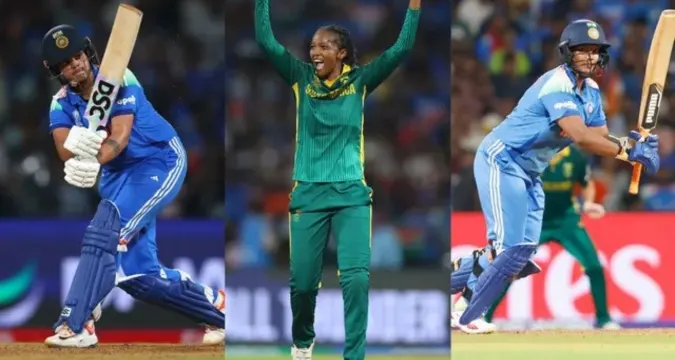
The undying multi-purpose star Deepti was the model of discipline and decency. Her 5/39 taking was the last to make her the leading wicket-getter of the tournament (21 wickets), the Player of the Tournament award. Her skill to vary the rhythm and play despite the pressure made her the heartbeat of India on platforms.
Shafali, on the contrary, embodied the spirit of redemption. Tellingly not chosen in India’s initial team and subsequently returned following a concussion to Pratika Rawal, the 21 year old Haryana student took her opportunity viciously. Her fearless hits at the bat destroyed the Proteas onslaught and her two vital wickets that would follow later in the game proved fatal in the fate of South Africa.
They combined patience-based performance with power-based performance, which scripted India into the golden night that one would never forget, a perfect balance of grit and glory.

Chase That Never Took Off: South Africa Bravely but Broken Effort
It started confidently with Tazmin Brits and Laura Wolvaardt, who started with a 51-run first wicket against South Africa. However, when the sharp throw of Amanjot Kaur ran out Brits, the tide turned in the other direction. The tight spell of Shree Charani sent Anneke Bosch away, and the middle order could not withhold any longer under the pressure of rising demands.
South Africa did not really get back even after Wolvaardt made arguably the fighting century 101 off 98 balls. Some clever variations of Deepti Sharma and the surprise of the two hits of Shafali broke their rhythm. When Wolvaardt had gone, so had the hopes of South Africa.
The Proteas took the bat off after 246 in 45.3 overs but gave a spirited fight but lost in the strategic brilliance and the emotional hunger of India.
The Call of the Captain: Redemption Arc of Harmanpreet Kaur
To Harmanpreet Kaur, this win was a personal one. She had twice left the field as a finalist and history slipped away. This time, she was not going to give up, and she led the team backing emotionally and expressing a composed ground.y
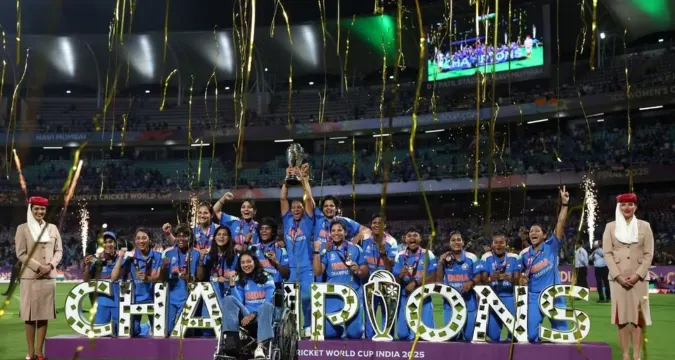
Her strong leadership, which was not at all flaunted, was all about enabling her players – giving liberty to the young ones like Shafali and giving experience to veterans like Deepti. She has given Indian women in the cricket field not only a captain but also a role model and motivator.
The 2012 Olympic Games also signified a change in her life and that is why she shed tears as she hoisted the trophy.
The Prize of BCCI and the Pride of the Nation
Hours later, the board of control of cricket in India (BCCI) declared a winning prize of [?]51 crore to the winning team- a gesture that honored years of tiresome work, sacrifice and struggle.
The whole country broke out in celebrations at the cricket academies in Haryana and the local grounds in Mumbai; in schools in Tamil Nadu and in stadiums in Kolkata. They were proclaimed as the Wonder Women of India and deservedly so, by social media.
Read More: India Men Hockey Asia Cup 2025
More Than a Trophy: What This Win Means to India
This win transcends cricket. It is a symbol of opportunity, empowerment, and shattering the barriers that once relegated women’s sports activities to the periphery in India.
Little girls viewing this match will no longer view cricket as something as improbable but something magnificent to dream of. The number of corporate sponsorships will increase, there will be more and more viewers and the next generation will have role models which resemble them, muscular, persevering and winning.
This victory will probably transform the sporting infrastructure in India, providing equality, fame, and development of women sportsmen in various fields.
A Nation Today In Partying
With the Indian tricolor flying high above the stadium it was not, it was not merely a cricketing triumph, but it was a national pride occasion. To all little girls who took up a bat when nobody thought they would, to all coaches who had faith and all fans who never gave up–it was a win to them.

The waiting decades of Harmanpreet were changed into the calm of joys tinged with tears in the night when the warriors of Harmanpreet had the magic night. They did not only win a cup, but they renaissance what can be.
More Read

This Cricket Age of Indian Women Has Started
Women winning the 2025 world cup is not only a milestone in Indian cricket but also the history of women sports. India has come, not as foes but as champions, able to lead, to inspire and to set examples of excellence.
There are many echoes which are reverberated as festivities run through the country, but this much is undeniable, these Wonder Women not only have laid the hand upon their Everest, they have placed the Indian flag securely on its summit.