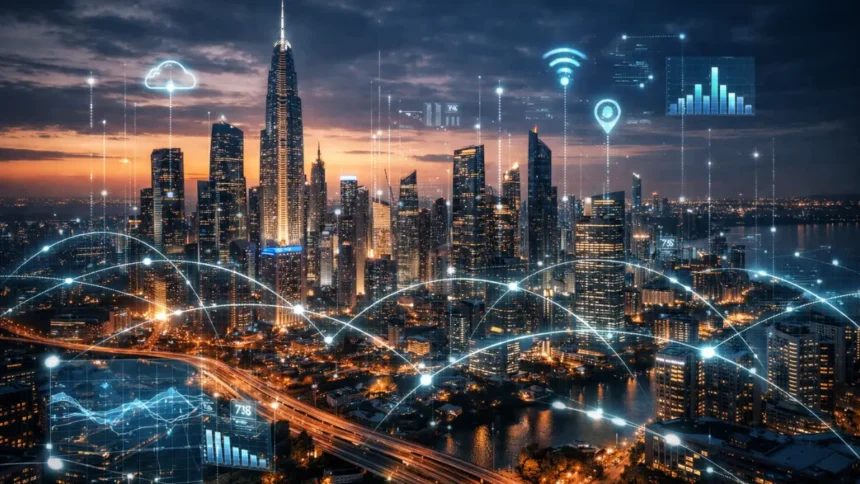
Step into a modern city at peak hour. Traffic signals adjust before congestion builds. Ride-hailing apps predict demand before you even open them. A delivery robot quietly navigates the sidewalk while sensors monitor air quality in real time.
This isn’t futuristic imagination anymore. It’s the reality of how cities operate today—subtly, efficiently, and increasingly intelligently.
The conversation around How Cities Use Tech has moved beyond buzzwords like “smart cities” and into something more grounded: systems that respond, predict, and sometimes even decide. The real shift isn’t just technological—it’s behavioral. Cities are no longer just places we live in; they are environments that actively shape how we move, work, and interact.
How Cities Use Tech to Redefine Everyday Systems
At its core, the story of How Cities Use Tech is not about gadgets—it’s about infrastructure. Invisible systems are now doing what humans once struggled to manage manually.

Traffic That Adapts Instead of Reacts
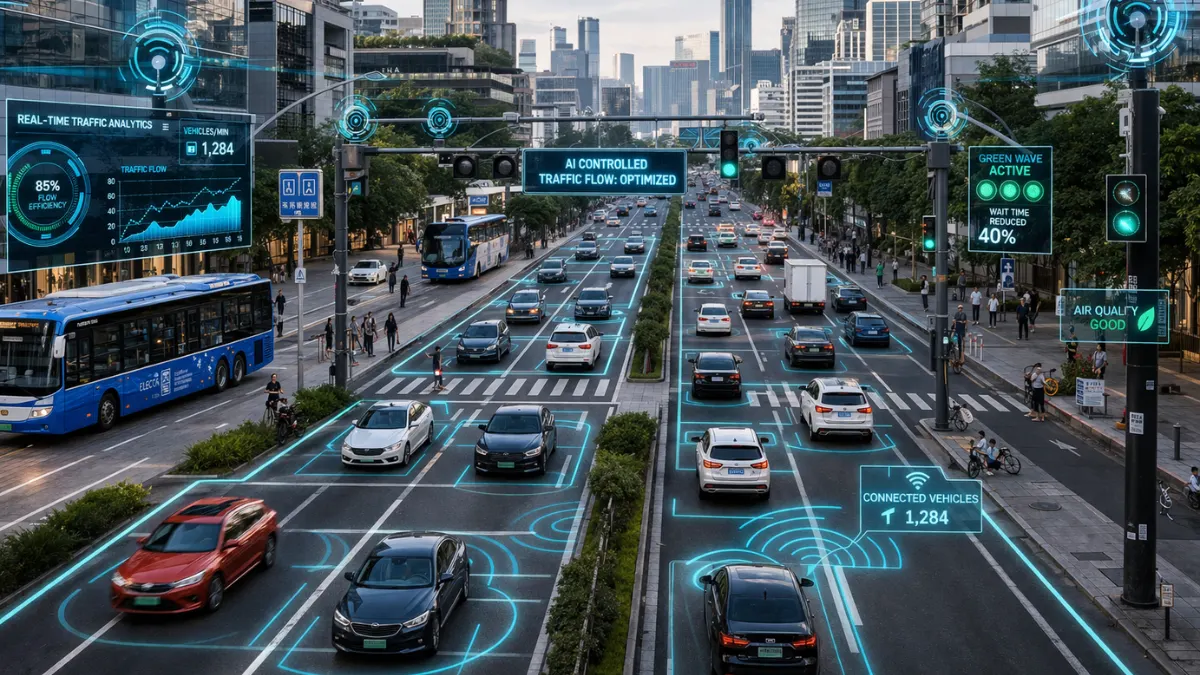
Urban traffic used to be reactive—managed after congestion happened. Today, AI-driven traffic systems analyze patterns, weather, and even event schedules to optimize flow in real time. Cities like Singapore and Barcelona have demonstrated how predictive traffic control can reduce commute times significantly.
The shift here is subtle but powerful: cities are learning from data continuously. They’re not just managing problems—they’re anticipating them.
Public Transport That Feels Personalized
Public transportation is becoming less rigid. Apps now provide real-time updates, suggest alternate routes, and even predict delays. Digital ticketing, integrated mobility platforms, and AI scheduling are turning fragmented systems into cohesive networks.
It’s no longer about “catching a bus.” It’s about navigating a system that adapts to you.
From Infrastructure to Intelligence: The Real Evolution
Technology in cities has evolved in phases. First came digitization—moving processes online. Then came automation—reducing human intervention. Now, we’re entering a phase of intelligence.

Data as the New Urban Backbone
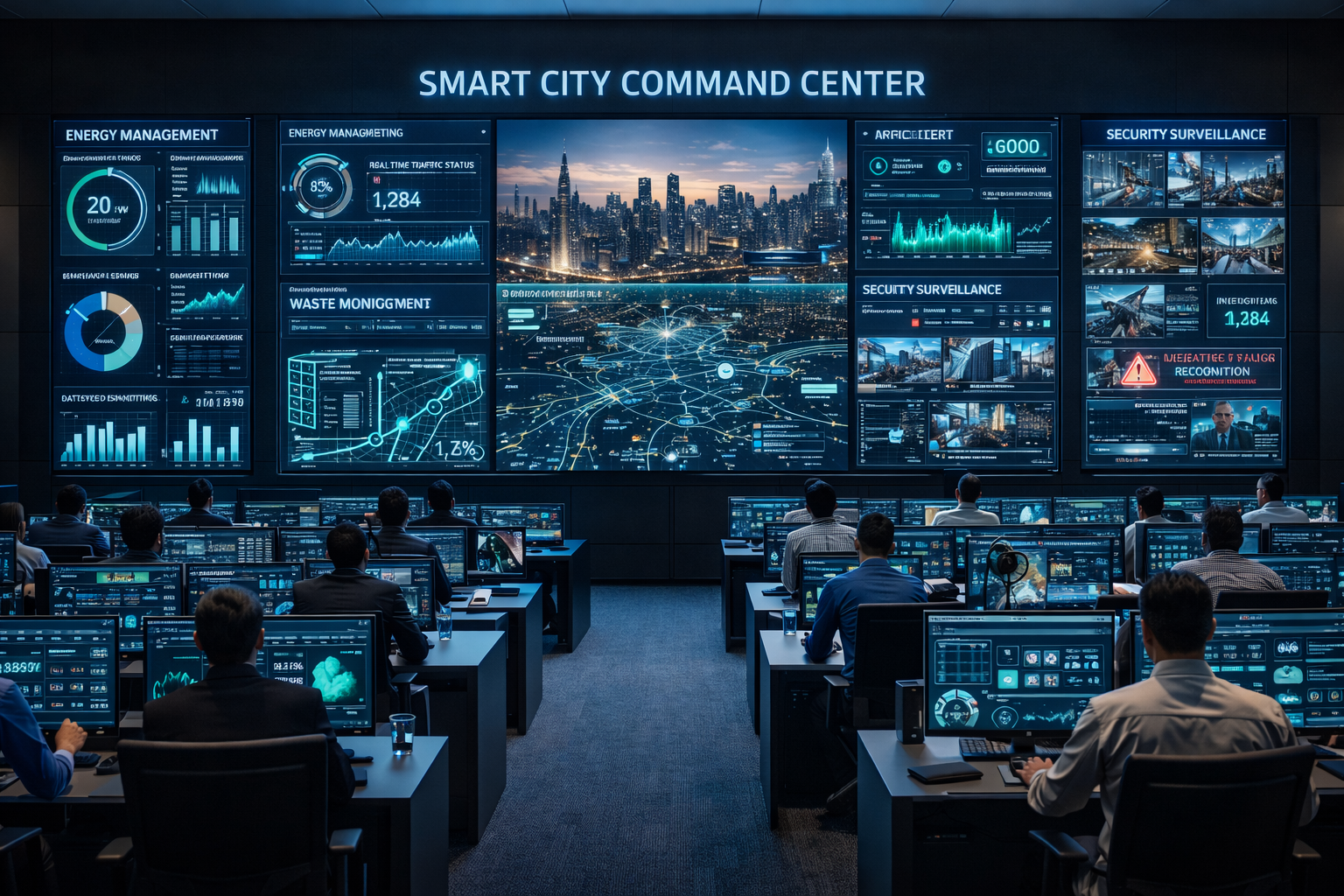
Every smart parking sensor, surveillance camera, or weather monitor generates data. Individually, these seem trivial. Collectively, they form a digital nervous system for the city.
This is where How Cities Use Tech becomes more strategic. Data isn’t just collected—it’s interpreted. City administrations are increasingly relying on dashboards that visualize everything from energy consumption to crime patterns.
But this also raises a critical question: who controls this data, and how is it used?

Why This Shift Matters More Than It Seems
It’s easy to view urban tech as convenience-driven. Faster commutes. Easier payments. Smarter utilities. But the deeper impact lies elsewhere.
Efficiency Is Becoming a Competitive Advantage
Cities today compete—not just culturally or economically—but technologically. Businesses are more likely to invest in cities with efficient digital infrastructure. Startups prefer ecosystems where systems work seamlessly.
In this context, How Cities Use Tech directly influences economic growth. A well-connected city isn’t just easier to live in—it’s easier to build in.
Behavior Is Quietly Being Rewritten
Technology doesn’t just solve problems—it changes habits.
When parking apps reduce the time spent searching for space, people drive more confidently. When public transport becomes predictable, dependency on private vehicles decreases. When digital governance simplifies processes, citizens engage more actively.
Cities aren’t just becoming smarter. Citizens are becoming more responsive to that intelligence.
The Psychological Layer: Living in a Predictive Environment
There’s a subtle psychological shift happening in tech-enabled cities.
People are beginning to expect systems to “just work.” Waiting becomes frustrating. Uncertainty feels outdated. This expectation loop is powerful—and risky.
Because while How Cities Use Tech enhances convenience, it also reduces tolerance for friction. And when systems fail—as they inevitably do—the disruption feels more severe.
This creates a paradox: the smarter the city, the more fragile its perception becomes.
The Business of Urban Technology
Behind every smart city initiative lies a complex ecosystem of private companies, startups, and public-private partnerships.
Tech Companies Are Now Urban Stakeholders
From cloud providers managing city data to mobility startups redefining transport, private players are deeply embedded in urban systems.
This raises important questions:
- Who owns urban infrastructure?
- Where does public control end and private influence begin?
- Can cities remain neutral when tech companies become essential?
The narrative of How Cities Use Tech is also a story of power—who builds the systems, who controls them, and who benefits.
Sustainability: The Quiet Driver Behind Urban Tech
One of the most important, yet often understated, reasons cities adopt technology is sustainability.
Smart grids optimize energy use. Waste management systems track collection routes. Water systems detect leaks before they escalate.
Technology allows cities to do more with less—less energy, less waste, less inefficiency.
And in a world facing climate pressure, this isn’t optional. It’s necessary.
The Risks No One Talks About Enough
For all its benefits, urban technology comes with trade-offs.
Surveillance vs Safety
Smart surveillance systems improve security—but at the cost of privacy. Facial recognition, behavioral tracking, and data collection blur the line between protection and intrusion.
Digital Divide
Not everyone benefits equally. While tech-enabled services improve urban living, they can also exclude those without digital access or literacy.
System Dependency
The more cities rely on technology, the more vulnerable they become to cyber threats, system failures, and data breaches.
Understanding How Cities Use Tech requires acknowledging these risks—not ignoring them.
Where This Is Headed Next
The next phase of urban technology will likely be more integrated—and more invisible.
- Autonomous vehicles interacting with city infrastructure
- AI-driven governance systems making real-time policy decisions
- Digital twins simulating entire cities for planning and testing
Cities will not just respond—they will simulate, predict, and optimize continuously.
And the biggest change? Technology will disappear into the background. It won’t feel like “tech” anymore. It will feel like the city itself.
More Read

Conclusion: Cities Are No Longer Static
Cities used to be defined by their buildings, roads, and people. Today, they are increasingly defined by their systems—systems that think, adapt, and evolve.
Understanding How Cities Use Tech is not about understanding machines. It’s about understanding how environments shape behavior, how data shapes decisions, and how invisible systems quietly influence everyday life.
The transformation is not loud. It doesn’t announce itself. But it is constant—and irreversible.
Final Insight
The future of cities will not be measured by how advanced they look, but by how intelligently they function. The real innovation lies not in technology itself, but in how seamlessly it integrates into human life.
At The Vue Times, we believe the cities of tomorrow won’t just be smart—they’ll be aware. And that awareness will redefine what it means to live, work, and belong.
Frequently Asked Questions
What does “How Cities Use Tech” actually mean?
It refers to how urban areas use digital systems, data, and automation to improve infrastructure, services, and overall quality of life.
What are examples of technology used in cities?
Examples include smart traffic systems, digital public transport apps, surveillance systems, smart grids, and IoT-based infrastructure.
Why is technology important for modern cities?
It helps improve efficiency, reduce waste, enhance safety, and support economic growth by making systems more responsive and reliable.
Are smart cities safe in terms of privacy?
While they improve safety, they also raise concerns about surveillance and data usage, making privacy a key issue in urban tech adoption.
What is the future of cities using technology?
Future cities will rely on AI, automation, and predictive systems to manage resources, improve planning, and enhance everyday life experiences.