


On 7 October 2025, a senior IPS officer of Haryana cadre, Y. Puran Kumar, died by suicide at his residence in Chandigarh. What has turned this tragic event into a major political and administrative crisis is that Kumar, in a scrawled final note, named several top police officers—including the state’s Director General of Police (DGP)—accusing them of caste-based discrimination, mental harassment, humiliation, and administrative manipulation. His death has triggered widespread outrage, intense media coverage, demands for accountability, protests by associations, and a sudden move by the state government to send the DGP on leave.
This case straddles a complex, painful intersection: the mental health and professional pressures faced by officers, institutional accountability, caste-based discrimination in public services, and political expediency. What exactly is known so far, what are the implications, and what must be done to seek justice and reform? Below is a reconstructed timeline, analysis, and commentary.
Who Was Y. Puran Kumar?
Y. Puran Kumar was an Indian Police Service (IPS) officer of the 2001 batch, serving in the Haryana cadre.
He was aged around 52 and known for being outspoken on issues of fairness and transparency. Kumar had reportedly flagged discrepancies in the allotment of housing and vehicles, and publicly raised questions about systemic bias within the service.

In recent weeks before his death, he was posted as the IG (Inspector General) of the Police Training Centre in Sunaria, Rohtak (Haryana).
Tragically, his life ended in a highly charged and contested manner that has now become the focus of institutional and public scrutiny.
The Death and the Suicide Note
The Death
On 7 October 2025, Kumar reportedly shot himself using his service revolver in the basement of his brother-in-law’s house in Sector 11, Chandigarh. His body was found in a soundproof room, and a handwritten note (of eight to nine pages) was discovered near him.
Because the note explicitly named senior officers—some still in office—the case immediately assumed political overtones. The family did not permit an immediate post-mortem or cremation until certain demands were met, raising questions about evidence preservation and procedural integrity.

Soon after, Chandigarh Police registered an FIR (number 156) at Sector 11, primarily based on Kumar’s note, and formed a Special Investigation Team (SIT) to probe.
The Suicide Note: Allegations and Names
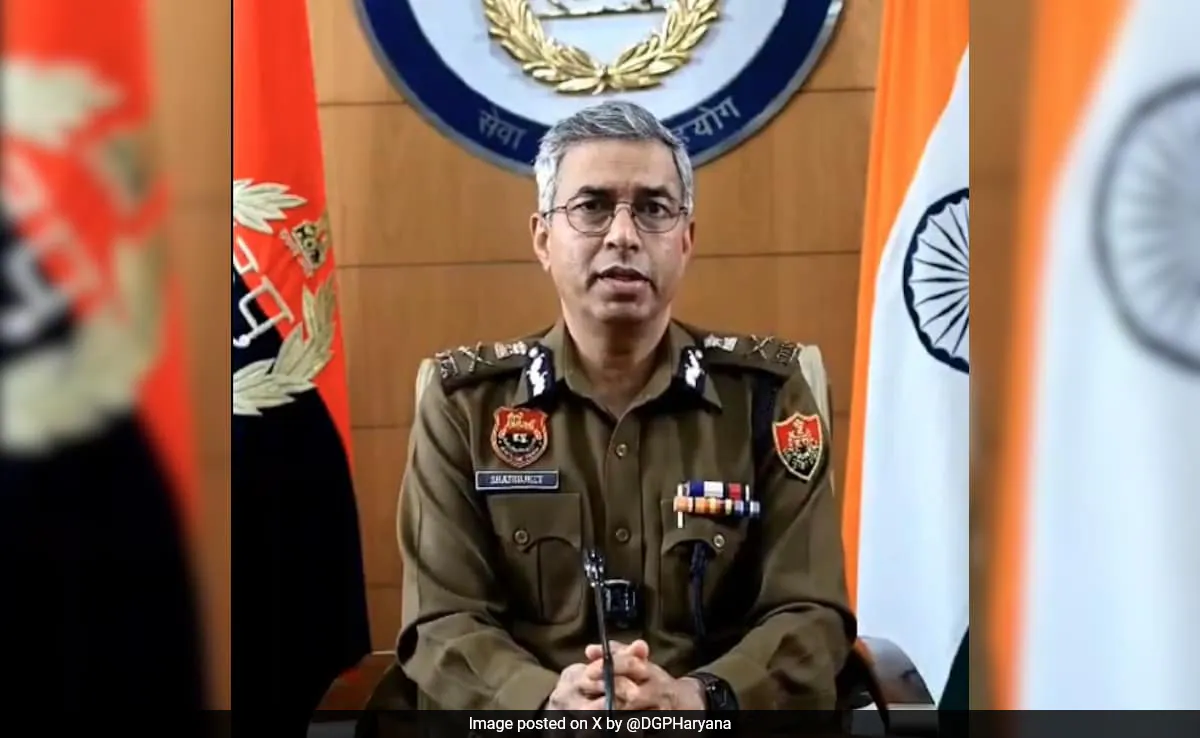
Kumar’s note is being treated by his family as a dying declaration. In it, he accused eight senior IPS officers — including the DGP of Haryana, Shatrujeet Singh Kapur, and Narendra Bijarniya, then SP of Rohtak — of perpetrating caste-based discrimination, sustained mental harassment, undue humiliation, and institutional conspiracy against him.
According to media reconstructions:

-
Kumar alleged that Kapur, as DGP, instigated or turned a blind eye to actions by SP Bijarniya that sullied Kumar’s reputation, ignored his reports, or issued “ultra vires” (beyond powers) orders against him.
-
The note details that he had, over years, faced caste-biased remarks, differential treatment in transfers and postings, repeated public humiliation, and administrative marginalization.
-
He claimed that certain officers attempted to malign him through false complaints, non-action on reports he forwarded, and misuse of authority to degrade his standing.
-
The note also included clauses of property, will, and demands that the named officers be investigated.
Some media accounts mention that the note included references to as many as 10 senior or retired officers being named.
Because dying declarations under Indian law (Section 32 of the Indian Evidence Act) carry special weight, the note is being treated seriously both legally and administratively. The fact that a senior officer would name the DGP in such a note has shaken the policing and administrative machinery in Haryana.
Institutional and Government Response
Removal & Leave Orders
Immediately following the public outrage and the family’s demands, the Haryana government took swift administrative steps:
-
SP Narendra Bijarniya, named in the note, was removed from his post and replaced by Surinder Singh Bhoria.
-
In a late-night decision, the state sent DGP Shatrujeet Kapur on leave.
-
Subsequently, OP Singh, a senior IPS officer of the 1992 batch, was appointed as the new acting DGP (additional charge) to fill the vacuum.
These moves are being seen by many as a damage-control effort by the state, attempting to defuse anger while ostensibly adhering to procedural propriety.
FIR, Investigation and Legal Steps
-
The FIR filed by Chandigarh Police includes charges of abetment to suicide, and relevant sections of the SC/ST (Prevention of Atrocities) Act as alleged by Kumar’s wife for caste-based harassment and humiliation.
-
The state government constituted an SIT of six members to investigate the case.
-
The family (led by Kumar’s wife, IAS officer Amneet P. Kumar) has demanded the suspension and arrest of the officers named in the note, and protection for their own safety.
-
The family has refused consent for post-mortem and cremation until their demands, including naming Kapur and Bijarniya in the FIR, are met.
Political Pressure and Protests

The case has drawn strong reactions from opposition parties, Dalit groups, civil society, and bureaucratic associations:
-
The Bahujan Samaj Party (BSP) has threatened statewide agitation if action is not taken within ten days.
-
Congress and other opposition leaders have demanded the dismissal, arrest, or at least suspension of the DGP Kapur.
-
Lok Sabha MP Raj Kumar Chabbewal has called for immediate arrest of those named and criticized the state for shielding powerful individuals.
-
The Haryana Revenue Officers’ Association (HROA) observed mass leave across the state in solidarity with Kumar, citing fears of harassment and conspiracy.
-
The case has also been taken up by SC/ST rights organizations and media outlets, highlighting caste discrimination in policing culture.
The cumulative pressure has forced the state to act, at least publicly, and to signal that no one is above scrutiny.
Key Themes & Challenges
This case is not just about one man’s death. It has exposed deeper fault lines in India’s policing, bureaucracy, and society. Here are some central themes:
1. Caste Discrimination in Services
Perhaps the most explosive element in the note is the explicit allegation that Kumar was targeted because of his Dalit identity. In a field (police, administration) that often prides itself on impartiality, such claims cut deep.
Many Dalit and civil society voices have used this case to illustrate how even senior officers cannot insulate themselves from caste-based bias.
If the allegations are true, they reflect a dangerous culture where seniority, power, and caste privilege converge to suppress dissenting or marginalized voices.
2. Mental Health, Pressure and Institutional Silence
The life of a senior police officer is stressful in the best of times, burdened with political interference, internal rivalries, and high expectations. But when such an officer is forced into a corner, institutional safeguards often fail.
Kumar’s note suggests years of mental trauma and humiliation. The absence of internal redressal pathways is stark. In many institutions, complaining internally is risky; speaking publicly risks retribution. The result is that grievances accumulate until they catastrophically explode.
3. Power, Impunity, and Political Cover
Naming a sitting DGP is unprecedented. That the state government first responded by quietly putting him on leave—rather than direct suspension or arrest—indicates the sensitivity and the potential fallout that powerful officials could bring.
Will the SIT and the FIR truly investigate without interference? Will senior officers implicated be allowed to influence the probe? These are real, practical risks in cases involving powerful institutional actors.
4. Evidence, Procedure, and the Dying Declaration
Kumar’s note, in legal terms, is a dying declaration, which under Indian law is admissible and carries weight. But admissibility does not guarantee conviction or justice.
The procedural steps—preserving the note, securing the crime scene, ensuring no tampering, unbiased investigation—are critical. The family’s refusal to permit post-mortem until demands are met complicates matters, but the state must still comply with standard fair procedures.
What Must Be Done (Demands & Recommendations)
For this case to go beyond symbolism and actually yield justice and reform, several steps must be taken:
Immediate Measures
-
Transparent and independent investigation
The SIT should include members from outside Haryana or from central agencies (e.g. CBI) to reduce local pressure. All named officers should be treated as suspects, not shielded by rank. -
Suspend or relieve implicated officials
Leaving officers like the DGP on “leave” is not enough; proper suspension till the investigation is concluded is necessary to ensure integrity of the process. -
Secure and preserve evidence
The original note, forensic records, communications, postings, transfers, internal memos—all must be preserved under secure chain-of-custody to avoid tampering. -
Provide protection to the family
Given the high stakes, the family (including Kumar’s wife and children) should receive security and protection against intimidation. -
Public disclosure and periodic updates
The government and investigators must maintain transparency—publishing interim reports, letting the public know where the investigation stands.
Structural & Policy Reforms

-
Institutional grievance redressal for officers
A structured, protected, impartial system must be in place so that officers—regardless of caste or seniority—can raise complaints of harassment without fear of reprisal. -
Anti-caste bias sensitization and oversight in police and administration
Training, monitoring, and transparent decision-making (especially about postings, transfers, promotions) should be audited for bias. -
Mental health support and counseling systems
High-stress jobs like policing must have confidential counseling, peer support, and mental health resources available. -
Rotation, decentralization, checks & balances in power
Tall hierarchies and centralized authority make accountability weak. More lateral transfer, oversight committees, and checks on discretionary power are needed. -
Protecting lower-cadre officers and whistleblowers
Often, lower-ranking officers are most vulnerable to abuse. Their protections should be strengthened, and complaints must be taken seriously, not suppressed.
Risks, Skepticism & How the Case Could Be Undermined
While many hope this will be a turning point, the history of India’s police and administrative systems is littered with cases where investigations petered out, evidence vanished, or powerful persons were exonerated. Some of the challenges here include:
-
Interference by implicated officers or political patrons
The very individuals named might attempt to influence the probe, tamper with evidence, or intimidate witnesses. -
Delays, dilution, or reclassification
Charges might be weakened, moved to lower courts, or drawn out over years, rendering justice meaningless. -
Lack of political will
If the ruling establishment sees a disadvantage in public accountability, they may slow-walk the process. -
Fear in the bureaucracy
Other officers may fall silent, refuse to support, withhold transfers, or avoid testifying.
To guard against these risks, continuous public pressure, media oversight, judicial supervision, and involvement of civil society will be vital.
Broader Implications
If justice is delivered in this case, it could set precedent not just for Haryana but for all states: senior police officers can be held accountable; caste bias in services can be exposed; institutional culture can be reformed. If, however, the case is buried or compromised, the message will be chilling: even top officers cannot safely protest when facing structural biases.
For Dalit and marginalized officers, this is a torn-open wound. The courage exhibited by Kumar in naming his persecutors may inspire others—if they believe there is hope. But trust in institutions is frayed, and only uncompromising transparency and penal consequences will restore confidence.



