On the same date every year, Haryana states its pride by marking the day when it was established. The event is a grand celebration of the day in 1966, when the new state, which later became known for its cultural heritage, excellent agriculture, and industrial development, came into existence by separating from Punjab. However, Haryana Day is not merely a day remembered for its historical event; it still embodies the spirit of struggle, progress, and togetherness, the traits that have been characteristic of the state and its citizens throughout the last fifty years.
The Birth of Haryana: A Dream of Identity and Governance
Haryana was part of the greater Punjab before the year 1966. As the call for a separate state became louder after the independence of India when the movement for linguistic reorganization and the demand for better administration took place, the necessity for a change became obvious. The people of this region spoke Haryanvi and Hindi, while the western part of Punjab was dominated by the use of Punjabi.
On account of the Punjab Reorganization Act of 1966, the Haryana state was officially established on the 1st of November, 1966. Chandigarh was made the common capital of both the Punjab and Haryana regions. At that time, the new state with limited resources, small-scale industries, and mainly rural population took its first steps, after which it rapidly developed into one of India’s most forward-looking areas.
The Symbolic Meaning of Haryana Day
The first day of Haryana is far from being only the political birth of a new administrative region; it embodies the concepts of steadfastness and independence. It comprises:

- Renewal and Rebirth: By the same token, Diwali represents the victory of light over darkness, Haryana Day stands for the birth of a new administrative and cultural identity.
- Unity in Diversity: The people of Haryana come from various cultural and social origins, but the citizens are united through their common love for the land and language.
- Hard Work and Progress: The celebration is a time when the people of Haryana are reminded of their state’s contribution in the Agricultural revolution, thus, the state’s farmers can be regarded as the major reason for the transformation of India from a nation of food deficit to one of food surplus.
- Cultural Pride: From Ragni folk songs to Phulkari embroidery, Haryana’s art and traditions are not only the reflection of the vibrancy and simplicity of the rural part of India but also the way of life.
Haryana’s Journey: From Fields to Future
The parents of Haryana surely didn’t think of such a bright future for their baby when the little girl was born. Today, the state is a large contributor to the country’s economy in these major fields:

- Agriculture: The Green Powerhouse
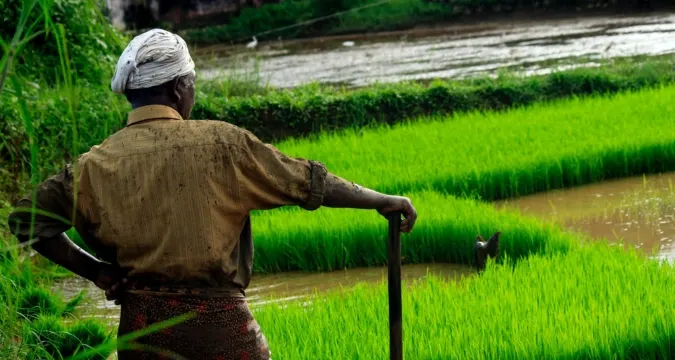
It was Haryana’s rich plains that were nourished by the Yamuna and Ghaggar rivers that turned out to be the backbone of the Green Revolution in India during the 1960s and 1970s. The state’s farmers adopted modern methods and were quick to install irrigation systems thus setting the Indian food problem off. The state, which has become a major exporter of rice, wheat, sugarcane, and cotton, has kept them as the mainstay of its identity.
- Industry: The Rise of Modern Hubs
What used to be a land solely for farmers now has several industrial powerhouses like Gurugram, Faridabad, and Manesar. These cities have become a home to automotive, IT, and manufacturing giants that attract domestic as well as international investments. Gurugram, the city of the future, is often considered the Millennium City, a symbol of how Haryana changed from a state of plough to power.
- Sports: The Land of Champions
Haryana is known as the Sports Capital of India and has got this title scientifically. The state is proud of its athletes who are also role models for a spirit of discipline and bravery that is, Neeraj Chopra, Sakshi Malik, Bajrang Punia, and Rani Rampal. In Haryana, sports are not merely competitions — they are a mirror of the state’s long-standing ethos of struggle and endurance.
- Culture and Language: The Voice of the Soil
Haryanvi culture is a perfect combination of attributes such as simplicity, humour, and strength. The Haryanvi dialect, folk dances like Ghoomar and Dhamal, and festivals such as Teej and Holi are perfect examples that point to the happy and community-oriented lifestyle of the people. These cultural practices have strong symbolic meanings related to fertility, prosperity, and closeness with nature.

Symbolism in Haryana’s Identity
The word Haryana itself is deeply meaningful — it was derived from the two Sanskrit words ‘Hari’ (Lord Vishnu) and ‘Ayana’ (Home) which when put together mean “The Abode of God.” In a metaphorical sense, it stands for an area where nature, spirituality, and humanity are in perfect harmony.

Read More: Krishna’s Birthday
Its terrain of green fields, yellow mustard flowers, and red earthen homes reflects the core of India’s rural heart which is the country-side. Among other things, the green color has become the symbol of not only Haryana’s agricultural strength, but also its environmental awareness.

How Haryana Day is Celebrated
Across the state, Haryanites kick off Haryana Day with a bang; cultural events, parades, exhibitions and sports tournaments that bring everyone together. Schools and universities hold debate competitions, essay contests, and traditional folk performances to celebrate the state’s remarkable journey so far.
Government departments showcase the state’s achievements in agriculture, industry and technology through fairs and awareness programs. It’s also a day to honor the unsung heroes – freedom fighters, farmers and public servants who have played a huge role in building the Haryana we know today.
In Chandigarh, the joint capital, Haryana Day is celebrated with gusto with official functions and tributes to those who have shaped the state’s destiny over the years. In rural areas, the celebrations take on a local flavor; traditional food, music and dance become a joyous communal activity that brings families together across generations.
Popular Cities and Their Unique Contributions
Haryana’s strengths aren’t just in its agricultural backbone or industrial growth, but in the vibrant city spirit that drives it forward – each one symbolizing a different facet of the state’s identity.
1. Gurugram – The Face of Modern India
What was once a quiet little town is now one of the country’s top corporate and financial hubs – over 250 Fortune 500 companies have made it their home. It’s the country’s digital and industrial leap – Gurugram is a hub for start-ups, tech firms and multinational corporations, earning it the title of India’s Cyber City.
2. Faridabad – The Heartbeat of Industry
Faridabad – the largest city in Haryana by population – is part of the National Capital Region (NCR). The city is known for its heavy manufacturing and engineering industries, producing machinery, tractors, and electrical goods that contribute a lot to Haryana’s GDP.
3. Hisar – The Steel and Education Hub
Hisar is home to the Jindal steel industry and prominent educational institutions like Chaudhary Charan Singh Haryana Agricultural University (CCSHAU) – one of Asia’s largest agricultural universities. The city has become a vital research and education centre in northern India.
4. Panipat – The City of Legendary Battles
Panipat is a city that holds immense historical significance – it was the site of three major battles that shaped Indian history. Today, it’s known as the “Textile City of India” for its thriving handloom and carpet industries which export goods all around the world.
5. Rohtak – The Academic and Administrative Centre
Rohtak stands out as a prominent educational hub, housing Maharshi Dayanand University (MDU) and several medical, management, and engineering institutions. It also plays a key role as a key administrative and political centre.
6. Karnal – The Land of Agriculture and Innovation
Karnal is known as the “Rice Bowl of Haryana” and is home to the Central Soil Salinity Research Institute (CSSRI) and National Dairy Research Institute (NDRI). It’s a crucial hub for agricultural research and food security.
7. Ambala – The Gateway to the North
Ambala is in a strategic location, making it a transportation and defense hub. The city is home to one of India’s oldest Air Force bases and has long been known for its scientific instrument industry.
8. Kurukshetra – The Land of the Mahabharata
Kurukshetra is more than just a city – it’s a spiritual symbol of India’s moral and philosophical heritage. It’s believed to be the site of the epic Mahabharata battle, where Lord Krishna delivered the Bhagavad Gita. Today, it stands as a global centre for spiritual tourism and Vedic studies.
Haryana in Numbers: A Data Overview
- Formation Year: 1966
- Area: Approx. 44,212 sq. km
- Population (2021 est.): Around 2.9 crore
- Urbanization: 35% urban, 65% rural
- Literacy Rate: Approx. 76% (as per Census 2011, rising steadily)
- GDP (2024 est.): Over ₹10 lakh crore
- Major Industries: Automobiles, IT, Textiles, Agro-processing, Engineering
- Top Agricultural Crops: Wheat, Rice, Sugarcane, Cotton, Mustard, Barley
These figures highlight Haryana’s remarkable growth trajectory, from an agriculture-dependent state to a balanced economy that combines tradition and technology.
Tourism and Culture
Haryana is cool because it mixes old stuff, countryside fun, and pretty nature spots.
Check out these places:
- Sultanpur Bird Sanctuary (Gurugram): Birds from all over stop here.
- Surajkund (Faridabad): People worldwide visit the Surajkund International Crafts Mela, where they show off Indian crafts and folk art.
- Morni Hills (Panchkula): It’s Haryana’s only hill station. It has calm lakes and hiking.
- Jyotisar (Kurukshetra): This is where Lord Krishna supposedly gave the Bhagavad Gita speech. So, it’s holy.
- Sheikh Chilli’s Tomb (Thanesar): An old-school Mughal building.
These spots are Haryana’s face, mixing history, religion, and nature
School and New Ideas
Haryana puts money into schools, which is changing things for young people. Places like IIT Delhi (Sonipat) and NIFTEM in Kundli, show they care about new ideas and helping women. The state backs job training programs to prepare people for industries like AI and clean energy.
Haryana’s Big Idea for India

Haryana Day isn’t just a party. It tells India that if you work hard, stay focused, and stick together, you can get somewhere. Haryana went from a small farm area to a big business place because they had a plan and stuck to it. Haryana shows what India is all about – always trying to get better.
What’s Next: Growth That Lasts
Haryana’s facing new stuff in the 21st century: crowded cities, pollution, and making sure everyone’s included. But, these things also give chances to make things better. The government and folks are trying to:
- Use clean energy and make green cities
- Improve schools and teach people how to use computers
- Help women do business, and help rural people
- Use better farming methods and have industries that don’t hurt the earth.
These things will keep Haryana growing without leaving anyone out, which is how it started.
In short: Haryana’s Always Got It
More Read

Haryana Day is a pat on the back for people’s spirits. It reminds us that a place is great not because of its size or riches, but because of its people, how hard they try, and what they believe. From farmers to athletes, Haryana shows the Indian values of hard work, courage, and caring.
As we have fun on Haryana Day, we also say that any dream can come true, no matter how small, and it’s never too late to make something happen.