On the evening of 10 November 2025, a car exploded near Gate No. 1 of the Red Fort Metro Station in Delhi, killing at least eight people and injuring many more. The vehicle involved was identified as a white Hyundai i20. Investigators quickly treated the incident as a possible terror attack, registering cases under the Unlawful Activities (Prevention) Act (UAPA) and the Explosives Act.
The vehicle’s traced movements
One of the key developments in the investigation is that the Hyundai i20 did not just appear at the blast site, but had a travelling pattern inside Delhi earlier that day:
- CCTV footage and police sources show the car was at Connaught Place around early afternoon, about 21/2 pm.
- It then moved to Mayur Vihar, another major Delhi locality, before finally being parked in Chandni Chowk / Sunehri Masjid parking lot near the Red Fort area.
- It is further reported the car was in Faridabad for about 11 days prior to the blast, parked in premises of a college (Al-Falah University) in Faridabad, Haryana.
Thus the vehicle’s journey appears multi-stop: Faridabad – Entry into Delhi – Connaught Place – Mayur Vihar – Final parking near Red Fort – Explosion.

Investigation status
- The investigation has been taken over by the national agency National Investigation Agency (NIA).
- Authorities have collected extensive forensic evidence: car parts, gas cylinders, ammunition/explosive fragments.
- The blast vehicle registration: HR 26 CE 7674.
- Links are reportedly being drawn between this incident and a large explosives haul in Faridabad (2,900 kg of ammonium nitrate and other materials) seized earlier the same day.
- CCTV images show a masked driver in the vehicle prior to the blast.
- The government has declared high alerts across Delhi/adjacent states and announced compensation to victims ([?]10 lakh to kin of deceased etc.).
Why the Connaught Place – Mayur Vihar route matters
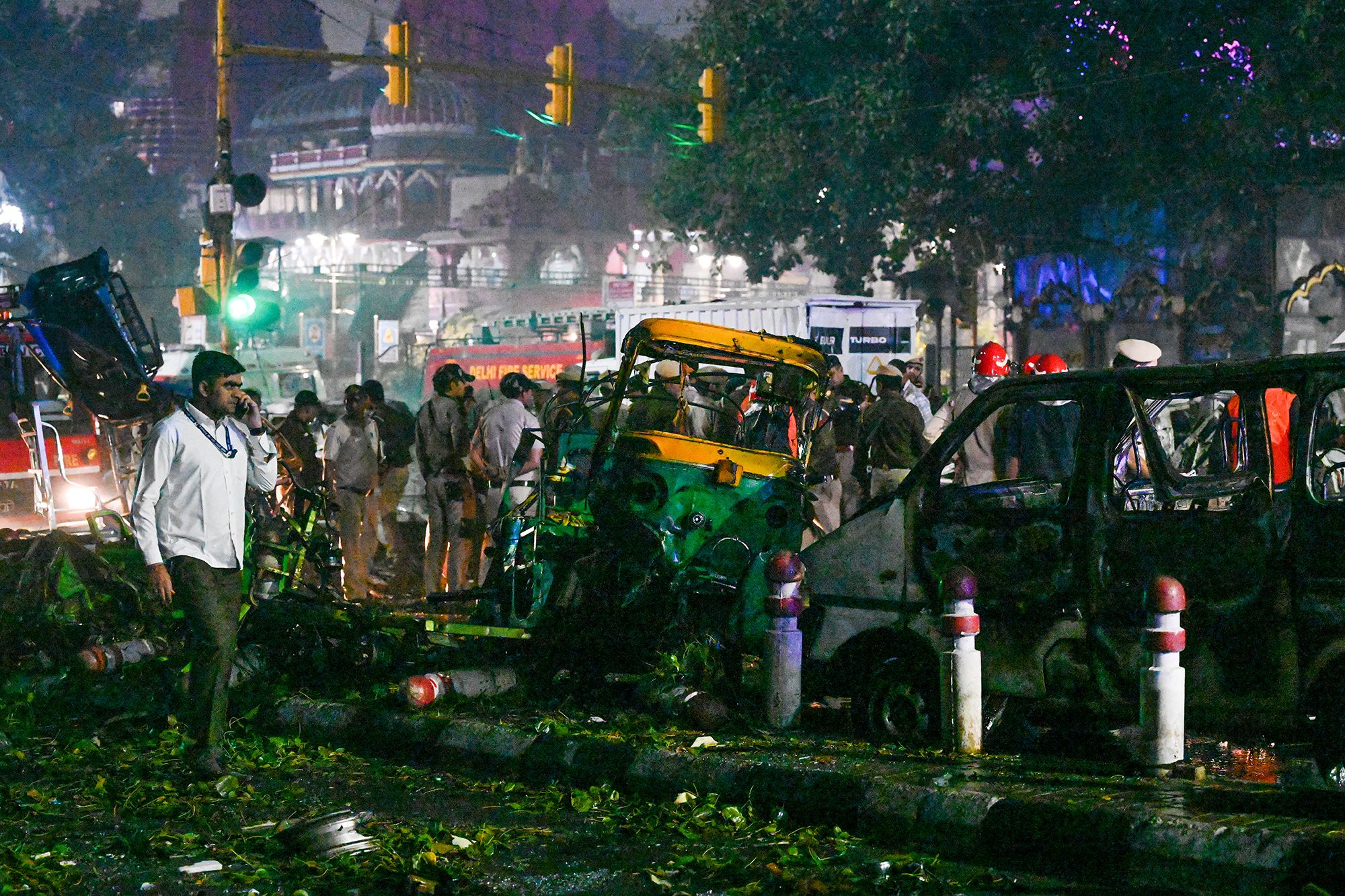
The fact that the vehicle was spotted at Connaught Place and Mayur Vihar is significant for several reasons:
- Connaught Place is one of Delhi’s busiest commercial hubs, with dense vehicular and pedestrian traffic. Its appearance there suggests the perpetrators were either assessing traffic flows, blend-in possibilities or creating confusion by circulating the car publicly.
- Mayur Vihar lies in east Delhi and the movement there suggests a route traversing the city, possibly trying to avoid detection. It also indicates the vehicle was in the city for hours before the blast.
- The time-gap between early afternoon (at Connaught Place) and late evening (at Red Fort) gives investigators a window of movement, possibly involving stops, reconnaissance, or meeting points. This helps build a timeline of the attackers’ actions.
- Tracking of this route opens up multiple CCTV and witness-led leads across the city, giving security agencies more points to gather evidence and trace accomplices.
Key findings & forensic clues
Explosive material
Forensic tests show that the blast involved ammonium nitrate and “higher-grade military explosives.” This suggests a level of sophistication beyond a simple car bomb; the use of ammonium nitrate aligns with previous terror-module patterns in the region.

Vehicle preparation
The Hyundai i20’s stay in Faridabad for about 10-11 days indicates it may have been converted into a “bomb-car” in a relatively hidden location prior to entering Delhi. This long preparation time is consistent with planning and assembly of explosive devices.
Timeline of attack

- Entry into Delhi (from Faridabad) early afternoon.
- Seen at Connaught Place around ~2:30 pm.
- Later moved to Mayur Vihar.
- Finally parked around 3:19 pm in Sunehri Masjid lot near Chandni Chowk / Red Fort area; remained until approximately 6:48 pm before explosion at 6:52 pm.
- Blast occurred at traffic signal, a busy junction, near Gate No. 1 of Red Fort Metro Station.
Suspected modus operandi
Preliminary investigations suggest this may have been a ‘fidayeen’-style attack (suicide attack) though official confirmation is pending. The location choice (historical monument + metro station junction) and timing suggest high symbolic value.
Victims & Impact
- At least 8 have died, with others injured — reports vary up to 12 or 13 deaths.
- Many victims appear to be local commuters, e-rickshaw/auto drivers or passers-by caught in the explosion and subsequent fire.
- Nearby vehicles, shops, e-rickshaws, autos and traffic signals were damaged in the blast. The shockwave shattered glass and disrupted metro station operations.
- Following the blast, security was heightened across Delhi and neighbouring states; metro station gates closed temporarily; travel advisories issued.
- Compensation: Delhi government announced [?]10 lakh to kin of deceased, [?]5 lakh for permanently disabled, [?]2 lakh for injured.
Possible motives & broader links
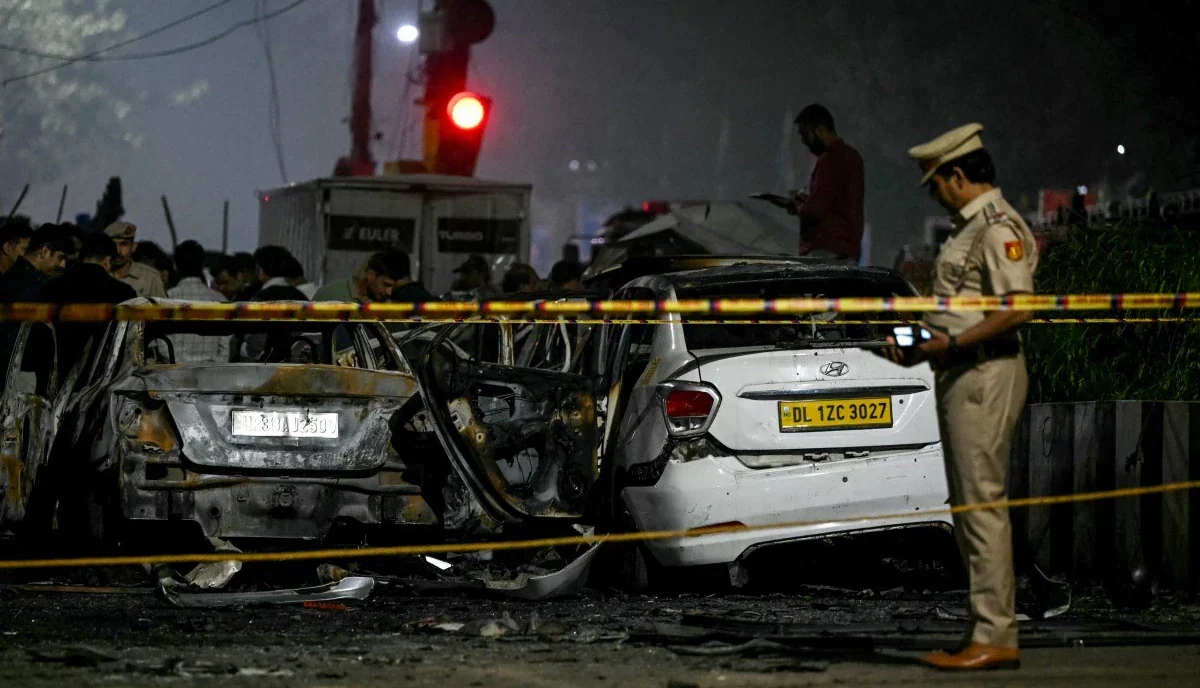
Investigators appear to be pursuing several parallel threads:
- The linkage to the explosives haul in Faridabad suggests the car-bomb may be part of a larger terror module operating inter-state, possibly with cross-border connections.
- The fact that the vehicle travelled through prominent areas before the blast and parked for hours suggests reconnaissance and timing were crucial.
- The involvement of persons with medical backgrounds and use of institutional parking (college in Faridabad) point to white-collar support networks rather than purely grassroots militants.
- Some media reports indicate a possible panic detonation rather than a perfectly executed suicide strike, because of the lack of crater formation and projectiles — suggesting the IED or vehicle-borne device may have been triggered prematurely.
What remains unanswered
- Identity of the occupants of the vehicle at the moment of explosion. DNA and forensic samples are still being analysed.
- Exact motive: Whether targeting the Red Fort/metro station was symbolic or opportunistic.
- Whether the explosion was intentional, accidental, or triggered prematurely (panic, interception, logistical fault).
- The full supply chain: who procured the explosives, who converted the vehicle, who directed the operation.
- Whether this was a stand-alone event or part of a series of coordinated attacks.
- Whether cross-border elements (foreign handlers or material supply) were involved.
- Full list of arrested or detained suspects, and what the interrogation has yielded.
Security & policy implications
- The blast underscores the vulnerability of high foot-traffic symbolic locations even in a city with strong security presence.
- It may trigger enhanced vetting of parking lots, buses, autos, and vehicles near monuments and metro stations.
- The multi-stop route of the vehicle highlights the need for city-wide coordination of CCTV, traffic, metro surveillance rather than just monument security.
- Given the possibility of a terror module, state and national agencies (NIA, NSG, local police) will likely reassess intelligence sharing, early-warning systems and explosive material tracking (especially ammonium nitrate and related compounds).
- Local commuters and visitors will be more alert, and there may be temporary disruption/increased security checks in Old Delhi, Chandni Chowk, and other congested historical zones.
- Politically, the incident may become part of the national debate on internal security, border management, radicalisation and counter-terror financing.
What to Watch for in Coming Days

Arrests & Charges: Who is charged, under what sections, the evidence revealed.
Forensic Report: The official technical document indicating exact explosives used, device assembly, and trajectory of blast.
Intelligence Findings: Reports on whether this was a coordinated terrorist attack, the network behind it, and whether there are further planned attacks.
Security Response: Steps taken by Delhi Police and central agencies to tighten security in heritage/metro zones, and whether there are immediate policy changes around parking, traffic, vehicle monitoring near sensitive zones.
Victim Support & Compensation: Regular updates on victim status, families of deceased, how government aids proceed.
Public Sentiment & Commuter Impact: How everyday traffic/commuter flow changes in Old Delhi, how tourism (especially near Red Fort) is affected.
More Read

Regional/Neighbouring States: Investigations and alerts in neighbouring states (Haryana, Uttar Pradesh, Jammu & Kashmir) given possible interstate links.
Conclusion
The vehicle-blast near the Red Fort in Delhi is a deeply troubling incident — both for its human cost and for the security implications. The tracing of the Hyundai i20 from Faridabad through Connaught Place and Mayur Vihar into central Delhi shows a degree of planning, patience and mobility. While the definitive conclusions (motives, network, full chain) are yet to emerge, the early signs point to a terror-linked operation rather than a simple accident.
The coming days and weeks will be crucial: forensic reports, interrogations of suspects, intelligence leads, and security policy responses will shape how the nation addresses this attack and prepares for any future ones. In the meantime, everyday citizens, commuters and visitors must remain alert, obey official advisories and trust only verified updates from agencies.