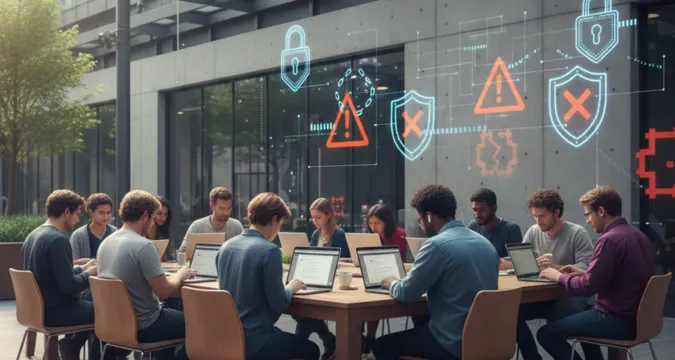
Cyber Security Threats Explained: How Digital Risk Is Reshaping Everyday Life
Once upon a time, cyber threats seemed like problems that only big banks, governments, or tech companies had to worry about. But these days? They’re a part of our everyday lives. Whether you’re just opening a message on your phone or logging into your work computer, the risk of something digital going wrong is something we all share. When cyber incidents happen, they don’t just stay on servers or in data centers. They spread out, affecting how we trust each other, how we act, and even who has power in our daily routines.
That’s why explaining cyber security threats in terms we can all understand is more important than ever. Recent events, from huge data leaks to ransomware attacks on hospitals and schools—show that cyber security isn’t just about computers anymore. It shapes how we do our jobs, how we talk to each other, how we vote, how we learn, and even how we get medical care. These threats are quietly changing our ideas about privacy, who’s responsible for what, and what safety means in a world that’s all connected.
This article looks at cyber security threats not as distant dangers, but as things that are actually changing our society and culture. It examines who feels these impacts the most, how they experience them in real life, and why these changes matter to all of us, not just tech experts or people reading industry news.
Understanding Cyber Security Threats in Plain Terms
At its heart, cyber security is all about keeping digital systems, networks, and data safe from people who shouldn’t have access to them or from things that could damage them.

Cyber threats happen when individuals or groups find and take advantage of weaknesses in those systems. These threats aren’t all the same thing. They differ in why they happen, how they happen, and what effect they have. What ties them all together, though, is how much more they’re affecting our day-to-day lives.
Some of the most frequent types include:
Phishing and social engineering: These are attacks that play on human behavior instead of exploiting software problems. They often use emails or messages that look like they’re from legitimate sources to trick people.
Ransomware: This is malicious software that locks people out of their systems or data, demanding payment to let them back in.
Data breaches: These are situations where personal or sensitive information gets accessed or exposed without permission.

Supply chain attacks: These breaches target trusted vendors or service providers in order to reach many different customers or partners at once.
What makes today’s cyber security threats different from the digital risks we saw in the past is their sheer size and how sneaky they can be. Lots of attacks don’t make themselves known right away. They might stay hidden, quietly collecting data or just waiting for the perfect time to cause trouble. This creates a feeling of uncertainty that goes way beyond just the technical teams dealing with it.
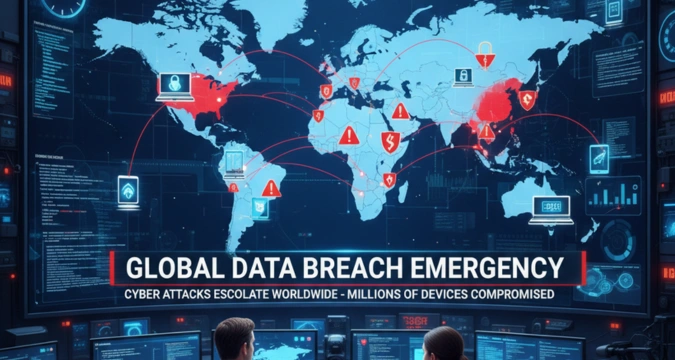
Recent Examples and What They Reveal
Looking at recent cyber incidents really helps explain why these threats feel more personal than ever these days.

Over the last few years, ransomware attacks have thrown public services into chaos in many countries. Hospitals had to postpone vital treatments. Local governments lost access to crucial records. Schools faced weeks where they couldn’t operate normally. These weren’t just technical hiccups; they disrupted real lives.
Likewise, massive data breaches involving social media sites, phone companies, and banks have exposed personal details belonging to millions. Even if there’s no immediate fallout, knowing that private information is out there being shared without your say-so definitely changes how people feel about using digital services.
Another growing worry is about attacks that take advantage of trust.
Phishing scams are now incredibly sophisticated, often pretending to be coworkers, official organizations, or even family members. Artificial intelligence has made these fake messages incredibly believable, making it much harder to tell what’s real and what’s not.
In every situation, the danger isn’t just about technology. It’s deeply social.
We’re all being forced to constantly question what—and who—we can actually trust anymore.
The Broader Context: How We Got Here
Cyber security threats did not emerge in isolation.
They are the byproduct of rapid digital expansion combined with uneven awareness and protection. Over the last two decades, societies have moved essential services online faster than cultural norms and safeguards could adapt.
Workplaces adopted cloud tools. Governments digitised records. Social life migrated to platforms designed for scale, not resilience.
At the same time, digital literacy developed unevenly. Many users learned how to use tools, but not how to evaluate risk. Security became something assumed rather than practiced.
This gap created fertile ground for exploitation.
Cybercrime has also become more organised. What was once the domain of isolated hackers has evolved into networks that operate like businesses, complete with customer support, pricing models, and outsourcing.
In this environment, cyber security is no longer just about defence. It is about navigating a contested digital space where economic, political, and social interests collide.

How Cyber Threats Are Changing Social Behaviour
Cyber security threats didn’t just pop up out of nowhere. They’re more like a side effect of how quickly everything went digital, mixed with the fact that people’s awareness and protection didn’t keep up. Over the last twenty years or so, society rushed to move essential services online much faster than our usual ways of doing things and safety measures could catch up.
Businesses started using cloud tools, governments moved records online, and even our social lives shifted to big platforms that were built for size, not necessarily for being tough to crack.
Meanwhile, learning about technology happened in fits and starts. Lots of people got good at using digital tools but didn’t really learn how to spot danger. It became easy to assume everything was safe instead of actually practicing good security habits.
That mismatch made it really easy for bad actors to take advantage.
And cybercrime itself has gotten more organized too. It’s not just lone hackers anymore; it’s turned into networks that run like proper businesses, with customer service, prices, and even outsourcing.
Because of all this, cyber security isn’t just about setting up defenses anymore. It’s about figuring out how to move through a digital world where different groups—economic, political, social—are all bumping up against each other.
Power, Responsibility, and Digital Inequality
Cybersecurity issues don’t hit everyone the same way. Big companies usually have the money and resources to bounce back from attacks, even if the damage is really bad. But individuals, small businesses, and organizations that don’t have a lot of funding often can’t do that.
This creates a kind of digital unfairness. When a huge company gets hacked, the people who use their services often end up dealing with the long-term problems. If your personal information gets exposed, you could end up with identity theft, lose money, or suffer damage to your reputation—even if you didn’t do anything wrong yourself.
It’s often not clear who’s actually responsible. Should we expect regular users to protect themselves, or should the organizations handling our data be the ones making sure everything is secure? In reality, the burden is frequently pushed onto individuals, leaving them to figure out these complex threats with very little help.
This whole situation brings up important ethical questions about things like consent, who’s really accountable, and who gets access to what in our digital world.
Cultural Impacts Beyond the Screen
It’s interesting how cyber threats are quietly changing our culture in ways we don’t always notice right away. Nowadays, stories about data hacks and security breaches have become part of our everyday digital story. These tales often shape how we see technology, frequently making us feel fearful or suspicious instead of helping us truly understand it.
While media coverage is important, it sometimes makes us even more anxious without giving us the full picture. This leads to a culture where we feel cyber risks are everywhere, yet we don’t really grasp what they mean.
At the same time, ideas about privacy are evolving. Younger people often grow up thinking some level of exposure online is just part of life. On the other hand, older folks might feel a stronger sense of loss when their privacy is violated. These different viewpoints really influence the discussions we have about rules, surveillance, and our rights in the digital world.
Looking at cyber security threats through their cultural impact shows us that it’s not just about stopping attacks. It’s also about figuring out shared values in our connected world.
Looking at cyber security threats through their cultural impact shows us that it’s not just about stopping attacks. It’s also about figuring out shared values in our connected world.
Current Trends Driving Change
Several trends are really ramping up the social impact of cyber threats. For starters, remote and hybrid work setups have pushed the digital boundaries way out. Our homes are now like extensions of the office, but they often lack the same strong security measures. This makes it harder to tell where personal risks end and professional ones begin.
Secondly, automation and artificial intelligence are reshaping both how attacks happen and how we defend against them. As security tools get more sophisticated, so do the methods attackers use. It’s a constant game of cat and mouse, with both sides always adapting.
Thirdly, geopolitical tensions are increasingly spilling over into cyberspace. Attacks driven by national interests can hit critical infrastructure, media outlets, or even civic systems. This raises serious questions about stability and the integrity of democratic processes.
All these factors combined mean that cyber security isn’t just a passing concern—it’s a central social issue that isn’t going away anytime soon.
Common Misconceptions That Limit Understanding
A really common myth is that cyber attacks only go after the big, famous targets. But the truth is, many attacks are just opportunistic. Small businesses and regular people often get targeted precisely because they might not have the same level of protection.
Another misunderstanding is that technical solutions are the whole answer. While tools are definitely important, how people behave is just as critical. Things like awareness, company culture, and incentives matter just as much as the software you use.
There’s also a tendency to treat cyber security like something we should be terrified of. This approach can actually make people tune out and stop learning. You don’t need to panic to understand threats; you just need a clear perspective.
Sorting out these misunderstandings helps change the conversation from pure alarm to feeling more empowered and capable.
Why This Matters for Society
The true importance of cyber security threats isn’t just about each individual attack, but how they all add up over time. Every incident chips away at the trust we have in digital systems, which are now so essential for modern society. If this continues unchecked, it can really slow down innovation, make inequality worse, and put a strain on how well we all get along. When people feel unsafe online, they tend to pull back, their voices are less heard, and opportunities start to shrink. On the other hand, if we treat cyber security as something we’re all responsible for together, it can actually make us more resilient. Open communication, making sure people are held accountable fairly, and educating everyone involved can help rebuild confidence. For those who want to understand the bigger picture beyond the daily news, looking at cyber threats in terms of real human impact gives a much clearer idea of what’s really at risk.
What to Watch Next
Several signals are worth paying attention to.
- How governments balance regulation with innovation
- Whether organizations invest in user-centred security design
- How education systems address digital risk literacy
- The role of public communication after major cyber incidents
The future of cyber security will be shaped not only by technology, but by choices about transparency, responsibility, and trust.
As explored in other reporting by The Vue Times, these choices often reveal deeper social priorities rather than purely technical ones.
More Read

Summary and Key Takeaways
Cyber security threats aren’t just theoretical anymore; they’re real and happening right now. They affect how we do our jobs, connect with others, and interact with digital tools every single day. Recent events have shown that the consequences go way beyond losing data—they raise serious questions about trust, power balances, and inequality. Looking at these threats as social issues can help us move past a cycle of fear and blame. It really brings to light the importance of everyone sharing the responsibility and staying informed to get involved.
In a connected world, cyber security is ultimately about people — their rights, their relationships, and their sense of safety.
FAQs
Why do cyber security threats feel more personal today?
Digital systems now support essential parts of daily life, from work to healthcare. When cyber incidents disrupt these systems, the effects are immediately felt by individuals, not just organisations. This proximity makes threats feel personal and urgent.
Are individuals really responsible for protecting themselves online?
Individuals play a role, but responsibility should not rest solely on them. Institutions that collect and manage data have a duty to design secure systems. Effective cyber security depends on shared accountability rather than shifting risk downward.
Do cyber threats affect culture, not just technology?
Yes. They influence trust, communication habits, and attitudes toward privacy. Over time, repeated incidents shape how societies perceive digital spaces, often normalising caution or resignation rather than openness.
Will better technology eliminate cyber security risks?
Improved tools help, but they cannot remove risk entirely. Cyber security also depends on human behaviour, organisational culture, and ethical decision-making. Technology is only one part of a broader social system.
What should readers pay attention to going forward?
Watch how transparency, education, and regulation evolve. The way institutions respond to cyber incidents often reveals whether society prioritises user trust, fairness, and long-term resilience over short-term convenience.