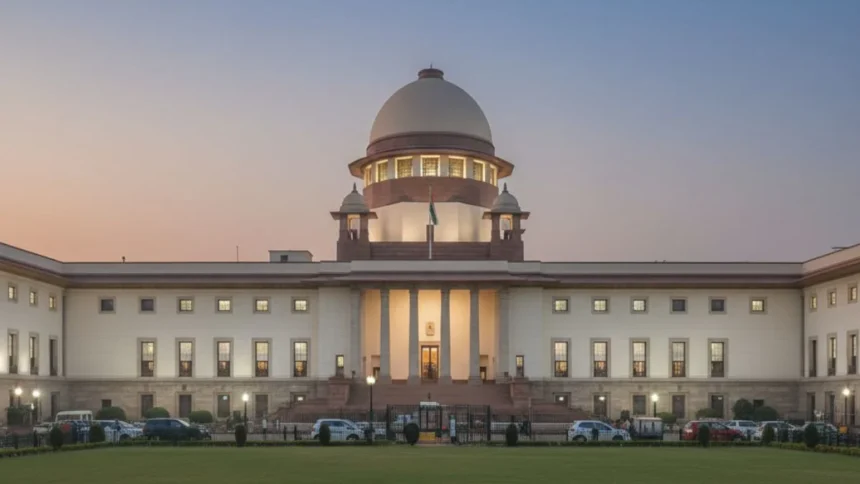
A recent court order met with government delay shows how governance gaps are felt most sharply by ordinary citizens.
Why Now
New interest in Court orders vs Government delays is in the wake of a new Supreme Court edict that re-energized schedules for the execution of a policy decision originally ordered many years ago touching upon thousands of the recipients. The ruling was categorical in its command and definite in urgency. However, a few weeks later several departments at the Centre and states wanted to have more time, citing the procedural bottlenecks, fiscal planning cycles, and inter-departmental coordination problems.
This pattern is familiar. Court orders can often generate a second period of latency between the judicial declaration of the order and the executive imposition, regardless of whether these orders deal with compensation disbursement, service regulations or regulatory protection. In the present case, citizens were likely to receive relief instantly according to the decision. Instead, they met with silence, explanations and under investigation signs.
The time is important as the delays are not happening in isolation. They coincide with both fiscal year changes, elections in multiple states and an already tense administrative machine. To those concerned, it is not a constitutional ratio–but the question: whether a legally recognized right is now or hereinafter my own one; whether it is being marked by concrete relief or by suspension without end.

Background: What Embezzlement Is
The constitution of India distinctly divides adjudication and execution. Courts read law and give instructions; governments build them. Ideally, this segmentation safeguards democratic accountability. In effect, it establishes a structural lag.

When a court order is issued, particularly on the matter of modification of policy or with economic implications, it finds its way through a congested administrative channel. The departments request legal advice to provide an interpretation of the order. The budgetary impact is evaluated by the finance ministries. The implication of services is investigated by personnel departments. States seek explanations of the Centre and the other way round. Every action has its own justification but over the long run they weaken urgency.
This disparity has widened in the past as the process of governance has become more complicated. During the 1990s, a lot of court orders were narrow compliance like reinstatement of workers or dues payment. Decisions nowadays sometimes revamp whole plans, regulatory systems, or requirements that include millions. The administration has not changed accordingly.
This can be seen through two illustrations. Following a Supreme Court directive on environmental clearances that boosted compliance requirements, a number of state pollution control boards put off implementing them, claiming understaffing and revised directions. Equally, the court guidance on the application of modified remuneration positions of specific types of employees has in most cases taken years to be reflected in actual payrolls despite successive court warnings.
A settlement of law is made when judgment occurs. The uncertainty is initiated later.
Who Is Affected and How
Citizens whose lives rely upon the prompt action of the state are the next direct beneficiaries of on-time action. The results have different groups but they all have one common factor; they have long periods of insecurity.

Delays are quite common after successful adjudication on promotions, arrears or recalculation of pensions by the government employees and pensioners. In the cases where the courts will stipulate time-frames, departments have a habit of paying in bits or executing the orders on future basis, leaving retirees to have to take the case to court once again when they are in their 70s.
Another group that is affected is the urban dwellers, especially the informal settlements. Before any demolition or eviction is undertaken, courts have ordered procedural protections on any number of occasions. But in a number of instances the municipal authorities have continued to do it incompliantly, in the name of administrative urgency, or of a misunderstanding of instructions. In the case of families, this implies leading a life that is full of threat even though the legal protection is extended.
The same is true with students and job aspirants. Administrative reviews that drag on for months usually follow court decisions regarding irregularities found in exams or reservation policies or recruitment processes. Job announcements and admission periods do not take the litigation results at hold and the students are trapped in an Adidas of a lost year.

This also affects businesses, particularly small businesses. The orders that involve tax refunds, regulatory clearance, or retrospective penalties are usually not implemented on ground of system constraint, which influences cash flows and planning.
In both cases delay is an unspoken policy option- an option that shifts the price of nonaction to people most ill-equipped to defray it.
Data/Fact Check
The Department of Justice reports that the number of cases of contempt dependent on government obedience still pending through the High Courts and Supreme Court is thousands, and there is evident systemic difficulty in enforcement.
It was pointed out earlier by a Comptroller and Auditor General (CAG) review of a subset of welfare schemes that there was a lag between judicial instructions and release of funds at the state level.
The 15th Finance Commission had noted the delay in the implementation as a governance risk that weakens fiscal discipline and confidence of citizens in the public institutions.
These are not one or two instances but they depict a systematic problem.
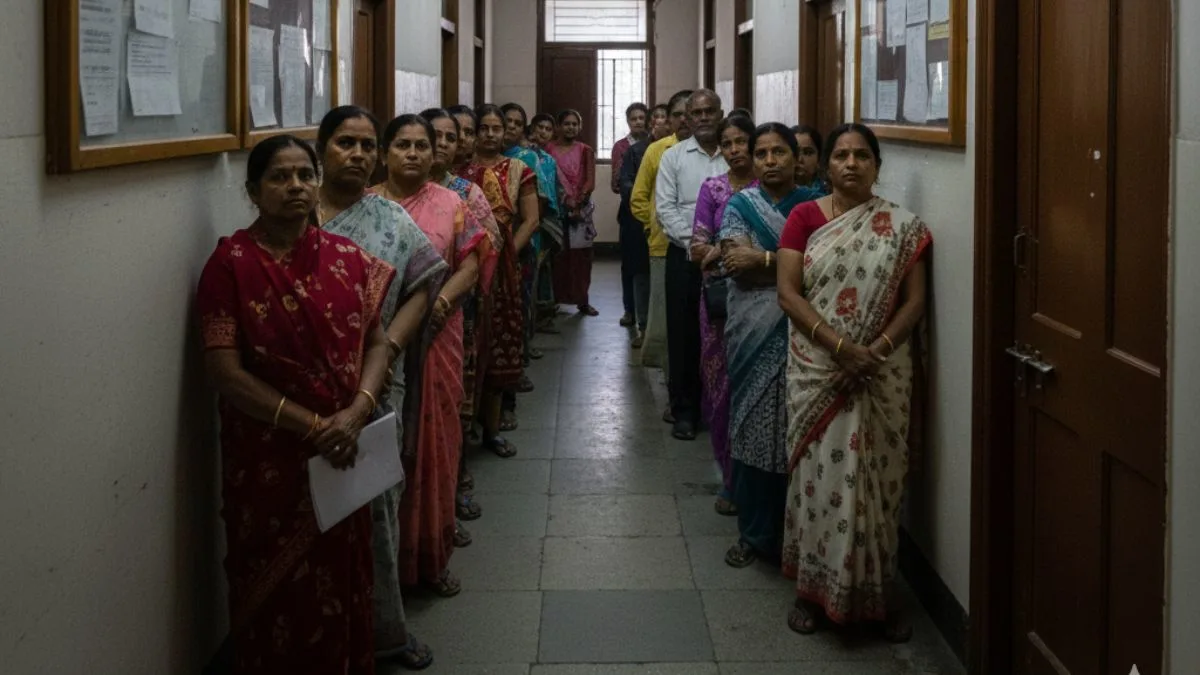
Decompensation Following Judicial Relief Case Study:
In a tribute to proper acquisition, in 2018, the Supreme Court ordered prompt payment of those affected by a big deal of infrastructure developments bringing to rights the flaws of honesty in previous purchases. The judgement stipulated new rates and required prompt disbursement.
On the ground, however, district administrations made payouts slowly, on the basis of incomplete records, awaiting state approvals, and not having had a budgetary allocation. Years later, some landowners were compensated at a partial rate; some were requested to provide new documents. Some went back to court and sought contempt.
To families that were affected, the delay was equivalent to late investments, loans that were not repaid, and legal expenses. Their rights were recognized by the ruling. The delay in administration completely negated its short-term worth.
This has since been repeated in industries, be it disaster relief or service issues and the disparity between judgment and justice is excruciatingly plain.
Why It Matters
The effect of not doing it in time goes further than personal suffering. They redefine the manner in which governance is understood and experienced.
It undermines institutional consensus when court directions are perceived as scaled-down deadlines, instead of being executed orders. Citizens also develop a perception that the judiciary is not decisive but declarative weakening their trust in the court solutions.
There is also the influence on economic efficiency. Any delay in compliance impacts negatively on labour relations, project execution and raises uncertainty among investors. Regulatory ambiguity between paper and reality increases costs of planning as well as risk premiums.
There is also increased judicial burden. Failure to do so creates new litigation, injunction suits, and appeals to clarify which overwhelm already overloaded courts. This consumes judicial time on decisions that have been settled by adjudicating new cases.
It also has a distributional effect. Persons having resources may make a recurrent court action; the rest suffer silently. Delay therefore increases the disparity of access to justice without changing the formal law.
Governance wise, there is lack of accountability due to the perennial implementation lag. Decentralization is made and no individual department can be held responsible. This nullifies the idea that state power is not practiced with administrative convenience, but the rule of law.
What Happens Next
In the future, there are some plausible directions that might develop.
Scenario One: Increasing Compliance
Orders are finally implemented by governments after an in house review, changes in the budget, or a wig in the ear. Relief arrives, but late. This is the standard consequence that it maintains the institutional form eroding the sense of urgency.
Scenario Two: Selective or Part Selective Implementation
Rules are implemented by the authorities selectively in favor of certain groups and against others. This tends to cause new lawsuits and inconsistent results, protracting doubt.
Scenario Three: Courts of Appeal Escalation
Tougher surveillance measures in courts are instituted; personal affidavits by top officials, time-limited adherence reporting, or monetary fines. This may be effective in certain circumstances, however, this indicates judicial overreach into executive operation.
Scenario Four: Reform on a Policy Level
Rarer, but also not the least, this includes systemic remedies: such as cells of standardised compliance, automatic budgetary arrangements to meet liabilities imposed by the court, or more explicit contempt structures. Friction is eradicated by such reforms and political will is needed.
Institutional incentives dominate over the legal clarity which way of approach prevails. Most cases are already settled by the law, the variable being execution.
More Read

Conclusion
Court orders are designed to end arguments, reinstatement of rights and to ensure that governance is thrown back on the right path. When implementation stops, they only start a second conflict, not between legality, but time.
The gap between the judgment and the execution is the place where citizens see the state as it is. The delays here are not annexed to the process: they can form trust, economic security, and trust to democratic institutions.
According to the recent course of events, the administrative inaction is not paid by any abstract structure but individuals, who have to survive in doubt even after the law has had its word. In the governance of present-day India, bridging this gap is a legal requirement but more importantly, its quantification is also how much the state is credible.