

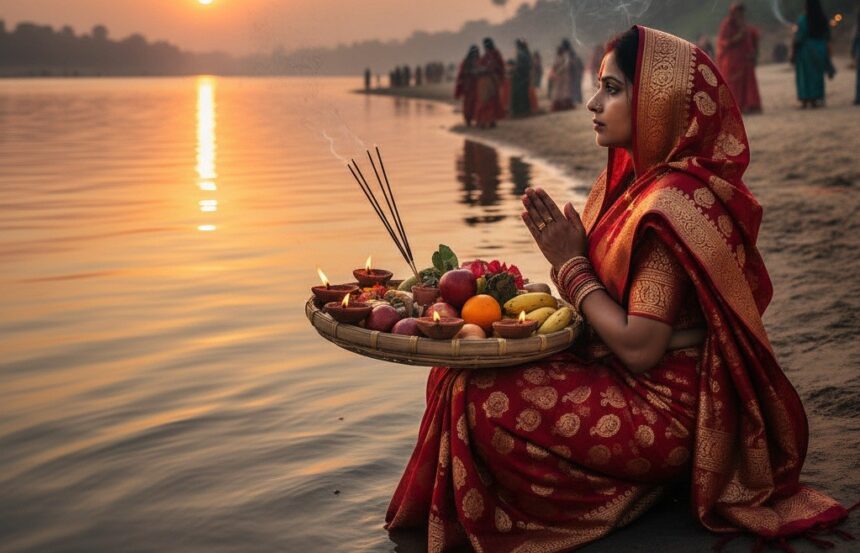
Chhath Puja is yet another ancient and most sacred festival in India and is observed with extreme reverence to the Sun God (Surya Dev) and Chhathi Maiya the goddess who is said to bring good health, prosperity, and happiness. The festival is based on the ancient traditions and Vedic rituals and glorifies the elemental forces of nature. Also it educates that there should be balance between human life and the environment.
Chhath Puja is celebrated with deep devotion in Nepal’s Terai region, where people gather to honor the Sun God. The festival reflects how faith continues to unite communities across borders and generations, keeping timeless traditions alive.

Ethnicity and Mythology of Chhath Puja
Chhath Puja has ancient roots and is mentioned in the Rigveda, as well as in the Mahabharata and Ramayana. The Vedic scriptures describe the worship of the Sun, called Surya Shashthi, as a sacred way to gain purity, strength, and divine energy. This shows the festival’s deep connection to faith and spiritual balance.
The Story of Devasena
During this period, she observed a strict fast and offered arghya—a ritual offering—to both the setting and the rising sun, expressing her deep devotion and spiritual discipline. At the same time, she continued this practice with unwavering faith, believing that her prayers would help restore divine balance. The act of offering arghya symbolized her piety, inner strength, and hope for the revival of divine energy. Through her determination and purity of heart, Devasena showed how sincere worship could awaken spiritual power and bring harmony back to the world of the gods.
The Surya Dev was impressed by her penance and blessed her, and imparted divine energy to the gods.
Based on this story, the tradition of praying to the setting and rising sun, which is one of the major rituals of Chhath Puja, came into existence. People who do the Chhathi Maiya adhere to the belief that the wish of any person who does the Chhathi Maiya with purity and faith is fulfilled.
The other common belief relates the festival with King Priyavrat and Queen Malini who conducted the ritual at the suggestion of the sages in order to have a child blessed. Chhathi Maiya came and bestowed them a son and the festival became one of fertility, thanksgiving, and rebirth.


Significance of Chhath Puja
This festival called Chhath Puja is not only witnessing worship but it is also about gratitude and balance. Surya Dev is the provider of life and energy, and worshiping him enables the followers to recognize the importance of nature in maintaining life. The rituals represent purification, discipline and patience.
Chhath Puja is unlike other Hindu festivals in that they do not require priests or temples. All rituals are carried out by the devotees themselves, where individual discipline and close contact with nature is stressed.

Chhath Puja Rituals and Traditions
Chhath Puja rituals are lasting a period of four days, each day has its meaning and purpose. Each action, including the first bath or the last sunrise offering, represents cleanliness, thankfulness and religiousness.
Day 1 – Nahay Khay (The Day of Purification)
The festival starts off with Nahay Khay, or bathe and eat. Devotees bathe in rivers or ponds such as the Ganges, wash their houses and make a simple meal of bottle gourd (lauki), chana dal, and rice cooked on an earthen stove using mango wood.
The food is cooked in clay utensils to keep the food sacred. This meal is only taken by those who are fasting or are vratees. The women sing folk Chhath songs like Nahay Khay ke din aaj when it gets dusk, thus marking the start of the festival with great happiness and piety.
Day 2 – Kharna (The Day of Fasting and Sacrifice)
Fasting starts on the second day which is called Kharna or Lohanda. Followers do not eat or drink during sunrise to sunset. In the evening they make kheer (sweet rice pudding) cooked using jaggery and rice, roti and serve it to Surya Dev before the fast is broken.
This is a holy meal that is taken with family and neighbors. When the fast starts, the believers (after Kharna) are not allowed to eat or drink any kind of food or drink and this is a 36-hour fast that demonstrates amazing discipline and devotion.
The evening air fills with traditional folk songs like “Ugi Hey Suraj Dev, Aragh Ke Ber Hamar”. These songs carry messages of patience and hope, reminding everyone of the Sun’s vital role in sustaining life.
Day 3 -Sandhya Arghya (Giving to the Setting Sun)
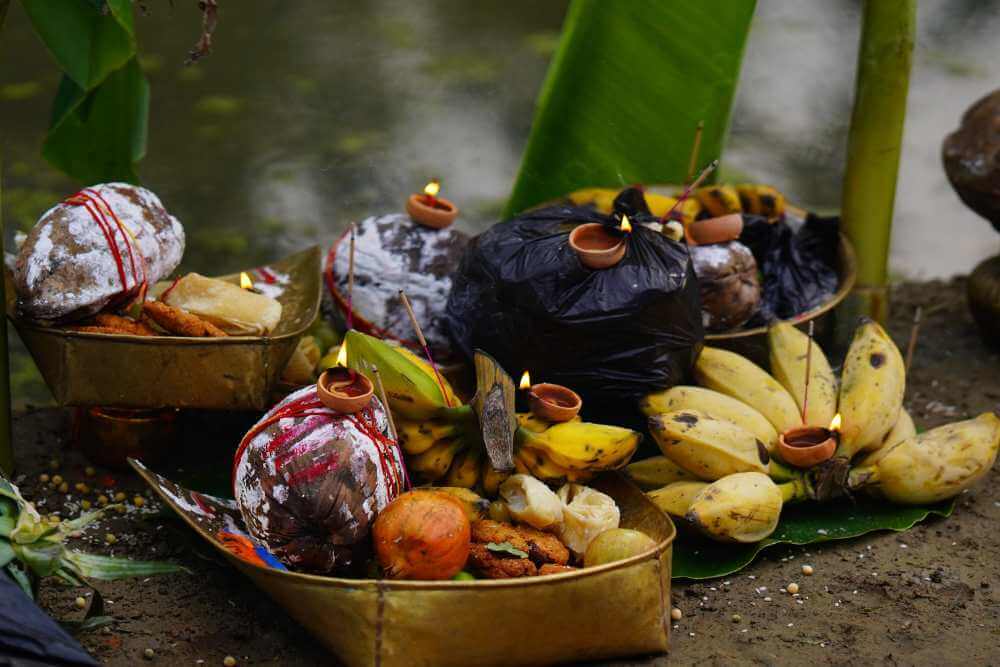
Chhath Puja is the third day, which is the spiritual centre. Devotees offer prasad such as fruits, thekua (sweet made out of wheat flour, jaggery and ghee), sugarcane and rice laddoos. Everything is symbolic, so, the sugarcane is a symbol of the sweetness, thekua is a symbol of the hard work and loyalty, and the fruits are a symbol of the fertility and prosperity.
During the sunset, religious followers flock the riverbanks, ponds, and lakes, wearing colorful garments with bamboo baskets loaded with offerings. They stand in the waist-deep water, and present arghya (water offerings) to the setting sun with prayers to save the wellbeing of their families.
It is amazing to see hundreds of lamps floating on the water. Different songs such as Kanch hi baans ke bahangiya are heard all around, praising the beauty and religion of women who carry the bamboo baskets.
This gesture of making an offering to the setting sun is an expression of appreciation of the light and energy upon which life depends.
Day 4 – Usha Arghya (Offering to the Rising Sun)
On the last day, Usha Arghya, starts earlier than the dawn. Devotees come back to the water bodies to pray to the rising sun. The scene is still–all are standing still and waiting when the first rays should come out.
Sharing of food is a sign of equality and unity, which Chhath Puja is strengthening every year.

Cultural Differences in Festivity
The rituals are similar in all regions though each region brings in a flavor.
- In the Mithila (North Bihar), offerings are covered by banana leaves and marigold flowers, which are offered by the devotees.
- Purvi geet (folk songs) is used to accompany the rituals in Bhojpur, and its verses combine emotion and devotion.
- In Jharkhand, the tribal groups bring forest fruits to the offering and dance around the ghats.
- People in Eastern Uttar Pradesh clean local ponds and decorate them, making sure that they are collectively involved.
Chhath Puja is also celebrated with great enthusiasm in Nepal’s Terai region. The shows how faith unites people across borders and generations, keeping shared traditions alive.
Folk Song Power in Chhath Puja
The celebration is full of Chhath Puja folk songs. Performed in the local languages such as Bhojpuri, Maithili and Magahi, these songs convey love, religion and persistence.
Themes are also motherhood, devotion, nature, and sacrifice. Songs such as; Kaanch ki baans ke bahangiya and; Ho Suruj Dev Bhail Ugi greet the sun (the rising sun) as a welcome guest, as women walked with their baskets in the ghats on their feet.
These are songs that unite generations. They are taught by grandmothers to daughters and granddaughters and the cultural spirit of Chhath Puja is preserved through word of mouth.
Contemporary Adaptations and Green Consciousness
Most worshippers these days find it convenient to build artificial ponds or take huge containers in the rituals with urbanization. Although the values have changed modernly, the values of purity, gratitude, and faith are still sound.
Chhath Puja is also environmentally friendly today. The believers shun plastic ornaments and embrace bio-degradable items. The river-cleaning drives are typical and are a sign of the festival respecting nature.
Indians abroad, especially in the U.S., U.K., and Mauritius, celebrate Chhath Puja near lakes or beaches. Their devotion shows how this ancient tradition continues to unite people across continents.
The Emotional and Spiritual Breed of Chhath Puja
In its very core, Chhath Puja is a festival of thanks and revival. It instructs discipline, meekness and reverence to nature. Every ritual Nahay Khay and Usha Arghya, is an act of cleansing, sacrifice, offering and rebirth.
Whenever religious adherents stand in river water with their eyes towards the sun, they represent the unchanging order of light and darkness, work and rest. The festival is a reminder that faith is like the sun, which will always resurrect.
Conclusion
The legend of Chhath Puja, the devotion of Devasena towards the contemporary fetes summaries the eternal relationship between man and nature. Its practices do not simply consist of worship, but they are forms of discipline, gratefulness, and perseverance.
Chhath Puja unites millions of people through shared faith and national pride. As lamps float on rivers and devotional songs fill the air, the festival reminds us how ancient traditions can guide modern life. It teaches that the truest form of worship is gratitude for the sunlight that sustains us all.



