The recently concluded two-phase elections for Bihar‘s 243-seat Legislative Assembly have triggered significant buzz across Indian politics. And as votes have already been cast, various exit polls suggest a potential strong comeback for the incumbent NDA alliance in Bihar. The results are yet to be officially declared on November 14 2025, but the forecasts are shaping narratives ahead of time.
In this detailed overview, we’ll unpack:
- What the exit polls are predicting.
- Factors driving the NDA’s projected performance.
- Why the opposition is expected to struggle.
- Historical & political context of Bihar elections.
- Key risks, caveats and what to watch on result day.
- Implications of an NDA win for Bihar and national politics.
What the exit polls are showing

Across multiple credible survey agencies, the trend is remarkably consistent: the NDA is being projected to cross the majority mark quite comfortably. Here are some headline numbers:

- According to exit-poll aggregates, the NDA is expected to win 133-167 seats in the 243-member House.
- Some agencies place the opposition alliance (Mahagathbandhan or “MGB”) in the 70-110 seats range, significantly behind the majority mark.
- The newly formed Jan Suraaj Party (JSP) led by Prashant Kishor is forecast to win 0-5 seats, meaning negligible impact in this cycle.
- Voter turnout has been high — around 66.9% average across both phases — signalling strong participation which can amplify momentum for the front that captures the wave.
In short: the exit polls are tilting heavily towards an NDA victory in 2025 — not just a win, but a “stronger majority” compared to the previous Assembly.
Why this projected upswing for the NDA?
Several inter-related factors appear to be enhancing the electoral prospects of the NDA alliance in Bihar:
Incumbency & governance narrative
The NDA (led in Bihar by Nitish Kumar’s JD(U) in partnership with the Bharatiya Janata Party) has emphasised continuity, development, and welfare schemes. Ahead of the polls, three major cash transfer schemes were rolled out by the Bihar government — seen as a direct effort to shore up votes in key demographics.
Having been in power, the NDA is projecting the message of “deliverables” and stability — an argument that tends to resonate when voter turnout is strong and widespread.
High voter turnout
The nearly 67% turnout is notable for Bihar, and exit-poll analysts suggest higher participation often favours the incumbent when they have a visible outreach infrastructure.

The scale of turnout also suggests the electorate is engaged, mobilised, and possibly responsive to welfare/distribution politics — which the NDA seems to have leaned into.
Alliance durability and local dynamics
The NDA’s alliance in Bihar remains cohesive; the JD(U) and BJP (and its allied parties like HAM, LJP-RV etc) are operating with a clear cooperative framework. The opposition, by contrast, is facing criticism for a lack of coordination and internal contradictions, which may weaken their ground-level mobilization.
Opposition weaknesses & new entrant’s low impact
While the MGB (RJD, Congress, Left) has a presence, exit polls suggest they are struggling to make the anticipated breakthrough. Meanwhile, the new player Jan Suraaj has apparently failed to make substantial inroads in this election cycle.

Strategic timing & symbolism
Bihar holds disproportionate symbolic importance: as a large state with 243 seats, its political climate and results are seen as a bell-wether for national trends. The NDA’s push to reaffirm dominance has been deliberate — from campaign strategy to messaging and deployment of central leadership.
The opposition’s challenge
While the exit polls provide a favorable picture for the NDA, the opposition still has some avenues to fight back — but several obstacles are visible:
- The MGB appears to have less momentum than in some previous cycles.
- The Jan Suraaj Party, despite its high profile, seems to be struggling for traction with the electorate in this round.
- Some segments of the electorate may feel the NDA has outpaced them in outreach or scheme delivery.
- There are also structural issues such as caste dynamics, demographic shifts and the impact of electoral roll revisions which may play a part. For example, allegations of disenfranchisement via removal of voters were raised.
Hence, for the opposition to overturn the trend, they would need both a substantial mobilisation surge and a significant shift in voter sentiment — which the exit polls suggest is unlikely.
Historical & Political Context
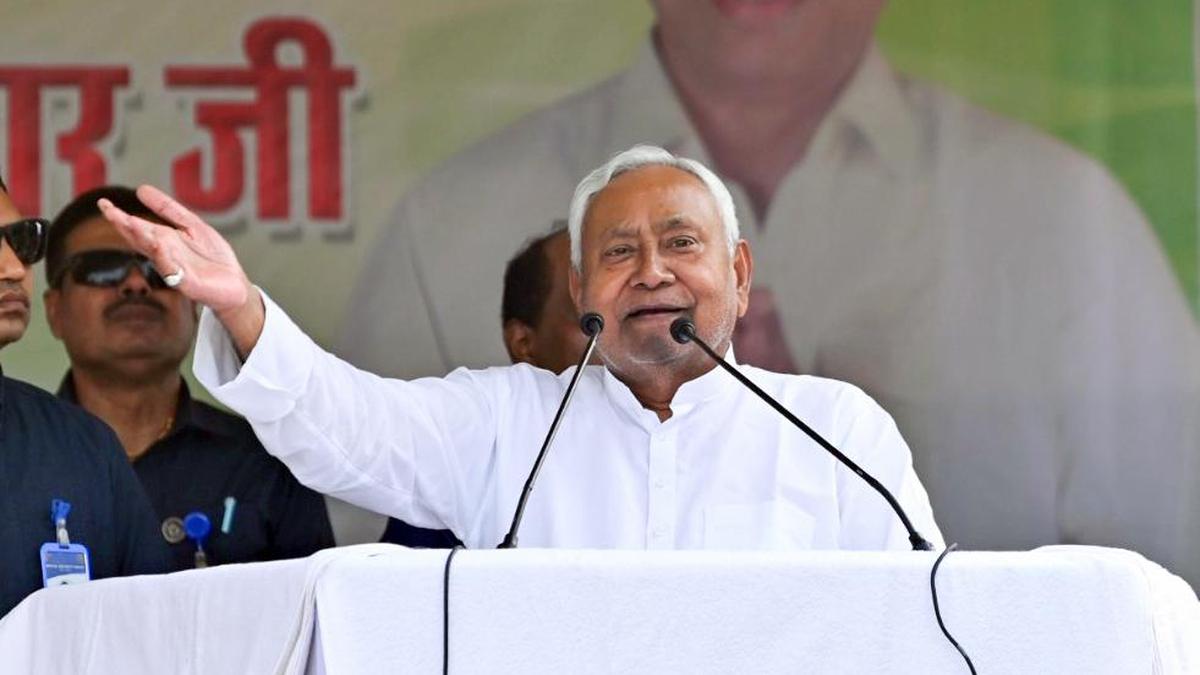
Understanding the 2025 projected outcome requires a brief glance at Bihar’s recent electoral history:
- In the 2020 Bihar Assembly elections, the NDA won around 125 seats. The MGB was stronger then.
- Since then, there have been political realignments: notable is Nitish Kumar’s re-joining of the NDA (after leaving the MGB) in early 2024.
- The 2025 election is also seen as a key test for the NDA ahead of the 2029 general election and other state polls in northern India. Thus, the stakes here are higher than just state-level governance.
In that sense, the 2025 result in Bihar is being watched not just as a state outcome but as a reflection of larger national dynamics — alliance strength, voter preferences, and emergent political trends.
Key Risks & Caveats: Exit polls vs real outcomes
While exit polls provide interesting forecasts, several caveats remain important:
- Exit poll accuracy in India has been inconsistent in past elections. Analysts emphasize that they are snapshots, not guarantees.
- Several pollsters differ in their seat-ranges and there is variation (for example one survey even predicted a MGB win).
- On-the-ground factors like last-minute swings, local candidate strength, caste/tribe constituency outcomes and campaign events can impact outcomes beyond the macro trends.
- The majority mark is 122 seats; even if NDA crosses this, the size of the majority will be critical for narrative but also for governance stability.
- Post-poll coalition arithmetic, potential defections, and how minor parties/independents behave on result day can also influence who forms government and with what margin.
Therefore while the NDA is projected to win, caution is warranted in interpreting exit polls as final results.
More Read

What to watch on Result Day (14 Nov 2025)
When the votes are counted, key metrics and patterns will matter:
- The actual seat tally of the NDA versus the exit-poll projections.
- Which party becomes the single largest party within the alliance (BJP vs JD(U) share).
- Performance of minor allies in the NDA (HAM, LJP-RV etc) and how many seats they win — crucial for internal balance.
- Regional patterns: e.g., how did North Bihar vs South Bihar vote; how did minority-dominated constituencies behave; turnout variations by district.
- How the opposition alliance fares, whether they regain lost ground or continue decline.
- Whether the new entrant JSP makes any impact despite exit poll forecasts of low seats.
- The governance plan and message the winning alliance projects post-victory — whether it emphasises continuity or a new agenda.
Implications of an NDA win for Bihar & beyond

If the exit poll forecasts translate into results, several major implications follow:
- For Bihar governance: A strong majority would give the NDA a freer hand in policy implementation, reassignment of Chief Minister post, and ability to press ahead with its agenda.
- For National politics: A decisive victory in Bihar would strengthen the NDA’s narrative ahead of general elections; it would be seen as a reflection of public endorsement for the BJP-led alliance.
- For opposition strategy: A loss would trigger soul-searching within the MGB and its constituent parties, potentially leading to re-structuring ahead of future contests.
- For third-front/new entrants: The poor forecast for JSP could discourage fragmentation of votes and strengthen the two-bloc structure (NDA vs MGB) in Bihar, and perhaps elsewhere.
- For caste/religion dynamics: The result might indicate shifts in traditional vote-banks, how welfare schemes and turnout trends influence outcomes in a large OBC/SC/ST-dominated state like Bihar.
- For policy-and-welfare politics: The role of cash transfers and scheme delivery may get highlighted if the ruling alliance is rewarded for them; this could set precedent for other states.
Conclusion
The 2025 Bihar Assembly elections appear to be shaping up as a strong comeback election for the NDA, according to major exit-poll forecasts. With indications of a sizeable majority, high voter turnout and favourable alliance dynamics, the incumbent coalition seems poised for victory — if the exit-poll trends hold true.
Yet, as always in politics, predictions are not certainties. The result on November 14 will determine not only who governs Bihar but will also send signals across India’s political landscape ahead of future state and national elections.
For now, all eyes are on the counting day — but the message from the exit polls is loud: the NDA is likely back, and likely with a stronger mandate.