A Nation at a Crossroads Between Justice and Retaliation
Bangladesh Violence once again finds itself confronting a familiar and deeply troubling cycle. Political violence followed by public outrage, emotional mobilisation, and the ever present risk of retaliation spiralling beyond control. The killing of Sharif Osman Hadi, a rising student leader associated with the Inquilab Mancha movement, has triggered nationwide protests and international concern. As tensions rise on the streets of Dhaka and other cities, the United Nations Human Rights Chief Volker Turk has issued a stark warning. Revenge attacks, he cautioned, will only deepen divisions and undermine fundamental rights.
The call comes at a sensitive moment. Bangladesh is not merely grappling with the aftermath of a violent incident. It is confronting questions about governance, rule of law, political intolerance, and the shrinking space for dissent. The manner in which authorities respond now may shape the country’s political trajectory for years to come.
This is not simply a story of one tragic death. It is a reflection of a broader crisis in Bangladesh’s political and social fabric.

The Killing of Sharif Osman Hadi: What We Know So Far
Sharif Osman Hadi was not yet a household name across Bangladesh, but among politically engaged students and youth movements, he represented a new generation of activism. Linked to Inquilab Mancha, a platform that positioned itself as a reformist and protest driven movement, Hadi had gained visibility during recent demonstrations that criticised political authoritarianism and demanded greater accountability.

Hadi was shot in the head during unrest weeks earlier and had been receiving medical treatment in Singapore. His death, confirmed after his mortal remains were returned to Bangladesh on December 19, triggered immediate protests, particularly in Dhaka. Demonstrators blocked Shahbagh Square, a symbolic centre of political mobilisation in the capital, demanding justice and accountability.
The emotional intensity surrounding his death cannot be overstated. For supporters, Hadi became a symbol of suppressed youth voices. For critics of the government, his killing reinforced claims of intolerance toward dissent. For authorities, the protests presented a volatile law and order challenge.
Also Read: India’s Response For Shaikh Haseena’s Death Sentence
UN Intervention: A Rare and Serious Warning
Volker Turk’s statement was measured but firm. He urged restraint from all sides and called for a prompt, impartial, thorough, and transparent investigation into the attack that led to Hadi’s death. His warning against retaliation was not merely rhetorical. It reflected concern that Bangladesh could slide into a familiar pattern where one act of violence sparks counter violence, often targeting political opponents, minorities, or perceived rivals.
Such statements from the UN Human Rights Chief are not issued lightly. They usually signal a belief that domestic mechanisms alone may be insufficient or under strain. Turk’s emphasis on due process and accountability underscores an international expectation that Bangladesh adhere to its human rights obligations at a time when global scrutiny of democratic backsliding is increasing.
The UN’s intervention also places Bangladesh’s leadership under pressure to demonstrate credibility. Failure to act transparently risks reinforcing perceptions that violence is either tolerated or selectively punished.

Government Response: Condemnation Amid Distrust
Interim Prime Minister Mohammad Yunus publicly condemned all forms of mob violence, intimidation, arson, and destruction of property. His statement urging citizens to resist violence committed by fringe elements was an attempt to draw a line between legitimate protest and unlawful retaliation.
However, public trust in such assurances remains fragile. Years of politicised policing and selective enforcement have created deep scepticism among opposition supporters and civil society groups. Many question whether investigations into politically sensitive cases can truly remain impartial.
The challenge before the government is not only to maintain order but to convince citizens that justice will be pursued without bias. Words alone are insufficient. The credibility of the state now depends on visible, transparent actions.

Student Politics and the Culture of Confrontation
To understand the broader significance of Hadi’s killing, one must examine the role of student politics in Bangladesh. Historically, student movements have been at the forefront of political change, from the Language Movement of the 1950s to the anti authoritarian struggles of later decades.
Yet student politics has also become deeply militarised and factionalised. University campuses frequently mirror national political rivalries, with clashes between student wings of major parties often turning violent. The line between activism and intimidation has blurred.
Hadi’s rise within Inquilab Mancha suggested a possible shift toward issue based mobilisation rather than traditional party alignment. His death, therefore, carries symbolic weight. It raises fears that even emerging alternative voices are not immune from violent suppression.

Revenge Violence: A Familiar and Dangerous Pattern
The UN’s warning against revenge attacks resonates strongly in Bangladesh’s recent history. Political killings often trigger waves of retaliatory violence that disproportionately affect ordinary citizens. Shops are burned. Transport is disrupted. Neighbourhoods become battlegrounds for rival groups seeking dominance rather than justice.
Such cycles rarely result in accountability. Instead, they deepen polarisation and normalise violence as a political tool. Each incident lowers the threshold for the next, creating a climate where fear replaces dialogue.
Revenge violence also corrodes democratic culture. When citizens believe that justice can only be achieved through force, faith in institutions collapses. This erosion is difficult to reverse.
Rule of Law Under Pressure
At the heart of the crisis lies a fundamental question. Can Bangladesh’s legal and investigative institutions operate independently in politically charged cases?
Volker Turk’s call for a transparent investigation reflects widespread concern that accountability in Bangladesh is uneven. Human rights organisations have long documented delays, procedural irregularities, and political influence in high profile cases.
If the investigation into Hadi’s killing is perceived as compromised, it will not merely fail one family or one movement. It will signal that the state is unable or unwilling to protect political dissenters. That perception carries serious consequences for Bangladesh’s democratic legitimacy.
International Image and Diplomatic Implications
Bangladesh has invested considerable effort in projecting itself as a stable, responsible actor on the global stage. Its contributions to UN peacekeeping missions, economic growth narrative, and strategic partnerships depend heavily on maintaining a reputation for internal stability.
Episodes of political violence undermine this image. International investors and partners closely monitor civil unrest, particularly when it involves state responses to protests. The UN’s public concern amplifies diplomatic attention.
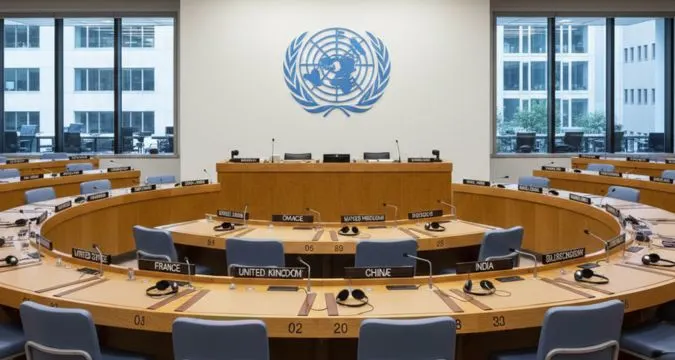
Failure to address the situation responsibly risks reputational damage that extends beyond human rights discourse. It can affect trade negotiations, development cooperation, and multilateral engagement.
The Youth Factor: A Generation Watching Closely
Perhaps the most critical audience in this unfolding crisis is Bangladesh’s youth. Young people form a significant portion of the population, and many are already disillusioned with formal politics. They see limited employment opportunities, shrinking civic space, and increasing intolerance of dissent.
Hadi’s death could become a defining moment for this generation. If justice is denied, cynicism may deepen. If protests are met with repression rather than dialogue, alienation will grow.
Conversely, a credible investigation and restraint from all sides could send a powerful message that peaceful activism still has a place in Bangladesh’s future.
Media, Misinformation, and Escalation Risks
In moments of crisis, information ecosystems become volatile. Social media platforms amplify emotions, often spreading unverified claims that fuel anger and fear. In Bangladesh, where digital misinformation has previously incited violence, this risk is particularly acute.
Responsible reporting and official transparency are essential to counter rumours. Silence or ambiguity creates space for speculation, which can quickly escalate into street level violence.
The media’s role is therefore critical. Not as a mouthpiece for authority or protestors, but as a fact based intermediary that reduces uncertainty.
A Test of Democratic Maturity
Bangladesh is not alone in facing such challenges. Many democracies struggle with balancing protest rights and public order. What distinguishes outcomes is the strength of institutions and the willingness of leaders to prioritise long term stability over short term control.
The killing of Sharif Osman Hadi has placed Bangladesh at a crossroads. One path leads toward escalation, retaliation, and deeper mistrust. The other requires restraint, transparency, and accountability, even when politically inconvenient.
Volker Turk’s warning is not merely a condemnation. It is an opportunity. An opportunity for Bangladesh to demonstrate that justice, not vengeance, defines its political culture.
More Read

Conclusion: Justice as the Only Sustainable Answer
Revenge may offer emotional release, but it cannot deliver justice. History, both in Bangladesh and elsewhere, shows that cycles of retaliation only entrench violence and weaken societies from within.
The international community has spoken. Civil society is watching. Most importantly, a young generation is observing how the state responds when confronted with dissent and tragedy.
Bangladesh’s future stability depends not on suppressing anger, but on addressing its causes. A transparent investigation into Sharif Osman Hadi’s killing, accountability for those responsible, and protection of peaceful protest are not concessions. They are obligations.
The choice before Bangladesh is clear. Justice, or a repetition of the past. The consequences of that choice will resonate far beyond the streets of Dhaka.