In the early hours of Friday, a night-time coach travelling the busy Hyderabad–Bengaluru corridor became the scene of a catastrophic fire that has left scores of families reeling. A private sleeper bus carrying dozens of passengers caught fire near Chinnatekur in Kurnool district, Andhra Pradesh, after colliding with a two-wheeler. Within minutes the vehicle was engulfed by flames; many passengers, said to be asleep at the time, were unable to escape. Officials have confirmed dozens of fatalities and multiple injuries. Forensic teams have begun DNA testing to identify the charred remains of victims whose bodies were beyond visual recognition.
What happened a sudden, fatal blaze
According to preliminary police and eyewitness accounts, the bus — reported to be on a Hyderabad-to-Bengaluru run — collided with a motorcycle on National Highway 44 near Kurnool at about 3:30 a.m. The two-wheeler became trapped under the bus and struck or ruptured the vehicle’s fuel tank, triggering an immediate and massive fireball. Survivors describe waking to screams and intense heat; some managed to break windows or jump out to safety, but the blaze spread so fast that many could not escape. Emergency crews, including multiple fire tenders, reached the site and worked to douse the flames, but the bus had already been largely gutted.
As of the latest official tallies released during the day, around 21 people are confirmed dead and several others are injured and hospitalized. Local hospitals reported receiving multiple burn victims and trauma cases, many of whom required immediate emergency care. The exact passenger manifest is being reconciled with survivors’ accounts and the charred remains recovered from the vehicle.
Identification efforts DNA tests underway
A grim complication in the aftermath is the condition of many of the deceased. The intensity of the blaze left several victims charred beyond recognition, making visual identification impossible. For that reason, state forensic authorities — assisted by police — have started DNA sampling from remains and are collecting blood samples from relatives for matching. Officials have said this process is necessary to ensure accurate identification before handing over bodies to next of kin. The use of DNA testing in such incidents is standard practice when fire damage obliterates recognizable features.

Authorities are encouraging family members of missing passengers to come forward to provide DNA or medical records, and governments in neighbouring states have set up helplines to assist anxious relatives trying to track down loved ones. The emotional strain on families awaiting confirmation — and the bureaucratic, time-consuming nature of post-mortem and forensic processing — means it could be several days before all victims are formally identified and returned to their families.
Survivors’ accounts and immediate rescue
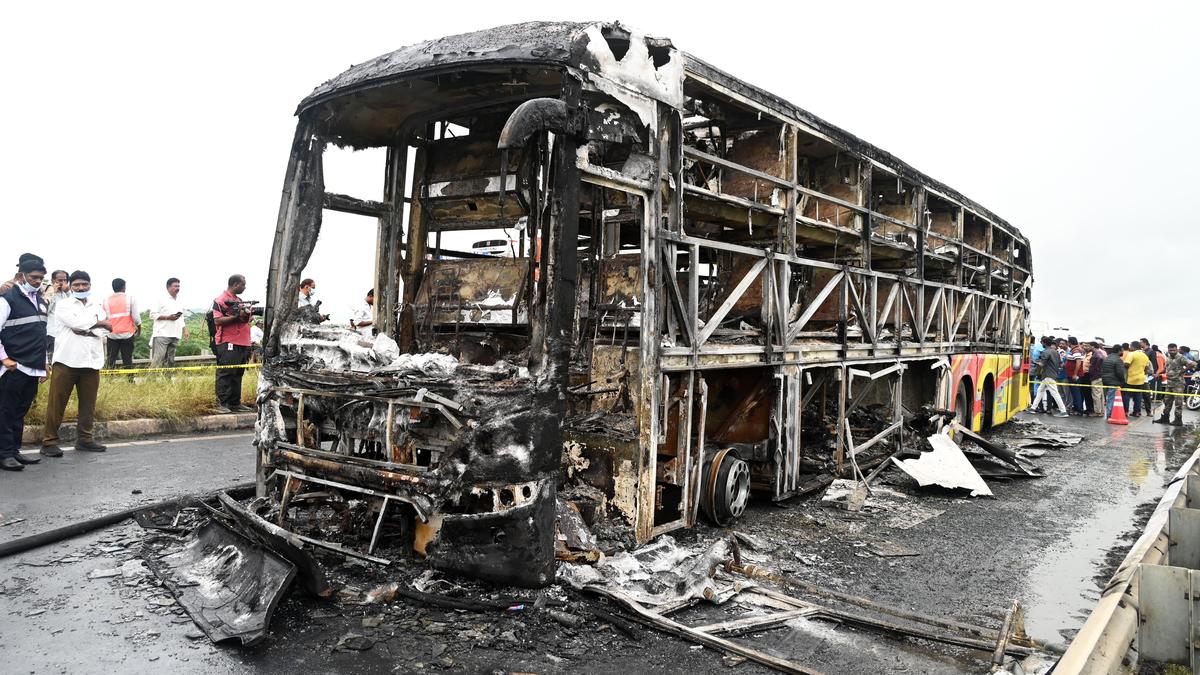
Survivors described a chaotic, terrifying scene. Many of the passengers were reported to have been sleeping in sleeper berths when the impact and subsequent fire occurred. Those who survived said they had only seconds to react: some smashed emergency exits and windows; others jumped from considerable heights onto the tarmac to flee the inferno. Several survivors sustained fractures, burns and injuries from the fall and were admitted to local hospitals for treatment. Local residents and passing motorists were among the first to rush to the bus, helping to pull people out before fire tenders arrived.
First responders said the bus was “reduced to a metal skeleton” by the heat, and forensic teams described the scene as one of total destruction inside the passenger compartment. Firefighters noted that fuel-fed blazes on long-distance buses can escalate extremely quickly, especially if ignition occurs near the fuel storage or if the bus is carrying flammable cargo or improperly stored liquids.
Operator, bus history and regulatory scrutiny
News outlets reported early details about the vehicle and operator as investigators began piecing together the chain of events. The coach involved was operated by a private firm, and officials were scrutinizing its registration, fitness certificate and permits. Some reports indicated the vehicle had been registered in another state and had recently been transferred; authorities said they would check maintenance records, the validity of safety certifications, and whether the bus had undergone statutory inspections. Transport and state officials also said they would probe whether the bus was overloaded, whether drivers were rested and licensed, and whether any safety systems (fire extinguishers, emergency exits) were functional.

In several past tragedies involving flaming coaches on long-distance highways, investigators found systemic shortcomings: tampered or missing fire extinguishers, poor maintenance of fuel tanks, structural modifications that increased fire risk, or drivers flouting safe-driving norms while attempting to meet tight schedules. Those past cases have hardened calls for stricter enforcement; in this instance, transport authorities pledged a thorough probe and immediate audits of similar operators on the route.
Government response and compensation
Political leaders and senior officials expressed shock and sorrow. The state chief minister and the prime minister both conveyed condolences; the centre announced ex-gratia relief for the next of kin and financial assistance for the injured. Local authorities said they were coordinating with neighbouring Telangana to ensure families of victims from Hyderabad and other places could be supported and informed. Emergency funds were being readied to cover hospital costs and the logistics of transporting bodies for cremation or burial once identification was complete.
Authorities also mobilized disaster-response resources, set up helplines and dedicated vehicles to ferry relatives to hospitals and morgues. The swift public messaging was intended both to provide immediate relief and to avoid the spread of misinformation at a time when facts were still emerging.

Legal and criminal angles driver behaviour and fleeing scene
Local police registered cases and began preliminary legal action. Anecdotal reports and some officials claimed the driver or drivers had fled the scene after the collision; investigators were trying to track them down to obtain statements and better understand decisions made immediately before and after impact. If drivers left without attempting rescue or reporting the incident, this could form part of criminal investigations. Police said they would examine whether negligence, rash driving, over-speeding, fatigue, or breach of other statutory duties contributed to the accident and the resulting fatalities.
In parallel, transport regulators signalled that licences, permits and the bus operator’s compliance records would be scrutinized, and if safety lapses were identified, the company and responsible individuals could face legal consequences ranging from fines and licence suspension to criminal prosecution in cases of gross negligence.
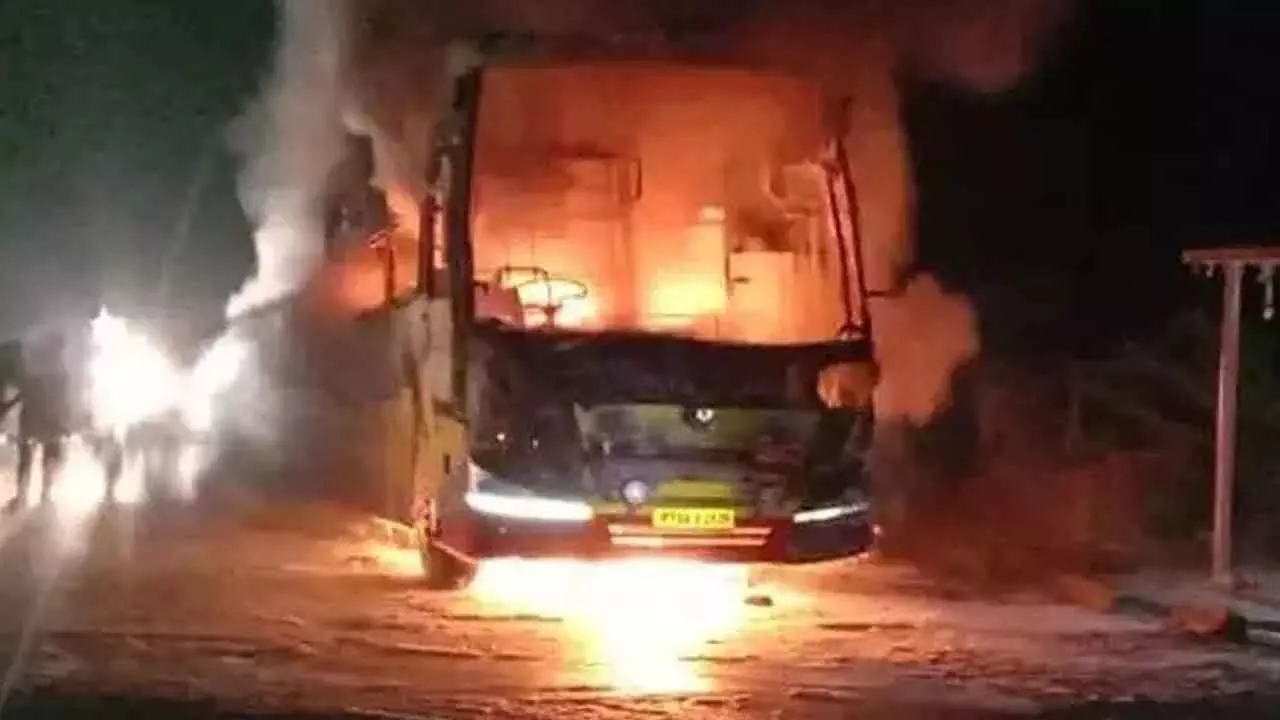
The human toll stories behind the headlines
Beyond statistics lie the human stories: young professionals heading to jobs or interviews, families travelling overnight to relatives, and ordinary passengers seeking cheaper night services. Media reports indicated many victims were residents of Hyderabad; some survivors were young IT workers and students who had been asleep during the journey. For families, the inability to visually confirm the fate of loved ones and the wait for forensic identification is a source of acute trauma. NGOs and local volunteers began coordinating psychological support and on-ground assistance for families who had arrived at hospitals or the site.
The images from the scene — of a skeletal yellow bus frame blackened and melted by intense heat — are jarring, and they underscore the intimate, sudden, and helpless nature of such accidents. Local community leaders and activists called for immediate action to tighten safety standards for private bus operators and to improve emergency response capabilities along major highways.
Why highway coach fires remain particularly deadly
Long-distance sleeper buses frequently travel at night, when passengers are asleep and slower to react. The design of many sleeper coaches — narrow aisles, limited exits, windows whose panes are fused or sealed for air-conditioning, and luggage stowed under berths — can make rapid evacuation difficult. If a fire ignites near the fuel tank or undercarriage, the spread is rapid and smoke inhalation can incapacitate occupants before heat reaches them. Witness accounts and forensic reconstructions from past incidents consistently show that minutes, sometimes seconds, separate a survivable incident from a mass casualty event.
Experts say the most effective measures include robust maintenance and inspection regimes, mandatory presence and routine checks of fire suppression equipment, clear and accessible emergency exits, and passenger awareness campaigns about escape procedures. Driver training and strict enforcement of hours-of-service rules to prevent fatigue are also critical. In addition, engineering improvements such as protected and isolated fuel tanks, flame-retardant interior materials, and simpler, more reliable emergency-release fittings can materially reduce lethality in case of collision-induced fires.
Broader pattern and past tragedies
This accident is not an isolated event in Indian road-transport history. There are painful precedents where fuel-fed bus fires claimed dozens of lives on the same corridors. Notably, a 2013 blaze on a Bengaluru–Hyderabad route left dozens dead; in that case too, DNA testing was necessary to identify many victims. Such recurring tragedies have driven decades-long debates about enforcement, the safety of private long-distance travel, and whether regulatory frameworks do enough to hold operators to account. Officials frequently promise reforms after each high-fatality accident — but implementation has often been uneven.
What happens next investigations and support
Investigators will compile the bus’s black box of evidence: driver statements (if obtained), witness testimonies, the vehicle’s maintenance logs, travel permits, and CCTV or dashcam footage from nearby stretches. Forensic reconstruction will attempt to determine precisely how the collision led to ignition, whether any pre-existing leak or mechanical defect accelerated the fire, and whether emergency equipment was present and functional. The DNA testing process will proceed alongside post-mortems to ensure accurate identification and timely release of bodies.
Meanwhile, transport departments in Andhra Pradesh and neighbouring states may launch immediate audits of similar routes and operators, temporarily suspending services in cases of suspect compliance. The central government’s road and transport safety wings may also step in to review systemic issues and propose tighter rules or enforcement crackdowns. For victims’ families, the focus for now remains on identification, funeral rites, and accessing promised compensation and medical care.
A call for durable change
After the initial shock and short-term relief measures, the harder question remains: how to translate grief into durable improvements that prevent another recurrence. Many of the same reforms are widely known — better vehicle standards, stricter inspection regimes, improved emergency exits, mandatory and verified safety equipment, driver-rest rules, and faster roadside emergency response — but enforcement and accountability must be consistent. Legislative and administrative measures without teeth will not suffice; families and civil society will likely press for transparent probes, public disclosure of findings, and demonstrable follow-through.
Closing mourning and responsibility
The Kurnool blaze is a reminder of how fragile life can be on the road and how systems meant to make travel inexpensive and efficient can become lethal if safety becomes secondary. As DNA tests continue and investigators dig into the facts, the immediate priority is to identify victims, bring closure to families, and care for the injured. In the weeks and months that follow, the public and policymakers will face hard choices about strengthening safety on India’s highways — choices that will matter to the countless people who rely on overnight coaches for work, family, and opportunity. The tragedy calls for empathy for those who lost their lives and a resolute commitment to actions that spare others the same fate.