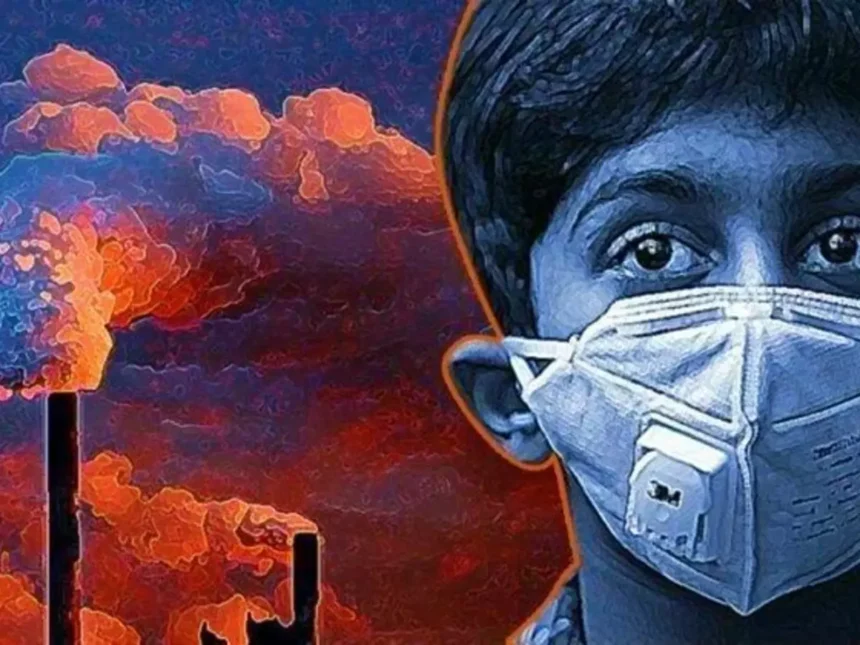
Imagine waking up, stepping outside, and feeling as though you are walking into a haze–not a fog, but a cloud of unseen danger. Every breath carries particulate matter that chips away at your lungs, every cough feels less like irritation and more like a warning. This is what millions of Indians are living with, day in and day out.
Earlier this month, a public interest litigation (PIL) was filed before the Supreme Court of India, seeking to declare air pollution a “National Public Health Emergency”. The petitioners say that existing legal and regulatory tools–however well-intentioned–have failed to protect citizens, especially children.
One line captures the urgency: “1.4 billion citizens are compelled to inhale toxic air every day, directly infringing their fundamental right to life under Article 21.”
The plea seeks not just recognition of the crisis, but a time-bound national action plan with statutory weight. The court has already taken up the hearing, asked for government response, and indicated that this cannot wait.

Let’s unspool how we arrived here, why this moment is critical, and what needs to change–fast.
Why This Moment Matters
The scale of the problem
Cities like Delhi, Ghaziabad, parts of Punjab and Haryana are routinely registering Air Quality Index (AQI) values in the “very poor” or “severe” categories. In one recent morning, a monitoring station in Ghaziabad recorded an AQI of 422.
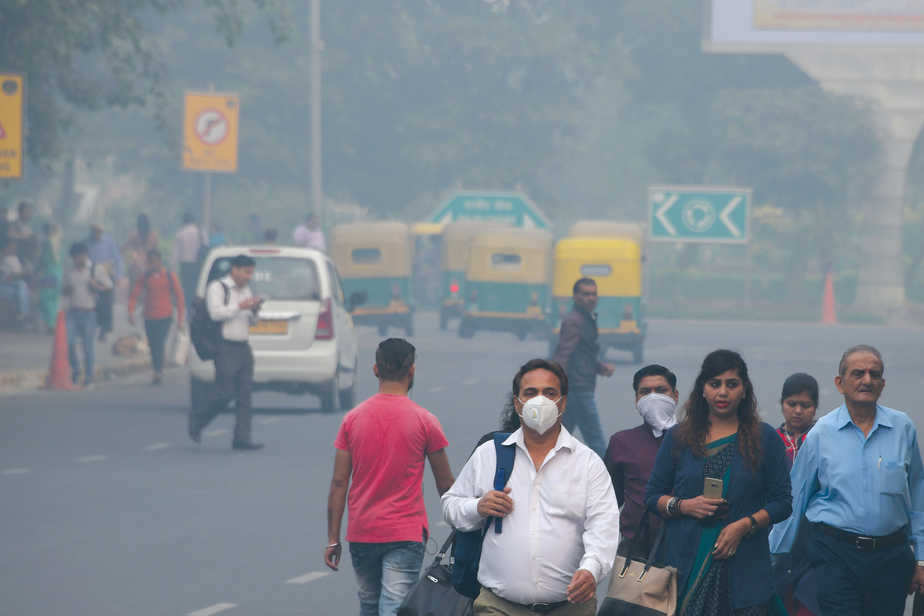
Fine particulate matter (PM2.5) concentrations in some zones remain multiples of the already-lenient Indian standards.

Meanwhile, it is not just cities. Many rural belts, industrial clusters and border-regions are also facing hazardous air–but receive far less attention. The PIL highlights this “data blind-spot” (rural pollution) and argues that programs largely focus on urban localities.
Health, rights and society at risk
When the air you breathe becomes a threat, the consequences cascade. The PIL cites that in Delhi alone “2.2 million schoolchildren have already suffered irreversible lung damage”.

Children, the elderly, people with chronic conditions, outdoor workers–they all face heightened risk. Doctors at institutions such as All India Institute of Medical Sciences (AIIMS) have issued safety advisories: stay indoors during peak hours, use N95 masks, avoid outdoor exertion.
In constitutional terms, the petition argues that the right to clean air is integral to the “right to life” under Article 21 of the Constitution of India.
Why previous measures have faltered
India has laws and programs: the Air (Prevention & Control of Pollution) Act 1981, the Environment (Protection) Act 1986, the National Ambient Air Quality Standards (NAAQS), and the National Clean Air Programme (NCAP) launched in 2019.
Yet, the data shows that under NCAP’s target of reducing particulate pollution by 20-30% (later extended to ~40% by 2026), only about 25 of 130 monitored cities have achieved meaningful reductions. Others have worsened.
Some of the root causes include:
Seasonal stubble-burning in Punjab/Haryana and wind-patterns trapping pollution.
Low wind-speeds, temperature inversions, regional topography that trap pollutants in basins like Delhi’s.
A fragmented governance architecture: many different agencies, often overlapping or under-resourced.
Lack of accountability in enforcement: real-world emissions from vehicles, industries often exceed tested values.
Focus on reactive “anti-smog” measures rather than structural overhaul.
Thus, the filing before the Supreme Court comes at a tipping point: the crisis is no longer episodic–it is systemic.
The Role of the Supreme Court: A Turning Point?
When the nation’s highest court intervenes, it signals that ordinary governance channels are failing. The bench hearing the PIL has reportedly said that this issue “cannot be brushed aside anymore.”
In the hearing:
The court sought responses from the Union government, the Central Pollution Control Board (CPCB), the Commission for Air Quality Management in National Capital Region & Adjoining Areas (CAQM) and other state agencies.
It questioned why, despite major programs, the pollution levels remain hazardous and rising in many places.
It is likely to consider imposing stronger nationwide mandates: statutory action plans, binding deadlines, compliance mechanisms.
If the court declares air pollution a national public health emergency, it would unlock several things:
A shift of the crisis into the realm of health law and emergency medicine, not just environment.
Higher priority for funding, inter-ministerial coordination (Environment, Health, Transport, Agriculture).
Possible invocation of extraordinary powers: e.g., national action plans with timelines, regulatory mandates for industries and states.
Greater legal teeth behind enforcement and monitoring.
It is not common for environmental issues to be declared national health emergencies–but given the scale, this may mark a legal and policy milestone.
What Everyday Indians Are Experiencing
Breathing in a grey cloud
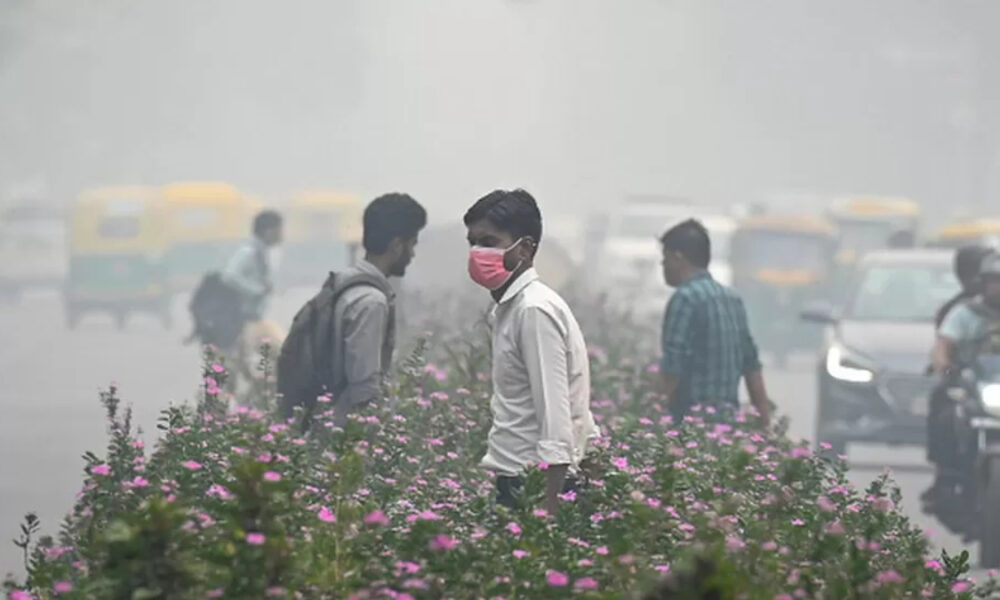
In Delhi’s winter mornings, the sun rises into a grey haze, not golden light. Commuters wrap scarves over their faces; children cough on school playgrounds; delivery workers pedal through toxic air. At home, families close doors and windows–but the indoor air still carries the particles that seep through.
One young mother in Delhi’s outskirts told a reporter: “I wake up and worry whether my toddler will wake up with a cough. I check the AQI on my phone and delay the walk. But I can’t stop breathing.”
Rural and small-town impact
The crisis is not just urban. In agricultural belts of Punjab and Haryana, post-harvest stubble burning sends huge plumes of smoke across states–and ultimately into Delhi and other cities. Yet those rural regions often lack real-time monitoring or strong enforcement. The PIL emphasises that rural data-gaps must be addressed.
In towns near industrial zones, roadside dust, unpaved roads, coal-fired brick kilns, ageing vehicles all contribute–and yet local children and households may have fewer protective options (air purifiers, N95 masks) than wealthy city centres.
Health and economic cost
Beyond coughs and asthma attacks, long-term exposure means higher risk of heart-disease, reduced lung capacity, cancers and premature mortality. Indoors, the cost is productivity: sick days, healthcare expenses, reduced quality of life.
One study noted that indoor air in high-emission zones still carries up to 70% of outdoor particulate matter, meaning simply staying indoors is not full protection.
Structural Faultlines: Where the System Fails
Governance, coordination and data-gaps
Pollution crosses state boundaries–but many regulatory functions are organised by states. Agencies like CPCB, CAQM, local pollution control boards often overlap or lack resources. Monitoring stations, especially in rural or semi-urban zones, are few. The result: policy often lags the reality.
Enforcement shortfalls
Even where laws exist, enforcement is uneven. Vehicle emissions tests may be bypassed; older diesel fleets continue; construction dust, open burning, unregulated industry slip through. The PIL highlights that even BS-VI vehicles allegedly emit beyond limits in real-world conditions.
Seasonality and natural factors
Wind-patterns, geography, temperature inversions often trap pollutants. Cities like Delhi are especially vulnerable. Experts say that some of the highest pollution occurs not only because of emissions, but because the air cannot disperse them.
Social inequality
Many advice-leaflets assume you can stay indoors, buy filters, wear N95 masks. But for many low-income families, options are limited. Pollution thus hits the most vulnerable hardest.
What Declaring a National Public Health Emergency Could Unlock
If the court and government follow through, this crisis could shift from “environmental regulation” to “health-emergency mode.” What might that look like?
Legal and regulatory urgency
Binding national action plan with deadlines across sectors (transport, agriculture, industry, waste, construction).
Mandatory adoption of cleaner fuel, stricter emissions standards, phasing-out older vehicles, dust control, open-burning bans.
Emergency funds for rapid mitigation (mist-spraying, green-barriers, air-purifiers in schools).
Health-first framing
Schools, hospitals, public institutions might trigger protective protocols when AQI crosses thresholds (indoor schooling, masks, backup power for indoors).
Nationwide health advisories, campaigns targeting vulnerable populations.
Integration of air-pollution health metrics into public health data, hospital admissions, mortality tracking.
National coordination and funding
Central government could take stronger role; inter-state coordination becomes easier under emergency.
Release of special funds for hotspots, monitoring stations in rural belts, real-time data sharing.
Private sector, civil society partnerships scaled up–for example, distribution of low-cost purifiers, community filters, awareness drives.
Monitoring, transparency & accountability
Public dashboards with real-time AQI, health alerts, enforcement actions.
Penalties for non-compliant industries, municipalities, vehicle fleets.
Independent audits of air quality interventions.
Social justice dimension
Subsidies or support for low-income households: cleaner cook-stoves, indoor-air purification.
Protection for outdoor workers, traffic-police, school children: specially designed protocols.
Rural-area monitoring networks expanded so that no region is “invisible”.
More Read

The Road Ahead: Challenges and Opportunities
Not just smoke, but system
Declaring an emergency is a symbol–but the work is in the follow-through. India must grapple with technical complexity (monitoring, modelling, meteorology), institutional reform, funding and behaviour change.
Behaviour and culture change

Turning off open burning, shifting farmers to alternate residue disposal, better city-planning, reducing vehicular usage–these require social buy-in, training, incentives. The old “winters-just-get-bad” mindset must change.
Equity and inclusion
Solutions must reach all layers of society–not just middle-class families who can buy purifiers, but families in rented rooms, industrial workers, rural communities. Without equity, the health gap will widen.
Innovation and scale
New technologies–satellite monitoring, low-cost sensors, AI forecasting, urban greening–will help. India can explore scalable models (community air-filters, school-safe zones, micro-grids) that fit local contexts.
Accountability
The PIL puts the courts into the picture; but enforcement lies with governments and agencies. Transparent metrics, independent review, civil-society watchdogs will matter.
A Human Face to the Numbers
Let’s zoom into individuals, families, communities:
A seven-year-old boy in Delhi’s outskirts walks to school wearing a mask. His father sells tea at a roadside stall. The father wonders: “Will this cough be the beginning of something more serious?”
A farmer in north India finishes harvesting his wheat crop and contemplates the residue. Burning it is cheap and convenient–but every year the neighbouring city’s sky darkens and mothers cover their children’s faces. He wonders: “Why am I blamed for the city smog when I struggle to find labourers and deal with slim margins?”
A school in a small town keeps an indoor classroom ready because the early-morning air is already unsafe. The teacher keeps an eye on the AQI app and plans alternative activities.
An older woman with asthma in an industrial belt pauses her morning walk, turns on the air purifier, but worries about the cost. She thinks: “I did not take retirement to sit indoors breathing filtered air.”
These are not isolated stories–they are multiplied millions of times across India. And until the systemic response matches the scale of the problem, the haze will linger.
What You Can Do Right Now
Track the AQI daily. Respect the warnings–on high-pollution days avoid outdoor exertion.
If you have health conditions (respiratory, heart), stay alert to changes.
Use masks (N95/N99) outdoors in high-pollution areas.
For parents: consider postponing outdoor play/sports on very bad air days.
Support local efforts: tree-planting, reducing open waste burning, avoiding fireworks or open fires.
Raise awareness: talk to your neighbours, schools, local politicians about the issue. Community pressure helps.
The Verdict: A Moment of Reckoning
The Supreme Court’s plea and the call for a national public health emergency reflect a stark truth: India’s sky is not simply dirty–it is dangerous. The air we breathe affects our health, our education, our labour, our future. The laws exist. The data exists. The will now appears on the brink of mobilising.
What happens next is vital. If the court and government rise to this moment, India could transform its approach: from reactive smog-crisis to proactive clean-air governance; from talking about pollution to treating it as a public-health imperative. The cost of inaction is already visible–children’s lungs, lives shortened, productivity lost, inequality deepened.
In our constitution, the right to life is fundamental. Breathing is the simplest right of all. When that is compromised, every other righ