Introduction
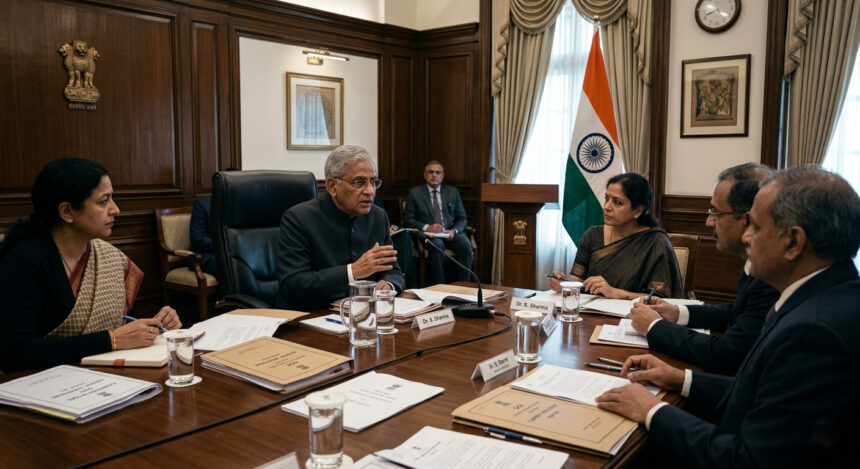
Cinema can always influence the mind of people, particularly when it covers sensitive issues in political and history aspects. This dynamic is reflected in the new debates surrounding the article 370 movie real story. Although the films based on the real life incidents may purport to convey truth, they also exist in the confines of narration, dramatization and framing of narratives.
The discussion of the merits and inaccuracy of such movies is not entirely about entertainment, but rather it can be viewed as a more fundamental issue concerning history, politics, and understanding of people. In a nation such as India, in which even Article 370 was a complicated constitutional clause, which was directly connected to the state of Jammu and Kashmir, any movie adaptation is bound to be questioned.
With movie vs reality in the seek of clarity among the audience, it becomes imperative to deconstruct what was factual, what is dramatized and what falls between the two. The paper has offered a detailed, balanced, and critical dissection of the subject and allowed readers to see the movie and the real-life situation behind it.
Background and Context
In order to know the article 370 movie’s real story it is first necessary to know what Article 370 was.

The Indian constitution article 370 accorded the special autonomous status to the state of Jammu and Kashmir. It was introduced in 1949 to enable the region to possess its constitution, their own laws regarding residency and property as well as rights and restricted the legislative powers of the Indian Parliament over the state.
Key Features of Article 370
| Aspect | Explanation |
| Autonomy | Jammu & Kashmir had its own constitution |
| Legislative Powers | Limited power of Indian Parliament |
| Citizenship | Separate laws for residency |
| Property Rights | Outsiders could not easily buy land |
Article 370 was the politically sensitive issue over decades. Others considered it as a necessity towards regional stability and others considered it was a hindrance to complete integration.
In August 2019, Article 370 was repealed by the Government of India and the state was restructured into two Union Territories, Jammu and Kashmir and Ladakh. This ruling established a historic change and turned out to be a subject of political, legal and social discussions.
What Is Happening Right Now
The revived interest in the article 370 movie additional real story is greatly influenced by the release of movies and media materials which portray events that preceded the abrogation of Article 370.
These movies are meant to recount the political events, security issues and the strategic choices leading to the move. Consequently, the audiences are revisiting the issue, not only as history but as a modern day debate.

Why It’s Trending
- Indian political cinema emergence.
- Growing interest in national security discourse.
- Opinions are increasing on social media.
- Interest in facts of article 370 india.
The movie has gained debates in different forums, as the audience wonders how well it depicts actual facts.
Debatable Reason Why This Topic is Controversial.
The dispute concerning the article 370 movie actual story is not pushed by the one-dimensional issue but a mixture of political, social, and narrative matters that overlap in complex terms. Fundamentally, the discussion speaks to the relationship of cinema with real-life occurrences, particularly, the most sensitive and those full of historical overtones.

Political Sensitivity

Article 370 never remained a mere article in the constitution. It was a special relationship between Jammu & Kashmir and the entire India, which was closely connected to issues of identity, autonomy and national integration. It is due to this that any description of its history or elimination is inevitably political.
Movies that make attempts to describe such events are usually taken not as a narration but as an assertion. They strengthen national unity, which is important to some viewers, and seem to ignore the complexities of regions, to others. This renders the article 370 movie real story to be a politically charged topic with even minor narrative decisions having the ability to shape the opinion of the populace.
Representation of Events
Cinema is in the restraints of time and viewer participation. Consequently, movies tend to wrap decades of political events in several hours. Much of the intricate legal arguments, historical discussions and multiple perspectives are reduced to produce a logical narrative.
Although this contributes to the accessibility of the story, it might cause the perception of inaccuracies. The viewers can wonder whether what they are watching is the facts of article 370 india or are they created with the main aim of dramatizing. It is one of the main reasons why the subject is highly debatable, as the tension between telling the story and providing facts is crucial in this situation.
Emotional and Regional Effect.
It is a very personal issue to most individuals, especially to Jammu & Kashmir. The Article 370 events have been real in terms of their impacts on governance, identity and life in the region.
When a movie tells such a topic, it is not merely a history presentation, it is a play with experiences. This exacerbates the vs reality debate even further because people might think that their views are either not represented or misrepresented. Emotional reactions, consequently, make a considerable contribution to the controversy.
Narrative Framing
Each movie represents a tale from a certain point of view. When discussing the article 370 movie real story, it is possible that the manner in which events are framed can affect the interpretation of the audience.
The political, social, and regional groups might possess a different perception of the same events. The film can be considered biased when it suits more one point of view than another. Such an interpretation difference is not extraordinary, yet it becomes more strong in case we are working with sensitive national issues.
Different Perspectives
Supporters’ View
Those who follow the article 370 movie real story to their films note that the projects play a significant purpose in the discourse. Article 370 on the constitution is a tricky issue to many individuals. In this sense, cinema is a mediator between sophisticated policy and ordinary viewers.
They are also convinced that despite the fact that some of the elements are dramatized, the larger storyline assists in creating awareness regarding the issue of national security and political choices. In this view, films lead towards a sense of unity as they emphasize the concept of integration and group identity.
Another argument in favour of storytelling is that interpretation has always been present in storytelling. They believe that cinematic liberties are acceptable as long as that main message is consistent with the real events.
Critics’ View
The critics, however, take the matter with caution. According to them, reducing a complicated topic such as Article 370 may result in misinterpretation (primarily when viewers use the movies as an initial source of information).
The possibility of bias is one of the serious concerns. A film can also give a biased account of events when it focuses on some things and leaves out other things. This has the capacity to shape the way people think which does not accurately represent the facts.
Also, the absence of subtle depiction especially of the local opinion of Jammu and Kashmir is noted by critics. To them, it does not only concern accuracy but also equity in narration. The gap between the movie and reality, in the present case, is perceived to be of such importance that it is worth paying close attention to it.
In general, the scandal surrounding the article 370 film real story is in the question of the fine line between narrative and accountability. Not only concerning the question of whether a movie is correct or erroneous, but concerning the way in which narratives can influence the comprehension in a sophisticated and constantly changing social world.
Facts vs Claims
To have the facts India needs to discern between facts and narrative claims made in article 370.
Verified Facts
- The Art 370 gave Jammu and Kashmir special status.
- It was revoked in August 2019
- The area was restructured to become Union Territories.
- There were constitutional and parliamentary decision making processes.
Basic Arguments in the Discourse.
- The relocation immediately corrected all the problems in the region.
- It was completely isolated in the period before 2019.
- Support or opposition towards the decision was unanimous.
Key Observation
The difference in movie vs reality is the size and complexity. The real world creates a situation where there are various stakeholders, long-term effects and different sides of the story which can hardly be summed up in a movie.
What People Might Be Missing
The debate, surrounding the article 370 movie real story, tends to disregard undertones:
Historical Complexity
Article 370 can be traced back to the 1947 partitioning of India and geopolitics.
Legal Nuances
The withdrawal concerned the constitutional interpretations and legal issues that are hardly depicted in movies.
Ground-Level Impact
It was brought about by changes in the ways of governance, economy and the day to day life that is yet to be finalized.
Long-Term Outcomes
It is not possible to estimate the entire effects of the decision at once, it should be observed over years.
Potential Implications on Society, Economy, and People.
The rescission of Article 370, and the media coverage of it, have had various consequences:
Social Impact
- Changing identity discourses.
- Greater national integration talk.
- On-going controversy on regional autonomy.
Economic Impact
- Investment prospects in the area.
- Infrastructure development
- Tourism growth
Political Impact
- Restructuring of governance systems.
- Emerging administrative systems.
Audience Impact
- Development of views according to media discourses.
- The concern with political issues.
Role of Media and Narrative
Media is also instrumental in influencing the perception of people regarding the article 370 movie real story.
Key Influences
- Selective narratives are exaggerated through social media.
- The news media casts issues in different ways.
- Movies offer emotional narration.
Here it comes to a critical point of difference between information and interpretation. As much as facts are the same, their presentation may be different in a big way.
Global Perspective / Future Projection.
Drawing away the focus on the immediate discussion, the article 370 movie real story is indicative of greater trends:
Rise of Political Cinema
Movies are becoming more entertaining and involve real world issues.
Citizen involvement in Policy.
The constitutional and political issues are being discussed by more people.
Long Term Regional Development.
The effects of policy changes will be realized with time.
Need for Critical Thinking
Viewers should be able to set the difference between narration and historical truthfulness.
Conclusion
The controversy of the article 370 is a real story movie is not merely an issue of a film, but how society makes sense of the complicated realities of life by simplifying the stories. Although cinema has the power of informing and involving, it does not represent historical, political, and social contexts in all their depth.

Movie vs reality does not always mean that there is a weakness but reminds the storytelling of the constraints. The world is not made up of static events; the real world is dynamic, changing and disputed.
As the viewers, it is upon us to consume such content critically, enjoying the story and doubting the truth. By so doing we are not merely watching but we are getting knowledge and that is critical in the world whereby the media is very strong in influencing the perception.