El Niño and India: Understanding the Climate Signal Shaping the Years Ahead
It feels like climate patterns that used to seem far off or vague are now a regular part of everyday chats in India. Things like unpredictable monsoon rains and heatwaves that break records have turned weather into a big national issue. It affects everything from how much food costs to whether we have enough water and even how the economy is planned.
One of the biggest patterns we’re dealing with is El Niño, which is this climate thing that happens over and over again and is connected to warmer water in the Pacific Ocean. Even though it starts thousands of miles away, its impact is often felt really hard right here in the Indian subcontinent.
As the climate keeps changing more, figuring out how El Niño affects India isn’t just something scientists worry about anymore. It’s super important information for policymakers, companies, farmers, and all of us regular folks trying to make sense of our uncertain future.
This piece is looking ahead. Instead of seeing El Niño as just a one-time weather deal, it dives into how its role might shift in the years to come. We’ll look at what trends the experts are keeping an eye on and how India’s connection with this climate signal could evolve.

The aim isn’t to predict what will happen. It’s about getting ready.
Understanding El Niño: A Clear and Practical Explanation
What El Niño Actually Is
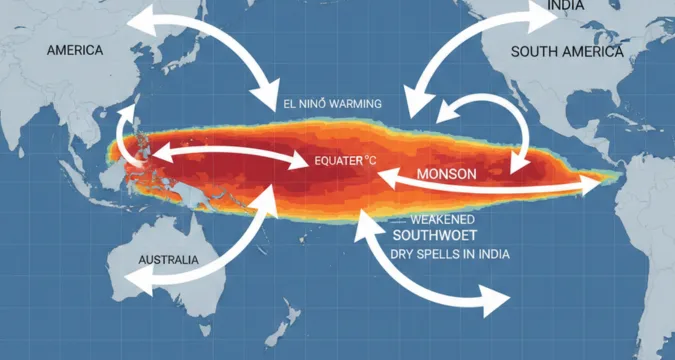
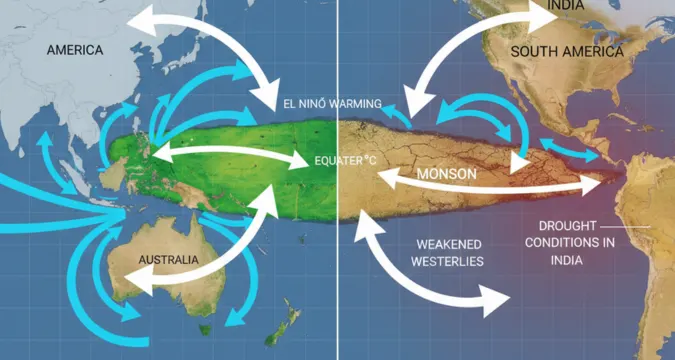
El Niño is basically the warm part of a bigger climate pattern called the El Niño–Southern Oscillation, often shortened to ENSO. This whole cycle is all about shifts in sea surface temperatures and air pressure in the tropical Pacific Ocean.
Here’s the gist of it:
In El Niño years, the surface waters in the middle and eastern parts of the Pacific get warmer than usual.
These warmer waters mess with typical wind patterns.

And that change in wind pattern then throws off rainfall and temperature conditions all over the globe.
While El Niño isn’t something caused by climate change, it’s true that climate change can make El Niño events stronger or affect how they impact the world.
How ENSO Works as a System
ENSO has three main phases:

Neutral:This means conditions are pretty much like the long-term average.
El Niño:During this phase, Pacific waters become warmer, and the trade winds that usually blow start to weaken.
La Niña: Here, the Pacific waters cool down, and those trade winds get stronger.
Each of these phases influences global wind patterns in distinct ways. India’s climate, especially the crucial southwest monsoon season, is quite sensitive to these changes.
Why the Pacific Ocean Matters to India
The Indian monsoon is driven by the temperature differences between the land and the sea, along with consistent wind patterns. When El Niño weakens the Pacific trade winds, it can mess with these conditions indirectly by changing the big atmospheric circulation patterns.
This often leads to:
– Less rain during the monsoon
– The monsoon arriving later than usual
– Rainfall that’s unevenly spread out
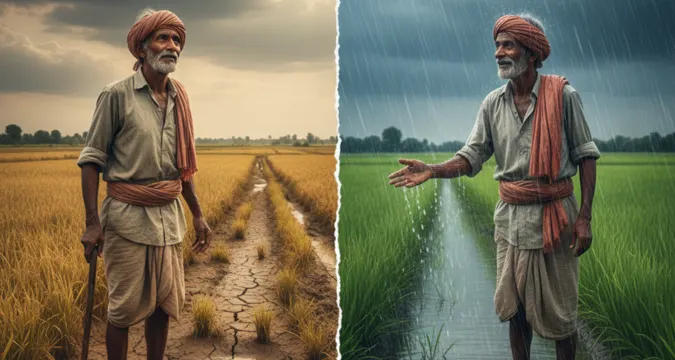
Not every El Niño causes a drought in India, but there’s a strong enough statistical connection to make it something we should keep an eye on.
Historical Context: El Niño and India’s Climate Record
Past Patterns and Lessons
India’s weather history makes it clear that powerful El Niño events often lead to weaker monsoon seasons. Many drought years during the 20th century happened at the same time as significant warming in the Pacific Ocean. Still, this connection isn’t perfectly straightforward. There have been El Niño years with rainfall close to normal, and some droughts have occurred even when El Niño wasn’t happening. This shows that looking at El Niño as a risk factor, rather than a sure thing, is the smartest way to approach it.
Shifting Baselines Over Time
One major shift is happening with the baseline conditions. Since global temperatures are climbing, the environment in which El Niño events occur now is quite different from what we saw in previous decades. This brings up some really important questions:
Are the effects of El Niño getting stronger?
Is there even more variation happening, even in years when El Niño isn’t active?
How dependable are the patterns from the past when we’re trying to plan for the future?
Climate scientists are paying closer attention to these uncertainties these days, rather than just looking at simple connections between events
Current Developments: What’s Changing Now
Increased Climate Variability
One of the most noticeable trends is that things are becoming more unpredictable. Rainfall patterns are changing, with longer periods of dry weather followed by sudden, heavy downpours. In this situation, El Niño tends to make existing problems worse rather than being the main reason for them.
Improved Forecasting Capabilities
India’s weather forecasting capabilities have really come a long way. These days, seasonal predictions draw on a much wider range of information, skillfully weaving together data from the oceans, atmospheric models, and past weather patterns.
This progress has led to some clear benefits, like:
- Better early warnings for drought conditions
- More useful advice for farmers planning their crops
- Improved strategies for managing water resources
Still, it’s important to remember that even with all these advances, weather forecasts deal in probabilities rather than absolute certainties.
Growing Awareness Beyond Agriculture
Farmers are definitely feeling the effects of El Niño most strongly, but the conversation is now broadening to include its impact on:
- Water supplies in cities
- Energy needs and the amount of power generated by hydropower
- Risks to public health during periods of extreme heat
This wider perspective really shows a deeper understanding of how climate changes affect everything.
How El Niño Affects India Across Key Sectors
Agriculture and Food Security
Agriculture is definitely the sector that feels the impact most sharply. Changes in rainfall—whether there’s less of it or it’s unpredictable—can really throw things off, affecting:
- The amount of Kharif crops we get.
- How much moisture is in the soil.
- The health of our livestock.
The bigger worry for the future isn’t just about losing crops year after year. It’s about how these repeated challenges add up and put even more pressure on farming systems that are already struggling with issues like running out of groundwater and increasing temperatures.
Water Resources
The amount of water in reservoirs is closely tied to how much rain the monsoon brings. When rainfall is weaker during El Niño years, it can put a lot of stress on:
- The drinking water available to people in cities
- The irrigation systems that help farms in semi-arid areas
- Agreements between different states about sharing water resources
Often, the effects of this strain only become noticeable several months after the monsoon season is over.
Energy and Infrastructure
Hydropower output can decline during dry years, increasing reliance on thermal power. At the same time, heatwaves drive up electricity demand for cooling.
This creates a dual challenge for energy planners.
Public Health
During El Niño years, we often see temperatures rise, which can make things worse for several reasons: it increases the risk of heat-related illnesses, alters the spread of diseases carried by insects or other vectors, and worsens air quality problems when the weather turns dry. Unfortunately, these effects don’t affect everyone equally; they tend to hit the most vulnerable populations the hardest.
Common Misconceptions About El Niño
“El Niño Always Causes Drought in India”
This is a really common simplification that doesn’t capture the whole picture. While it’s true that the risk of less rainfall is growing, what actually happens depends on several things, like:
- How intense the event is.
- When it occurs.
- How it interacts with conditions in the Indian Ocean.
Relying too much on this overly simple idea can actually lead to poor planning choices.
“Climate Change Is the Same as El Niño”
El Niño is a natural event that happens in cycles. Climate change, on the other hand, is a long-term shift in our climate caused by greenhouse gases. While these two things do affect each other, they’re definitely not the same thing
“Technology Can Fully Offset Climate Risk”
Tools for forecasting are helpful, but they can’t get rid of all the uncertainty involved. To adapt to these changes, we need teamwork from different groups, knowledge from the local community, and a commitment to long-term investments.
Future Outlook: How the Relationship May Evolve
More Complex Interactions
Future El Niño events are likely to interact with warmer oceans, altered wind patterns, and changing land use. This complexity makes simple cause-and-effect thinking outdated.
Instead, analysts focus on risk ranges and scenario planning.
Regional Differences Within India
Future El Niño events are expected to occur in conjunction with warmer oceans, shifts in wind patterns, and modifications in how land is used. This intricate interplay renders straightforward cause-and-effect reasoning obsolete. Consequently, experts are now concentrating on assessing a range of potential risks and developing strategies through scenario planning.
Policy and Planning Implications
It’s becoming more common to see El Niño awareness woven into various important areas. You can now find it factored into things like:
- Advice given to farmers
- Plans to prepare for disasters
- Strategies focused on long-term climate resilience
This change really shows a shift in how we approach things – moving from simply reacting after problems happen to trying to anticipate and prepare in advance. A recent climate analysis from The Vue Times, which looked at how monsoon patterns vary, actually pointed out how integrating early warning systems can really lessen the economic hit when we carefully understand the climate signals.
What to Watch Next: Signals That Matter
Readers looking to stay informed should watch for:
- Pacific Ocean temperature trends: Changes here are often early signs of warming that can influence predictions for the upcoming season.
- Indian Ocean conditions: These can either make El Niño effects stronger or weaker.
- Monsoon onset timing: When the monsoon is delayed, it often points to larger problems happening elsewhere.
- Policy responses: Pay attention to investments in things like water storage, crop insurance, and better weather forecasting.
- Urban adaptation measures: Look for cities putting into place plans to handle heat waves and changes in how they manage water.
It’s important to remember that none of these signs work in isolation. It’s the overall picture they paint together that really tells you what’s going on.
More Read

Summary: Key Takeaways for the Years Ahead
El Niño will continue to be a major factor shaping India’s weather, but its effects are getting more intricate rather than easier to predict. Looking ahead, we can expect:
More variation in weather patterns instead of a steady decrease.
Increased consequences for key areas like farming, water resources, energy, and public health.
Better forecasts alongside ongoing unpredictability.
Understanding El Niño’s impact on India is less about pinpointing exact rainfall amounts and more about identifying trends, potential risks, and how well the country can respond. Ultimately, being prepared is the biggest challenge, not just trying to predict what will happen.
Frequently Asked Questions
Why does El Niño matter more to India now than before?
Rising temperatures and growing water stress have reduced India’s buffer against climate variability. Even modest rainfall disruptions can have outsized economic and social effects, making climate signals more consequential than in the past.
Does every El Niño affect the monsoon the same way?
No. The impact depends on timing, intensity, and interaction with other ocean systems. Some events have minimal effects, while others coincide with significant disruption.
How far in advance can El Niño be predicted?
Large-scale ocean warming can often be detected months ahead, but local impacts remain uncertain. Forecasts provide probabilities rather than fixed outcomes.
Can better planning reduce El Niño-related risks?
Yes. Early advisories, diversified cropping, improved water storage, and urban heat planning can significantly reduce vulnerability, even when rainfall is below average.
Will climate change make El Niño stronger in the future?
Research suggests climate change may influence the intensity and impacts of El Niño events, but uncertainties remain. Scientists focus more on preparedness than on precise projections.