
Why Semiconductor Chips Matters Right Now
Semiconductor chips have quietly become one of the most contested resources in the global economy. Over the past few years, they have moved from being a background component of modern life to a central subject of policy debates, trade negotiations, and national strategy documents.
For India, the conversation has intensified. What was once seen as a highly specialized manufacturing niche is now framed as essential infrastructure, on par with energy, transport, and telecommunications. This shift is not accidental. It reflects changes in global supply chains, technology adoption patterns, and geopolitical realities that are reshaping how countries think about economic resilience.
The focus is no longer on explaining what chips do in everyday devices. Instead, the real question is why semiconductor capabilities have become so strategically important now, and why India, in particular, is accelerating efforts to position itself within this ecosystem.
This article examines that shift as a trend. It looks at what is changing, what forces are driving those changes, and how India fits into a rapidly evolving global semiconductor landscape.

Understanding the Trend Without the Basics
Semiconductor chips sit at the center of almost every digital system, but the current momentum around them is not about their functionality. It is about control, capacity, and continuity.
Over the last decade, the semiconductor industry has undergone three major transitions:
- Production has become highly concentrated geographically
- Demand has expanded beyond consumer electronics into strategic sectors
- Disruptions have exposed the fragility of global supply chains
These shifts have transformed chips from an industrial input into a strategic asset. Governments now track chip capacity the way they once tracked oil reserves or steel output.
India’s interest in this space reflects this broader reframing.
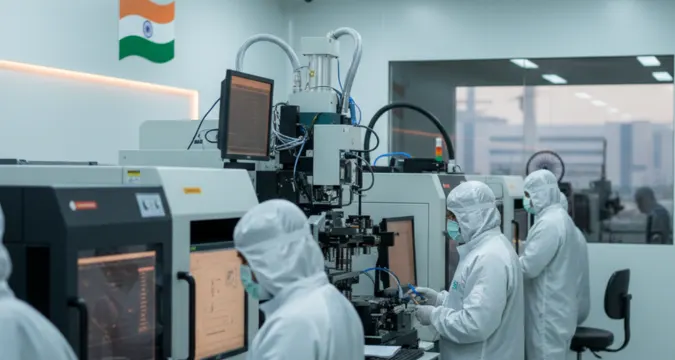
Broader Context: How Semiconductors Became Strategic
From Efficiency to Vulnerability
For years, the semiconductor industry optimized for efficiency. Manufacturing clustered in regions with advanced infrastructure, skilled labor, and established ecosystems. Taiwan, South Korea, and parts of East Asia emerged as dominant hubs.

This model worked well, until it didn’t.
Pandemic-related shutdowns, logistics bottlenecks, and sudden spikes in demand revealed how little redundancy existed in the system. Industries ranging from automotive to healthcare found themselves unable to source critical components.
The lesson was clear: extreme efficiency came at the cost of resilience.

Technology Expansion Into Every Sector
At the same time, chips moved beyond traditional computing.
They now underpin:
- Electric and autonomous vehicles
- Renewable energy systems and smart grids
- Defense platforms and space missions
- Artificial intelligence and large-scale data centers
As more sectors digitize, semiconductor demand grows not just in volume, but in strategic importance. This has amplified competition among countries seeking secure access.
Current Developments Shaping the Semiconductor Landscape
Supply Chain Rebalancing
One of the most visible trends is the deliberate rebalancing of chip supply chains. Countries are attempting to reduce overdependence on a small number of manufacturing regions.
This is not about replacing existing hubs overnight. It is about diversification.
India’s policy moves align with this global direction, positioning the country as a complementary manufacturing and design destination rather than a direct competitor to established leaders.
Government-Led Industrial Policy
Semiconductors have re-entered the era of industrial policy. Incentives, subsidies, and long-term infrastructure commitments are now common.
India’s approach reflects this shift, with a focus on:
- Attracting fabrication and assembly units
- Supporting chip design and research
- Building supporting ecosystems, not isolated plants
This signals a recognition that semiconductor capability cannot be built piecemeal.
Industry Behavior and Investment Signals
Global semiconductor firms are increasingly open to geographic diversification, but with caution. Capital costs are high, timelines are long, and ecosystem readiness matters.
India’s strength lies in design talent and a large electronics market, which lowers entry risk. However, challenges around fabrication complexity and supply chain depth remain part of the calculation.
The trend is not explosive growth, but steady, policy-backed engagement.
Why India Is Moving Now
Electronics Demand Is Structural, Not Cyclical
India’s electronics consumption is no longer limited to consumer devices. Growth in electric mobility, digital payments, telecom infrastructure, and public digital platforms has created sustained demand for chips.
This demand is domestic, predictable, and expanding.
Relying almost entirely on imports in such a context introduces long-term vulnerabilities that are increasingly difficult to justify.
Strategic Autonomy Has Taken Center Stage
Global events have pushed strategic autonomy higher on national agendas worldwide. For India, this intersects with technology in a direct way.
Semiconductor access affects:
- Defense readiness
- Secure communications
- Critical infrastructure resilience
Domestic capability does not mean isolation, but it does provide leverage and continuity during disruptions.

Talent and Design Strength Create a Foundation
India already plays a significant role in semiconductor design and verification. Many global chip companies operate large R&D centers in the country.
The current shift builds on this base, attempting to connect design expertise with manufacturing and packaging capabilities. This integrated approach reflects lessons learned from other countries’ experiences.
Implications: Who Is Affected and Why It Matters
For Industry and Manufacturing
A domestic semiconductor ecosystem reduces uncertainty for electronics manufacturers. It shortens supply chains, improves coordination, and supports faster innovation cycles.
Over time, this can influence where companies choose to build devices, not just source components.
For Jobs and Skills
Semiconductor manufacturing is capital-intensive, but it also creates demand for highly skilled roles across engineering, materials science, and precision manufacturing.
The broader ecosystem—equipment, chemicals, logistics, testing—extends these benefits across sectors.
For Global Positioning
India’s participation adds depth to the global semiconductor network. It offers an alternative geography without dismantling existing ones.
This positioning aligns with a multipolar technology world rather than a winner-takes-all model.
Common Misconceptions Around Semiconductors and India
“India Is Late to the Game”
While India is not a legacy fabrication hub, the industry itself is evolving. Advanced packaging, specialized chips, and diversified supply chains are gaining importance alongside leading-edge nodes.
Entry timing matters less than strategic alignment.
“Only Fabrication Matters”
Fabrication is visible, but it is only one part of the value chain. Design, testing, packaging, and materials are equally critical.
India’s current strategy reflects this broader understanding.
“Self-Reliance Means Isolation”
Domestic capability does not imply cutting off global trade. In semiconductors, collaboration remains essential. The goal is resilience, not separation.
What to Watch Next
Execution Over Announcements
The next phase will be defined by execution: timelines, yield improvements, and ecosystem coordination.
Observers should watch how projects move from policy approval to operational reality.
Talent Pipeline Development
Sustaining growth will depend on whether India can continuously develop specialized talent across manufacturing and materials domains.
Education-industry alignment will be a key signal.
Global Partnerships
How India integrates into global semiconductor networks—through joint ventures, research collaboration, and trade agreements—will shape its long-term role.
This will indicate whether the country becomes a peripheral player or a meaningful node.
Summary: Understanding the Direction of the Trend
Semiconductor chips have become central to how nations think about growth, security, and technological relevance. The global industry is shifting from extreme concentration toward cautious diversification.
India’s push reflects this broader movement. It is driven by domestic demand, strategic considerations, and an existing base in design talent. Progress will likely be incremental rather than dramatic, shaped by long timelines and complex execution challenges.
What matters most is not speed, but direction. India is aligning itself with where the semiconductor world is heading, rather than where it has been.
[ruby_related heading=”More Read” total=5 layout=1 offset=5
FAQs
Why has the semiconductor conversation intensified in recent years?
The focus has grown due to supply disruptions, rising demand across strategic sectors, and geopolitical tensions. These factors exposed how dependent modern economies are on stable chip access, turning semiconductors into a policy priority rather than a purely industrial concern.
Does India aim to compete with established chip manufacturing hubs?
The goal is not direct competition at the most advanced levels immediately. India is positioning itself as part of a diversified global ecosystem, focusing on complementary strengths such as design, packaging, and selected manufacturing capabilities.
How does semiconductor capability affect everyday consumers?
While the impact is indirect, stable chip access influences product availability, pricing, and innovation in electronics, vehicles, and digital services. Over time, domestic capability can reduce vulnerability to global shortages.
Are semiconductor investments mainly government-driven?
Governments play a catalytic role due to high capital costs and long timelines. However, private investment, global partnerships, and industry confidence ultimately determine whether ecosystems become sustainable.
What signals should readers watch to track real progress?
Key indicators include operational fabs, export activity, workforce development, and integration with global supply chains. These signals matter more than policy announcements in assessing long-term momentum.