Why Artificial Intelligence Dominates the Conversation Right Now
Artificial intelligence has moved from the margins of technical debate to the centre of public, political, and economic discussion. What was once a specialised field within computer science is now shaping how people work, learn, communicate, govern, and create. Governments are drafting policies around it, companies are restructuring workflows because of it, and societies are debating its ethical limits.
The reason artificial intelligence is in the news today is not a single breakthrough or product launch. It is the convergence of multiple shifts happening at the same time: rapid advances in computing power, the availability of massive datasets, improved algorithms, and widespread deployment across everyday applications. Together, these forces have accelerated AI’s visibility and impact, turning it into a defining topic of this decade.

This article helps to understand how it has evolved, and why recent developments have pushed it into the global spotlight. The focus is not on hype or fear, but on understanding momentum, direction, and relevance in the present moment.
Understanding Artificial Intelligence: Beyond the Buzzword
Artificial intelligence refers to the ability of machines or software systems to perform tasks that typically require human intelligence. These tasks include learning from data, recognizing patterns, understanding language, making decisions, and adapting to new information.

At its core, AI is not a single technology. It is an umbrella term that covers several methods and approaches, including:
- Machine learning, where systems learn from data rather than following fixed instructions
- Deep learning, which uses layered neural networks inspired by the human brain
- Natural language processing, enabling machines to understand and generate human language
- Computer vision, allowing systems to interpret images and video
What distinguishes modern artificial intelligence from earlier automation is adaptability. Traditional software follows predefined rules. AI systems, by contrast, adjust their behavior based on experience and feedback.
This shift from rule-based logic to data-driven learning is central to why AI is gaining prominence now.
A Brief Historical Context: Why AI’s Moment Took Decades
The idea of artificial intelligence is not new. Researchers began exploring machine intelligence as early as the 1950s. However, progress was uneven. Early optimism was followed by long periods of stagnation, often referred to as “AI winters,” when funding and interest declined.
Several constraints held the field back:

- Limited computing power
- Small and fragmented datasets
- Inadequate algorithms for complex learning
These barriers meant that early AI systems worked well in controlled environments but failed in real-world complexity.
What has changed in recent years is the removal of these constraints. Cloud computing provides scalable processing power. Digital platforms generate vast amounts of data. Improved algorithms allow systems to learn efficiently from that data. Artificial intelligence has not suddenly appeared; it has matured to a point where its capabilities align with real-world demands.
Why Artificial Intelligence Is in the News Now
The current surge in attention is driven by three overlapping developments.

1. Widespread Consumer Exposure
AI is no longer confined to laboratories or enterprise systems. It now appears in consumer-facing tools that millions of people interact with daily. From writing assistance and translation to image generation and recommendation systems, artificial intelligence has become visible and personal.
This visibility matters. Technologies gain public attention when people experience them directly, not when they remain abstract.
2. Economic and Workplace Impact
Businesses across sectors are integrating AI into core operations. This includes:
- Automating routine tasks
- Supporting decision-making with predictive models
- Enhancing customer service through intelligent interfaces
As a result, discussions about productivity, job transformation, and workforce skills have intensified. Artificial intelligence is increasingly seen not as a support tool, but as a structural factor shaping labor markets.
3. Policy, Regulation, and Ethical Debate
Governments and institutions are responding to AI’s rapid adoption. Questions around data privacy, bias, accountability, and national competitiveness have moved into legislative and diplomatic arenas.
When a technology begins influencing policy and geopolitics, it naturally attracts sustained media attention.
Core Technologies Driving Modern Artificial Intelligence
To understand why AI is advancing so quickly, it is important to examine the technical foundations behind it.
Machine Learning as the Engine
Machine learning enables systems to identify patterns within large datasets. Instead of being explicitly programmed, models are trained on examples. Over time, they improve performance by adjusting internal parameters.
This approach allows AI systems to:
- Adapt to new inputs
- Scale across diverse applications
- Handle uncertainty more effectively
The Role of Deep Learning
Deep learning uses multi-layered neural networks to process complex data such as speech, images, and video. These architectures have dramatically improved accuracy in areas that were previously difficult for machines.
Deep learning is resource-intensive, but advances in hardware and optimization have made it practical at scale.
Data as the Critical Input
Artificial intelligence systems are only as effective as the data they learn from. The explosion of digital data, generated by smartphones, sensors, online platforms, and enterprise systems, has provided the raw material needed for modern AI.
This data-rich environment explains why progress has accelerated in the last decade rather than earlier.
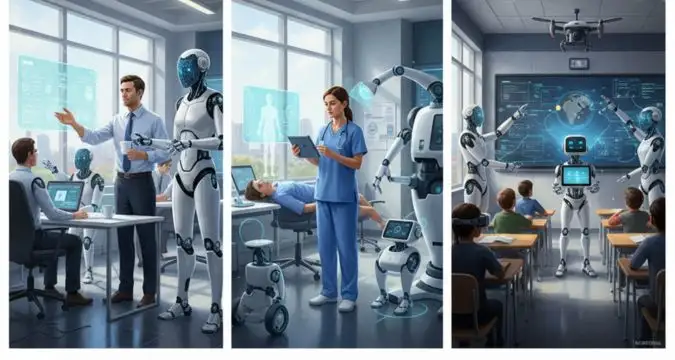
Current Trends Shaping Artificial Intelligence
Artificial intelligence is not evolving in a single direction. Several distinct trends are shaping its present and near-term trajectory.
Integration into Core Infrastructure
AI is becoming embedded within foundational systems rather than existing as a standalone feature. This includes:
- Operating systems and productivity software
- Healthcare diagnostics and administrative tools
- Financial risk assessment and fraud detection
This integration reduces friction and increases reliance on AI-driven processes.
Shift from Narrow to More General Capabilities
Early AI systems were designed for specific tasks. Recent models demonstrate broader capabilities, handling multiple functions within a single framework. This does not mean machines possess human-level intelligence, but it does indicate greater flexibility and transferability of skills.
Increased Focus on Responsible Use
As deployment expands, attention is turning toward governance. Issues such as algorithmic bias, transparency, and misuse are now part of mainstream discussion.
This trend reflects a growing recognition that technical capability must be matched with social responsibility.
Broader Societal and Cultural Implications
Artificial intelligence is influencing not just industries, but cultural norms and expectations.
Changing Perceptions of Creativity and Work
AI-generated content has challenged assumptions about creativity, originality, and authorship. While machines do not possess intent or consciousness, their outputs can resemble human-created work closely enough to prompt reevaluation of creative processes.
In the workplace, AI is reframing productivity. Rather than replacing all jobs, it is more accurately reshaping tasks within roles. This distinction is critical for informed discussion.
Inequality and Access
The benefits of artificial intelligence are not evenly distributed. Organizations and countries with access to data, infrastructure, and talent gain disproportionate advantages. This raises concerns about digital divides at both national and global levels.
Understanding AI’s impact therefore requires attention to power structures and access, not just technology.
Common Misconceptions About Artificial Intelligence
Despite widespread discussion, several misunderstandings persist.
“AI Thinks Like Humans”
Artificial intelligence does not think, reason, or understand in a human sense. It identifies statistical patterns and generates outputs based on probability, not awareness or intent.
“AI Is Fully Autonomous”
Most AI systems operate within constraints defined by humans. They require oversight, maintenance, and contextual judgment, particularly in high-stakes settings.
“AI Progress Is Inevitable and Unstoppable”
While momentum is strong, AI development is shaped by policy, economics, and public trust. Adoption can slow or redirect depending on social response and regulatory choices.
Correcting these misconceptions is essential for realistic expectations.
Why Artificial Intelligence Matters to Readers Today
AI’s relevance is not limited to specialists. Its influence extends to:
- How information is produced and consumed
- How decisions are made in institutions
- How skills are valued in the job market
Understanding artificial intelligence allows readers to interpret news more critically, evaluate claims more effectively, and engage in informed discussion about future directions.
For readers of The Vue Times who track global developments, AI represents a cross-cutting force that intersects with economics, governance, culture, and technology.

What to Watch Next: Signals and Developments to Monitor
Several indicators will shape the next phase of artificial intelligence.
Regulatory Frameworks
How governments balance innovation with safeguards will influence deployment patterns. Divergent regulatory approaches may lead to regional differences in AI use.
Talent and Education Shifts
Demand for AI-related skills is reshaping education systems and professional training. Monitoring how institutions respond offers insight into long-term capacity building.
Public Trust and Acceptance
High-profile failures or misuse could slow adoption. Conversely, transparent and beneficial applications may strengthen confidence.
These signals matter more than individual product announcements.
More Read

Where Artificial Intelligence Stands Today
Artificial intelligence is in the news because it has reached a threshold where capability, accessibility, and impact intersect. It is no longer an experimental technology operating at the edges of society. It is embedded within systems that shape daily life and long-term strategy.
Understanding AI today means recognizing both its strengths and its limitations. The trend is not defined by machines becoming human-like, but by tools becoming more capable, more widespread, and more consequential.
For informed readers, the key insight is this: artificial intelligence is not a future possibility. It is a present reality, still evolving, still contested, and still open to influence through human choice and governance.
Frequently Asked Questions
Why has artificial intelligence advanced so rapidly in recent years?
The acceleration comes from a combination of increased computing power, access to large datasets, and improved algorithms. These factors matured simultaneously, allowing artificial intelligence systems to perform complex tasks reliably. The convergence, rather than a single invention, explains the recent pace of change.
Does artificial intelligence pose a risk to employment?
AI is more likely to change how work is done than eliminate work entirely. Many roles will see task-level automation rather than full replacement. The larger challenge lies in reskilling and adapting institutions to ensure workers can transition as job requirements evolve.
How is artificial intelligence different from traditional software?
Traditional software follows explicit rules written by developers. Artificial intelligence systems learn patterns from data and adjust behaviour accordingly. This allows them to handle complexity and variability that rule-based systems struggle with, but it also makes outcomes less predictable.
Can artificial intelligence be regulated effectively?
Regulation is possible but complex. Effective frameworks focus on accountability, transparency, and risk management rather than attempting to control innovation directly. The balance between flexibility and oversight will determine how AI develops across different regions.
What should individuals pay attention to as AI evolves?
Rather than tracking every new tool, individuals should watch broader signals: changes in workplace expectations, shifts in education and skills demand, and emerging norms around data use and accountability. These trends reveal how artificial intelligence is shaping society over time.
Stay ahead of global shifts that shape India’s future. Read more clear, in-depth explainers on The Vue Times.