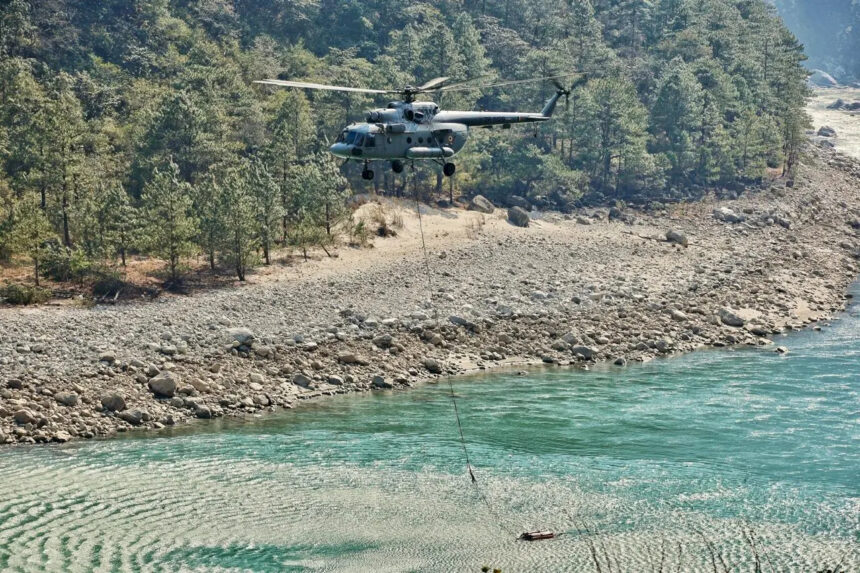
The current forest fire in Arunachal Pradesh has again brought the national focus to the increasing India susceptibility to climatic-based disasters. When forested hills began to smoke and the flames were spreading over the inaccessible areas the situation helped to reveal the extent of ecological danger as well as the intricacy of disaster management in India.
The Indian state of Arunachal Pradesh belongs to the weak Eastern Himalayan ecosystem and is the area of lush forests, rare wild species, and native populations who are highly dependent on forests. When a forest fire erupts in such a land, it is not only to put out the fire but to save the biodiversity, livelihoods and ecological wellness in the long run.
In this incident, another issue that has been highlighted is the working of the system of disaster management in India in real time, starting with the state-level response and early warnings, through the deployment of the national forces and firefighting activities of the Indian Air Force.
The reason why forest fires are becoming frequent in Arunachal Pradesh
Forest fires are not a recent occurrence in the Northeast part of India but it has been more frequent in recent years, more intense and unpredictable.

This trend can be attributed to a number of interchangeable factors:
Changing Climate Patterns
An increase in temperature, long dry seasons and unpredictable rainfall has provided the perfect environment to forest fires. According to the climate data provided by the national agencies, there is a consistent rise in the heat stress days in Himalayan states.
Dry Biomass Accumulation
All dead vegetation, pine needles and dry leaves quickly pile up in the winter and pre-monsoon months and make forests natural tinderboxes.

Conventional Agricultural methods.
Shifting cultivation is a regulated practice that occasionally adds to accidental fires when the weather conditions are deteriorated.
A difficult terrain and accessibility.

- Razing mountains and inaccessible forests slow down the reaction of the ground forces, which spreads fires with impunity in the initial phases.
- There are the possibilities of Human Activity and Negligence.
- These risks include campfires, cigarette butts, and unsanctioned tourism.
The forest fire in Arunachal Pradesh is therefore not a one off event but that which is part of a wider environmental trend that is taking shape in forest fire prone areas in India.
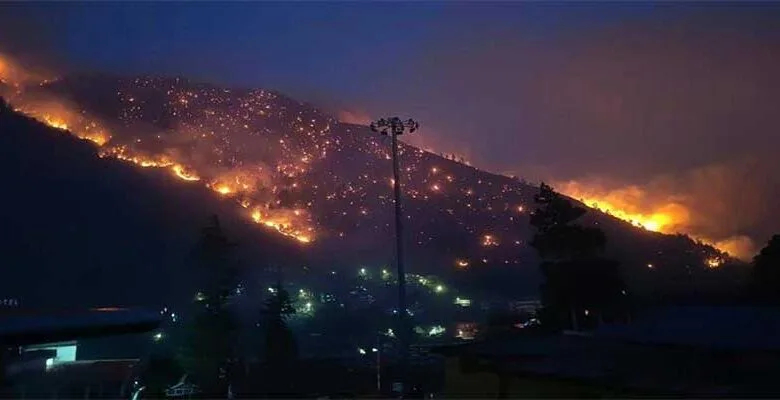
Short-term Effect of the Forest Fire
The impacts of forest fires are much deeper than meets the eye.
Environmental impact
- Deforestation and destruction of biodiversity.
- Destruction of habitats of wildlife
- Soil degradation and soil erosion in the long run.
Human and social impact
- Menace to villages on forest edges.
- Health hazards associated with inhalation of smoke.
- Interruption of the livelihood business like agricultural activities and forest produce harvesting.
Economic impact
- Expensive fire fighting measures.
- Destruction of forest tourism.
- There is long-term destruction of ecosystem services.
These run-on effects underscore the reason why forest fire India is a nationwide issue and not a local one.
Indian Air force in Forest Fire Control
The intervention of the Indian Air Force has been considered as one of the most important ones in the response to the forest fire in Arunachal Pradesh today.
IAF Explained Fire fighting operations.
The Air Force of India is in a special position of responding to disasters because of its rapidity, coverage and technical capacity.
Key contributions include:
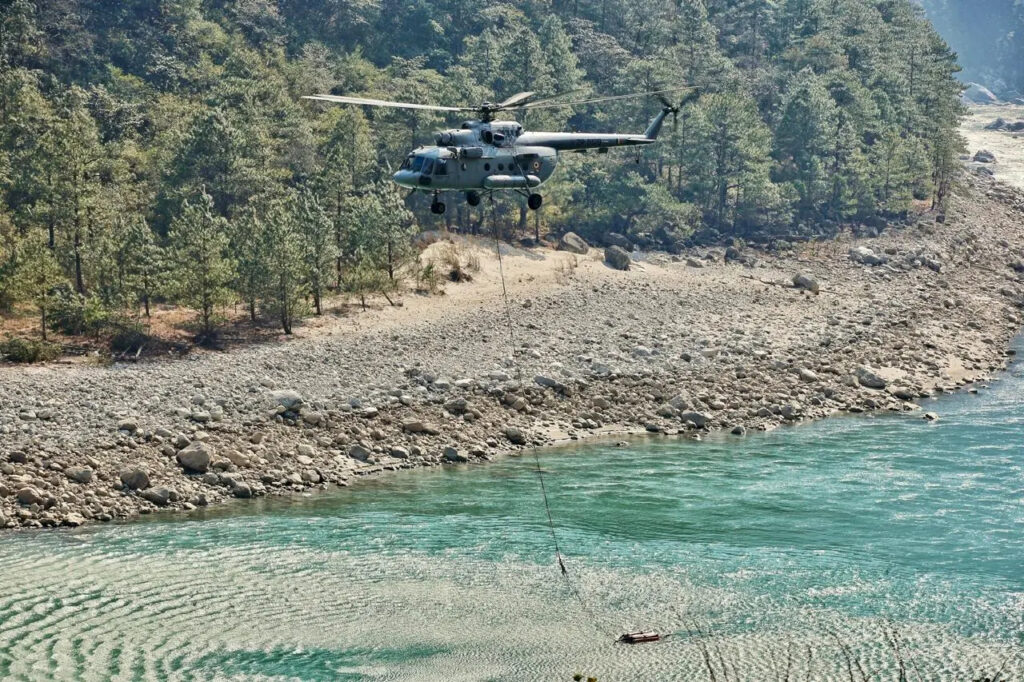
- Helicopter water bombing by helicopters fitted with Bambi Buckets.
- Availability of remote and mountainous areas that cannot be accessed by road.
- Quick response to eliminate fire outbreak.
- Liaison between civil administration and forest officials.
When there is a fire in the forest, helicopters are used to pick water in the surrounding rivers or lakes and dump it in the burning areas. This technique is specially useful in steep terrain of the Himalayas where ground fighting can require days.
The Indian Air Force forest fire response has proven decisive several times in curbing the destruction in case of disasters in the Uttarakhand and Himachal Pradesh, and recently in Arunachal Pradesh.
The Disaster Response Mechanism in India: The Multilayered System
India adheres to a multi-tier disaster management system, which is aimed at the efficient response on local to national levels.
This system automatically goes on in case of major natural disasters like forest fires, floods, cyclones, earthquakes, and landslides.
National Disaster Management Authority (NDMA): Policy and Planning
The highest policy making of disaster management is the NDMA India.
Its main areas of responsibility are:
- Setting the guidelines to national disaster management.
- Aligning disaster preparedness plans.
- Consultation to central and state governments.
- Planning climate resiliency.
The NDMA focuses on changing the reactive relief approach to a more proactive risk reduction especially in areas vulnerable to climate changes, such as the Northeast.
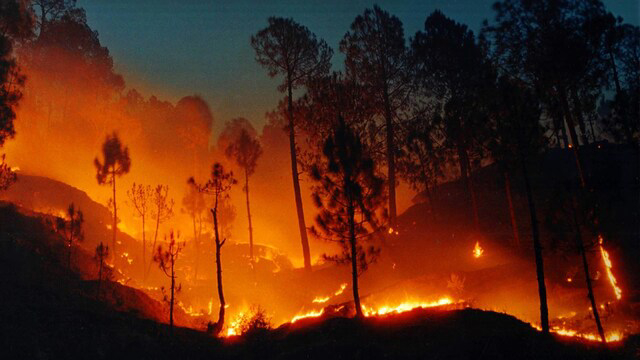
National Disaster Response Force (NDRF): Ground Response
National Disaster Response Force (NDRF) is the special force in India that is trained to handle extreme conditions during disaster response.
In case of forest fires NDRF teams:
- Help in evacuation of the affected communities.
- Assist in fire control activities.
- Standby medical assistance and logistics.
- Cooperate with forest departments in states.
The NDRF staff is trained on multi-hazard responses such as chemical hazard, floods, landslides, and forest fires.
State Disaster Response Force (SDRF): First Responder
On the state level, the State Disaster Response Force (SDRF) provides the initial response.
They are responsible to perform the following tasks:
- Quick reaction to fire outbreaks.
- Local coordination with the administration of districts.
- Emergency movement and crowd control.
- Ground support to the officials of the forest.
The use of SDRF teams is also crucial in Arunachal Pradesh because they have a good understanding of the local terrain and communities.
Forest Department: Prevention and Early Detection
The forest department has continued to be the pillar at forest fire prevention.
Key roles include:
- Monitoring fire-prone zones
- The development of fire lines and buffer zones.
- Awareness programs in the community.
- Satellite information and watchtowers.
Timely responses that forest officials are able to make can usually either lead to a successful management of a fire or a major tragedy.
A transformation of Technology in Forest fire management in India
The disaster response system in India is more dependent on technology.
Key tools include:
- Satellite-based fire alerts
- Mapping, Geographic Information Systems (GIS).
- Inaccessible area Drone surveillance.
- Weather forecasting in real time.
The government agencies get near real time warnings when temperature anomalies or smoke plumes are identified and resources mobilized to handle the situation much faster.
Historical Background: How India became the student of historic forest fire
The present structure of India has been developed as a result of experience that is gained during disasters.
Significant events that influenced policy are:
- Repeat forest fires in Uttarakhand.
- Himalayan wildfires on water sources.
- Uncontrolled fires in the Indian central forests.
Gaps in coordination, funds, and preparedness that were noted with every occurrence resulted in reforms in India’s disaster management system.
Climate Change and future forest fires in India
Climate scientists caution that fires in the forest will increase and be even more devastating unless the mitigation programs are reinforced.
Future risks include:
- Longer fire seasons
- Increased carbon emissions
- Himalayan glaciers are threatened by the following factors.
- Water insecurity in the lower areas.
The Arunachal Pradesh forest fire should then be perceived as a wake-up call and not an emergency.
Data and Policy Direction Government
Based on national policy evaluation:
- Incidences of forest fires have been on the rise in the past ten years.
- States sensitive to climatic conditions are at the risk of increased disasters.
- Disaster preparedness results in long-term economic payoffs.
Planning Disaster resilience is being incorporated in development planning especially in ecologically sensitive areas by institutions like NITI Aayog.
What More Can Be Done: Building Disaster Response in India
In spite of this, there are still a number of gaps.
Key areas for improvement:
- Increased investment on forest fire prevention.
- Fire management in the community.
- Modern fire fighting equipment at the state level.
- Better interagency coordination.
- Adaptation of climate to forest areas.
Practical Implications on Citizens, Students and Professionals
For students and aspirants
- Realize disaster management as a governance problem.
- Train inter-agency coordination on tests.
- Associate climate change with domestic security.
For professionals
- Disaster management, environmental policy Explore careers.
- Fund environmentally-friendly development projects.
- Encourage sustainable tourism and planting of trees.
For citizens
- The activity that can cause forest fires should be avoided.
- Contribute towards community awareness.
- Encourage afforestation and conservation.

Conclusion: A Wake-Up Call and a Call to Action
The forest fire in Arunachal Pradesh is not only a natural disaster but also a challenge on disaster preparedness of India in the times of climate change. The forceful mobilization of the Indian Air Force, coordination of NDMA, NDRF, SDRF, state proves the effectiveness of the disaster management system in India.
Nevertheless, the increasing number of such cases necessitate more prevention, more planning and more climate resilience. Conservation of forests in India is not merely an environmental issue but an Indian challenge, related to health, security and sustainable development.
Frequently Asked Questions (FAQs)
What was the cause of the forest fire in Arunachal Pradesh to-day?
The forest fire in Arunachal Pradesh remains under evaluation by the authorities as to the cause. Nevertheless, there are general causes such as dry weather, a build-up of dry forest biomass, an increase in temperatures, and some human activities like unattended fires. Over the last few years, climate variability has been a major contributor towards the occurrence of such incidences.
What is the contribution of the Indian Air Force in forest fires?
The Indian Air Force (IAF) assists in firefighting missions through air water bombing, which is done by the introduction of helicopters furnished with Bambi Buckets. Such operations play a very vital role in remote and hilly regions where ground-based fire fighting is either slow or not possible. The quick response of the IAF ensures that fires do not extend much.
What is the level of NDMA’s role in management of forest fires in India?
The National Disaster Management Authority (NDMA) works on framing policies, guidelines and preparedness strategies to disaster management. In forest fires, NDMA takes care of inter-agency coordination, guides governments, and long-term disaster risk mitigation and climate resilience.
What is the role of NDRF in case of forest fire?
National Disaster Response Force (NDRF) provides support in the form of rescue, evacuation, relief distributions, and logistical assistance to forest fires. NDRF works in collaboration with the state authorities and forest departments, to save lives and reduce the damage.
What is the difference between SDRF and that of NDRF?
The State Disaster Response Force (SDRF) is a state-level organization that is first responder in the case of disasters. As SDRF deals with emergency response and local coordination, NDRF is a specialized response that is offered at a national level in case there is an escalation of the situation.
What is the disaster response mechanism of India when the forest is on fire?
India adheres to a multi-layered disaster response model consisting of forest department, SDRF, NDRF, NDMA, civil administration and Indian Air Force. This organized system will facilitate early response, containment, evacuation and recovery.
Climate change: Are forest fires in India on the rise?
Yes. Research and government evaluations suggest that climate change induced higher temperatures, lengthy dry seasons and unpredictable rainfall cycles that are contributing towards more and more forest fires in India and in particular, in ecologically vulnerable areas.
What are the long-term damages to forest fires?
Forest fires contribute to the destruction of biodiversity, soil erosion, air pollution, loss of water sources and carbon emissions. Frequent fires may end up changing the forests permanently and posing a danger to livelihoods that rely on forests.