Introduction: Why India–US Relations Matter Right Now
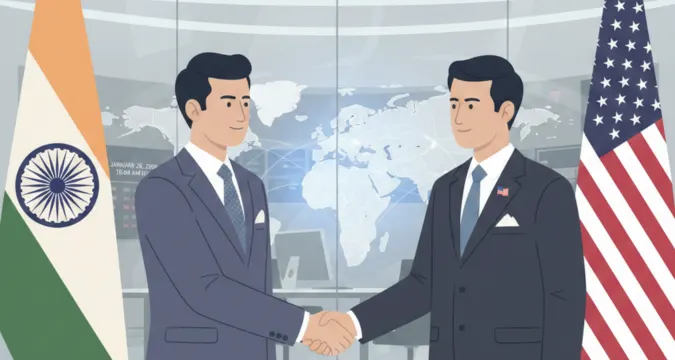
India–United States relations have entered a phase where engagement is no longer episodic or symbolic. It is structural. What was once a cautious partnership shaped by Cold War alignments has evolved into one of the most consequential bilateral relationships of the 21st century.
This matters now because global power equations are shifting rapidly. The international system is becoming more fragmented, supply chains are being re-engineered, and strategic competition in the Indo-Pacific is intensifying. Against this backdrop, cooperation between New Delhi and Washington increasingly influences outcomes in trade, technology, defence, climate policy, and global governance.
Recent developments have added momentum as well as complexity. High-level political exchanges, expanding defence interoperability, collaboration in critical technologies, and deeper people-to-people ties coexist with disagreements over trade practices, data governance, and geopolitical autonomy. Understanding this relationship requires moving beyond headlines to examine the logic driving cooperation and the constraints shaping it.
This article offers a deep explanatory analysis of India–US relations, with a focus on contemporary shifts, underlying drivers, and practical implications for policy, society, and India’s global positioning.

Core Explanation: What Defines India–US Relations Today
At its core, the India–US relationship is neither a formal alliance nor a transactional arrangement. It is a strategic partnership built on converging interests rather than identical worldviews.
Several features define this relationship today:
- Mutual recognition of each other as indispensable partners
- Issue-based cooperation rather than bloc politics
- Acceptance of strategic autonomy on both sides
The United States views India as a key stabilising power in Asia and a democratic counterweight in a multipolar world. India, in turn, sees the US as a critical source of capital, technology, defence capability, and global influence.
Importantly, this partnership has matured enough to accommodate disagreement without collapse, a sign of strategic depth rather than fragility.
Broader Context: How India–US Relations Evolved
Early Years: Distance and Distrust
For decades after independence, India and the US remained strategically distant.

- India pursued non-alignment and state-led development
- The US aligned closely with Pakistan during the Cold War
- Differences over nuclear policy and global institutions persisted
The relationship was marked more by mutual suspicion than cooperation.
Post-Cold War Reset
The end of the Cold War created space for re-engagement.
Key turning points included:

- India’s economic liberalisation in the early 1990s
- The gradual expansion of trade and investment
- Recognition of India’s growing market and geopolitical relevance
Despite setbacks after India’s 1998 nuclear tests, dialogue channels remained open.
Strategic Convergence in the 21st Century
The real transformation began in the 2000s.
- The civil nuclear agreement signalled trust and political will
- Defence cooperation expanded steadily
- Shared concerns about terrorism and regional stability grew
By the 2010s, India–US relations were no longer reactive. They were agenda-driven.
Recent Shifts: What Has Changed in the Last Few Years
The current phase of engagement is marked by breadth, depth, and institutionalisation. Cooperation now spans sectors that were previously sensitive or inaccessible.
Strategic and Defence Cooperation
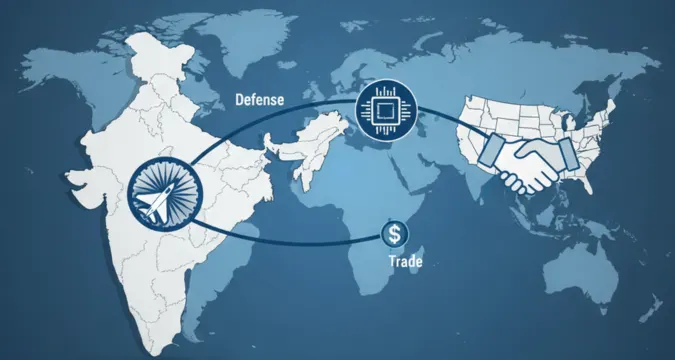
Defence ties have moved from buyer–seller dynamics to operational partnership.
Key trends include:
- Foundational defence agreements enabling secure communication and logistics
- Joint military exercises across land, air, sea, and cyberspace
- Growing defence technology and industrial collaboration
This has enhanced interoperability while preserving India’s independent decision-making.
Indo-Pacific as a Shared Strategic Space
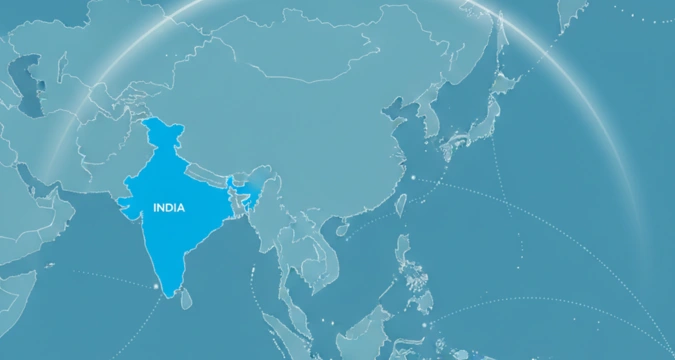
Both countries now explicitly recognise the Indo-Pacific as central to global stability.
This convergence is driven by:
- Concerns over unilateral actions and rule-based order
- Security of sea lanes and trade routes
- The need for resilient regional institutions
Frameworks like the Quad reflect this alignment without binding treaty obligations.
Technology, Innovation, and Supply Chains
One of the most significant recent developments is cooperation in critical and emerging technologies.
Focus areas include:
- Semiconductors and advanced manufacturing
- Artificial intelligence and quantum research
- Telecommunications and digital infrastructure
The emphasis is on trusted supply chains rather than cost-only efficiency.
Economic and Commercial Engagement
Trade and investment ties have expanded, though not without friction.
Current realities include:
- The US as one of India’s largest trading partners
- Strong flows of foreign direct investment
- Persistent disputes over tariffs, market access, and digital regulation
Economic engagement is increasingly shaped by strategic considerations rather than pure liberalisation.
Climate and Energy Cooperation
Climate change has emerged as a core pillar of engagement.
Areas of collaboration include:
- Clean energy transitions
- Green finance and climate-resilient infrastructure
- Research on sustainable technologies
This reflects a shift from moral commitments to practical implementation.
What Is Driving These Changes
Several structural drivers explain the momentum in India–US relations.
Changing Global Power Balance
As the international system moves away from unipolarity, both countries seek partners that enhance strategic flexibility.
- The US needs reliable partners beyond traditional alliances
- India seeks diversified engagement without overdependence
This creates space for pragmatic cooperation.
Domestic Economic and Political Factors
Domestic priorities also matter.
- India’s focus on manufacturing, infrastructure, and digital governance
- The US emphasis on supply chain security and technology leadership
These priorities align more often than they clash.
People-to-People and Knowledge Ties
The Indian diaspora plays a stabilising role.
- Deep integration in academia, technology, and healthcare
- Strong educational and professional networks
- Growing cultural familiarity
These links act as shock absorbers during political disagreements.
Implications: Why This Relationship Matters to Readers
For policymakers, India–US relations shape options in defence procurement, technology access, and global negotiations.
For businesses and professionals, they influence:
- Investment climates
- Innovation ecosystems
- Regulatory environments
For students and citizens, the relationship affects India’s strategic space and economic opportunities in a competitive world.
As discussed in a related explainer on how India positions itself in a multipolar global order on The Vue Times, bilateral partnerships increasingly determine national leverage in global forums.
Common Misconceptions and Oversimplifications
“India Is Becoming a US Ally”
India is not entering a formal alliance system.
- Strategic autonomy remains central to Indian foreign policy
- Cooperation is issue-based, not bloc-driven
This distinction is often overlooked.
“Disagreements Mean Weak Partnership”
Differences over trade, data, or regional conflicts do not indicate fragility.
Mature partnerships allow disagreement without disengagement.
“The Relationship Is Only About China”
While regional competition is a factor, cooperation extends well beyond it.
- Technology
- Climate
- Health
- Education
Reducing the relationship to a single driver oversimplifies reality.
What to Watch Next
Several signals will shape the next phase of engagement.
- Progress on defence co-development rather than co-production alone
- Outcomes of technology and semiconductor partnerships
- Alignment in global institutions undergoing reform
- Management of trade and digital policy disputes
The sustainability of the partnership will depend on delivery, not declarations.
More Read

Key Takeaways
- India–US relations are strategic, not transactional
- Cooperation is expanding across defence, technology, and climate
- Disagreements coexist with deepening engagement
- The partnership enhances flexibility for both countries
- Future progress depends on institutional follow-through
This relationship is no longer about potential. It is about execution in a complex global environment.
Frequently Asked Questions
Why are India–US relations especially important at this point in time?
Global uncertainty, supply chain disruptions, and strategic competition have increased the value of reliable partnerships. India and the US see each other as anchors of stability in their respective regions. Their cooperation now affects outcomes in technology, security, and global governance, making the relationship more consequential than in earlier decades.
Does closer cooperation limit India’s strategic autonomy?
India has consistently avoided binding alliances. Its engagement with the US is selective and interest-based. Strategic autonomy is maintained through diversified partnerships, independent decision-making, and issue-specific alignment rather than permanent commitments.
How do economic disagreements affect the broader relationship?
Trade and regulatory disputes are real but manageable. Both sides increasingly separate economic negotiations from strategic cooperation. This compartmentalisation reflects maturity and prevents disagreements in one area from derailing progress in others.
What role does technology play in shaping future ties?
Technology collaboration is becoming central. Cooperation in semiconductors, digital infrastructure, and emerging technologies will influence economic competitiveness and national security. This area is likely to define the next phase of engagement more than traditional diplomacy.
How should students approach this topic for academic and competitive exams?
Focus on evolution, drivers, and implications rather than static facts. Emphasise strategic convergence, issue-based cooperation, and the ability to manage differences. Analytical clarity matters more than descriptive detail.
Stay ahead of global shifts that shape India’s future. Read more clear, in-depth explainers on The Vue Times.