Everything you need to know , explained simply, clearly, and with real legal clarity
In today’s India, maintenance law has become one of the most debated and social-impacting areas of family law. It affects millions of married couples, separated partners, children, and even extended family members every year. With recent court rulings, especially from the Supreme Court and various High Courts, the way maintenance is awarded, calculated, and enforced is changing. This blog explains how maintenance works in India, why recent judgments matter, and how students, law aspirants, and ordinary citizens can understand their rights and duties.
What Is “Maintenance” in Indian Law?
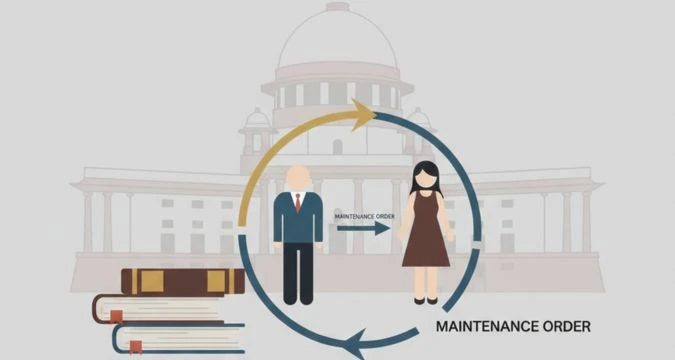
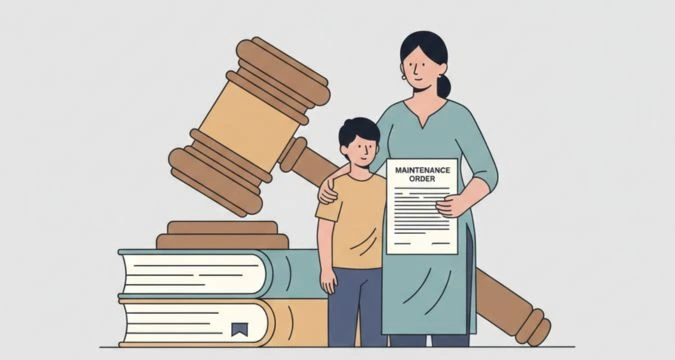
Maintenance refers to financial support that one person (usually a spouse, child, or parent) is legally required to provide to another person who cannot support themselves.
In India, maintenance is not just a moral duty , it is a legal obligation enforced by law. It ensures that no spouse, child, or dependent is left destitute after marriage breakdown or separation.

Maintenance law exists to protect:
- Wives
- Husbands (in certain cases)
- Divorced spouses
- Children
- Parents and senior citizens
These rights come from different laws like:
- Section 125 of the Criminal Procedure Code (CrPC) , a key secular law covering maintenance for spouses and children
- Hindu Marriage Act, 1955
- Special Marriage Act, 1954
- Muslim Women (Protection of Rights on Divorce) Act, 1986
- Maintenance and Welfare of Parents and Senior Citizens Act, 2007
Each law has its own context and criteria, but the underlying goal is social justice , to prevent destitution and vagrancy.
The Core Law: Section 125 CrPC (Now BNSS Section 144)
For most cases today, Section 125 of the Criminal Procedure Code (CrPC) is the backbone of maintenance law. Recently, with legal reforms, Section 125 in practice has been replaced by Section 144 of the Bharatiya Nagarik Suraksha Sanhita (BNSS) Act, 2023 , but the legal principles and rights remain the same.
Who can claim maintenance under Section 125/144?
A person can claim maintenance if they are:

- unable to support themselves,
- legally eligible (spouse, child, parents),
- dependent on the other person for financial support.
Landmark Supreme Court Decisions That Changed Everything
A. Rajnesh v. Neha , Important Guidelines (2020/2021)
In the landmark case Rajnesh v. Neha, the Supreme Court gave comprehensive guidelines on how maintenance should be calculated and awarded, covering:
- who can claim maintenance
- how quantum (amount) should be determined
- when maintenance starts
- how interim maintenance works before the final decision
This judgment is now considered a central reference for maintenance cases in India.
B. Division of Jurisdiction & Uniform Principles
Before Rajnesh v. Neha, different laws applied differently across religions and courts, causing confusion and inconsistent judgments. The Supreme Court streamlined the approach: the focus is on justice, need, and dependency, not just marital status.

C. Maintenance Is a Legal Duty, Not Charity
In ABC v. XYZ (2025), the Supreme Court reiterated that a husband’s responsibility to pay maintenance is not a “benefit” to the wife. It is a legal and moral duty. This means courts will interpret maintenance laws in a beneficial and expansive way rather than restrictively.
Key Recent Rulings You Must Know (2024–2026)
A. Maintenance Cannot Be Denied Just Because a Wife Refuses Restitution of Conjugal Rights
If a court orders the wife to return to the husband’s home (restitution of conjugal rights) and she does not, that alone cannot disqualify her from maintenance. The rationale is simple: refusal to return might be due to legitimate reasons like neglect, abuse, etc.
B. Education and Earning Capacity Do Not Automatically Disqualify Maintenance (Allahabad HC, 2026)
A very recent judgment from the Allahabad High Court stated that a wife’s educational qualifications or ability to work cannot be used to deny her maintenance. The Court held that maintenance depends on need and dependency, not potential to earn.
C. Interim Maintenance Is Being Awarded More Responsively
High Courts are now actively increasing interim maintenance when the payer underreports income or fails to provide evidence of self-sufficiency. For example, in Delhi, court increased interim maintenance after reviewing bank and income records.
Religion and Maintenance Law , What Recent Rulings Clarify
A. Muslim Women and Secular Law
Long after the famous Shah Bano case of 1985, modern judgments confirm that Muslim women , married or divorced , can claim maintenance under Section 125 CrPC even if their marriage ended under Muslim personal law.
The Supreme Court clarified that Section 125/144 is secular and applies to all women of all religions, including Muslim women.
This fills a crucial gap: earlier, under the Muslim Women (Protection of Rights on Divorce) Act, 1986, divorced Muslim women could claim maintenance only for the ‘iddat’ period (approximately three months). Now, through CrPC, rights extend beyond that, offering stronger protection.
B. Multiple Marriage Scenarios
Some recent cases have even allowed a woman to claim maintenance from a second husband under Section 125, even if her first marriage was not formally legally dissolved , provided the social purpose of the law is satisfied.

Practical Issues and Court Enforcement
A. What Happens if the Court Order Is Not Followed?
A maintenance order is legally binding. If someone fails to pay even after a court order, the aggrieved person can:
- file an execution petition in court
- move civil remedies for arrears
- seek enforcement including attachment of salary/property
High Courts have confirmed that maintenance arrears can be pursued through civil suits if other procedures fail.
B. Penalties for Non-Payment
While imprisonment for non-payment is possible in extreme cases (traditionally under older law provisions), courts increasingly prefer enforcement through financial remedies rather than incarceration, focusing on practical compliance.
Common Misconceptions , Busted
Myth 1: “If Wife Can Earn, She Can’t Get Maintenance”
Not true. Courts now look at whether the person is actually able to sustain themselves, not just “potential to earn.” Years of domestic responsibilities may have weakened job prospects.
Myth 2: “Maintenance Only After Divorce”
No. Maintenance can be awarded even during separation or while cases are pending. Interim maintenance exists to support immediate needs.
Myth 3: “Maintenance Is a Handout”
The Supreme Court has explicitly said that maintenance is a legal duty, not a charitable benefit.
Impact On Indian
Example 1
A wife with limited income and a husband with inconsistent financial documentation was awarded higher interim maintenance because the husband failed to prove his claims. This reflects courts closely examining real income and financial capacity.
Example 2
A Muslim woman, even after divorce under personal law, successfully claimed maintenance under Section 125/144 because secular law took precedence on the basis of social justice.
What Students Should Focus On
If you are a law student or a learner:
- Understand Section 125 CrPC/Section 144 BNSS as the core legal base
- Study Rajnesh v. Neha as a landmark guideline
- Know how courts balance need vs ability to pay
- Recognize modern trends towards expansive interpretation for social welfare
- Be aware of evolving religion-neutral applications
Conclusion, Maintenance Law Today and Tomorrow
Today, maintenance law in India is much more responsive, equitable, and protective of vulnerable spouses and dependents than ever before. Recent rulings show that:
- Courts are rejecting outdated stereotypes
- Maintenance is treated as a legal duty, not charity
- Religion and personal law differences are subsumed under secular, justice-oriented principles
- Enforcement is actively evolving to ensure compliance
For ordinary couples, families, and students, this means maintenance law is not fixed or rigid , it grows with social needs and judicial insight. India’s courts are pushing for a system that ensures dignity and sustenance for all dependents, respecting both law and fairness.
More Read

FAQs
1. What does “maintenance” mean under Indian law?
Maintenance means financial support that a person is legally required to provide to their spouse, children, or parents if they are unable to maintain themselves. It is meant to ensure basic dignity, food, shelter, and living expenses, not luxury.
2. Which law is most commonly used for claiming maintenance in India?
The most commonly used provision is Section 125 of the Criminal Procedure Code (CrPC), now reflected as Section 144 under the Bharatiya Nagarik Suraksha Sanhita (BNSS). It is a secular law and applies to people of all religions.
3. Can a wife claim maintenance even if she is educated or capable of working?
Yes. Recent court rulings clearly state that education or theoretical earning capacity is not a ground to deny maintenance. Courts focus on whether the wife is actually earning enough to maintain herself, not whether she could earn.
4. Is maintenance only granted after divorce?
No. Maintenance can be claimed:
- during marriage,
- during separation,
- while divorce proceedings are ongoing,
- and even after divorce.
Courts often grant interim maintenance to meet immediate needs until the final decision.
5. Can a husband also claim maintenance?
Yes, but only in limited circumstances. If the husband is unable to earn due to illness, disability, or other valid reasons, and the wife is financially stable, courts may grant maintenance to the husband under certain personal laws.
6. Does refusal to live with the husband automatically cancel maintenance rights?
No. Courts have clarified that a wife’s refusal to return to the matrimonial home does not automatically disqualify her from maintenance, especially if there are valid reasons such as cruelty, neglect, or lack of safety.
7. How do courts decide the amount of maintenance?
Courts consider multiple factors, including:
- income and assets of both parties,
- standard of living during marriage,
- reasonable needs of the claimant,
- number of dependents,
- liabilities of the paying spouse.
There is no fixed percentage; the amount is decided case by case.
8. From which date is maintenance payable?
In most cases, courts award maintenance from the date of filing the application, not from the date of the judgment. This ensures the dependent is not financially harmed due to long court delays.
9. Can a divorced Muslim woman claim maintenance under Indian law?
Yes. Recent Supreme Court rulings confirm that divorced Muslim women can claim maintenance under Section 125 CrPC, which is a secular law. This right is not restricted to the iddat period alone.
10. What happens if the person ordered to pay maintenance refuses to pay?
If maintenance is not paid despite a court order, the affected person can:
- file an execution petition,
- seek attachment of salary or property,
- claim arrears through legal proceedings.
Courts increasingly focus on enforcement to ensure compliance.
11. Can maintenance orders be modified later?
Yes. Maintenance can be increased, reduced, or cancelled if there is a significant change in circumstances, such as loss of job, serious illness, remarriage, or improved financial condition of either party.
12. Is maintenance considered charity or a legal right?
Maintenance is a legal right and duty, not charity. The Supreme Court has repeatedly emphasized that providing maintenance is a legal and moral obligation meant to prevent destitution.
13. Can maintenance be claimed for children separately?
Yes. Children have an independent right to maintenance, regardless of disputes between parents. Courts prioritize the welfare, education, and basic needs of children while deciding maintenance.
14. Can maintenance be claimed under more than one law at the same time?
Yes, but courts ensure there is no double benefit. If maintenance is awarded under one law, it is usually adjusted against amounts granted under other laws to maintain fairness.
15. Why are recent court rulings important for maintenance law in India?
Recent rulings have:
- reduced ambiguity,
- ensured uniform standards,
- strengthened women’s rights,
- clarified enforcement mechanisms,
- and focused on social justice over technicalities.
They reflect a modern, realistic approach to family disputes.