India is at a great historical crossroads in 2026. In 2026, 1000 years after the first known demolition of the Somnath Temple in 1026 CE, the country is celebrating 1000 years of continuous faith, strength and continuation of the civilisation. It is not just a religious phenomenon, but a cultural, historical and national contemplation of how the spiritual foundations of India have endured throughout the centuries of turmoil.
The Somnath Temple on the western border of Gujarat where the Arabian Sea is fused to the land is more than just a stone structure and sculpture. It is the survival of the Indian civilization, the national memory of people, the eternal spiritual power of Lord Shiva, who is here venerated as the original Jyotirlinga.
India is welcome to face its past with honesty, celebrate its present with confidence and look into its future with clear and proud eyes and that is what Somnath Swabhiman Parv 2026 has to offer.
What Is Somnath Swabhiman Parv 2026 and Why This Matter Is Important Today
Somnath Swabhiman Parv 2026 is a national event that is aimed at celebrating 1000 years of devotion associated with Somnath Temple. Swabhiman is the term that means self-respect or civilisational pride and Parv is a term that means a sacred observance or celebration.

This event is important as it does not just loosen the historical account, but it does so with continuity and restructuring. Somnath was destroyed and rebuilt several times as it was attacked and destroyed for centuries. This continuity is one of the distinctive characteristics of the civilisational spirit of India as pointed out by the Parv.
Some of the main goals of Somnath Swabhiman Parv 2026 are:
- Observing the spiritual heritage of Somnath Jyotirlinga.
- Teaching the younger generations on the history of the Somnath Temple.
- Presenting the strength of India as a civilisation.
- Marketing cultural heritage and responsible religious tourism.
- Strengthening a national identity based on the common past.
This celebration is not an act of war, but rather a manifestation of cultural memory, survival and regeneration.
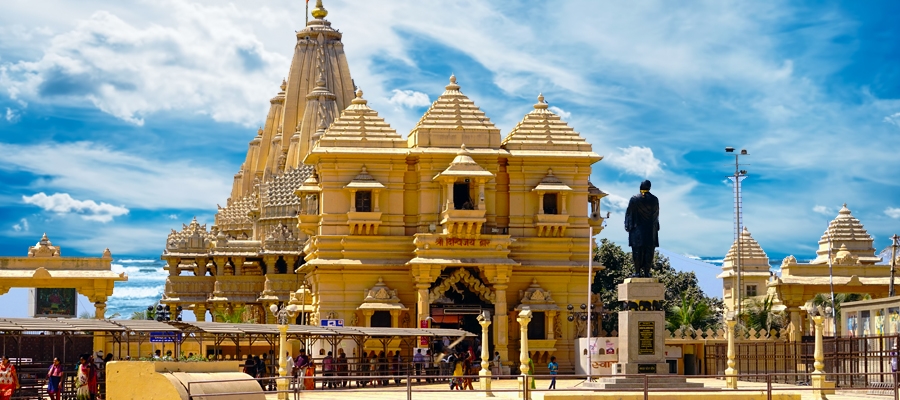
The History of Somnath Temple: Ancient greatness to destruction again and again
Somnath Temple is the oldest known temple in India, mentions of it can be traced in the ancient scriptures, Puranas, and the history of India. The temple was believed to have been constructed by Soma, the god of the moon, but later on it has been developed into the different dynasties such as the Chalukyas and the Solankis.
In the same year, 1026 CE, Mahmud of Ghazni seized and demolished the temple. It was a start of a long procession whereby Somnath was destroyed and rebuilt several times over the centuries.

Major historical periods of the Somnath Temple history are:
- Premature mentions in Hindu literature of Somnath being sacred.
- Destruction by Mahmud of Ghazni in 11 th century.
- Recovery during the Hindu rule.
- Medieval invasions Subsequent attacks during medieval invasions
- Reconstruction after the Indian independence.
Every reconstruction was not merely a construction, but a symbolic one, which states that faith and culture cannot be crushed by a sword.
Somnath Temple as a Nurturing Rock
The fact that Somnath is not only the oldest temple in India but has been revived several times is a unique feature of this temple. Most of the structures were lost permanently but Somnath was restored many times and many times it happened at social and economic cost.

This loop drew a very strong narrative:
Destructions were short lived; faith was eternal.
Even centuries later, the followers still linked Somnath to Lord Shiva despite the physical status of the temple. The concept of Somnath still existed in the Indian national mind even after the shrine had been ruined.
This is why the Somnath Swabhiman Parv 2026, pays a lot of attention to resiliency, but not victimhood.
The Jyotirlinga Importance: Why Somnath should be the first
Somnath is hailed to be the inaugural Jyotirlinga of lord Shiva, one of the twelve pious Jyotirlingas situated all over India. Jyotirlingas, according to the Hindu belief, are a symbol of Shiva as an infinite pillar of light, which represents the creation, preservation and destruction.
The importance of the Somnath Jyotirlinga is:
- It was the first one of the twelve.
- Its connection with times of the universe.
- Its connection to the renewing and the new strength.
Spiritually, Somnath represents the origin of godly power hence its survival is even more civilisation-wise symbolic.
Somnath Temple Civilisational Spirit: Beyond a Religious Place
Somnath is a sacred location, too. It is a civilisational phenomenon that indicates how Indian society is associated with history, trauma, and renewal.
The civilisation of India has never existed in a linear manner. It took up invasions, internal wars, and colonialist rule without losing its indigenous cultural identity. Somnath echoes this process very clearly.
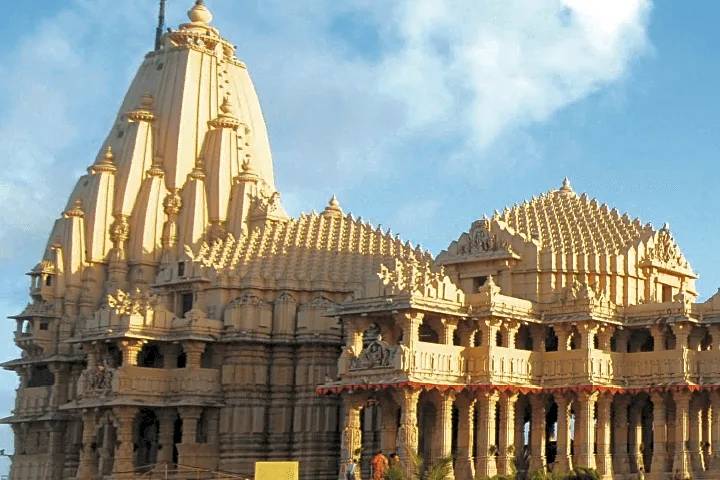
The civilisation spirit of Somnath Temple is manifested in:
- Memes of a culture passed down orally.
- Pilgrimage Relentless pilgrimage through the transformations of politics.
- Collectively willed reconstruction.
- Combination of religion and nationalism.
That is why, Somnath Swabhiman Parv 2026 appeals across religious borders.
Reconstruction after Independence: A New Direction of Modern India
The most characteristic episode of the history of Somnath Temple was the one that followed Indian independence. The temple was rebuilt in the year 1951 and the rebuilding was led by Sardar Vallabhbhai Patel with the active assistance of Dr Rajendra Prasad.
This reconstruction was very symbolic. It represented:
- India is recovering its cultural heritage.
- Belief in post-colonial attitude.
- A distinction between political neutrality and cultural restoration.
During the opening of the temple, Dr Rajendra Prasad termed Somnath as a symbol of eternal soul of India. This is the point that formed the basis of the role of Somnath in contemporary India.
Somnath Swabhiman Parv 2026 Contemporary India
Somnath Swabhiman Parv 2026 has a complex meaning in modern India. It arrives at a time when:
- Conservation of heritage is becoming a policy concern.
- Cultural tourism is growing at a great rate.
- The younger Indians are in search of historical clarity.
- India is pushing its civilisational discourse to the world.
The Parv works as a linkage to the past and the present generating wise pride as opposed to emotional response.
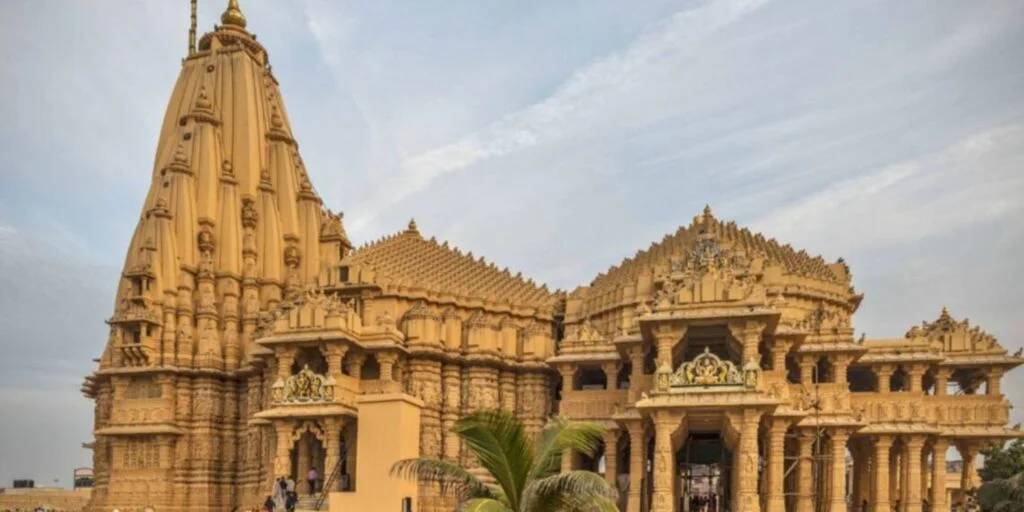
Gujarat and the Heritage of Somnath Temple
Once Somnath Temple Gujarat has become a heritage-led development attention centre. The area has been transformed into infrastructure development, digital interpretation centres and enhanced pilgrim facilities.
Government statistics indicate that religious tourism has emerged as one of the major economic sources in Gujarat and it provides jobs and also helps in preserving cultural sites.
The communities around Somnath have been helped in the following ways:
- Tourism-linked livelihoods
- Conservation of the traditional crafts.
- Better infrastructure in the society.
- Optimized cultural sensitivity.
This shows that the management of heritage in a responsible way can be used to spur inclusive development.
Real world View: The Generation Relationship of a Devotee
Somnath is not an ancient historical icon and this is why it is considered a living tradition by many families.
Consider the case of a rural family in Rajasthan which has been going to Somnath every generation over decades. The belief in visiting the first Jyotalinga was strong even at the time when travelling was arduous.
This is a very important message that can be conveyed by such stories: Somnath survived not thanks to kings alone but also thanks to common devotees who never wanted to forget it.
The Greater Cultural Identity of Somnath and India
The cultural identity of India is not in the continuity of monuments but in the belief continuum. Somnath is not out of this order.
Indian heritage sites have stratified histories, and these include the ruins of Nalanda or the ghats of Kashi. The story of Somnath is one of the most dramatic ones as it is a mixture of:
- Sacred geography
- Historical conflict
- Reconstruction
- National symbolism
These layers are united in a single national dialogue through Somnath Swabhiman Parv 2026.

Somnath swabhiman parv 2026 Education value
Another crucial consequence of the Parv is that it has a potential of enhancing education. It does not provide a random arrangement of historical narratives, but a systematic chance to educate:
- Contextual history
- Cultural resilience
- Civilisational continuity
Academic institutions are now talking about the Indian heritage in a multidisciplinary manner, involving history, archaeology, philosophy, and public policy.
What Somnath Can Teach India Today
Somnath provides some lessons to the people in India as it delves into the 21st century:
- Confidence about culture should be based on knowledge, rather than anger.
- Preservation and improvement may go hand in hand.
- Identity should not be constrained by history.
- When followed inclusively, faith can be a unifying factor.
Somnath Swabhiman Parv 2026 does not promote response.
Practical Implications to Citizens, Students, and Professionals
For students:
- Research Indian history outside of textbooks.
- Visit the heritage by conducting research and field trips.
- Don’t interpret surroundings using one-on-one incidents.
For professionals:
- It is a chance to study heritage management and tourism.
- Promote sustainable cultural programs.
- Make skills available in documentation and preservation.
For citizens:
- The responsible visit of heritage sites.
- Promote intelligent discourses about history.
- Conserve local culture associated with national culture.
More Read

Somnath Living Memory of India
Somnath Swabhiman Parv 2026 is not the process of going back to pain but a realisation of endurance. The Somnath Temple remains an active reminder of the civilisational spirit of India, which was destroyed by people, but rebuilt by reconstruction.
When global countries are reevaluating identity, the tale of Somnath in India provides an excellent message:
Civilisations do not survive without history, but rather they understand their past and re-create themselves accordingly.
With the Indian Somnath Temple 1000 years event, the festival is a mass gesture that faith, culture, and identity, especially when founded on a strong hand, can endure over millennia.