The Middle East has long been one of the most volatile and strategically significant regions of the world. In recent years the conflict between Israel and Hamas has drawn global attention, not only for its humanitarian consequences but also for its implications for regional and global diplomacy. The ceasefire that has been negotiated between the two parties marks a crucial turning point. For India, a country with deepening ties in the region and a rapidly evolving foreign policy, this development opens new diplomatic opportunities and challenges.
1. What is the Ceasefire? A Snapshot
The ceasefire between Israel and Hamas represents a multi-phase agreement aimed at halting hostilities, facilitating release of hostages and prisoners, and enabling humanitarian aid and reconstruction in the Gaza region. The key elements are:
-
A cessation of military operations and attacks, at least for an initial period.
-
Hostage and prisoner swaps—Israeli hostages held by Hamas, and Palestinian prisoners held by Israel.
-
Movement of humanitarian aid and return of displaced persons.
-
Longer term, the agreement envisions a process for reconstruction of Gaza, re-entry of civilian life and eventually a governance arrangement.
-
While the phases are defined, many of the details remain fluid—how Israel withdraws forces, how governance will evolve in Gaza, and how enforcement and monitoring will be handled.
This ceasefire is more than a temporary pause in fighting—it carries the potential to reshape regional dynamics and create diplomatic openings.
2. Immediate Implications of the Ceasefire
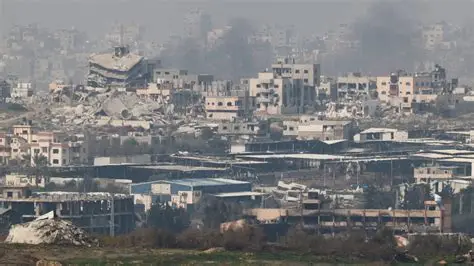

a) Humanitarian Relief & Stability
One of the most visible effects is that the cessation of open hostilities allows humanitarian agencies greater access, civilian casualties may reduce, and some semblance of stability may return to Gaza. For millions of civilians this is vital.
b) Regional Power Rebalancing
The ceasefire influences the larger Middle East architecture. With Israel reducing operations and Hamas negotiating, regional actors such as Egypt, Qatar and Gulf states along with major powers like the United States and European players are deeply engaged. The conflict’s spill-over into Lebanon, Yemen, and the Red Sea corridor means that every shift matters.
c) Diplomacy Gains Momentum
A ceasefire creates diplomatic space. Past years of conflict left little room for negotiation; now, with fighting paused, more states and international organisations may step in to shape the post-conflict order. This includes reconstruction, border management, and governance frameworks.
d) Fragility and Uncertainty
However, the ceasefire remains fragile. Without clear frameworks for security, governance and political settlement, there is a real risk of relapse into violence. The absence of a durable peace plan or fully defined oversight mechanism undercuts its long-term reliability.
3. India’s Position and Diplomatic Interests
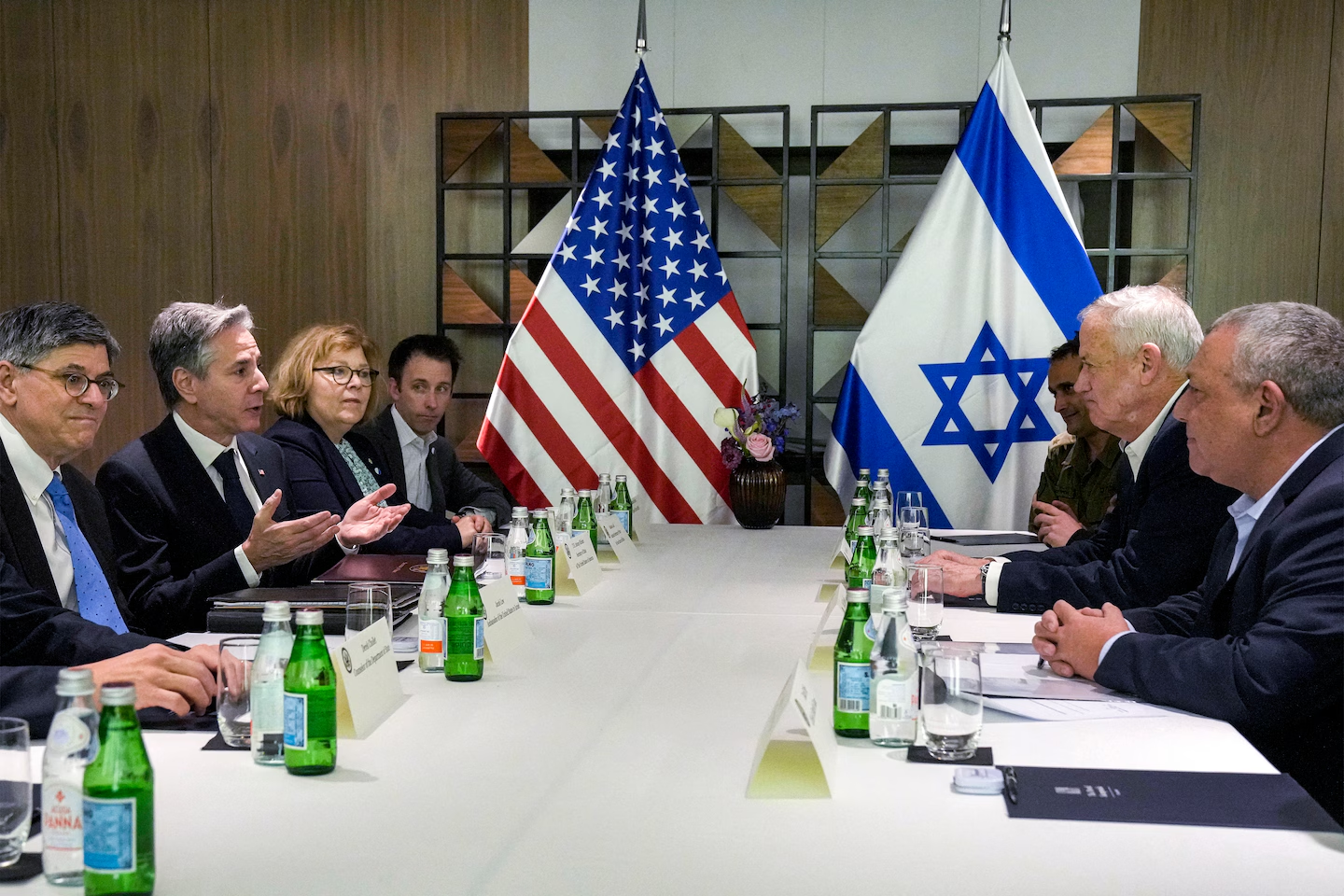

a) Historical Context
India has had a complex relationship in the Israel-Palestine arena. Traditionally, India strongly supported the Palestinian cause, being one of the first non-Arab states to recognise a Palestinian entity. Over time, India’s relationship with Israel deepened—for strategic, defence and technology partnerships—while still maintaining a pro-Palestinian diplomatic stance.
b) Recent Developments
In recent years, India has adopted what is often called a de-hyphenated policy in this region—namely maintaining strong bilateral ties with Israel while simultaneously supporting Palestinian statehood and rights. The Ministry of External Affairs has reiterated India’s support for a negotiated two-state solution, the release of hostages, sustained humanitarian assistance and immediate ceasefires.
c) Why India Cares
India’s interest in the region is multifaceted:

-
India has a large diaspora in the Middle East; regional stability directly affects their welfare and India’s ability to protect its nationals.
-
Energy security, trade and investment flows through the broader West Asia region are critical to India’s economy.
-
India seeks to project its role as a global responsible power; engaging constructively in major conflict zones enhances its diplomatic credentials.
-
India wants to maintain its strategic autonomy—balancing ties with Israel, Gulf countries, Iran and the larger Muslim world.
d) India’s Statement on Ceasefire
In official responses, India welcomed the ceasefire deal, called for immediate humanitarian relief, the release of hostages, and emphasised its support for dialogue and diplomacy.
4. What Does the Ceasefire Mean for India’s Diplomatic Role?
a) Opportunity for Mediatory and Facilitative Role
With violence paused, India has an opportunity to enhance its role as a facilitator in regional diplomacy. By leveraging its diplomatic ties with both Israel and Arab/Muslim nations, India can offer mediation support, humanitarian logistics, or reconstruction assistance. India signalling neutrality, while actively engaged, increases its credibility among a wide spectrum of regional actors.
b) Soft Power and Humanitarian Leadership
India’s participation in humanitarian relief and reconstruction (for example via UN or bilateral channels) can strengthen its image globally. By providing aid to Gaza or facilitating Arab-India cooperation, India can demonstrate moral leadership and strengthen its global brand.
c) Strategic Diplomacy: The Two-State Solution
India’s consistent endorsement of a two-state solution aligns with the ceasefire’s eventual aims. India can use the ceasefire window to push for institutionalisation of peace—supporting talks on governance frameworks for Gaza and Palestinian statehood, and working with multilateral partners.
d) Balancing Complex Diplomatic Relationships
India’s diplomatic balancing act will become more active: maintaining deepening ties with Israel, expanding cooperation in defence, technology and intelligence; while also preserving its historic links with the Palestinian cause and Arab states. The ceasefire shifts the region’s equation and India must navigate carefully.
e) Economic and Strategic Partnerships
As the region stabilises post-ceasefire, India may expand trade, investment and energy partnerships across the Middle East, leveraging its enhanced diplomatic profile. The opening of Gaza for reconstruction, renewed Gulf investment flows, and Israel’s regional partnerships provide avenues for India to strengthen its economic diplomacy.
f) Protecting Indian Nationals and Interests
A stabilised region reduces risks to Indian diaspora and supply chains. The ceasefire may facilitate safe transit routes, improved regional cooperation on maritime security and energy flows—all beneficial to India’s interest.
5. Challenges and Strategic Choices for India
i) Implementation Uncertainties
India must recognise that ceasefires are fragile. The absence of a detailed agreement on long-term governance and security means renewed tensions may return. India’s diplomatic efforts must therefore include preparedness for backlash, ensuring Indian interests are protected even if the ceasefire falters.
ii) Perception Risks
India’s enhanced relationship with Israel has raised questions about its commitment to Palestinian rights among some Arab and Muslim countries. India must work to offset any negative perceptions by actively engaging with Palestinian leadership, supporting humanitarian assistance, and emphasising its balanced approach.
iii) Facilitator Role vs. Stakeholder Role
India needs to decide how active it wants to be: as a mediator/facilitator of peace, or as a stakeholder with direct strategic interests. Both roles carry costs and benefits. If India takes a bigger peacemaking role, it may face push-back from regional powers or need to invest substantial diplomatic capital.
iv) Domestic and Global Image
India’s foreign policy in this context intersects with its domestic politics and global image. A constructive role will enhance India’s aspirations as a “Global South” leader. Missteps—perceived bias or failure to deliver—could undermine its credibility.
v) Economic Engagement vs. Ethical Diplomacy
Engaging economically in the post-ceasefire environment (reconstruction of Gaza, Israel-Palestine trade flows) must be balanced with humanitarian and ethical diplomacy. India must align its economic interests with its stated diplomatic principles to avoid charges of opportunism.
6. What India Could Do: A Roadmap

Step 1: Humanitarian Assistance
-
Scale up relief efforts into Gaza and Palestinian territories—medical supplies, reconstruction aid, food relief.
-
Use India’s logistical capabilities and diaspora networks to increase relief speed and visibility.
Step 2: Diplomacy and Dialogue
-
Initiate or support regional forums on Gaza reconstruction with Israel, Palestine, Egypt, Qatar and other Gulf states.
-
Push for Indian involvement in observer or technical roles in governance and security mechanisms of the post-ceasefire phase.
Step 3: Economic Engagement
-
Explore early reconstruction contracts for Indian firms in Gaza (in infrastructure, renewable energy).
-
Deepen India-Israel and India-Gulf economic cooperation, leveraging the ceasefire as the foundation for broader stability and investment.
Step 4: Balanced Messaging
-
Reaffirm India’s support for Palestinian statehood and rights, while also highlighting India’s strategic partnership with Israel.
-
Use India’s “de-hyphenation” policy as diplomatic language: India treats Israel-Palestine issues autonomously, not as binary.
Step 5: Strategic Leveraging
-
Use the regional shift to enhance India’s role in West Asia. A more stable Middle East means better energy security, maritime security, and diaspora welfare for India.
-
Position India as a contributor to regional stability, not just a consumer of stability.
More Read

7. Looking Ahead: What Success Looks Like
If India plays its role well, the ceasefire could usher in:
-
A more secure Gulf-Israel-Palestine corridor with India as an engaged partner.
-
Indian companies participating in Gaza reconstruction, generating jobs and economic return.
-
Enhanced India diplomatic leadership in global forums, especially among the Global South, Non-Aligned Movement and United Nations.
-
Reduced risk and stronger protection for Indian nationals and investments in the region.
-
A clearer path toward a two-state solution in which India is a meaningful contributor, enhancing its strategic credibility.
However, if the ceasefire fails or stalls, India must be ready to pivot—to support humanitarian relief, lobby for renewed negotiations and protect its nationals and interests. The same diplomatic role can serve as a hedge.