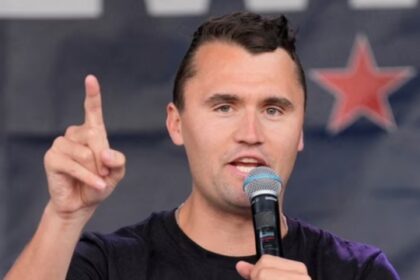
In a political landscape where personal presence often conveys power, Prashant Kishor has made a striking decision: he will not contest in the upcoming Bihar elections. The announcement has set off ripples among political analysts, party leaders, journalists, and voters. Known primarily as a poll strategist and political consultant, not a conventional electoral politician, PK’s decision raises several questions: Why step back now? What does this mean for his own aspirations? Which actors stand to gain? And how will this affect the electoral dynamics in Bihar?
In this article, we will explore:
-
Who is Prashant Kishor, and how he has shaped Indian politics
-
What led to this decision
-
Political context in Bihar
-
Implications and reactions
-
Strategic possibilities ahead
-
Risks and challenges
-
What this means for the future of “political strategists” in Indian elections
Who Is Prashant Kishor? A Brief Profile
To understand the significance of this decision, a quick background:
-
Prashant Kishor (PK) is a renowned political strategist, campaign manager, and public policy consultant. He first came to national prominence for orchestrating the Modi campaign in 2014 (though his later relationship with the BJP soured).
-
Over subsequent years, PK has advised or worked with several parties: Janata Dal (United), Congress, Telangana’s K. Chandrashekar Rao, West Bengal TMC, etc.
-
In recent times, PK has also attempted to position himself as a political actor, forming his own platforms (e.g. “Jan Suraaj”), giving policy inputs, contesting in public debates, but not always entering electoral contest himself.
-
His public persona is that of a strategist who intervenes behind the scenes, sometimes visibly, but generally outside the formal contest arena.
Hence, when PK states that he will not contest elections, it is entirely consistent with some of his prior posture — though the timing and context make it politically significant.

Political Context in Bihar

To appreciate the weight of PK’s announcement, consider the political climate in Bihar:
-
Bihar is a politically high-stakes state in India, with complex caste equations, coalition dynamics, and strong regional identity.
-
Over recent elections, the competition has seen alliances between RJD, Congress, Left parties on one side, and BJP, JD(U), allied partners on the other.
-
Leadership figures like Nitish Kumar, Tejashwi Yadav, Chirag Paswan, Misa Bharti, Sushil Modi, and leaders of regional parties dominate.
-
There is space, though, for new entrants, policy-driven platforms, and strategic campaign interventions — which is where PK has been active behind the scenes.
If PK had contested, it could upset existing calculations — for alliances, candidate selection, vote shares, and influence. Thus, his decision not to contest has direct consequences for both parties and alliance dynamics.
What Prompted PK’s Decision?
At its core, PK’s non-participation decision likely stems from a mix of strategic, personal, and political factors. Some plausible motivations and signals:
1. He wants to retain neutrality
By not contesting, PK can maintain his role as a strategist or advisor — seen as above immediate electoral stakes. That preserves his ability to negotiate with multiple sides, avoid being boxed into ideological alignments, or alienating certain factions.

2. He may foresee electoral headwinds
If internal calculations, surveys, or intelligence indicate that contesting directly would risk losing or being marginalized, PK may prefer to steer clear. A visible electoral loss could dent his brand as a strategist.
3. Focus on long-term positioning
PK might aim for a broader national role, or technology/policy intervention platforms, rather than starting as a grassroots politician from Bihar. Contesting could lock him into state-level battles and distract from national ambitions.
4. Reputational risk & personal constraints
Campaigning demands time, travel, ground organization, and electoral fights. Maybe PK assessed that his strengths lie in planning, not direct canvassing. Also, contesting might force him into local controversies or alliances he’d rather avoid.

5. Pressure or negotiation play
Sometimes such announcements are part of negotiating leverage — by stating he will not contest, PK might push parties to “invite” him to control campaign or candidate selection. It could be a pressure tactic.
6. Electoral arithmetic & alliance constraints
His entry could disturb existing alliance seat-sharing formulas, upset coalitions, or lead to friction with powerful local leaders. To avoid that, he might prefer to stay out of the contest zone.
In sum, this appears to be a deliberate strategic choice, not mere hesitation or retreat.
Immediate Reactions & Benchmarks
PK’s announcement has prompted a spectrum of responses from politicians, analysts, media, and public opinion.
Political Reactions
-
Ruling parties and their strategists may see this as reducing the unpredictability factor. Without PK directly in the race, their campaign strategies face fewer surprises.
-
Opposition parties or alliance partners might feel relieved from potential internal contest or power shift. Some may even seek to bring PK into advisory roles.
-
Skeptics argue that PK’s non-contest is just a temporary posture; he might still influence candidature, messaging, or campaign direction.
-
Grassroots leaders or aspirants may feel emboldened — with space opening up for local faces rather than a “big name” entering directly.
Analytical Perspectives
-
Some analysts believe PK’s move signals his belief that influence is more powerful than formal power. He may aim to control narrative, messaging, and alliances without subjecting himself to electoral volatility.
-
Others caution that staying off the ballot may limit his credibility among some sections who believe leaders must “face elections.”
-
Political watchers also note that this decision avoids creating new political rivals or angry breakaway factions.
Public & Media
-
Media coverage is intense: many headlines speculate “why PK stepped back,” “what is his next move,” “which party gets his support.”
-
Some commentators view it as a mature decision — avoiding making electoral entry prematurely. Others are skeptical — suggesting PK may be hedging bets.
Implications for Bihar Elections

1. Candidate Allocation and Alliances
-
PK’s absence from the candidate list means that existing party leaders will likely not have to yield ground to a “PK candidate.” This reduces friction in seat-sharing deals.
-
Alliances may pivot to co-opt PK as an adviser, campaign manager, or “face behind the scenes” rather than direct contestant.
-
Parties might compete more openly in seats where PK might have contested, giving greater leverage to local leaders.
2. Messaging & Narrative Control
-
PK’s strength lies in campaign messaging, branding, narrative setting, voter segmentation. Although he won’t contest, he can still shape the tone of propaganda, manifestos, communication strategies, and media interactions.
-
His presence (or absence) in campaign collateral can become a narrative in itself — parties might project themselves as working with PK, or opposing “outsider influence,” etc.
3. Electoral Threats & Disturbance Mitigated
-
Some feared that PK’s direct contest could fracture votes in key constituencies. With him sitting out, that threat is reduced.
-
The attention on PK’s decision may distract from candidate-level issues in some areas, shifting discourse to the strategist’s role.
4. The “Kingmaker” Role More Visible
-
PK may play the role of kingmaker — advising one or more parties, crafting strategies, selecting candidates, and managing alliances — without being a candidate himself.
-
His non-contest potentially enhances his bargaining power: parties may compete to secure his support, granting him strategic control or policy input.
5. Space for New Faces
-
With a marquee name abstaining, local aspirants gain more opportunity to stake claim to candidacies. This could refresh internal party politics or open up paths for new leaders.
-
However, parties may still attempt to borrow legitimacy by associating with PK (e.g. “endorsed by Prashant Kishor”).
Strategic Moves PK May Pursue
Given he isn’t contesting, PK’s influence and actions may unfold in several ways. Some plausible strategic directions:
A. Serving as Chief Strategist / Campaign Director
This aligns with his core strength — he may formally partner with a party or alliance as the architect of the election strategy, branding, messaging, micro-targeting, ground operations, media campaign, etc.
B. Controlling Narrative & Media Campaigns
Even without being a candidate, PK might drive media narratives: what issues dominate, which debates take center stage, which themes the campaign emphasizes — e.g. development, governance, youth, corruption.
C. Candidate Selection & Seat Allocation
He may influence which candidates parties field in which seats, ensuring balance across communities, castes, regions, electoral arithmetic, and ensuring brand coherence.
D. Policy / Vision Platform
PK might front a “vision document” or manifesto-level inputs. He may try to be perceived as the intellectual voice, shaping party platforms without being tethered to electoral duties.
E. Post-Election Role
If a party wins, PK could be poised for roles such as policy advisor, chief strategist for future elections (state or national), or institutional architect of governance reforms.
F. National Expansion
Using Bihar as a launchpad, PK might take on advisory roles in multiple states, or build a national-level think tank / political movement without contesting directly.
Risks and Pitfalls Ahead

PK’s non-contest decision is not without risk. Some strategic hazards he must navigate:
-
Perceived lack of credibility
Critics may say: “If he won’t contest, does he believe in his own message? Will people trust someone who won’t subject themselves to the electorate?” -
Overexposure without accountability
As a visible strategist, PK may draw both praise and blame. If the campaign fails, he may face public backlash despite not contesting. -
Partisan backlash
Opponents might label him as meddling from behind the scenes, criticizing his neutrality or accusing him of influencing outcomes without mandate. -
Loss of street-level legitimacy
Without ground-level political work like constituency visits, public campaigning, local connect, PK might lack the direct touch that voters and grassroots cadres value. -
Dependency on winning parties
His influence may depend heavily on whether the party he advises wins. If the party loses, his leverage might diminish or he might be blamed for miscalculations. -
Conflict with regional or caste politics
Bihar’s politics is heavily caste and identity-driven. Even as a strategist, PK must navigate local sensibilities. If perceived as outsider or misaligned on local dynamics, his strategies may misfire.
Why This Move Resonates Beyond Bihar
This decision holds significance beyond the state:
-
It reflects a changing role of political strategists in Indian politics — not just backstage, but power brokers who may or may not take formal political office.
-
It raises questions about the future of technocratic politics — can policy-driven or branding-driven figures gain legitimacy without electoral mandates?
-
It may inspire or deter others — some might choose to step back from contesting and become strategists; others might see contesting as essential to convert influence to formal power.
-
The balance between influencing politics from outside vs participating from inside elected office is a core tension in modern democracies. PK’s decision crystallizes that tension.
What to Watch Next
To understand the real impact, we should keep an eye on:
-
Which parties or alliances PK associates with
If he partners formally with a coalition, that signals his support base and influence center. -
Campaign role and visibility
Will PK be publicly visible (town halls, rallies, TV debates) or stay in background? Which seats or regions he sketches blueprint for. -
Messaging themes
The narrative he injects — whether development, governance, caste justice, youth, jobs — will influence how the campaign is measured. -
Post-election alignment or role
If an allied party wins, what position or influence PK acquires — policymaker, advisor, party office-bearer, or something else. -
Adaptation and feedback
How he responds to missteps, electoral results, critics and whether he adjusts strategy for future contests or states.