As India commemorates the 150th birth anniversary of Sardar Vallabhbhai Patel, popularly known as the Iron Man of India, the nation pauses to reflect on the legacy of a leader whose vision, determination, and leadership forged the very foundation of a united India. His contributions to national integration, administrative reforms, and people’s unity continue to guide the country even today, nearly seven decades after his passing.
The year 2025, marking Sardar Patel’s 150th birth anniversary, offers a timely moment to revisit his life and teachings—principles rooted in courage, discipline, and unyielding commitment to national unity.
1. The Early Life of a Visionary
Born on October 31, 1875, in Nadiad, Gujarat, Vallabhbhai Patel came from a humble farming family. His early years were marked by hard work, simplicity, and self-reliance—qualities that shaped his personality throughout his life. He completed his matriculation at a relatively late age but demonstrated exceptional determination and intellectual ability.
After practicing law in Godhra and Ahmedabad, Patel traveled to England to study at the Middle Temple Inn in London, where he completed a three-year course in just two years—an early testament to his diligence and discipline.

2. The Rise of a Leader in the Freedom Struggle
Sardar Patel’s transformation from a successful barrister to a freedom fighter began under the influence of Mahatma Gandhi during India’s non-cooperation movement. Deeply moved by Gandhi’s ideals of truth and non-violence, Patel dedicated himself to the national cause.
His leadership in the Kheda Satyagraha (1918), Borsad Satyagraha (1923), and Bardoli Satyagraha (1928) brought him national prominence. The victory in Bardoli earned him the title of “Sardar”, meaning leader or chief, bestowed upon him by the grateful farmers he represented. These movements reflected his strategic thinking, organizational skill, and unshakeable faith in justice.
3. Architect of India’s Unity
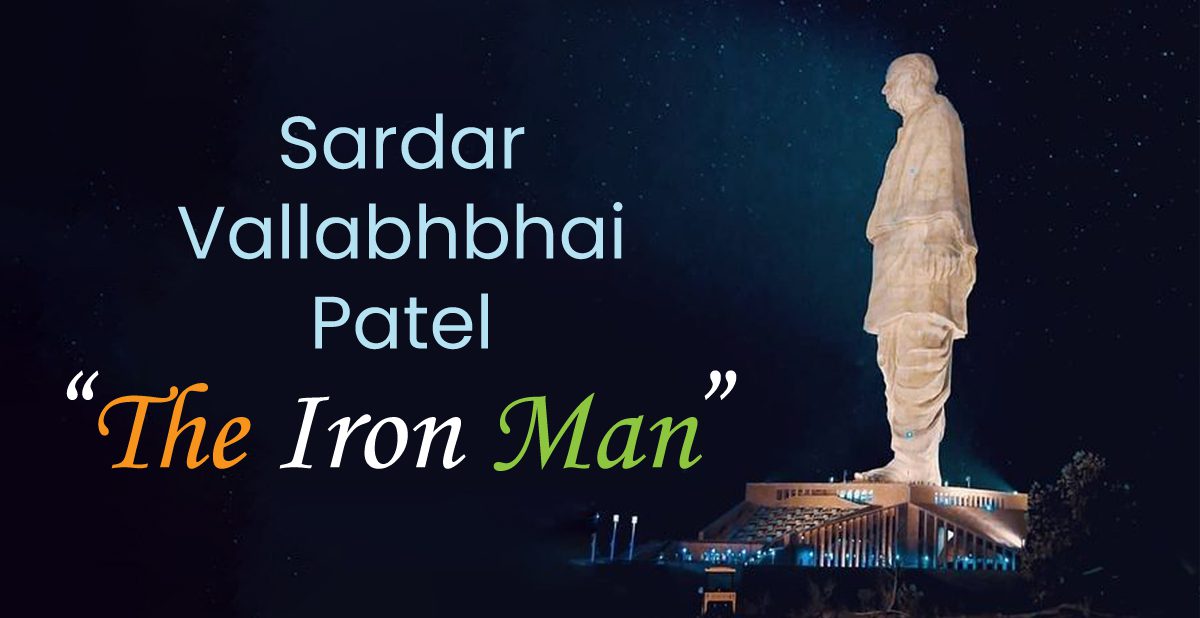
Following India’s independence in 1947, Patel took on the monumental challenge of unifying over 560 princely states into a single nation. At a time when the country was facing division, communal tension, and administrative chaos, his leadership stood as the pillar of strength and stability.
Through a mix of diplomacy, firmness, and foresight, Sardar Patel and his secretary, V. P. Menon, managed to integrate almost all princely states into the Indian Union. His efforts in Hyderabad, Junagadh, and Kashmir were particularly noteworthy, preventing potential fragmentation of the nation.

Without his decisive leadership, the political map of India might have looked very different today. This extraordinary achievement earned him the title of “Iron Man of India.”
4. Administrative Reformer and Nation Builder
As India’s first Deputy Prime Minister and Home Minister, Sardar Patel laid the foundations of a strong administrative framework. He reorganized the civil services and established the All India Services (IAS and IPS), calling them the “steel frame of India.”
His vision for a unified, disciplined, and efficient bureaucracy continues to define India’s administrative structure. Patel believed that governance must be rooted in integrity, impartiality, and national service—values that remain relevant in today’s bureaucratic system.

5. A Pragmatic Visionary
Sardar Patel’s leadership was guided not by ideology but by pragmatism. He believed in practical solutions rather than idealistic dreams. Whether it was resolving princely integration or managing post-Partition rehabilitation, Patel prioritized action over rhetoric.
His letters to bureaucrats and state leaders reveal his foresight on issues like national security, unity, and border management—many of which are still applicable in the 21st century. Patel’s pragmatic nationalism continues to inspire India’s policy and governance strategies.
6. Patel and Gandhi: A Partnership of Purpose
Sardar Patel and Mahatma Gandhi shared a deep bond of respect, even when they differed in opinion. Gandhi admired Patel’s organizational discipline, while Patel valued Gandhi’s moral leadership. Together, they represented two essential aspects of India’s freedom struggle: the spiritual force and the administrative strength.
It is said that Gandhi once described Patel as the “Bismarck of India,” recognizing his crucial role in nation-building. Their partnership symbolizes how moral idealism and practical governance can coexist in harmony for the greater good.
7. Leadership Lessons from Sardar Patel
Sardar Patel’s life offers timeless lessons for leaders, policymakers, and citizens alike. His principles resonate across generations:
-
Unity Above All: For Patel, national interest was supreme. He taught that regional, religious, or linguistic divisions must never overshadow the identity of India as one nation.
-
Discipline and Duty: He believed that every citizen has a moral duty toward nation-building.
-
Courage in Crisis: His firmness during political negotiations and national crises demonstrated that leadership requires both compassion and strength.
-
Practical Vision: Patel’s approach to problem-solving was grounded in realism and adaptability.
-
Integrity and Accountability: His personal honesty and dedication made him one of the most respected figures in Indian history.
8. The Statue of Unity: A Modern Tribute
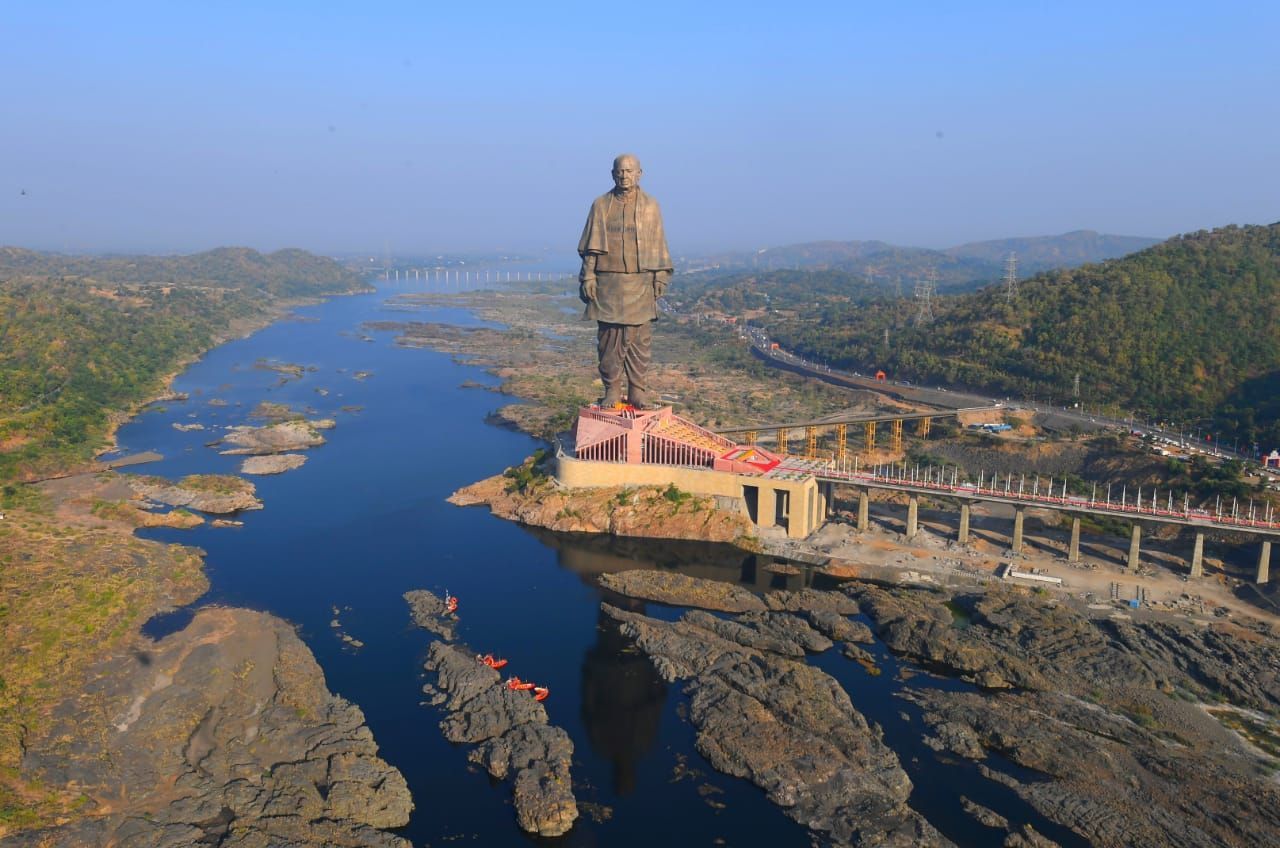
Unveiled on October 31, 2018, the Statue of Unity in Gujarat stands as a monumental tribute to Sardar Patel’s legacy. At 182 meters, it is the world’s tallest statue, symbolizing unity, strength, and national pride.
Situated near the Sardar Sarovar Dam on the Narmada River, it attracts millions of visitors each year and serves as a reminder of Patel’s contribution to India’s integrity. Beyond its architectural marvel, the statue represents India’s gratitude to a leader who gave the country its cohesive identity.
9. Patel’s Economic and Industrial Vision
While Patel is best remembered for political unity, he also had a vision for economic strength. He believed that a strong industrial base was essential for a stable democracy. He supported cooperative movements, local industries, and agricultural reforms to uplift rural India.
Patel also emphasized fiscal discipline and accountability in governance—principles that modern India continues to pursue in its development policies. His vision aligns with today’s call for Aatmanirbhar Bharat (self-reliant India), focusing on self-sufficiency, integrity, and collective growth.
10. The Relevance of Sardar Patel in Contemporary India
In today’s world, where regionalism, political divisions, and global uncertainties persist, Sardar Patel’s message of unity holds even greater significance. His life teaches that strength lies in togetherness, not fragmentation.
The challenges of modern India—social inequality, communal harmony, and economic disparities—can find guidance in Patel’s inclusive approach. His vision of India was one where every citizen, regardless of caste or creed, could participate in nation-building.
Patel once said, “My only desire is that India should be a good producer and no one should be hungry, shedding tears for food in the country.” His statement resonates today as India focuses on development that leaves no one behind.
11. Inspiring the Youth of India
For India’s youth, Sardar Patel’s life is a lesson in determination and discipline. From his humble beginnings to his leadership in shaping a united India, Patel demonstrated that true strength comes from perseverance, integrity, and service to the nation.
His story motivates young Indians to rise above personal ambition and work toward collective progress. The government’s programs like “Run for Unity” and educational initiatives around his birth anniversary aim to instill these values in the next generation.
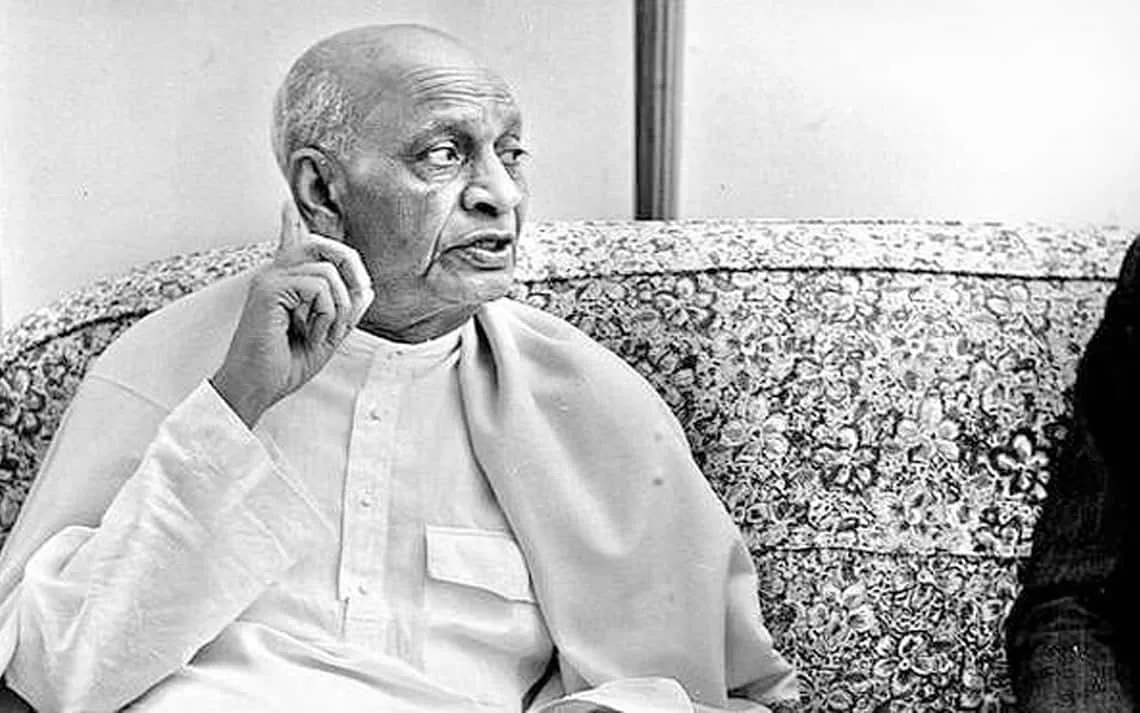
12. Patel’s Philosophy of National Integration
Sardar Patel envisioned an India that thrives on diversity but is united in purpose. He believed in respecting regional identities while nurturing a strong central framework—a delicate balance that remains crucial even today.
His idea of unity was not uniformity but harmony—a federation of hearts rather than just territories. This philosophy continues to guide India’s federal structure and cultural coexistence.
13. Sardar Patel’s Enduring Global Legacy
While Patel’s role is central to Indian history, his principles have global relevance. In an era of geopolitical conflicts and fragmentation, his vision of unity through dialogue and cooperation stands out as a timeless model for peace-building.
Global leaders have often admired Patel’s diplomatic acumen and nation-building strategy, comparing him with figures like Otto von Bismarck and Abraham Lincoln for their ability to unify divided lands through strength and wisdom.
14. The Iron Will Behind the Iron Man
Patel’s leadership style was marked by calm authority and unwavering resolve. He was known for his humility, yet his words carried weight that could resolve conflicts and inspire action. His firmness during negotiations with princely states and his compassionate handling of Partition refugees reveal a rare combination of strength and empathy.
It was his moral authority and administrative brilliance that made him the anchor of post-independence India.
15. Remembering the Sardar: India’s Pillar of Unity
As India celebrates Sardar@150, it’s not just a commemoration of the past—it’s a call to embody the values that built the nation. Patel’s dream was of an India united in spirit, disciplined in action, and fearless in facing challenges.
Every citizen who believes in unity, equality, and service is living the legacy of Sardar Vallabhbhai Patel. His life continues to be a beacon of leadership for a new India striving for balance between tradition and modernity, independence and globalization.