

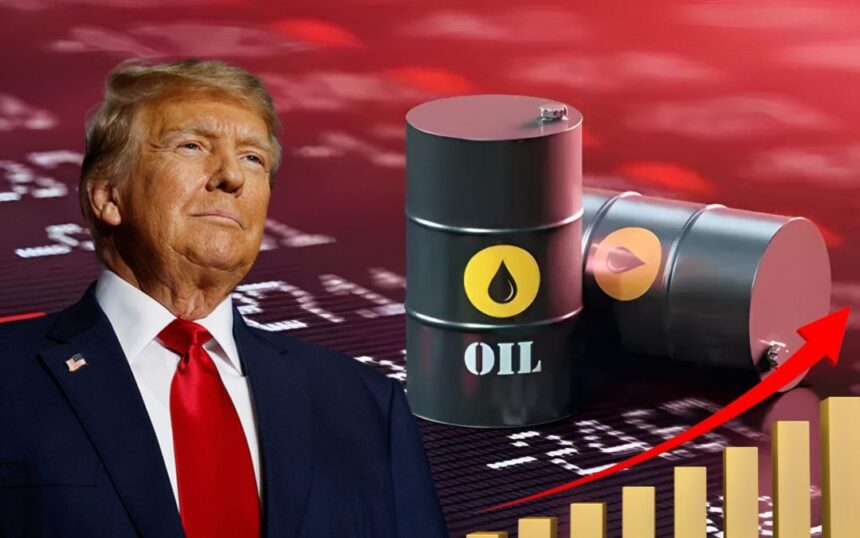
On October 16, 2025, oil prices jumped by about 1% in early trading after former U.S. President Donald Trump claimed that Indian Prime Minister Narendra Modi had personally assured him that India would cease buying crude oil from Russia.
This statement, if true or even partially acted on, could shift supply dynamics, impact geopolitics, and reshape energy ties. But markets are reacting cautiously. Below is a breakdown of how this event could ripple across global trade, energy, diplomacy, and markets—along with the risks and uncertainties.
1. Context: India, Russian Oil & Global Energy
India’s Recent Oil Imports from Russia
-
Following Russia’s invasion of Ukraine and ensuing Western sanctions, Russia began offering discounted crude to buyers willing to accept delivery and bypass sanctions. India became a major beneficiary of these deals.
-
In 2024 and into 2025, India’s imports of Russian-origin crude accounted for a substantial share of its total oil imports—sometimes estimated between 30–40% of its crude basket.
-
For India, this arrangement offered a way to secure supply amid a global squeeze, ensuring domestic energy security while taking advantage of discounted pricing.
-
On the diplomatic front, Western nations, especially the U.S., have expressed displeasure over India continuing to import Russian oil despite sanctions. In mid-2025, the U.S. imposed steep reciprocal tariffs (25% initially, later rising to 50%) on Indian goods, citing India’s ongoing Russian oil purchases.
Global Oil Supply and Demand Pressures
-
The oil market has been delicately balanced. Oversupply fears linger, especially as OPEC+ nations, U.S. shale producers, and non-OPEC nations maintain or increase output.
-
On the demand side, slowing global growth, energy transitions, and seasonal factors (e.g. weakening demand in off-peak months) can dampen consumption.
-
Any sudden change in supply—especially from a big buyer like India—could act as a shock to the market, pushing prices up or down depending on direction.

2. Immediate Market Reaction
Price Movement
-
After Trump’s claim, Brent crude futures traded around $62.45 per barrel, and U.S. West Texas Intermediate (WTI) hovered near $58.84.
-
The ~1% rise reflects a cautious but noticeable reaction, suggesting that traders were at least momentarily influenced by the announcement.
Why the Rally Was Limited
-
Skepticism & Lack of Confirmation
Analysts and market watchers noted that there was no immediate confirmation from Indian officials, which makes the remark speculative rather than definitive. -
Muted Overall Sentiment
Some experts point out that the reaction in the oil market has been muted. The ~1% uptick is modest. Markets may be waiting for more clarity before re-pricing heavily. -
Offsetting Factors
Other dominant themes—slowing economic growth in large demand centers, increasing output from non-OPEC producers, inventory build expectations—dampen the impact of any one geopolitical surprise. -
“Noise vs Reality”
Some see Trump’s statement as political theater or strategic messaging rather than a guaranteed policy shift. Markets don’t always price in unverified statements.
3. Strategic & Geopolitical Implications
For India
-
Energy Security vs Geopolitical Pressure
India must balance securing lower-cost supply vs maintaining diplomatic flexibility. Russia has been a reliable partner, and abruptly cutting ties could risk supply disruption or higher costs. -
Diversification Forward
India has already been exploring increasing import from other sources (e.g. U.S., Middle East) to reduce overdependence. -
Domestic Cost & Consumer Impact
If India cuts Russian crude, it may have to pay higher costs elsewhere or absorb increased fuel costs, which can affect inflation, subsidies, and public sentiment.
For Russia
-
A significant drop in exports to India would deal a blow to Russia’s energy revenue, especially given sanctions from the West.
-
However, Russia is likely to resist pressure and maintain ties with reliable buyers like China, India, Turkey, etc.
For the U.S. & Western Powers
-
This is part of larger pressure campaigns on Russia: limiting its ability to trade oil is a geopolitical tool.
-
The U.S. might see benefit if India shifts purchases toward U.S. suppliers, strengthening its energy diplomacy.
-
But forcing too abrupt a change could backfire—if supply disruption spurs prices, it could hurt global economies (including Western ones).
For the Oil Market & Other Exporters
-
If India reduces Russian imports, demand may shift toward Middle Eastern, U.S., African, or Latin American producers, benefitting them.
-
That said, global supply is already tight in many quarters; any reallocation could push prices higher.
4. Analyst Opinions & Warnings
-
CLSA Warning: Some analysts, like from CLSA, have warned that if India stops importing from Russia altogether, crude oil prices could spike to $100 per barrel.
-
Market Caution: Vandana Hari (Vanda Insights) argued markets are treating Trump’s claim as “noise” for now.
-
Russia’s Response: Russian officials, including the Ambassador to India, have reaffirmed that energy cooperation is driven by economic logic and that Moscow does not interfere in India’s choices.
-
Indian Government Position: The Indian Ministry of External Affairs has emphasized that energy import decisions are based on national interest, cost, and stability, not external pressures.
Key Things to Watch
-
Official public statements from India’s Ministry of External Affairs, oil ministries, and petroleum importers
-
Real import data from Indian customs on Russian crude volumes
-
U.S. Treasury and trade negotiations between the U.S. and India
-
Inventory data in the U.S. (EIA / API), especially crude, gasoline, distillates
-
Output changes announced by OPEC / OPEC+ / major producers
-
Responses from Russia / energy trading partners
5. Broader Market & Economic Impacts
Currency & Rupee
-
The Indian rupee strengthened modestly (to ~₹87.70 per USD) following optimism from trade talks and expectations of easing tensions.
-
However, oil import costs, if rising globally, can reapply downward pressure on local currencies in net importers.
Inflation & Fuel Prices
-
India is already vulnerable to oil-linked price pressure. An increase in global crude rates could push up petrol, diesel, LPG, and related transport costs.
-
That in turn can have ripple effects—food prices, logistics, power generation, etc.
Stock Markets & Energy Shares
-
Oil & gas companies (refiners, upstream firms) could see gains.
-
Consumers / transport / autos may take a hit if fuel costs rise rapidly.
-
Importers / refining margins may be squeezed if crude costs jump.
Trade / Energy Diplomacy
-
India may pursue more deals with U.S., Middle East, or African oil exporters.
-
Broader shifts in alliances could emerge—energy deals often double as geopolitical signaling.
-