

Every year in Delhi and the National Capital Region (NCR), the Diwali season brings with it a spike in air pollution, often pushing the city into “hazardous” or “severe” air quality zones. Traditional firecrackers emit high levels of particulate matter (PM2.5, PM10), sulfur dioxide, nitrogen oxides, and heavy metal residues, contributing to health hazards, especially for children, the elderly, and those with respiratory issues.
Over the years, courts, environmental bodies, and government agencies have repeatedly intervened to regulate or ban crackers, especially around Diwali. In recent years, a blanket ban or strict restrictions on firecracker use have been imposed in Delhi-NCR, often citing the right to clean air under Article 21 of the Constitution and the region’s deteriorating air quality.
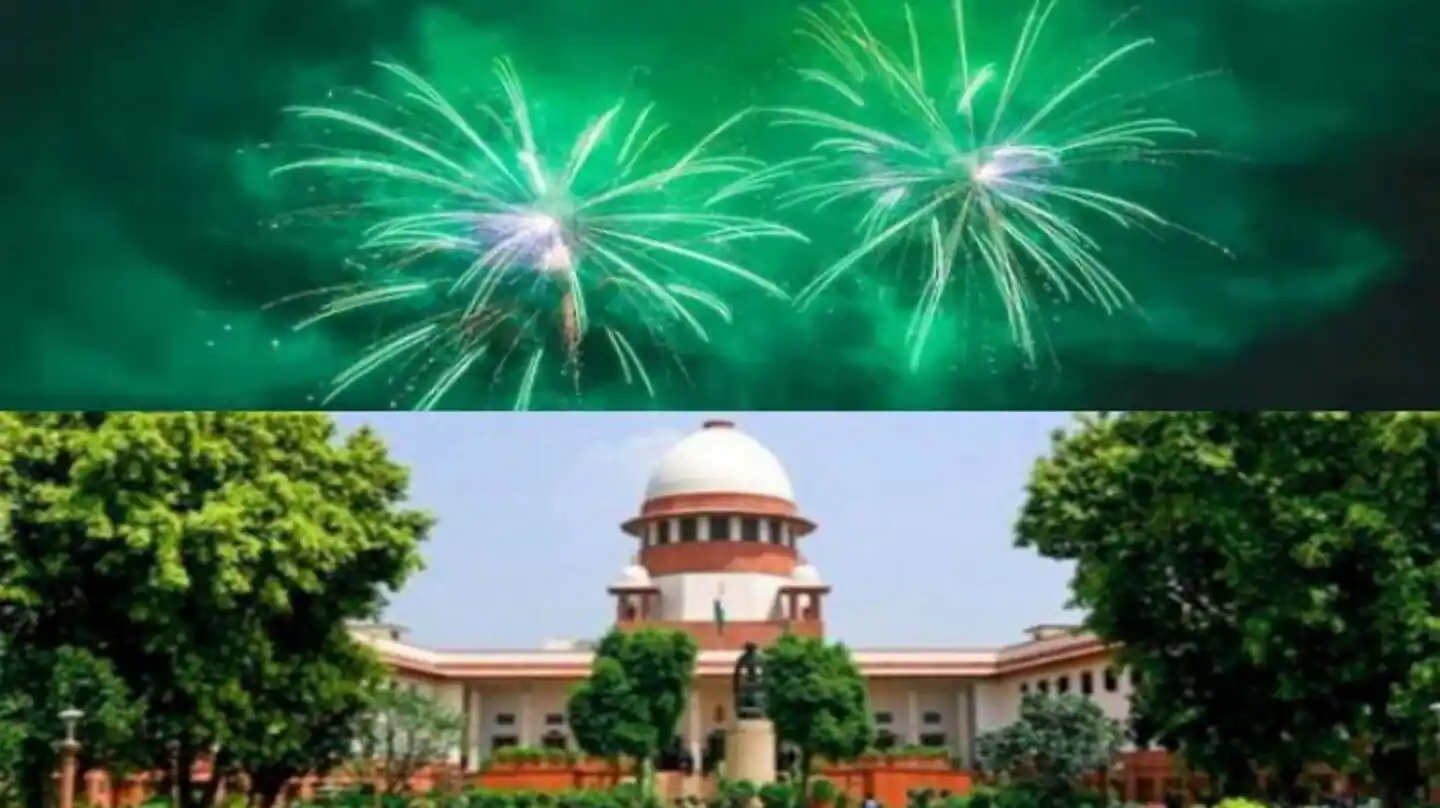
In 2025, the Supreme Court has decided to partially ease those restrictions for Diwali, but with significant caveats: only green firecrackers will be allowed, and only under well-defined conditions. Let’s dive into what exactly the court has permitted, why it has done so, and what the implications are.
What Did the Supreme Court Order?
According to reports, the Supreme Court on October 15, 2025, allowed the sale and use (i.e. bursting) of green crackers in Delhi-NCR during a limited window around Diwali. Some of the key features are:
Key Provisions in the Order
-
Time window for sale / bursting
-
The court allows the offline sale of green crackers in Delhi-NCR in a limited period: October 18 to October 21
-
Bursting (i.e. use) of green crackers is allowed only in prescribed time slots: 6 am to 7 am and 8 pm to 10 pm.
-
The court emphasized that the relaxation is temporary and on a trial basis.
-
-
Type of allowed crackers
-
Only green crackers certified by NEERI (National Environmental Engineering Research Institute) will be allowed.
-
These crackers will need to carry QR codes to ensure traceability and authenticity.
-
Crackers containing banned substances (e.g. barium) or those not approved by NEERI are prohibited.
-
-
Restrictions on sale / supply chain
-
Only offline sales (i.e. physical shops) are allowed; sale via e-commerce platforms is banned.
-
Only licensed traders registered with NEERI (or as per the regulatory scheme) can sell them.
-
Crackers from outside Delhi-NCR will not be allowed to enter or be sold.
-
Violation (selling non-compliant crackers) could lead to cancellation of license, confiscation of goods, and legal action.
-
-
Monitoring, compliance, and enforcement
-
Patrolling/monitoring teams are to be set up near sale points to verify QR codes and check compliance.
-
Random samples of crackers sold will be tested to ensure they meet emission norms.
-
The Central Pollution Control Board (CPCB) and State Pollution Control Boards will monitor air and water quality before, during, and after the permitted window.
-
The court asked for reports from October 14 to October 21 (or beyond) on how air quality is affected.
-
-
Balancing approach
The Court has stressed that this relaxation is not unlimited — the right to clean air and a healthy environment remains paramount (Article 21). The court said this must be a balanced approach, rather than unrestrained bursting of crackers.
Thus, the Supreme Court has chosen a kind of middle path: permitting controlled use of green firecrackers under strict checks, rather than maintaining a complete ban or allowing all crackers freely.
Why The Change — Rationale & Demands

Why did the court choose this path? The decision is influenced by several competing considerations:
1. Cultural and religious sentiment
-
Diwali is one of India’s most widely celebrated festivals, intimately tied to traditions of lights, fireworks, and joyous festivities. Many people feel that banning crackers entirely dampens the spirit of celebration. Some stakeholders (residents, traders) have petitioned for moderation, not prohibition.
-
States in the NCR had earlier appealed to the Supreme Court to allow green crackers for Diwali to preserve festivities while reducing pollution.
2. Livelihoods of traders and manufacturers
-
Strict bans hurt people in the firecracker industry: manufacturers, traders, supply chains. Many argue that a regulated allowance helps them survive while encouraging safer alternatives.
-
The court itself noted that excessive restrictions may inadvertently lead to illegal activities or black markets.
3. Scientific and technological developments
-
Over the past few years, “green crackers” have been developed and promoted by research institutions (CSIR, NEERI) to reduce emissions relative to conventional crackers. These use alternate chemical compositions, dust suppressants, and design tweaks.
-
The court has considered that if emissions can be reduced meaningfully under controlled conditions, some relaxation may be permissible without severely compromising air quality.
4. Need for a data-driven experiment
-
The court is not declaring a permanent change but allowing a trial — to see how the environment responds under regulated conditions. If adverse effects occur, tougher measures or re-banning may follow.
-
By directing air quality monitoring and sample testing, the court seeks empirical feedback.
5. Legal & constitutional balance
-
The right to breathe clean air is fundamental. But the court has to balance that with other freedoms (religion, cultural expression) and economic interest. A total ban may be viewed as disproportionate in some years when pollution levels are manageable or with the use of less-polluting alternatives.
-
The court’s phrasing of a “balanced approach” indicates its attempt to find a middle ground.
What the Order Means in Practice — Pros & Cons
Let’s look at how this decision plays out on the ground — what are the gains and risks.
Potential Benefits
-
Preserving Festival Spirit
People get to celebrate Diwali with some fireworks — though limited to green crackers — which many will see as a humane compromise rather than outright prohibition. -
Promoting Cleaner Alternatives
The order gives manufacturers an incentive to produce certified green crackers and encourages consumers to choose less-polluting options. Over time, this might shift markets. -
Curbing Black Market Crackers
With legal channels open under supervision, the demand for illicit, highly polluting crackers may reduce. Strict enforcement, QR codes, and penalties may dissuade vendors from selling noncompliant products. -
Empirical Data Generation
The trial will generate real data on the environmental impact of limited green cracker use in a heavily polluted zone like Delhi-NCR. That data can inform future policy (how many, when, what types). -
Safeguards Built In
By restricting times, locations, requiring licensing, banning online sales, and setting up monitoring, the order tries to minimize harm and misuse.
Risks, Challenges, and Criticisms
-
“Green” doesn’t mean zero pollution
Even green crackers emit fine particulate matter and trace chemicals, albeit less than conventional crackers in lab conditions. In Delhi’s already poor winter air, even small additional emissions can have disproportionate impact. Environmentalists have warned that any easing of restrictions may push the AQI to “severe.” -
Enforcement and leakage
Policing whether a cracker is truly green, whether QR codes are valid, whether banned crackers enter from outside, etc., is difficult. Smuggling and mislabeling are serious risks. In past years, illicit crackers have circulated despite bans. -
Timing and air dynamics
Pollution during winters tends to be trapped due to atmospheric inversion and low winds. Emissions from crackers, vehicular traffic, construction dust, biomass burning all combine. The incremental pollution from crackers may have outsized effects. -
Partial compliance or token gestures
Some vendors or users may not comply fully. Some may claim their cracker is “green” but use non-compliant ingredients; others might use crackers outside allowed time slots, leading to enforcement burdens. -
Public health impact
Vulnerable populations — children, asthmatics, the elderly — might still suffer from exacerbations due to even moderate additional pollution. The incremental harm, although smaller than with conventional crackers, is not zero. -
Ambiguities & legal challenges
There may be hybrid areas, jurisdictional overlaps, and conflicts between state orders, municipal rules, or further appeals. The temporary nature also introduces uncertainty for traders and users. -
Moral hazard / slippery slope
Critics might argue that allowing any crackers could set a precedent or open the door for broader relaxations in future, perhaps even diluting anti-pollution norms.
Key Points Users / Citizens Must Know
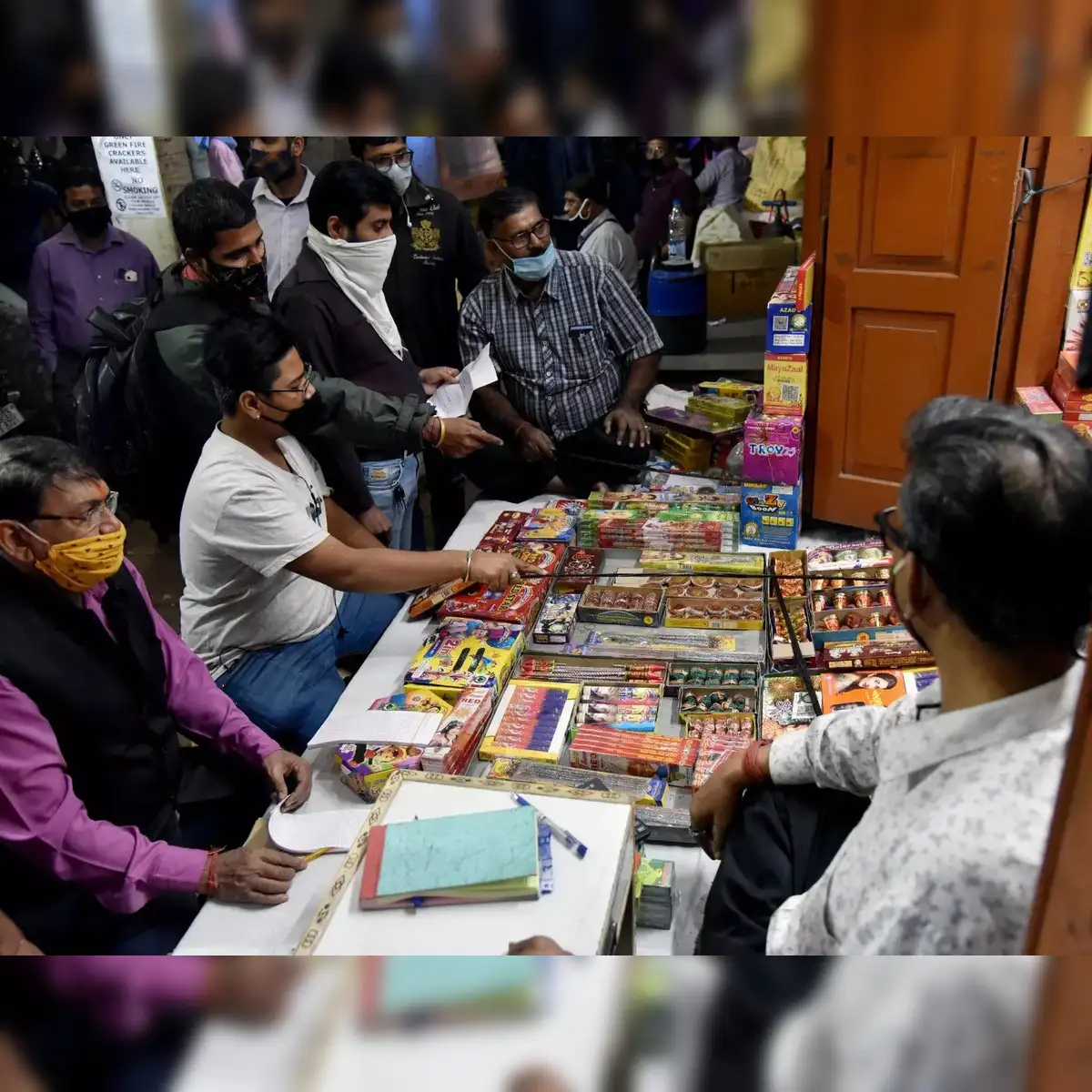
If you live in Delhi-NCR in 2025 and wish to use green firecrackers under this Supreme Court order, here’s what you must be careful about:
-
Buy only certified green crackers
Check for the NEERI logo and valid QR code on the packaging. Products without these should be avoided. -
Buy only from licensed, designated shops
Do not purchase crackers from unverified street vendors or online channels (e-commerce is banned per the order). -
Burst only within allowed time slots
6 am to 7 am, and 8 pm to 10 pm (as per the order). Doing so outside those hours may invite penalty. -
Do not bring in crackers from outside NCR
Only those manufactured and certified for Delhi-NCR are lawful. -
Authorities will monitor
Be ready for inspections. Noncompliant vendors may be penalized or have their licenses revoked. -
Support the spirit of moderation
Use small crackers, limit noise, avoid bursting near hospitals, sensitive zones, or during pollution alerts. -
Be mindful of air quality
Even within permitted window, check AQI forecasts. On days with poor air (e.g. high PM2.5), you may choose to abstain for health safety. -
Keep documentation / proof
If possible, retain purchase receipts, product details, and QR code info in case enforcement agencies request them.
Critical Perspectives & Reactions
The court’s decision has elicited mixed reactions:
-
Support from traders, industry: Many in the firecracker trade see this as a welcome relief from stringent restrictions. They hope for renewed business under legal conditions rather than underground trade.
-
Cautious optimism from environmentalists: Some see it as a pragmatic compromise, but stress that “green” must be meaningfully better, not just a cosmetic label.
-
Skeptics pointing to past experience: Some critics argue that past bans and relaxations have been ineffective in enforcement, and laxity may undo gains in air quality.
-
Public health advocates: Concern that even moderate emissions in a high baseline pollution environment can have outsized health costs, especially for vulnerable populations.
Looking Ahead: What Will Matter
While the Supreme Court’s decision is a significant shift, the real test will lie in execution and data. Some things to watch for:
-
Air quality trends
Does the AQI worsen noticeably during and after the allowed cracker period compared to baseline years? Analysis of PM2.5, PM10, NO₂, SO₂ and other pollutants will be crucial. -
Compliance & enforcement record
Reports of confiscated non-green crackers, license revocations, penalty actions, and crackdowns on noncompliant sale points matter. -
Market behavior
Will certified green crackers capture a meaningful share? Will unlicensed vendors adapt or be pushed out? How will pricing and availability evolve? -
Public sentiment
Whether people feel the relaxation was responsible, or whether demands for further loosenings arise. -
Future litigation or appeals
NGOs, environmental groups, or government bodies may challenge the order or seek revisions — especially if pollution worsens. -
Policy institutionalization
Will this become an annual conditional policy for Diwali? Or will stricter rules return? Will regional governments adopt similar norms?