
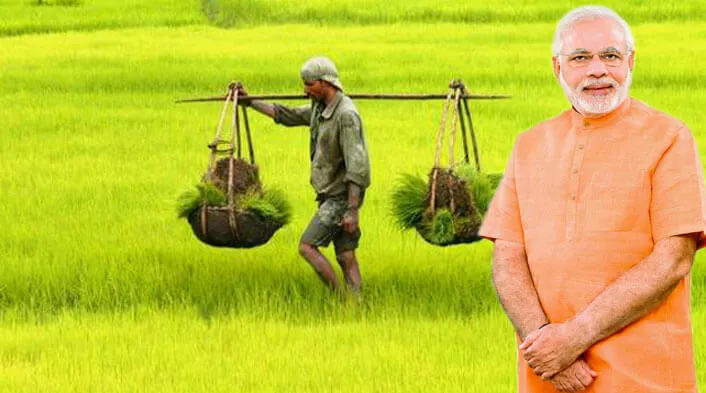
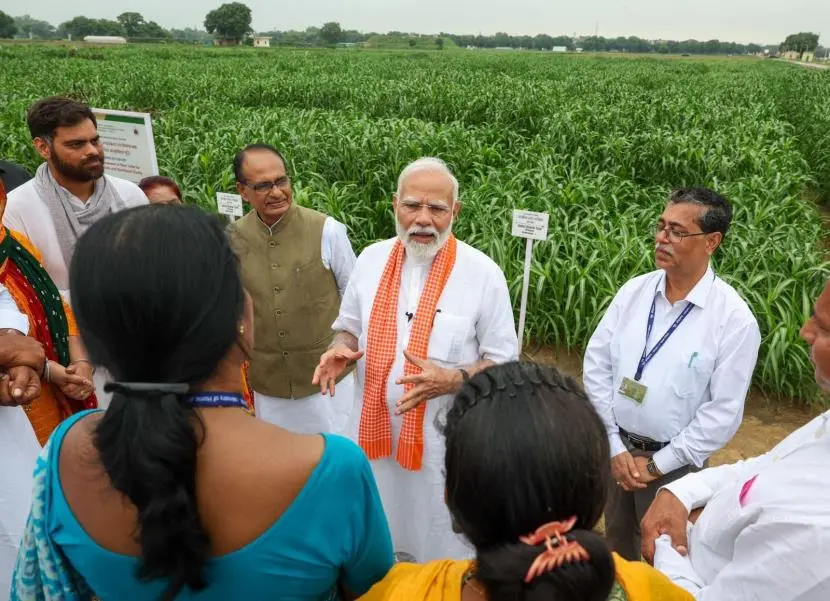
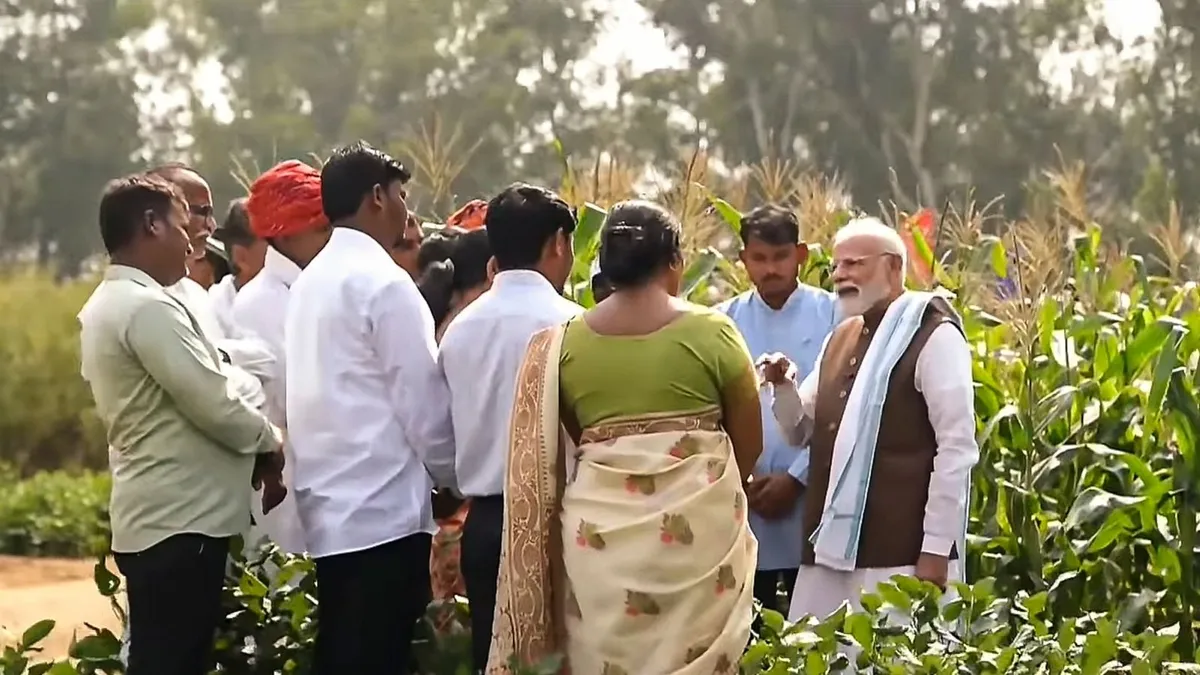
Prime Minister Narendra Modi has recently emphasised the importance of group farming, asking small and marginal farmers across India to pool their lands and resources, focus on high-value crops, and adopt collective styles of cultivation. The aim is to bolster incomes, reduce costs, improve market access, and strengthen rural prosperity. This message came in an interaction at the Indian Agricultural Research Institute (IARI), Delhi, coinciding with the launch of two major agricultural schemes with a massive combined outlay of about ₹35,440 crore.
Group farming, though not new, is being promoted as a way to help farmers overcome fragmentation of land, economies of scale, lack of bargaining power, and poor returns. Modi has also asked farmers to gradually move toward natural farming, millets, and pulses, and to experiment with farming innovations like aeroponics.
The Proposals: What Modi is Encouraging
From the reports, the key elements of the PM’s suggestions are:
-
Group Farming for Small & Marginal Farmers
Farmers with small or fragmented land parcels are being asked to come together, pool land, jointly cultivate high-value crops. By doing so, they can reduce costs (input, labour, machinery), gain better access to markets (bulk selling, better grading), and possibly attract better investment. -
High-Value Crops
The emphasis is not just on increasing yield of staples, but on switching part of farming to high-value crops—such as pulses (for example, Kabuli chana), millets, or specialty produce. High-value does not always mean export crops only; it may mean those for which there is good demand, higher margins, or better nutrition. -
Natural Farming, Phased Adoption
Modi encouraged a gradual or phased adoption of natural farming (less chemical input, sustainable practices). For example, trying natural farming on a portion of one’s land while maintaining traditional methods elsewhere. This helps build confidence and reduces risk. -
Better Market Access & Value Chains
Group farming helps farmers negotiate or enter better value chains. As one example, a group has been able to cultivate 1200 acres of residue-free Kabuli chana. That sort of scale gives access to better markets and fetches better pricing. -
Government Support & Schemes
Alongside these suggestions, the PM launched or highlighted major schemes: PM Dhan-Dhaanya Krishi Yojana (₹24,000 crore) and Mission for Aatmanirbharta in Pulses (₹11,440 crore). These schemes aim to promote self-reliance in pulses, improve productivity, cover underperforming districts, etc. -
Special Crops for Changing Conditions
Where water is scarce, Modi encourages millets like bajra, jowar; crops which are more resilient. Also inter-cropping, legumes to improve soil fertility and to provide additional income streams. -
Success Stories & Farmer Producers Organisations (FPOs)
PM pointed out success stories: for instance, a farmer from Hisar growing Kabuli chana, women from self-help groups cultivating green gram, a young entrepreneur in aeroponic potato seed farming, etc. Also that FPOs are giving dividends, and collective models are helpful.
Why Group Farming Matters: The Potential Upside

To understand why this call to group farming is significant, it helps to examine what problems it can address, and how it could unlock gains.
-
Land Fragmentation & Small Holdings
India has many small and marginal farmers; landholdings are highly fragmented. Small plots mean inefficiencies: difficulty using machinery, higher per-unit costs for inputs and labour, weaker bargaining power. Group farming can help pool these parcels or share responsibilities, making scale economies possible. -
Cost Reduction
Collective procurement (seeds, fertilizers, equipment), shared machinery (via custom hiring centres or cooperative models), and pooling labour resources can significantly reduce per-unit costs. For instance, transporting produce in bulk reduces logistics costs. -
Access to High-Value Crops & Premium Markets
High-value crops (pulses, speciality grains, millets, organic produce, residue-free crops) often fetch higher prices, especially if quality and standards (residue-free, natural farming) are met. But for small farmers, meeting those standards and marketing individually is harder. As a group, compliance, grading, certification, and scale become more achievable. -
Market Clout & Better Linkages
Groups (FPOs, cooperatives) can negotiate better with buyers, get better contract terms, and access newer markets (domestic premium markets, exports). They can invest in branding, packaging, storage—things individual small farmers often can’t afford. -
Risk Sharing
Farming has risks—weather, pests, market fluctuations. In a group, risk can be shared. Losses in one plot may be offset by gains elsewhere. Group farming may also enable better insurance, collective investment in resilience measures (e.g. water conservation, shared irrigation, storage). -
Promoting Innovation & Sustainability
When multiple farmers come together, the sharing of knowledge, adopting practices like inter-cropping, natural farming, millets, use of new seed technologies (aeroponics, residue-free cultivation) become more feasible. Birds of knowledge flocking together—peer learning, collective experimentation. -
Increased Income & Rural Prosperity
All the above—higher productivity, cost savings, better prices, access to markets—when combined, can increase farm incomes. That in turn can enhance rural prosperity: better infrastructure, education, health, reduced migration, more investment in rural areas. -
Agricultural & Nutritional Security
Focus on pulses and millets also helps in nutritional dimensions: pulses are good protein sources; millets are nutritious and climate resilient. Natural farming reduces chemical inputs, improving health of soil, environment, and consumers. This aligns with broader goals of self-reliance for food, and environmental sustainability.
Challenges & Risks in Implementing Group Farming
While the promise is clear, actually making group farming work at scale has many challenges. If these are not addressed, the initiative may suffer from inefficiencies, inequities, or outright failure. Some of the key challenges are:
-
Land Ownership & Legal / Tenure Barriers
Pooling land implies coordination among multiple owners. Land may be jointly owned, sharecropped, or have tenancy issues. Legal rights over land, disagreements among owners, inheritance complexities can make pooling difficult. Clear legal frameworks will be needed. -
Trust, Social & Cultural Barriers
Farmers may be reluctant to cooperate due to distrust, fear of losing autonomy, relational barriers. There may be caste, gender, or community divisions. Convincing smallholders to share land, or yield, may require strong community leadership, good governance in group institutions. -
Institutional & Management Capacity
For group farming to succeed, good management, accounting, marketing, quality control, storage and supply chain capability are essential. Many rural groups lack experience or access to technical know-how or extension services. -
Access to Infrastructure & Inputs
Market linkage, proper roads, cold storage, processing units, quality seeds, water facilities, efficient irrigation—these are often lacking in many rural areas. Even if farmers group together, without infrastructure they may not be able to add value, reduce wastage or reach premium markets. -
Financing & Risk Management
Initial investment may be required to switch to high-value crops, or to get certifications, or improve soil health, or buy equipment. Credit has to be accessible, affordable. Also, group farming exposes members to shared risk—if a pest or climatic shock hits, the group might suffer collectively. -
Consistency of Quality & Standards
High-value markets (especially for exports, or residue-free produce) require consistency in quality, grading, post-harvest handling. Coordinating quality across many small parcels and many farmers is difficult. -
Pricing Volatility & Market Access
Crops that offer higher value may also come with volatile prices. There must be mechanisms to protect farmers (minimum support, contracts, insurance). Also, connecting to markets (domestic and global) may require overcoming regulatory, logistical, export-standard barriers. -
Adoption of Natural Farming & Sustainability
Moving to natural farming practices (less chemical input) often requires change in mindset, training, sometimes initial yield drops, or risk. Phased adoption suggested by PM is a wise strategy, but the implementation support (extension, inputs, soil testing, pest control) must be made available.
What Is Being Done Already & Success Stories
From the statements and data, there are examples and early models that point to how group farming and allied ideas are already helping.
-
Residue-free Kabuli Chana Farming: About 1,200 acres under such farming by a group, which resulted in better market access and improved incomes.
-
Farmer Producer Organisations (FPOs) Giving Dividends: Some FPOs have been successful financially, distributing dividends to member farmers.
-
Examples of Women and Self-Help Groups: Women farmers in SHGs have taken up cultivation of pulses such as moong, benefiting from support schemes.
-
Adoption of Millets: In regions with water scarcity, millets are being promoted, in both government messaging and actual farmer practices.
-
Innovation like Aeroponics: A young farmer using aeroponic methods for potato seed farming in Jabalpur was highlighted.
These success stories illustrate how group farming, combined with high-value crops, innovation, collective effort, and government support, can produce tangible outcomes.
Policy Measures & Government Support Needed

To maximise the benefit of group farming and make this a sustainable accelerator of rural prosperity, government policy must support in several ways. Some needs are already being addressed via the new schemes, but more may be required:
-
Better Institutional Frameworks for FPOs / Cooperatives
Strengthen Farmer Producer Organisations, cooperatives, SHGs, so they can manage group farming effectively—financial management, transparency, accountability, professional support, value addition, marketing. -
Legal Support for Land Pooling / Cooperative Ownership
Laws or regulations to facilitate land pooling, clarify ownership, provide for group leases, or shared ownership models may help small farmers join hands without facing legal hurdles. -
Credit, Subsidies, Risk Coverage
Accessible credit (low interest), subsidies for inputs needed for high-value crops, subsidies or assistance for certification (organic, residue-free), and crop/area specific risk insurance schemes will support farmers making transitions. -
Extension Services & Technical Support
Knowledge dissemination on high-value crop cultivation, natural farming, inter-cropping, integrated pest management, water conservation, post-harvest handling. Agricultural research institutions (like IARI, ICAR) and state agricultural departments must be actively involved. -
Market Infrastructure & Value Chains
Cold storage, packing, grading, transport, market linkages, digital platforms, e-commerce for farm produce, possibly branding and export facilitation. Access to market info (pricing, demands) so farmers can plan what to cultivate. -
Sustainability Measures & Water Management
Promoting millets, natural farming, water-efficient technologies (drip irrigation, rainwater harvesting), soil health programmes. Ensuring environmental sustainability while increasing income. -
Phased Transition Strategies
As PM said, transitioning gradually—part-land experimentation, part traditional farming until farmers gain confidence, combined with measurable feedback loops. Pilot projects and demonstration plots help. -
Incentivising Farmers
Government could provide incentives (price guarantees, MSP support, procurement) for groups growing high-value crops or those practising natural farming. Premiums or market preference for residue-free / certified produce. -
Gender & Social Inclusion
Ensuring women, marginalized communities are included in group farming structures. Ensuring equity in benefit sharing, leadership, decision making within farmer groups.
Potential Impacts for Rural Prosperity and the Larger Agricultural Sector
If group farming is scaled well, the impacts could be far-reaching:
-
Higher Farmer Incomes & Reduction in Rural Poverty
More efficient agriculture, higher yields, better prices can raise incomes, reducing poverty levels in rural India. -
Reduced Migration
With better livelihood opportunities in villages, young people may be less driven to migrate to cities. Rural areas could see more stable populations, maybe more investment in social infrastructure. -
Improved Food Security & Diets
More pulses, millets, nutritional crops will help with nutritional security. Also less dependence on chemical inputs will improve food quality. -
Environmental Benefits
Natural farming, sustainable practices may help soil health, biodiversity, water conservation. Less chemical runoff and reduced carbon emissions from more efficient farming methods. -
Strengthened Rural Economy
With value-addition (processing, packaging), better infrastructure (storage, transport), rural areas may see increased economic activity, job creation beyond farming (transport, processing industries, trading, logistics). -
Export Opportunities
High-quality, residue-free produce, millets, organic/premium crops may have global demand. India could enhance its agricultural export basket. -
Resilience to Climate Change & Market Volatility
Diversification, more sustainable crops, collective action can help buffer against extreme weather, price drops, pest attacks.
Criticisms & Concerns to Watch
While the vision is strong, there are critiques or concerns that must be addressed to avoid unintended harms. Some of these include:
-
Risk of Exploitation: In group settings, power dynamics could lead to elites or well-off farmers dominating decisions, marginalizing smaller or weaker members. Benefit sharing must be fair.
-
Homogenization of Crops: Overemphasis on certain high-value crops may lead to reduction in crop diversity, which can be risky ecologically or economically.
-
Dependence on Market Demand: If demand for certain crops drops, groups could be left with losses. Market forecasting, flexibility, avoiding over-dependence on a narrow set of crops is important.
-
Transition Costs / Initial Yield Drop: Moving to natural farming or new crops may initially reduce yields or require substantial investment (soil, inputs, certifying), which farmers may not be able to bear without safety nets.
-
Logistics & Supply Chain Failures: Even with group efforts, poor transport, storage, or middlemen controlling pricing could eat into profits. Payment delays or quality grading issues may hurt farmers.
-
Quality Control and Standards Compliance: Particularly for exports or premium markets, non-compliance (residues, pesticide levels, etc.) can lead to rejection or bans, which can severely damage group reputations.
-
Administrative Overhead & Corruption Risks: More schemes, more aggregation could also mean more bureaucracy; there is always risk of funds, benefits not reaching intended beneficiaries.
What It Will Take for Success: A Roadmap
Putting together what PM Modi has said, what is already happening, and what the challenges are, here is a possible roadmap for implementing the group farming strategy in a way that maximizes benefits and minimizes pitfalls.
-
Pilot Projects & Demonstration Models
Local pilot projects in different agro-ecological zones demonstrating successful group farming with high-value crops, natural farming, etc. These serve as models and allow learning. -
Empowering FPOs and Cooperatives
Strengthen institutions of farmer collectives via capacity building, management training, access to finance, ensuring democratic functioning and transparency. -
Legal & Policy Support for Land Pooling
States may need to provide legal structures for land consolidation or cooperative ownership, or group leasing, to facilitate pooling. Also simplify registration, ownership, land sharing agreements. -
Financing & Insurance
Provide affordable credit, subsidised inputs, grants for initial costs, insurance schemes for crop failures or market risks. -
Extension, Research & Innovation
Use agricultural universities, institutes like ICAR, research centres to develop high-yield, climate-resilient, high-value crop varieties; promote soil health, pest management; technology adoption (aeroponics, drip irrigation, etc.). -
Infrastructure Investment
Build cold storage, processing units, grading/packaging facilities; better roads and transport; digital marketplaces; godowns and warehouses to reduce losses. -
Market Linkages & Brand Building
Help groups access premium domestic and export markets; support certification (organic, residue-free), branding; transparent supply chains; ensure fair pricing and contract farming options if needed. -
Monitoring, Evaluation, Feedback Loops
Tracking outcomes—yields, income changes, environmental effects—so that policies can be refined. Use data to understand what works regionally, which models are scalable. -
Social Inclusion & Gender Equality
Ensuring women farmers, tribal communities, small marginal farmers are included in group farming. Equitable benefit sharing, leadership roles, ensuring their voices are heard. -
Gradual & Contextual Adoption
Not all areas are the same. What works in a water-scarce region vs a fertile irrigated region will differ. Natural farming, millets etc. may be more appropriate in some places. Group farming models must be adapted to local conditions, soil, water, culture.
Possible Outcomes & Long-Term Vision
If well-implemented, PM Modi’s vision of group farming coupled with support can lead to transformative change:
-
Rural India could shift from subsistence / low-profit farming to more commercial, sustainable agriculture.
-
Small/marginal farmers may see real upliftment in income, autonomy, and standard of living.
-
The agricultural sector may become less dependent on imports (for pulses, for example), contributing to food sovereignty.
-
Environmental recovery—soil health, water use efficiency, less chemical pollution—may improve.
-
Indian agriculture could move towards being competitive globally in niche areas: millets, organic produce, residue-free exports, superfoods.
-
Villages may not only be sites of agriculture but hubs for agro-processing, value addition, rural employment, entrepreneurship.
-
Reduced migration to cities as rural incomes improve, reducing urban stress.